“Memory” by William Butler Yeats [w/ Audio]

One had a lovely face,
And two or three had charm,
But charm and face were in vain
Because the mountain grass
Cannot but keep the form
Where the mountain hare has lain.

“Butterflies in Love with Flowers” by Zhu Shuzhen [w/ Audio]

Thousands of willow twigs beyond my bower sway;
They try to retain spring, but she won't stay
For long and goes away.
In vernal breeze the willow down still wafts with grace;
It tries to follow spring to find her dwelling place.
Hills and rills greened all over, I hear cuckoos sing;
Feeling no grief, why should they give me a sharp sting?
With wine cup in hand, I ask spring who won't reply.
When evening grizzles,
A cold rain drizzles.

Translation: Xu Yuanchong [translator]. 2021. Deep, Deep the Courtyard. [庭院深深.] Cite Publishing: Kuala Lumpur, pp. 146-147.

ESSAY: “Tradition and the Individual Talent” by T.S. Eliot

Tradition and the Individual Talent: An EssayTradition and the Individual Talent: An Essay by T.S. Eliot
My rating: 5 of 5 stars

Read for free at the Poetry Foundation

Amazon.in Page

While this is a controversial essay and I don’t accept it wholesale, myself, I would wholeheartedly recommend it as required reading for poets (and other artists.) What is Eliot’s controversial thesis? It’s that poetry should be less about the poet. That broad and imprecise statement can be clarified by considering two ways in which Eliot would make poetry less about the poet. First, Eliot proposes that poets should be in tune to the historic evolution of their art and — importantly — should not be so eager to break the chain with the past masters. He’s not saying a poet needs to be a literary historian, but rather that one be well-read in the poetry of the past. Second, Eliot advocates that a poet avoid packing one’s poetry with one’s personality, and – instead – let one’s personality dissolve away through the act of creation.

A quote from the essay may help to clarify — Eliot says, “Poetry is not a turning loose of emotion, but an escape from emotion; it is not an expression of personality, but an escape from personality.”

One can imagine the accusations of pretension and dogmatism that Eliot received in 1919 from the mass of poets who were moving full speed ahead into poetry that was suffused with autobiography, was avant-garde, and which was free of meter, rhyme and other compositional elements that had once been seen as the defining characteristics of poetry.

I don’t see this essay as being the map to our new home, but rather as the catalyst of a conversation that could move us to a more preferable intermediary location. I have, too often, picked up a collection by a young poet that was entirely autobiographical and (also, too often) of the “everybody hates me, nobody loves me, I think I’ll go eat worms” variety of wallowing in personal feelings. And I always think, when I want to read something depressing, I’ll read something from someone who has lived tragedy — e.g. a Rwandan refugee, not something from a twenty-four-year-old MFA student at some Ivy League school.

So, yeah, maybe we could use more connection to the past and a bit less autobiographical poetry from people who haven’t lived a novel-shaped life.

View all my reviews

“The Call” by Charlotte Mew [w/ Audio]

From our low seat beside the fire
Where we have dozed and dreamed and watched the glow
Or raked the ashes, stopping so
We scarcely saw the sun or rain
Above, or looked much higher
Than this same quiet red or burned-out fire.
To-night we heard a call,
A rattle on the window-pane,
A voice on the sharp air,
And felt a breath stirring our hair,
A flame within us: Something swift and tall
Swept in and out and that was all.
Was it a bright or dark angel? Who can know?
It left no mark upon the snow,
But suddenly it snapped the chain
Unbarred, flung wide the door
Which will not shut again;
And so we cannot sit here anymore.
We must arise and go:
The world is cold without
And dark and hedged about
With mystery and enmity and doubt,
But we must go
Though yet we do not know
Who called, or what marks we shall leave upon the snow.

“Darest Thou Now O Soul” by Walt Whitman [w/ Audio]

Darest thou now O soul,
Walk out with me toward the unknown region,
Where neither ground is for the feet nor any path to follow?

No map there, nor guide,
Nor voice sounding, nor touch of human hand,
Nor face with blooming flesh, nor lips, nor eyes, are in that land.

I know it not O soul,
Nor dost thou, all is a blank before us,
All waits undream'd of in that region, that inaccessible land.

Till when the ties loosen,
All but the ties eternal, Time and Space,
Nor darkness, gravitation, sense, nor any bounds bounding us.

Then we burst forth, we float,
In Time and Space O soul, prepared for them,
Equal, equipt at last, (O joy! O fruit of all!) them to fulfill O soul.

“Mock on, Mock on, Voltaire, Rousseau” by William Blake [w/ Audio]

Mock on, Mock on, Voltaire, Rousseau;
Mock on, Mock on, 'tis all in vain.
You throw the sand against the wind,
And the wind blows it back again.

And every sand becomes a Gem
Reflected in the beams divine;
Blown back, they blind the mocking Eye,
But still in Israel's paths they shine.

The Atoms of Democritus
And Newton's Particles of light
Are sands upon the Red Sea shore
Where Israel's tents do shine so bright.

“Tomorrow and Tomorrow and Tomorrow” [Soliloquy from MACBETH] by William Shakespeare [w/ Audio]

Tomorrow, and tomorrow, and tomorrow,
Creeps in this petty pace from day to day,
To the last syllable of recorded time;
And all our yesterdays have lighted fools
The way to dusty death. Out, out, brief candle!
Life's but a walking shadow, a poor player,
That struts and frets his hour upon the stage,
And then is heard no more. It is a tale
Told by an idiot, full of sound and fury,
Signifying nothing.

“Reply to Caishu’s ‘Ancient Temple by a River'” by Mei Yaochen [w/ Audio]

Old trees with tangled hanging tassels
by a deserted temple open to the river.
Rain, rain threw down the clay statues
and wind blew down this ancient building.
Wild birds nest in dusty shrines,
fishermen hold a bamboo lottery cup.
About to play the tune "Mountain Ghost," I stop:
the Verses of Chu make me too sad.

Translation: Barnstone, Tony and Ping, Chou. 2005. The Anchor Book of Chinese Poetry: From Ancient to Contemporary. New York: Anchor Books.

“Walking to Guanghua Temple by Moonlight” by Ouyang Xiu [w/ Audio]

Sound of water cascading over rock.
A silent mountain in the night.
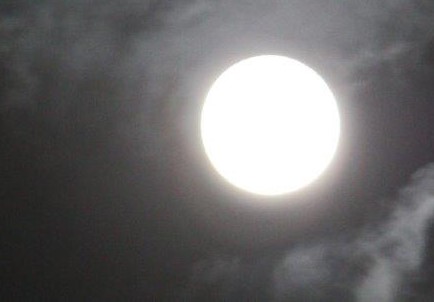
Bright moonlight washes over the pines.
One thousand peaks, all in one color.

“Retort” by Paul Laurence Dunbar [w/ Audio]

"Thou art a fool," said my head to my heart,
"Indeed, the greatest of fools thou art,
To be led astray by the trick of a tress,
By a smiling face or a ribbon smart;"
And my heart was in sore distress.
Then Phyllis came by, and her face was fair,
The light gleamed soft on her raven hair;
And her lips were blooming a rosy red.
Then my heart spoke out with a right bold air:
"Thou art worse than a fool, O head!"