BOOKS: “Water Margin” by Shi Nai’an

Outlaws of the marsh (the Water Margin)Outlaws of the marsh by Shi Nai’an
My rating: 5 of 5 stars

Amazon.in Page

Water Margin is one of the four classic Chinese novels. The English language translations of the novel go by many names, but in Chinese it’s called Shui Hu Zhuan (i.e. 水滸傳.) The book tells a tale of war and brotherhood in a world in which a person’s virtue and his station in life are often topsy-turvy. It’s one of the most engaging pieces of fiction I’ve read in some time. While it’s a sprawling epic (close to a thousand pages in the unabridged translation,) it draws the reader in and keeps one reading by way of clever plotting and intense intrigues.

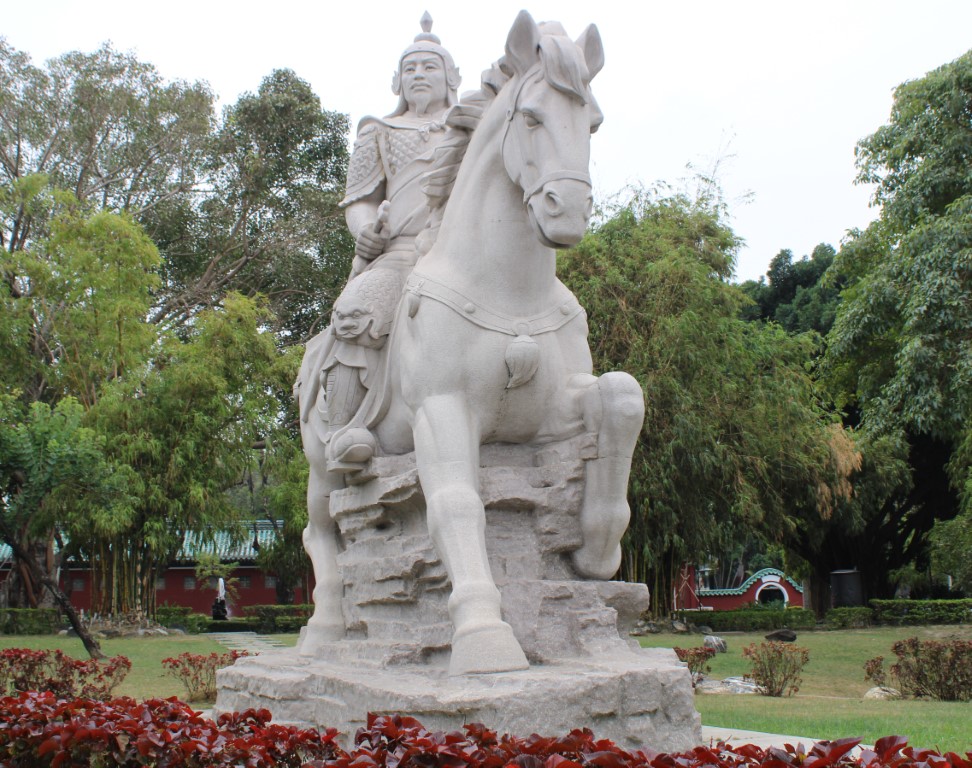
The story revolves around 108 individuals of varied checkered pasts who end up together as a band of outlaws in the Liangshan Marsh (hence, one of the most common translated titles is “Outlaws of the Marsh.”) Under the leadership of an exceptionally virtuous and beloved leader, Song Jiang, these outlaws are united into, first, a band of outlaws and, later, (having been pardoned by the emperor) as an incomparable military force that quells threats to the nation.

About the first half of the book consists of the individual stories of the most central of the 108 outlaw chieftains. The next quarter of the book describes their time together as outlaws and, particularly, how they repeatedly defeated government attempts to crush their band. The final quarter of the book is about the band’s Imperial service: first in defeating Tartar invaders from the North and then in crushing a kingdom that arose in the south by uprising of a self-declared king.

If the reader is thinking that 108 primary characters is too many to contend with, I would say that: a.) there are a small set of characters that are so substantially discussed and developed that you’ll be able to always keep them straight; b.) not all of the 108 are crucial to keep straight to follow the flow of the story, but c.) yes, it is not easy to keep them all straight — particularly for a non-Chinese reader who will find a number of the names quite similar (e.g. Wu Yong and Wu Song.)

I should note that the book can be extremely visceral, too much so for some readers. This intensity largely has to do with the stories involving one of the chieftains, Li Kui. Li Kui is the worst. He has a horrific temper, a blood lust, is completely out of control, and almost always turns anything he touches into a bloody mess. His only saving grace is that he recognizes in Song Jiang’s virtue something that must be followed, such that he does his level best to do anything Song Jiang tells him to and (often more importantly) not do whatever he is told not to do. Many readers will hate Li Kui, finding him completely despicable. However, there is a good chance that thinking about why Li Kui is kept around and tolerated after constantly fouling things up will be a productive thought exercise for those who can get through the gore. One may want to consider that question in relationship to the fascinating fact that Song Jiang, the undisputed leader who all the men insist take the position of head chieftain, is the only member of the band who has no kung fu. The other 107 chieftains are all martial arts masters-extraordinaire, most with specialties in particular weapons or tactics.

I won’t say there aren’t clunky plot devices and repetitive elements, but they didn’t bother me much for a few of reasons. Firstly, this novel is from the fourteenth century, and — given that — the readability and emotional resonance of the book is phenomenal. Secondly, I have no way of knowing how much the cheapening plot devices are a product of the original versus of the translation. Finally, those elements are more than made up for by skilled story crafting.

I’d highly recommend this book for all readers who can feasibly get through an 850-page novel with hundreds of characters. Martial artists and travelers may find it of particular value.


View all my reviews

“The Charge of the Light Brigade” by Alfred, Lord Tennyson [w/ Audio]

Half a league, half a league,
Half a league onward,
All in the valley of Death
Rode the six hundred.
"Forward the Light Brigade!
Charge for the guns!" he said:
Into the valley of Death
Rode the six hundred.

"Forward the Light Brigade!"
Was there a man dismay'd?
Not tho' the soldier knew
Some one had blunder'd:
Their's not to make reply,
Their's not to reason why,
Their's but to do and die:
Into the valley of Death
Rode the six hundred.

Cannon to right of them,
Cannon to left of them,
Cannon in front of them
Volley'd and thunder'd;
Storm'd at with shot and shell,
Boldly they rode and well,
Into the jaws of Death,
Into the mouth of Hell,
Rode the six hundred.

Flash'd all their sabres bare,
Flash'd as they turn'd in air
Sabring the gunners there,
Charging an army, while
All the world wonder'd:
Plunged in the battery-smoke
Right thro' the line they broke;
Cossack and Russian
Reel'd from the sabre-stroke
Shatter'd and sunder'd.
Then they rode back, but not,
Not the six hundred.

Cannon to right of them,
Cannon to left of them,
Cannon behind them
Volley'd and thunder'd;
Storm'd at with shot and shell,
While horse and hero fell,
They that had fought so well
Came thro' the jaws of Death
Back from the mouth of Hell,
All that was left of them,
Left of six hundred.

When can their glory fade?
O the wild charge they made!
All the world wonder'd.
Honour the charge they made!
Honour the Light Brigade,
Noble six hundred!

“Singing My Mind” #1 by Ruan Ji [w/ Audio]

One sleepless night:
I sit up to strum my lute.
The moon shines through thin curtains,
A gentle breeze rustles my robe.
A wild goose honks in the wilderness,
Stirring a cascade of other birdcall.
I pace and peek out windows --
Alone, and burdened with sorrows.

“Cavalry Days” by Xin Qiji [w/ Audio]

Drunk, I'd keep a lamp lit to find my sword,
The blare of horns sounded throughout the camp.
Soldiers ate meat under waving banners;
The military band played boisterous tunes.
Autumn brought our troops to the battlefield.

Carried by a charger at full gallop,
My bow thwipped, sending swift arrows flying.
We restored Imperial lands, boldly,
And won great fame for fighting gallantly,
But fame grows thin and gray just like my hair.

“Sailing to Byzantium” by William Butler Yeats [w/ Audio]

I

That is no country for old men. The young
In one another's arms, birds in the trees,
-- Those dying generations - at their song,
The salmon-falls, the mackerel-crowded seas,
Fish, flesh, or fowl, commend all summer long
Whatever is begotten, born, and dies.
Caught in that sensual music all neglect
Monuments of unageing intellect.

II

An aged man is but a paltry thing,
A tattered coat upon a stick, unless
Soul clap its hands and sing, and louder sing
For every tatter in its mortal dress,
Nor is there singing school but studying
Monuments of its own magnificence;
And therefore I have sailed the seas and come
To the holy city of Byzantium.

III

O sages standing in God's holy fire
As in the gold mosaic of a wall,
Come from the holy fire, perne a gyre,
And be the singing-masters of my soul.
Consume my heart away; sick with desire
And fastened to a dying animal
It knows not what it is; and gather me
Into the artifice of eternity.

IV

Once out of nature I shall never take
My bodily form from any natural thing,
But such a form as Grecian goldsmiths make
Of hammered gold and gold enamelling
To keep a drowsy Emperor awake;
Or set upon a golden bough to sing
To lords and ladies of Byzantium
Of what is past, or passing, or to come.

“Refined” [Poetry Style #6] by Sikong Tu [w/ Audio]

Buying fine jade in the springtime,
Enjoying rain song from within a cabin,
A taciturn scholar sits betwixt
Copses of tall, arching bamboo.
Sparse white clouds in a newly clear sky;
Swallows weave 'round trees in pursuit.
Light through leaf casts a green hue on all;
Sound of falling water, thin but near;
Flower petals fall without a sound.
But the man sits unyielding as a mum;
He writes what the scene dictates
To make a pithy book.

NOTE: The late Tang Dynasty poet, Sikong Tu (a.k.a. Ssŭ-k‘ung T‘u,) wrote an ars poetica entitled Twenty-Four Styles of Poetry. It presents twenty-four poems that are each in a different tone, reflecting varied concepts from Taoist philosophy and aesthetics. Above is a translation of the sixth of the twenty-four poems.

“To be, or not to be” [Soliloquy from HAMLET] by William Shakespeare [w/ Audio]

To be, or not to be, that is the question:
Whether 'tis nobler in the mind to suffer
The slings and arrows of outrageous fortune,
Or to take arms against a sea of troubles
And by opposing end them. To die -- to sleep,
No more; and by a sleep to say we end
The heart-ache and the thousand natural shocks
That flesh is heir to: 'tis a consummation
Devoutly to be wish'd. To die, to sleep;
To sleep, perchance to dream -- ay, there's the rub:
For in that sleep of death what dreams may come,
When we have shuffled off this mortal coil,
Must give us pause - there's the respect
That makes calamity of so long life.
For who would bear the whips and scorns of time,
Th' oppressor's wrong, the proud man contumely,
The pangs of dispriz'd love, the law's delay,
The insolence of office, and the spurns
That patient merit of th' unworthy takes,
When he himself might his quietus make
With a bare bodkin? Who would fardels bare,
To grunt and sweat under a weary life,
But that the dread of something after death,
The undiscover'd country, from whose bourn
No traveller returns, puzzles the will,
And makes us rather bear those ills we have
Than fly to others that we know not of?
Thus conscience doth make cowards of us all,
And thus the native hue of resolution
Is sicklied o'er with the pale cast of thought,
And enterprises of great pith and moment
With this regard their currents turn awry
And lose the name of action.

BOOKS: “Ali and Nino” by Kurban Said

Ali and Nino: A Love StoryAli and Nino: A Love Story by Kurban Said
My rating: 5 of 5 stars

Amazon.in Page

I read this book as travel literature for a trip to Azerbaijan and was pleased that it both met my needs as travel literature (i.e. offering insight into the local culture(s),) and it turned out to be an engrossing story, as well. You may have caught that “turned out to be.” It’s true that the first one-third to half of the book is a slow-burn on the story front. Through those early chapters, the book is the character-driven, plotless novel one frequently sees among literary fiction. Don’t get me wrong, it is still interestingly written and engaging (if you’re a literary fiction reader,) and it definitely met my needs for travel literature. But just as I’d resigned myself to this character-driven literary fiction formulation, it shifted into being a compelling and even action-packed story.

This is a tale of star-crossed lovers but set in the Caucuses in the WWI era (i.e. the time of the Armenian Genocide, when the Ottoman Empire was in its violent death throes.) Unlike Romeo and Juliet, in which the lovers came from feuding clans that were culturally quite similar, cultural divergence is the crux of the matter for Ali and Nino. While the families of the two kids get along fine enough, Nino is from an aristocratic Georgian family of progressive Western (and Christian) proclivities. The protagonist, Ali, is also from an upper-crust family, but they are of a much more conservative Muslim bent. While Ali, himself, is an educated and moderate personality and somewhat of a bridge between the old world Persian mindset of his family and the liberal European one in which he was educated, he has friends and family that it would not be unfair to call fanatics. So, while the families bless the union, it is ill-fated because the worldviews of Ali and Nino make it so there is no place they can both be happy living, except a Baku that is being contested by the Ottoman Empire and a Russia in the midst of its own transmutation. In Persia, Nino is a soulless possession who is not allowed to interact with anyone but Ali, eunuch and female servants, and her own family when they visit. On the other hand, Ali can’t bear to go to Europe or America, where he’d be so far out of his element. So, they are stuck with a Baku besieged by multiple entities.

The writer made a couple of unconventional but clever choices that I found to be brilliant. I’d highly recommend this book for readers of literary fiction and / or historical fiction.

View all my reviews

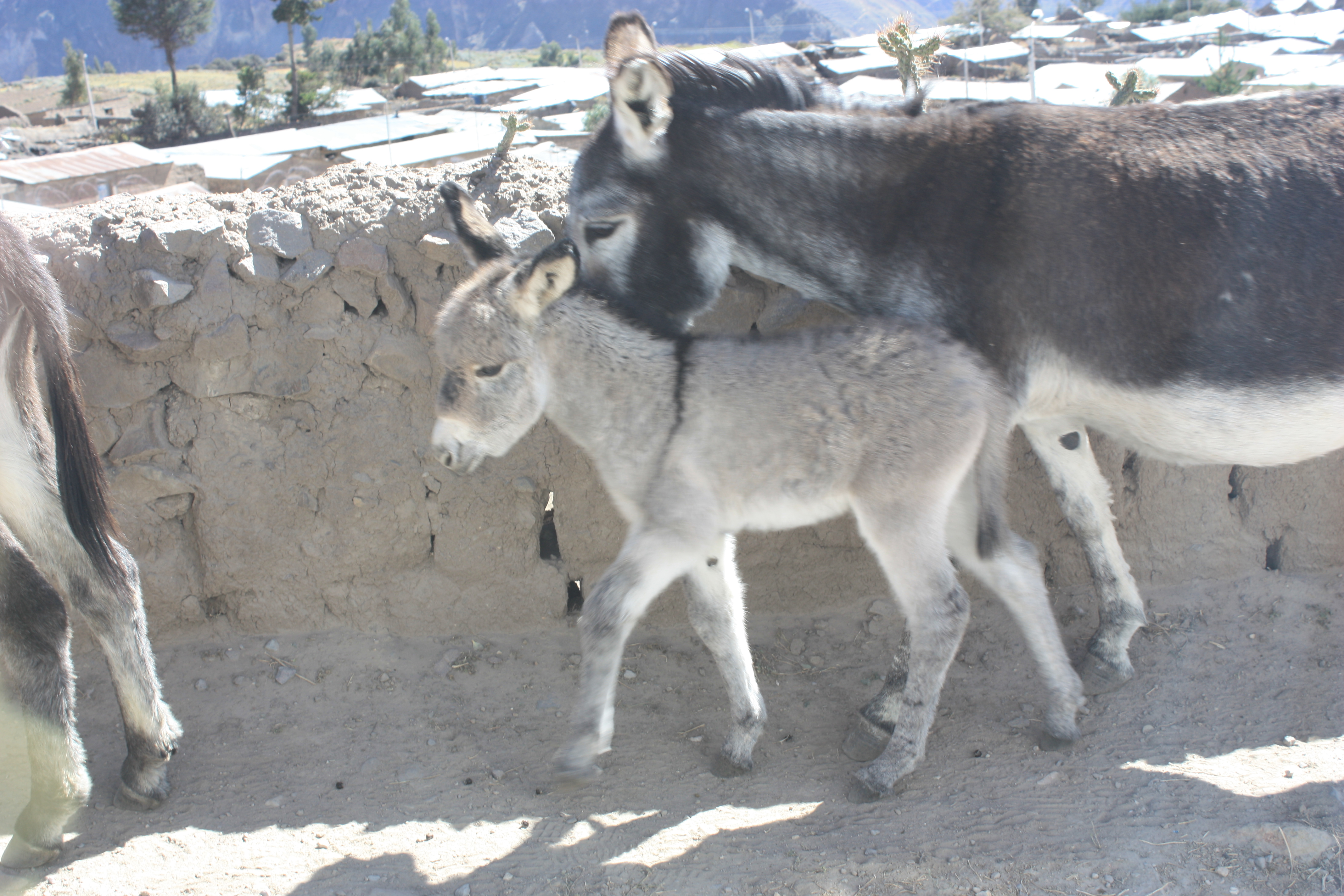
“The Donkey” by G.K. Chesterton [w/ Audio]

When fishes flew and forests walked
And figs grew upon thorn,
Some moment when the moon was blood
Then surely I was born.

With monstrous head and sickening cry
And ears like errant wings,
The devil's walking parody
On all four-footed things.

The tattered outlaw of the earth,
Of ancient crooked will;
Starve, scourge, deride me: I am dumb,
I keep my secret still.

Fools! For I also had my hour;
One far fierce hour and sweet:
There was a shout about my ears,
And palms before my feet.

“He Wishes for the Cloths of Heaven” by William Butler Yeats [w/ Audio]

Had I the heavens' embroidered cloths,
Enwrought with the golden and silver light,
The blue and the dim and the dark cloths
Of night and light and the half-light,
I would spread the cloths under your feet:
But I, being poor, have only my dreams;
I have spread my dreams under your feet;
Tread softly because you tread on my dreams.

NOTE: This poem is also sometimes entitled, “Aedh Wishes for the Cloths of Heaven.”