BOOK: “The Perennial Philosophy Reloaded” by Dana Sawyer

The Perennial Philosophy Reloaded: A Guide for the Mystically-inclinedThe Perennial Philosophy Reloaded: A Guide for the Mystically-inclined by Dana Sawyer
My rating: 4 of 5 stars

Amazon.in Page

Release Date: July 9, 2024

The good news is that this book does a thorough, clear, and balanced job of discussing Perennial Philosophy along a number of dimensions including metaphysics, psychology, theology, and aesthetics. The bad news is that it can lead one to believe there IS NO Perennial Philosophy, just a hodge-podge of (often disparate) assumptions about the grand metaphysical questions of life, the universe, and everything, assumptions that are usually Eastern, mystical, or both and which appeal to the kind of person who likes to say, “I’m spiritual, but not religious,” but which are all over the place, intellectually speaking. We learn more about the varied metaphysical perspectives that can be lumped under rubric Perennial Philosophy, than we learn of any internally consistent set of beliefs which distinguish the Philosophy from others. Sawyer does acknowledge that there is not a unified worldview that is Perennial Philosophy and that, instead, one must think in terms of “family resemblance.” The problem is that Perennial Philosophy displays the kind of family resemblance seen in a foster home. One can believe in a god or not, believe in a soul / persistent self or not, one can hold any number of beliefs about time, causation, creation, and other aspects of metaphysics. Sawyer does solidly distinguish Perennial Philosophy from Materialism, but it’s not clear why we needed it, given we already had various permutations of Idealism.

The book does provide a lot of food-for-thought, if often frustratingly so. The most important thing it does is lay out the various questions at the fore of Perennial Philosophy, how they’ve been addressed by different thinkers, and the crux of discord.

I did find myself disturbed by the arguments on occasion. A prime example is when Sawyer writes about students who describe themselves as non-spiritual but who enjoy going hiking. Because Sawyer couches the experiences that are had on a good hike in spiritual terms, he believes the students are wrong to describe themselves as “non-spiritual.” However, it’s far from clear why they need to twist their interpretations into line with his worldview. I suspect that his “non-spiritual” students, like me, see in “spiritual” types a need to escape the surly bonds of nature, to have magic exist in their worlds, something above and beyond nature. I see “spiritual” people as having a craving like the proverbial true-believer / flood victim whose neighbors come by in a truck and a boat to rescue him (and then rescue services come by with a helicopter,) but he turns them all down because “God Will Save Me!” Then he dies and goes to heaven and berates God for letting him drown, to which God says, “I sent a truck, a boat, and a helicopter. What do you want from me?” Well, he wanted a divine golden light to levitate him not some mundane solution based in the natural world; he wanted magic, rapturous rescue.

If you are interested in the various debates between Materialism and Idealism, this book is well worth reading, and if you describe yourself as “Spiritual, but not religious,” you’ll probably really love it.

View all my reviews

Worlds, Inner & Outer [Free Verse]

Inside -- Outside...
Is there an outside?
I don't know.
I feel I can breathe into
Infinite space.

But how far beyond
My reaching fingertips
Must the cage walls be
For me to feel that I'm
In a cave of unknown
Circumstance?

“Mock on, Mock on, Voltaire, Rousseau” by William Blake [w/ Audio]

Mock on, Mock on, Voltaire, Rousseau;
Mock on, Mock on, 'tis all in vain.
You throw the sand against the wind,
And the wind blows it back again.

And every sand becomes a Gem
Reflected in the beams divine;
Blown back, they blind the mocking Eye,
But still in Israel's paths they shine.

The Atoms of Democritus
And Newton's Particles of light
Are sands upon the Red Sea shore
Where Israel's tents do shine so bright.

BOOKS: “Inner Space Philosophy” by James Tartaglia

Inner Space Philosophy: Why the Next Stage of Human Development Should Be Philosophical, Explained Radically (Suitable for Wolves)Inner Space Philosophy: Why the Next Stage of Human Development Should Be Philosophical, Explained Radically by James Tartaglia
My rating: 5 of 5 stars

Amazon.in Page

Release Date: July 1, 2024

This is a strange book, and I suspect it will be mostly loved or loathed, with relatively few people in that usually broad spectrum of indifference. It’s not strange in its message (which is an argument for philosophical Idealism and a metaphysics consistent, therewith,) but rather it’s odd in its delivery. It mixes fact and fiction, often in an ill-defined way, and it’s loaded with fourth wall breaking self-introspection. I enjoyed reading the book, found it amusing at times, and received a lot of food-for-thought from it (but not without some frustration, particularly around not knowing which were true stories. I suspect this was intentional. Philosophical Idealism being a notion that what matters is our internal [i.e. mental / emotional] experience and that that experience may not have much to do with any external “reality” [and, to the degree it does, that we have limited capacity to know how.] Therefore, it makes sense that a book taking such a stance would eschew the importance of external world “truths” in favor of building mental models that have pedagogic value regardless of whether the reflect external world happenings. The book boldly puts its money where its mouth is in that regard.)

It should also be said that part of the reason for the book’s unusual approach was to make a hard break from the usual mode of philosophical writing, which is often pedantic, pretentious, and elitist. That’s because, beyond the metaphysics it’s prescribing, the book is also proposing a need for philosophy to be a broadly human endeavor – approachable by all, rather than the domain of an elite who communicate in their own special jargon-laden language and argue over minutiae irrelevant to everyday living. Like a number of books of recent years, it’s proposing that we need a philosophy of life that helps us live better lives, rather than a philosophy of semantics and elaborate logic that helps “professional philosophers” score points in a game of philosophy.

A few things I liked about this book, include: a.) it didn’t treat the Western Philosophical tradition as the sum total of philosophy (as many books have.) For example, it explored Akan and Buddhist philosophy alongside the ancient and modern philosophy of the West. b.) it gives special emphasis to Cynicism, a school of philosophy that is usually disregarded as the domain of a few madmen of ancient Greece. There is a chapter imagining Trinidad’s Gambo Lai Lai as a Cynic of the modern world. c.) I liked that it used the last chapter as a way to review in a way that was fun and echoed the approach of the Socratic dialogue. It pitted a scholar in favor of the ideas of the book against what might best be thought of as a mainstream academic philosopher (though he was also an opponent of the book.) This allowed the author to review the book’s ideas in a way that can only be experienced through a clash of ideas. (And it offered some levity, as well.)

I got a lot out of reading this book. If you can cope with your belief in the importance of factual happenings being challenged, you too will probably enjoy it.

View all my reviews

Idealist Limerick

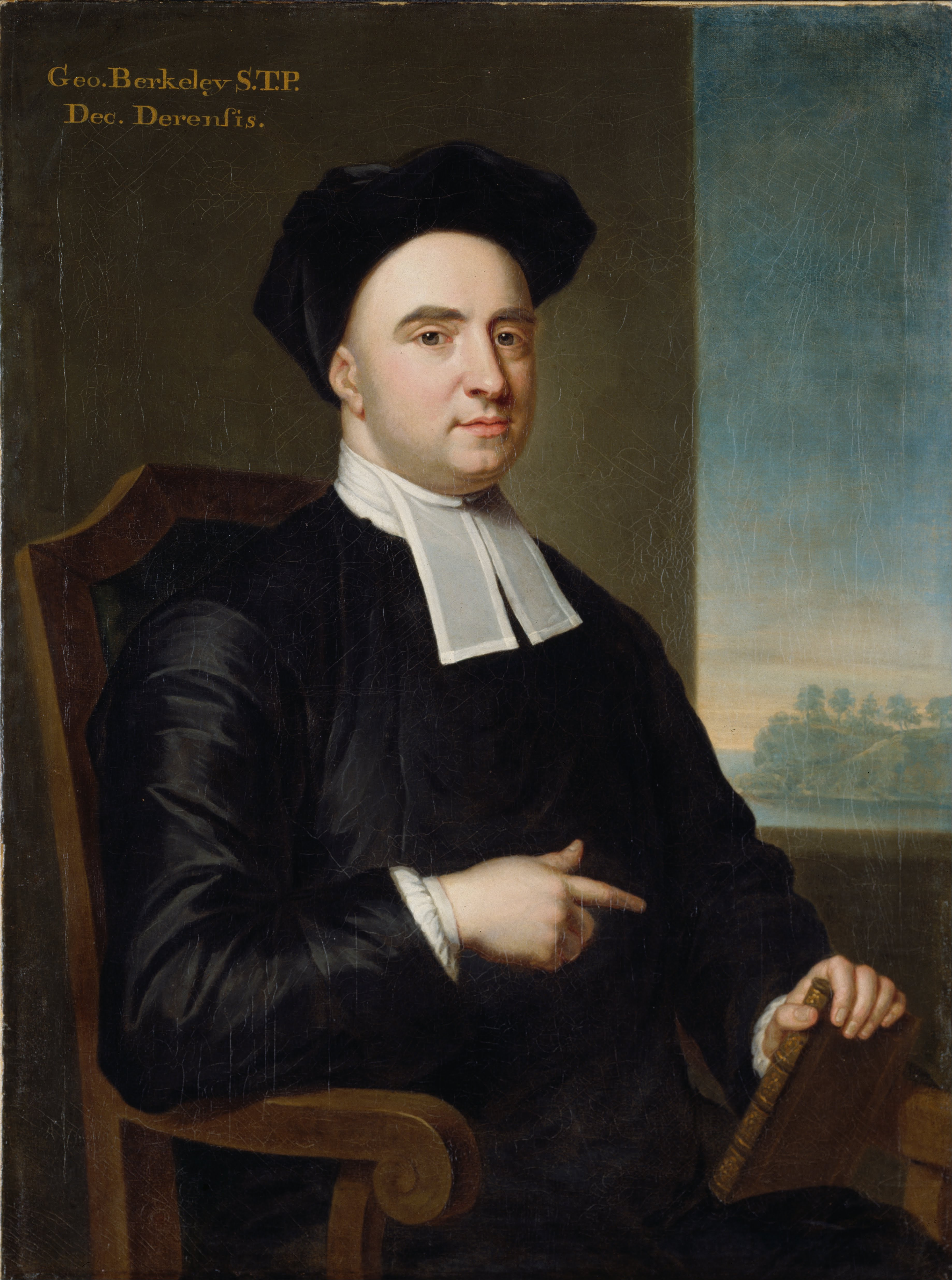
The philosopher known as George Berkeley
 denied the existence of all matter, curtly.
   Still, when he wanted pie,
   he wouldn't be denied,
  but made sure he ate it covertly.

Metaphysical Limerick

A drunken old idealist philosopher
got pulled over by a "pos'lif ossifer."
"Oh, can't you see,
my true self 's a tree,
and you can't justly jail a conifer!"

BOOK REVIEW: The Transcendentalist by Ralph Waldo Emerson

The TranscendentalistThe Transcendentalist by Ralph Waldo Emerson
My rating: 5 of 5 stars

Amazon.in Page

Free Online: Emersoncentral.com

In this short essay (about ten pages,) Emerson lays out an argument for Idealism over Materialism, and then contends that it’s reasonable to excuse oneself from the economic and civic aspects of society in favor of a simple life of introspection. [e.g. As Thoreau did in his years at Walden Pond.]

Emerson opens by suggesting that Transcendentalism is just Idealism by a different name. Idealism being a philosophical stance which puts consciousness at the fore while proposing that there is something beyond [that transcends] our experience of sensory information. The arguments put forth in favor of Idealism include the fact that sensory illusions exist and the Kantian critique of Locke’s view that there’s no more to the intellect than that which is or was sensory experience; Kant argues that there’s intuition. Kant’s influence is considerable, and Emerson explains that even the term “Transcendentalism” is derived from Kant’s use of the term “transcendental.”

The latter part of the essay echoes Emerson’s masterwork, the essay “Self-Reliance.” It proposes that it’s perfectly laudable to take advantage of the greatest gift one has, one’s consciousness, to introspect and indulge one’s need to better understand.

I may have mixed views on Emerson’s ideas, but one can’t say he doesn’t use language and reason and passion to make compelling claims. I found this brief essay to be both thought-provoking and inspirational, and I’d highly recommend it.


View all my reviews