BOOK: “Understanding Eastern Philosophy” by Ray Billington

Understanding Eastern PhilosophyUnderstanding Eastern Philosophy by Ray Billington
My rating: 4 of 5 stars

Publisher Site — Taylor & Francis

This book does a solid job for one that bites off so much in a single go. Eastern Philosophy is a large subject, and to try to outline the major premises of its varied systems and also compare them to Western / Abrahamic notions (when Western schools are sometimes no more different from Eastern schools than each side is within,) and to do so in under two-hundred pages is a daunting undertaking.

For the most part, I felt the book did a fine job of meeting its objective. A fair amount of selection and simplification is required. I will say the part describing karmic doctrine didn’t seem consistent with what I was taught and seems more in line with the early Western scholars who started writing about Eastern Philosophy but could not help but couch the subject in a Western / Abrahamic frame because it was what they knew and was invisible to them. I say this as one who is no big fan of Karmic philosophy, though for another reason (one which is also mentioned in this book.) I’ve always been told that the central idea is to do selfless acts in order to escape the karmic cycle. Billington, like others before him, states it as do “good deeds” and then he puts forth the critique that this won’t help because doing good for one’s own benefit is fraught with peril. My understanding from Sanskrit scholars is: first, Hindu philosophers were aware of this paradox from the beginning and that’s why the emphasis has always been on “selfless” acts; second, the Abrahamic bifurcation of all actions into good and evil is not so much a thing in Hindu thinking (most actions are inherently neither.) I should point out that there is a lot of internal conflict within these philosophies (e.g. differences between Buddhist and Hindu thoughts on Karma) and that Billington does elsewhere reflect on the differences between Eastern and Western thinking about good and evil.

The first two-thirds of the book is organized by schools of thought (beginning with the Indian ones and working toward Chinese / East Asian schools) and the last third deals with a series of fundamental philosophical questions.

If you want a quick outline of Eastern philosophical ideas, this book gives a good look at them, particularly if one is interested in a comparison to Western ideas. The book also spends a fair amount of time in discussion of what a religion is and how one differs from a philosophy.

View all my reviews

“King Trisanku” by Henry Wadsworth Longfellow [w/ Audio]

Viswamitra the Magician,
By his spells and incantations,
Up to Indra's realms elysian
Raised Trisanku, king of nations.

Indra and the gods offended
Hurled him downward, and descending
In the air he hung suspended,
With these equal powers contending.

Thus by aspirations lifted,
By misgivings downward driven,
Human hearts are tossed and drifted
Midway between earth and heaven.

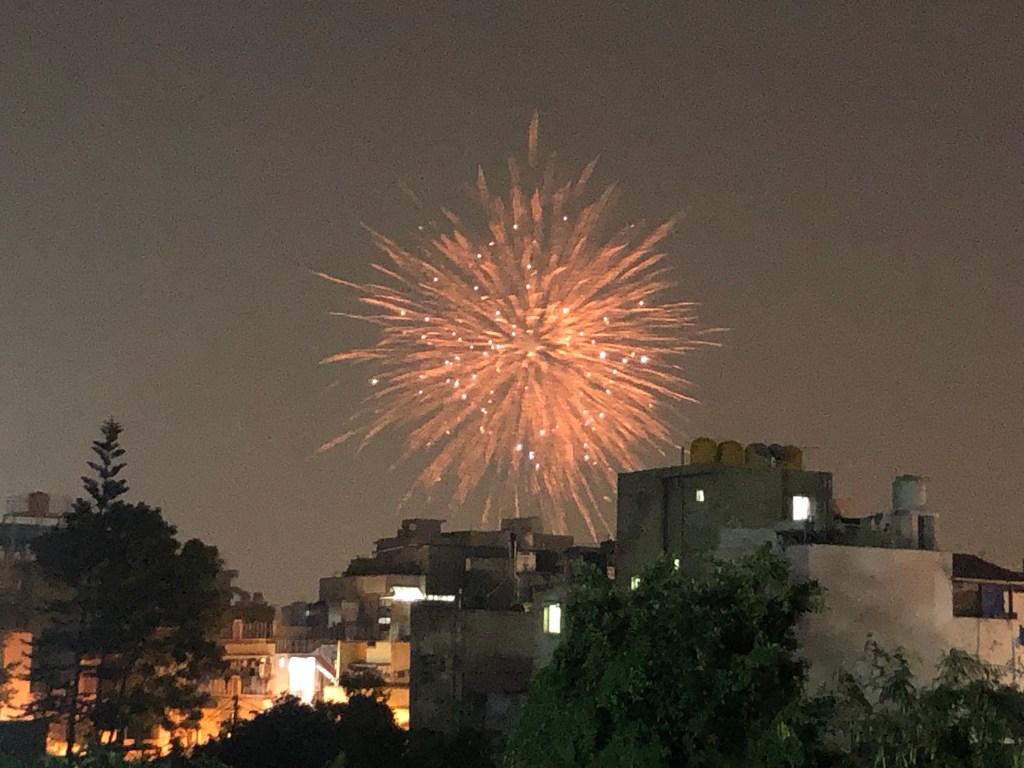
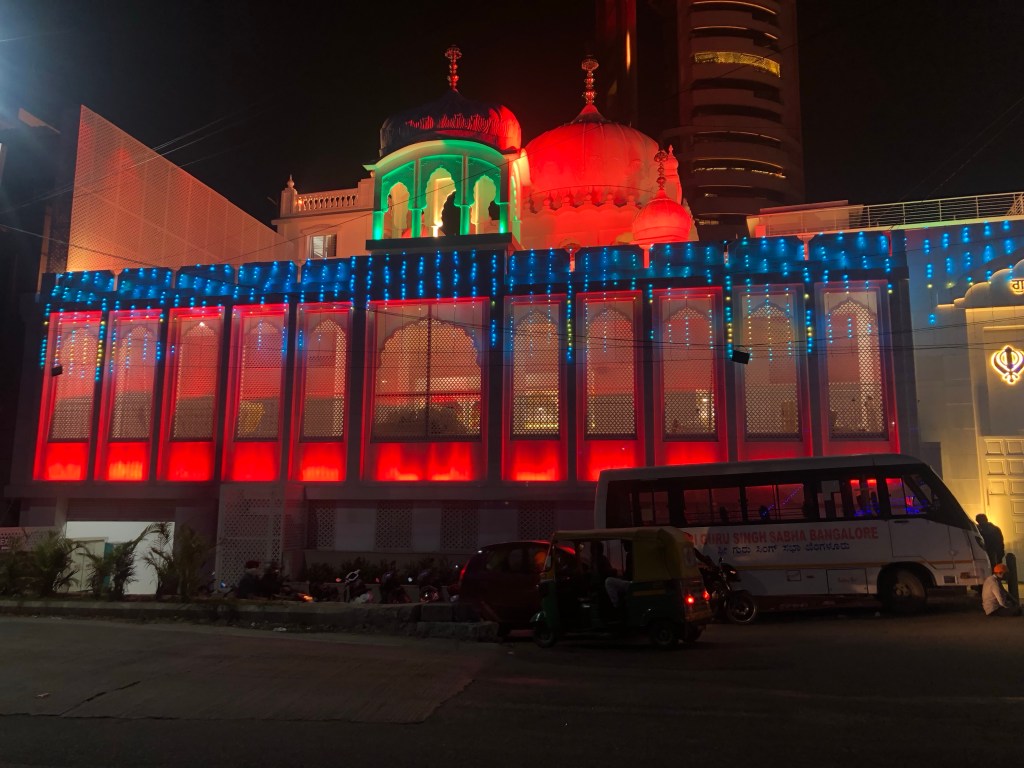
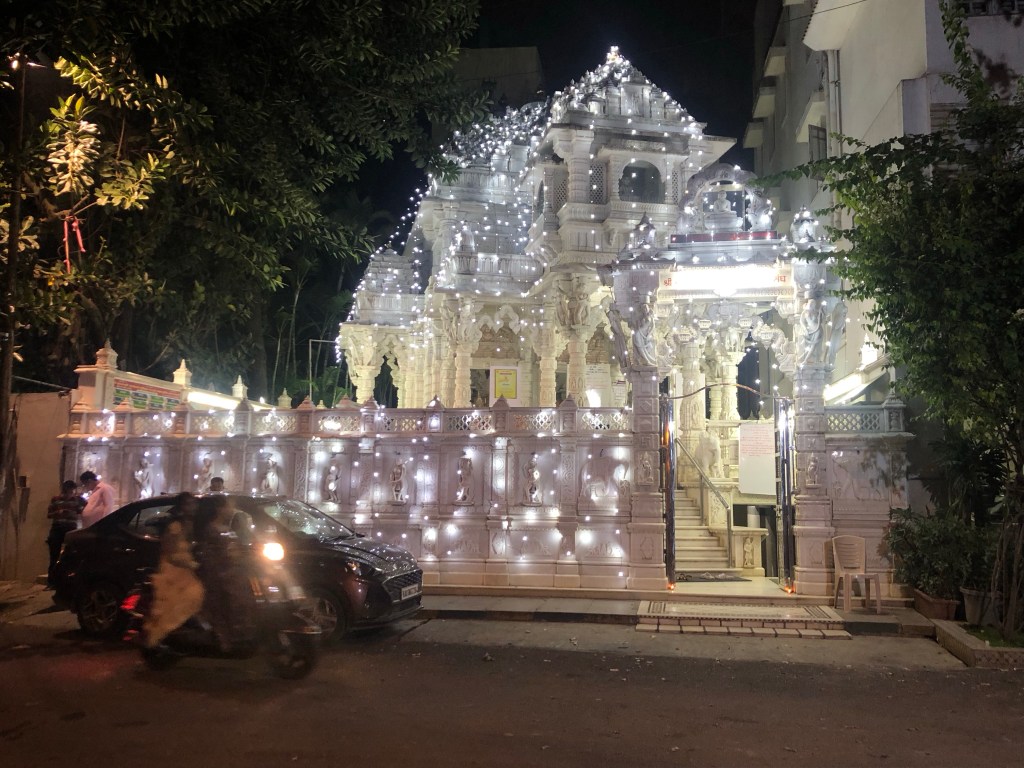
DAILY PHOTO: Scenes from Diwali 2023, Bangalore

Brahma by Ralph Waldo Emerson

If the red slayer think he slays,
   Or if the slain think he is slain,
 They know not well the subtle ways
   I keep, and pass, and turn again.

Far or forgot to me is near;
   Shadow and sunlight are the same;
 The vanished gods to me appear;
   And one to me are shame and fame.

They reckon ill who leave me out;
   When me they fly, I am the wings;
 I am the doubter and the doubt,
   I am the hymn the Brahmin sings.

The strong gods pine for my abode,
   And pine in vain the sacred Seven;
 But thou, meek lover of the good!
   Find me, and turn thy back on heaven.

BOOK REVIEW: The Stories Behind the Poses by Raj Balkaran

The Stories Behind the Poses: The Indian mythology that inspired 50 yoga posturesThe Stories Behind the Poses: The Indian mythology that inspired 50 yoga postures by Raj Balkaran
My rating: 4 of 5 stars

Amazon.in Page

Released: July 26, 2022

Yoga practitioners will be aware that — while some posture names are banal, straightforward descriptions (e.g. Utthita Hasta Padangusthasana, or “standing hand-to-big toe pose –”) many others invoke animals, sages, or deities for historical, mythological, or symbolic reasons. As this book’s title suggests, it presents the mythological backstories for fifty yoga postures. The vast majority of these fifty poses are common ones that will be readily familiar to most Hatha Yoga practitioners, though a few are advanced or obscure and aren’t likely to come up in your run-of-the-mill studio class. (And a couple may be familiar to some individuals by another name.)

The book is cleanly organized with five sections (Shiva poses, Vishnu poses, Devi / goddess poses, God story poses, and sage poses) each containing writeups for ten poses. Each pose is presented via colorful artwork in the Indian style (typically with the deity or sage in question performing the posture.)

I found the entries to be well-written and clear (Hindu Mythology can be extremely complicated and some authors get lost in the weeds by including too much minutiae or unnecessary details, but that wasn’t the case here.) The full-page artistic renderings of the poses are also clear and tidy, such that anyone familiar with the pose should readily recognize it.

The one thing I think could have been done better (though probably not without messing up the aforementioned clean organizational scheme) would be to cut some of the redundancy in the stories. In a few instances, the same story appeared in multiple chapters. To the author’s credit, these weren’t just copy / pasted, they were written uniquely, sometimes with additional information or a different focus. Still, it was a bit distracting to find myself in the middle of the same story and wondering whether I’d zoned out or lost my place. This might have been dealt with by putting multiple poses with one story and not repeating the tale one or more times. For example, the stories about Vasisthasana and Visvametrasana are inherently coupled, and the poses might be as well. (Perhaps even referencing the fact that the story had already been told might have been helpful and less distracting.)

All-in-all, I thought this book did a fine job of presenting the myths and relating them to the postures. I learned a great deal from reading the book and would recommend it for yoga practitioners and those interested in Hindu Mythology.


View all my reviews

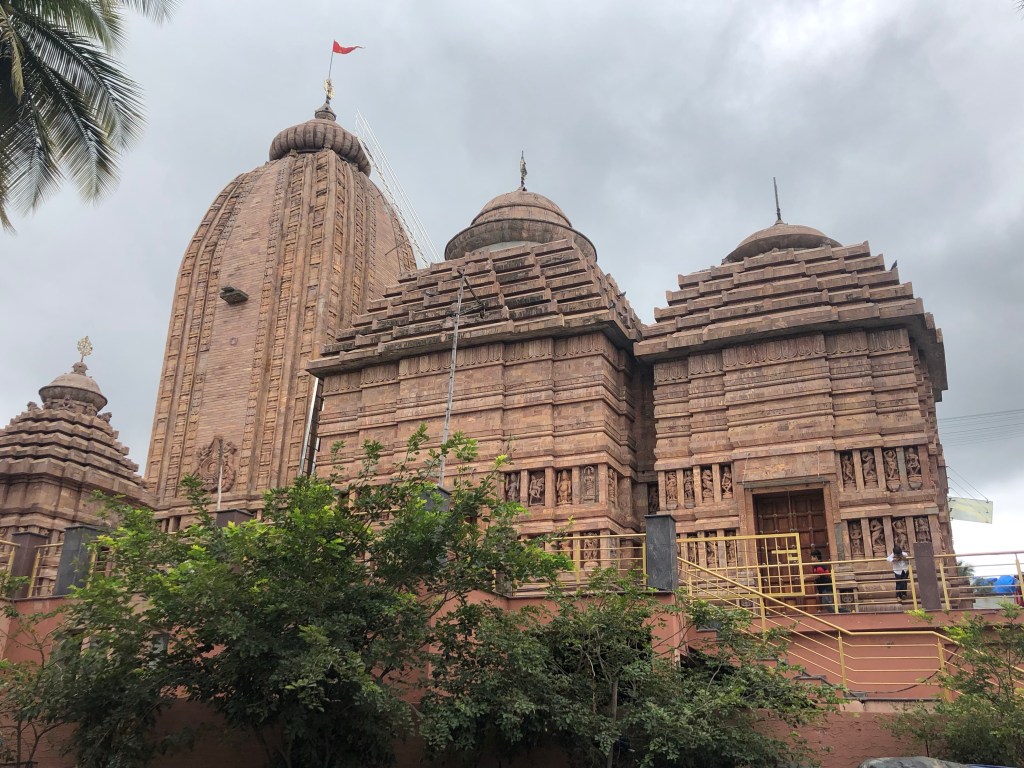
DAILY PHOTO: Jagannath Temple, Bangalore

Taken on July 16, 2022 in Bangalore

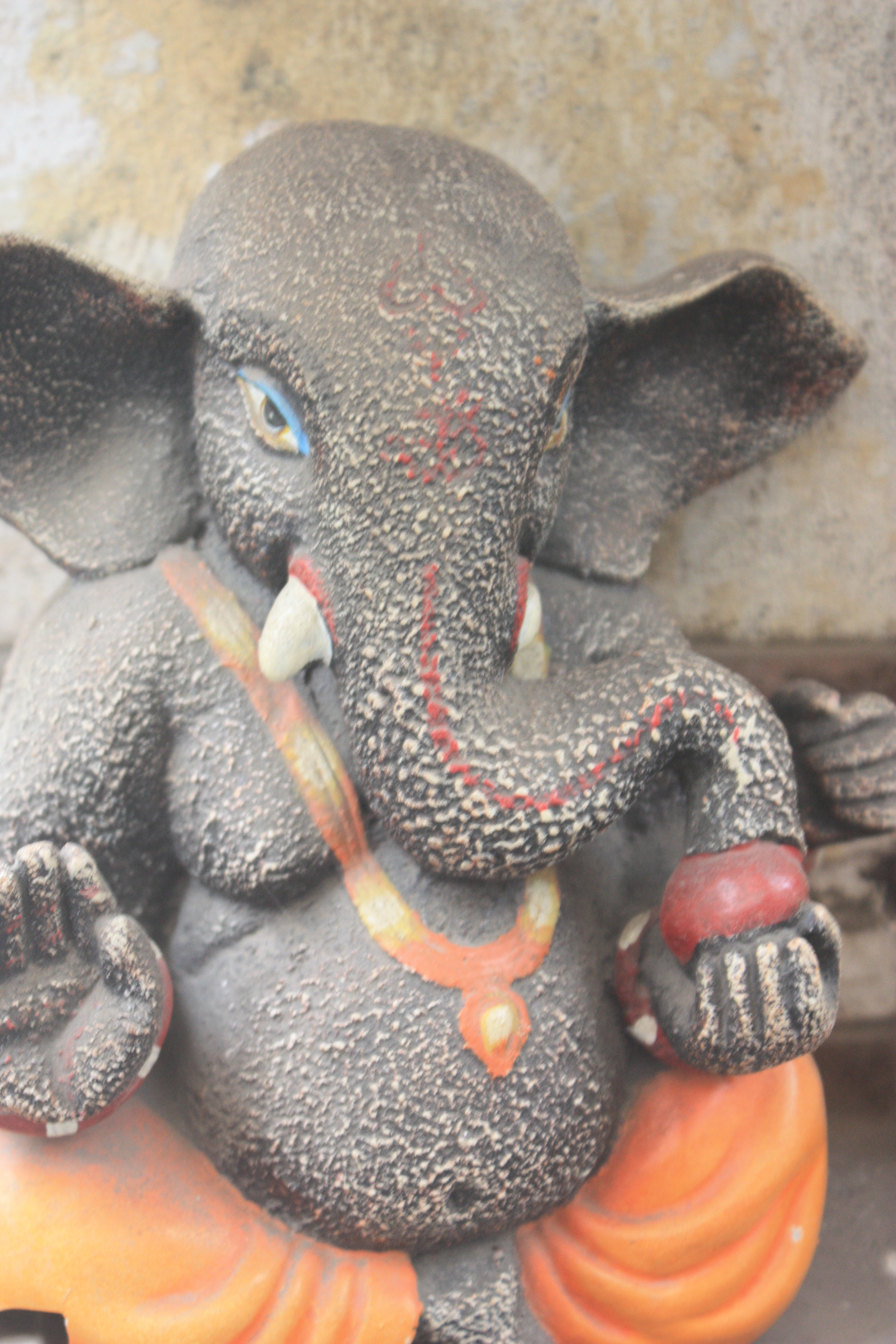
DAILY PHOTO: Ganesha

Taken in Bangalore in 2019

BOOK REVIEW: Sadhus by Patrick Levy

Sadhus: Going Beyond the DreadlocksSadhus: Going Beyond the Dreadlocks by Patrick Levy
My rating: 5 of 5 stars

Amazon.in Page

I got to the last couple chapters before I realized that this was a novel, and not a work of immersion journalism. I don’t mean to suggest that it wasn’t as compelling as I’d wish a work of fiction to be. On the contrary, it’s a fascinating look into a group of people (Sadhus / renunciants) who are little understood because they exist on the edges of society and can appear strange – if not a little scary – in their countercultural existence. The book reads like an authentic account of the Sadhu experience of a Frenchman who gives up his money and all but a few meager possessions to become a wandering ascetic under the tutelage a philosophically compatible Baba. (Until the fever dream ending instills a bit of surrealism and fourth-wall breaking.) The fact that the lead is demographically and a philosophically like the author, heightens the tendency to believe it’s nonfiction. [It’s quite possibly fictionalized autobiography to some degree, but I couldn’t say to what extent.]

Besides telling a story centered on a wandering Western ascetic in Northern India, the book does double duty in reflecting upon Hindu-Yogic-Tantric philosophy, particularly with respect to metaphysics. The lead character is neither religious nor a believer in the supernatural. Rather, he is (like many of us) in search of an almost defunct variety of a philosophy, the kind practiced by Socrates and some historic and present-day Buddhists, a variety that’s open to questioning and challenging all beliefs and assumptions as the means to better understand one’s world, a variety that recognizes the ubiquity of ignorance with respect to key questions of metaphysics. The story includes a number of Socratic method style conversations, as well as quotes from texts such as the “Avadhuta Gita” and “Ashtavakra Gita.”

I found this story to be compelling and informative, shining a light on a rarely-seen side of India.

View all my reviews

BOOK REVIEW: Jagannatha of Puri by Gayatri M. Dutt

Jagannatha of puriJagannatha of puri by Gayatri Madan Dutt
My rating: 4 of 5 stars

Amazon.in Page

I recently visited Puri, and – seeing the little, big-eyed Jagannath idols and images all across Odisha – I was curious to learn about the mythology behind the Puri temple and its tripartite deity. This 30+ page comic may not be the most scholarly or detailed account, but it may be the quickest way to get the gist of the story. And the comic does present an intriguing morality tale that includes lessons of patience and unselfishness.

The story begins with a king who is obsessed with finding a fabled cave-shrine that he was directed to in a dream. The king sends his best men out in search of the cave as its whereabouts are unknown. In time, one of the men stumbles upon a village whose chieftain is said to regularly make secretive visits to the cave and its idol. And from there, the race is on to get the king to the cave. But the deity is elusive, and insists that its followers work together harmoniously.

It’s a clear and well-developed story. It blends intriguing trippy elements like time-travel and messages in dreams with traditional religious mythology.

If you’re looking for a brief explanation of the Puri temple and the Jagannaths, it’s worth giving this short comic a look.


View all my reviews

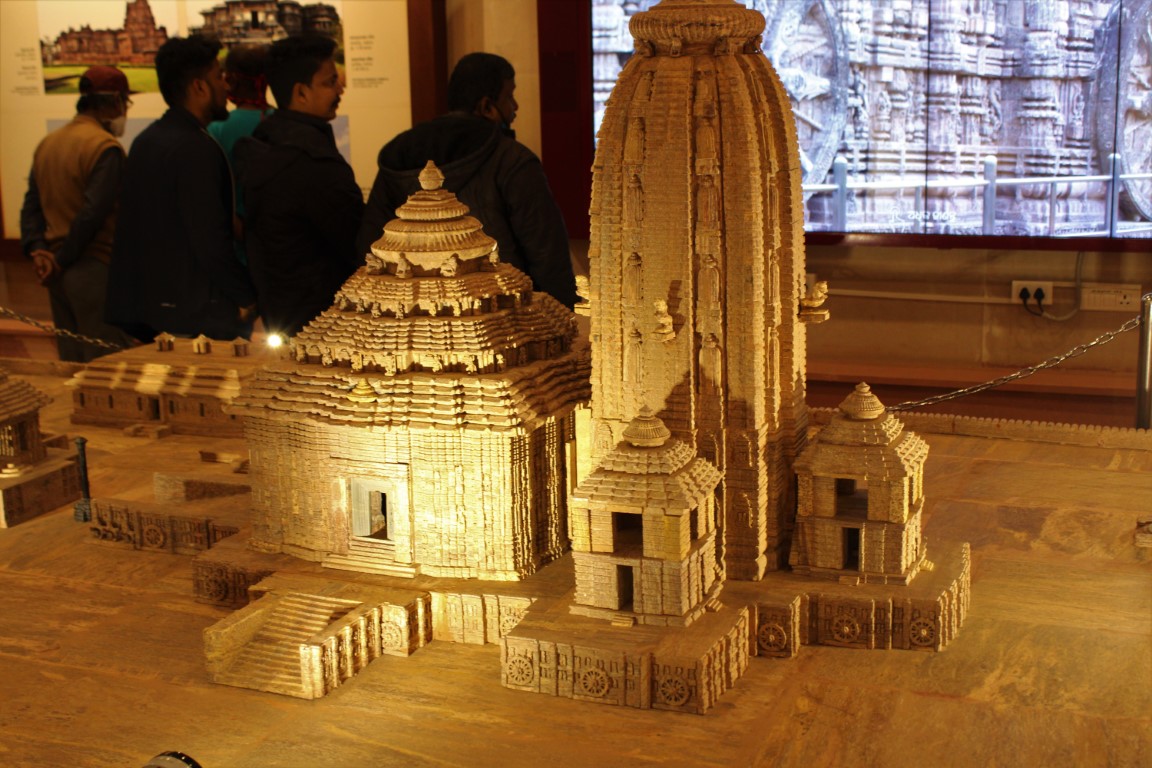
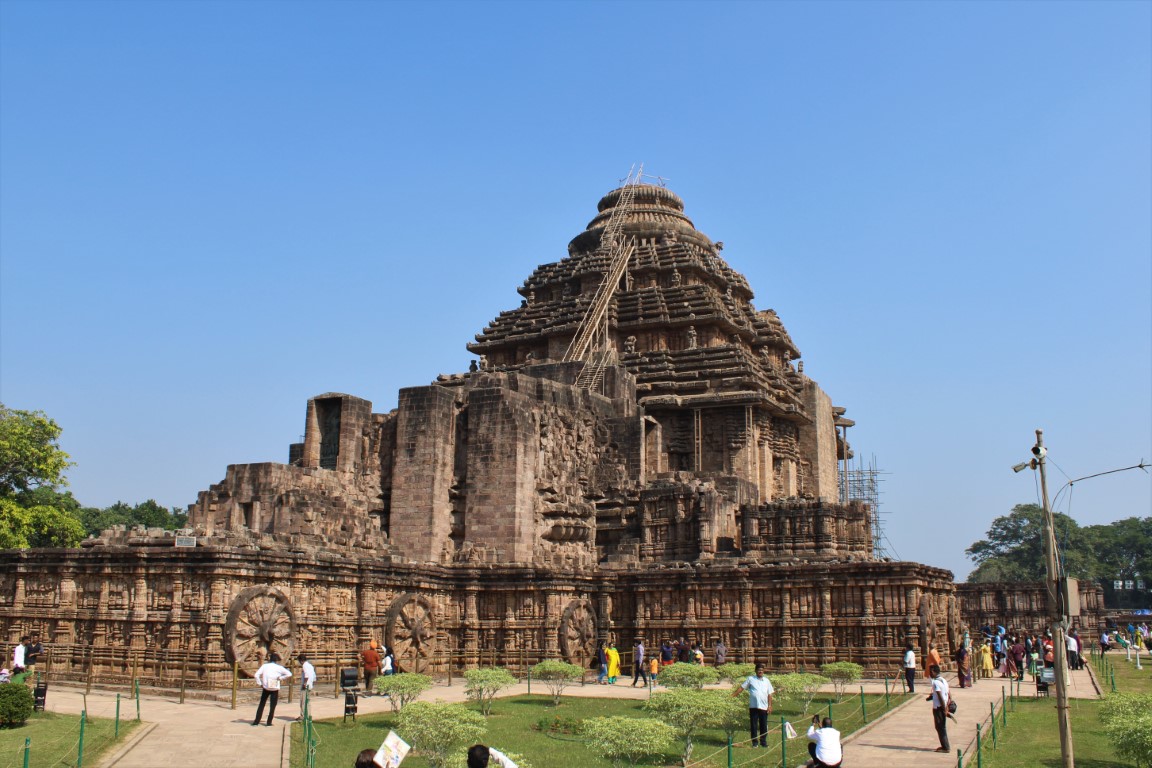
DAILY PHOTO: Konark Sun Temple as It Was and Is

Taken in December of 2021 in the Archeological Museum of Konark
Konark Surya Mandir [Note: the tower and three sub-temples collapsed.]