PROMPT: Eating Meat

Daily writing prompt
What are your feelings about eating meat?

I have no strong feelings. Everything that lives becomes food, so I don’t see a sound moral argument against meat. There is certainly a nutritional argument against eating excessive quantities of meat (which I would grant many meat-eaters do) but this is not an argument for dropping meat altogether. I accept that there is a reasonable environmental argument, but — counterpoint — it’s delicious.

I see no argument at all against choosing to eat vegetarian or vegan, so I certainly wouldn’t try to talk anyone out of their decision to do so. (i.e. The “you can’t get enough protein” argument is bullshit.)

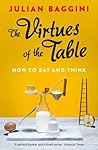
BOOK: “The Virtues of the Table” by Julian Baggini

The Virtues of the Table: How to Eat and ThinkThe Virtues of the Table: How to Eat and Think by Julian Baggini
My rating: 4 of 5 stars

Publisher Site – Granta

This book examines the nexus of food and philosophy, from the ethics of butchery to the virtue of authenticity to whether hedonism is a necessary component of eating philosophically. Much of the book challenges or debates conventional wisdoms such as whether local foods are inherently better, whether dining is always and everywhere a social activity (or should be,) and whether organic is always preferable. The book covers a wide variety of topics including: mindfulness, gratitude, skepticism, fasting, willpower, spontaneity, technology, etc.
The book offers many ideas for reflection though sometimes it felt like it rambled on for more than the issue in question necessitated.

Each chapter ends with a discussion of a particular food and its preparation as thought relevant by the author. This is a nice grounding mechanism for discussion that tends otherwise to be cerebral and philosophic.

I’d recommend this book for anyone interested in thinking more about food and its intersection with philosophy of life.

View all my reviews

PROMPT: Do More

Daily writing prompt
What could you do more of?
Pie eating. I don't mean to be gluttonous about it, but I seldom eat a proper piece of pie. I'd say I get enough dessert, overall, but perhaps need to shift more of the balance of dessert in the direction of pie. Or maybe I just have a momentary hankering for pie, and this is all just meaningless rambles. I do not intend to build a pie-eating action plan, so things will probably remain as they are on the pie-eating front.

PROMPT: Foods

Daily writing prompt
What are your favorite types of foods?

Those that are authentic to wherever I am at the moment. [Nothing fancy, but with nutritional value.]

FIVE WISE LINES [September 2025]

The aim of introduction is to conceal a person’s identity.

George Mikes, How To Be an Alien

From the beginning our philosophers have tried to teach us how to die,
and our poets have taught us that to contemplate death
is to learn to live.

Jonathan weiner, Long for this world

Nothing is harder to see into than people’s natures.

Zhuge liang [a.k.a. Kongming], The WAy of the General

To know how to eat is to know how to live.

Auguste Escoffier

Reality can be beaten with enough imagination.

Mark twain

PROMPT: Expensive Meal

Daily writing prompt
What’s the most money you’ve ever spent on a meal? Was it worth it?

I can’t remember, but it’s never been worth it. Seems like the more one pays for a meal, the hungrier one leaves it. Enjoy your “foam reductions” if you like, but it’s not for me. I’ll take street food any day — cheap, filling, flavorful street food. It’s got character and doesn’t try too hard.

My palate may be unrefined, but — also — I’m no sucker.

PROMPT: Comfort Food

Daily writing prompt
What’s your go-to comfort food?

It depends on where I am. I recently discovered that my Busan comfort food is “Hotteok with seeds.” In Central Asia, it’s tandoor bread — by whatever name it’s called in the local tongue. In Tblisi, it’s khinkali. In Peru, a lomo saltado is a beautiful thing. Chicago is the only place I’ll eat a hotdog, but I do love one there.

As a traveler, I find it’s important to not get attached to any one thing. If you crave a bagel, you’re great if you’re in New York or Tel Aviv, but if you insist on one in Hyderabad, it will be a sad experience. But, by the same token, if you order Chicken Biryani in Des Moines, expect to be underwhelmed (or — if not — to pay an exorbitant amount, either way it’s depressing.)

Probably the single most widespread comfort food would be whatever the local dumpling is, be it called mo-mo, khinkali, pierogi, dim sum, etc. All quite unique, but with an underlying familiarity.

So, in the immortal words of (the apparently quite slutty) Crosby, Stills, Nash, and Young, “If you can’t be with the one you love… love the one you’re with.”

PROMPT: Fruits

Daily writing prompt
List your top 5 favorite fruits.

As my personal philosophy precludes having stable favorites, I’ll go with the fruits I had at breakfast (in no particular order): Mango, Banana, Leechee, Watermelon, and Cantaloupe.

PROMPT: Favorite Restaurant

Daily writing prompt
What is your favorite restaurant?

I don’t have a favorite restaurant, but I do have a type: mom-and-pop hole-in-the-wall that only does a few things but does them all exceedingly well. I don’t care for frou-frou places, and it drives me batty when a place has a thirty-page menu and you have to play the “guess what they actually have” game. I always loved watching Monty Python’s “Cheese Shop Sketch,” but have loathed reprising the John Cleese part in so many restaurants.

Chains have their place in the travel pipeline or in a busy schedule, but I generally prefer a novel experience over a cookie cutter one.

In [Atheological] Praise of Grace & Fasting

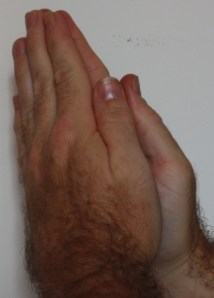
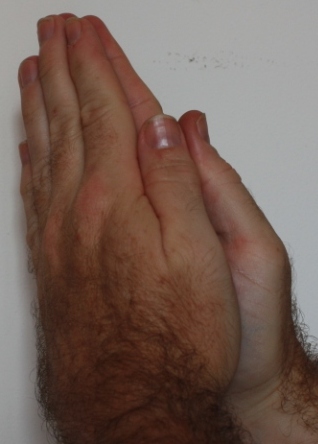
IMG_1214Those who’ve read my posts, or who know me, probably know me to be areligious, which–contrary to popular belief–isn’t necessarily the same as being atheist. Personally, and on the whole, I’ve never found enough virtue in religion to outweigh what I believe to be its vices. That being said, I do find behaviors to applaud among the faithful.

First and foremost among these commendable activities is the practice of saying grace before each meal. Of course, what appeals to me isn’t the notion of saying, “Hey, God, you are really groovy for laying this food upon my plate, and it’s my most heartfelt wish that you’ll keep up the good work. Thank you ever-so-much,  and YEEAAAH, God!” [Though if a less borderline-sacrilegious version of this kind of grace is your bag, more power to you.]

What I commend is the taking of a moment to be still and introspective before eating, of taking time to recognize the importance of our food. Of course, one can do this same sort of thing without invoking a God or gods–and some people do so.

One can take a moment to remind oneself to be mindful of how one eats, to not eat too quickly, and to recognize when one is full. (Bodily full not mentally satiated, the two are often not the same and the former will usually arrive first.)

One can take a moment to remember a time in one’s life when one was hungry or thirsty and concerned about whether one would have enough calories or safe drinking water to get through.  In our modern age, I suspect many have never been in a situation to experience such a thought, and are the poorer for it.

One can recollect the image of some hungry soul,  scraping to gather enough food to survive.

One may simply say, hara hachi bu, as Okinawan people do to remind themselves to eat only until they are 80% full.

Whatever you think or say, the goal is to keep eating from being a mindless activity, done on automatic pilot. Failure to be cognizant of what one puts in one’s mouth is the number one killer among human beings–and not just the obese. OK, I admit that I made that statistic up. But of how many statements can it be said that one is better off behaving as if it’s true–regardless of whether it is or not.

On a related note, I also applaud the act of periodic and/or partial fasting as carried out by many religions, as long as the safety of the individual is put before religious dogma, which–to my knowledge–it usually is. One shouldn’t be what my father called a Red Lobster Catholic, the kind who went to Red Lobster on Fridays during Lent and ordered the most sumptuous seafood feast they could afford–missing the point entirely by treating themselves. One also shouldn’t fast to the point that one feels starvation, and then binge and gorge.  One should cut one’s intake in a safe and reasonable manner in order to observe what it’s like to feel biological hunger (as opposed to cravings of the mind,  or boredom hunger.) Then take advantage of the fact that one’s stomach capacity shrinks surprisingly rapidly, allowing one to control one’s intake much more easily.

One needn’t believe that one has to make oneself suffer as a sacrifice to a higher being to see the value of fasting. Fasting done mindfully, and not dogmatically, increases one’s bodily awareness, one’s thankfulness, and one’s pleasure in eating.