BOOK: “The Adventures of Tom Sawyer” by Mark Twain

The Adventures of Tom SawyerThe Adventures of Tom Sawyer by Mark Twain
My rating: 5 of 5 stars

Available Online – Project Gutenberg

This is Twain’s best-known and probably most beloved work — though arguably neither his best nor most impactful piece. It tells the tale of a mischievous but warmhearted boy, Tom Sawyer, and a series of formative events in Sawyer’s youth from learning how to trick other kids into doing his chores to being trapped deep in a cave with his sweetheart. While there is a plot throughline involving the closest thing the novel has to a villain, Injun Joe, for the most part the story is episodic. That’s for the best because if too much weight were placed on that throughline, it’s resolution would feel flat. As it is, we see Sawyer and his friends, particularly Huck Finn, subjected to trials and challenges (often of their own making) that present moral dilemmas and the need to steel themselves for the occasion.

It’s often been said that this book isn’t as powerful or influential as its sequel, Adventures of Huckleberry Finn, which this book sets up nicely I should point out. It is probably true that Huck Finn is more profound. That said, Tom Sawyer could be said to be a cleaner read in that Huck Finn gets a bit muddled, particularly toward its end.

I’d highly recommend this book for all readers.

View all my reviews

PROMPT: Book from Childhood

Do you remember your favorite book from childhood?

Green Eggs and Ham is the earliest children’s book that made an impression — mostly for its catchy lyricism. Robinson Crusoe was the first story that resonated.

“Patience” by Gelett Burgess [w/ Audio]

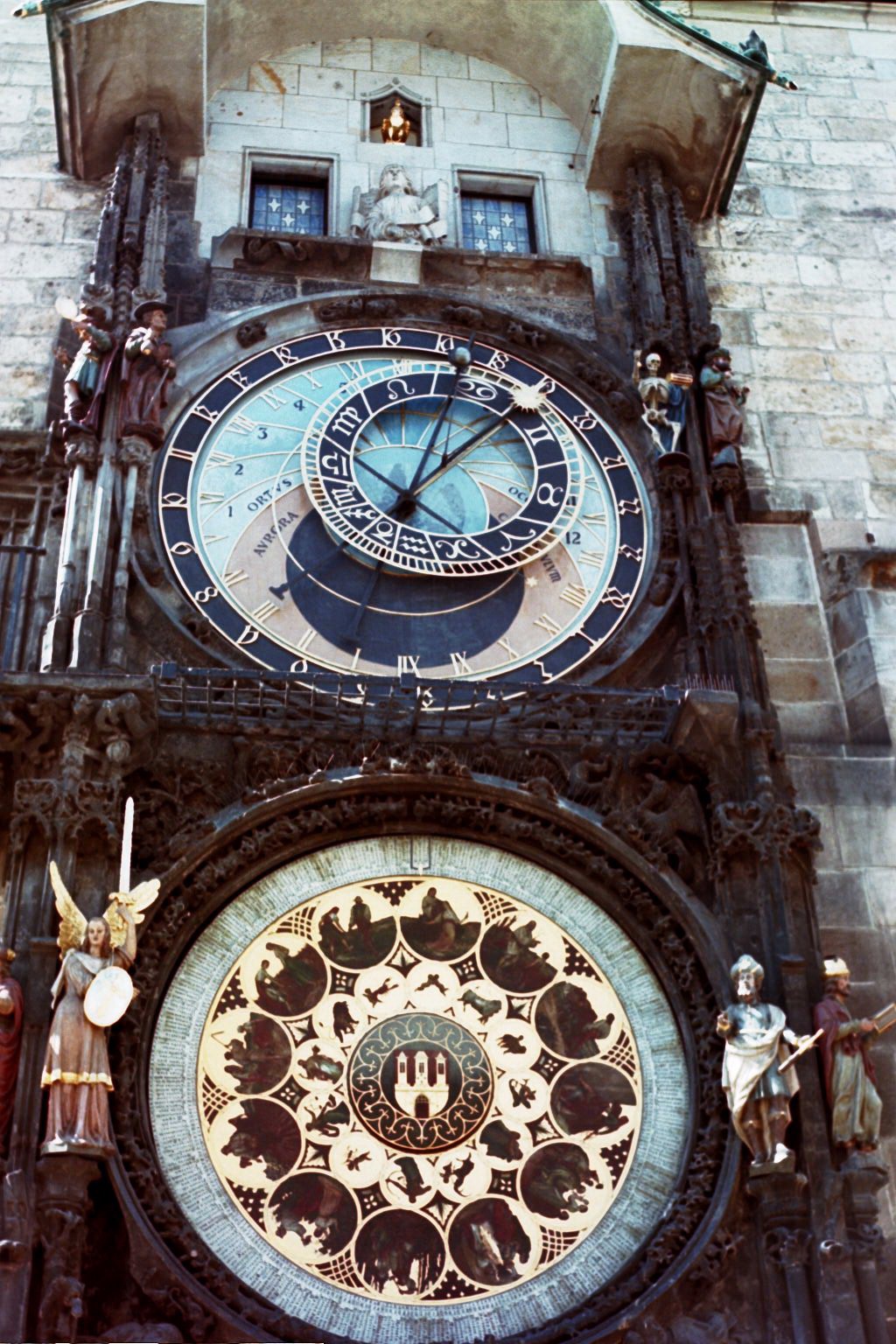
The clock will go slow
If you watch it, you know;
You must work right along and forget it.
So study your best
Till it's time for a rest,
The clock will go fast, if you let it!

“The Friend” by A.A. Milne [w/ Audio]

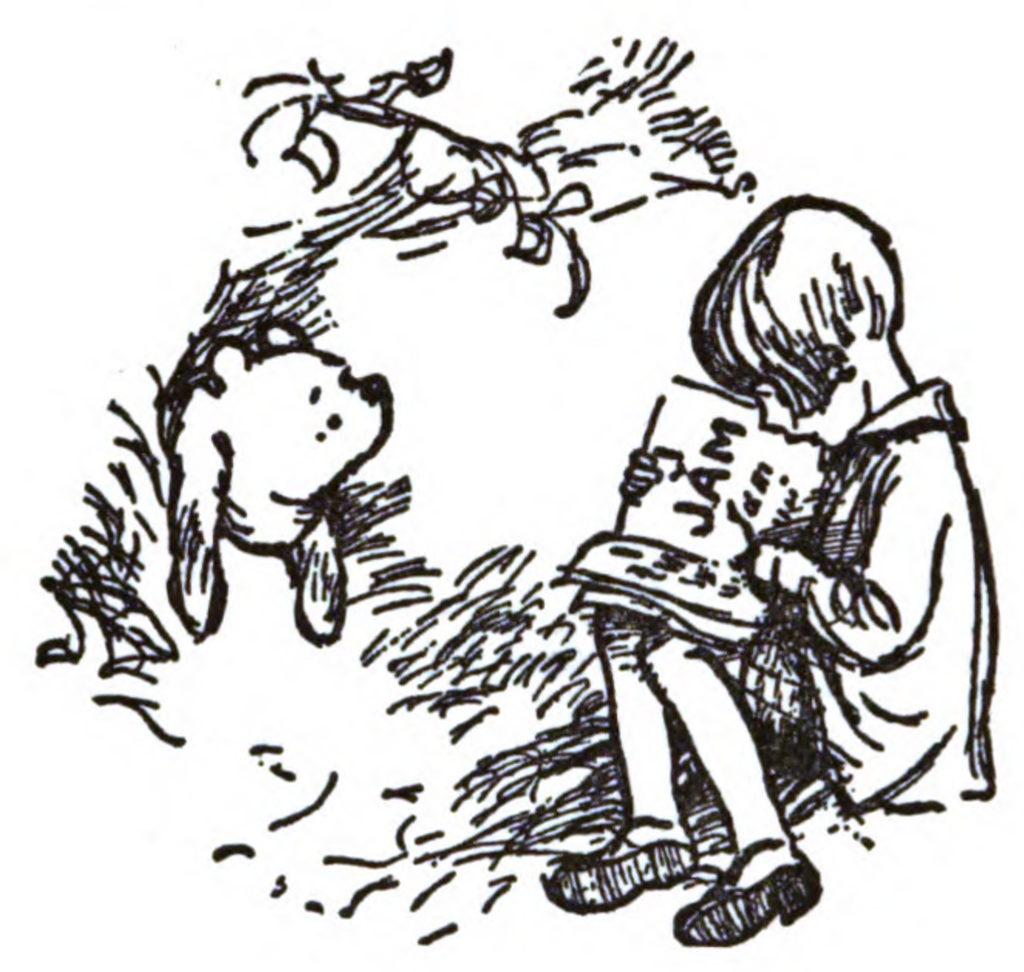
By E.H. Shepard; Public Domain; Source: Wikimedia Commons
There are lots and lots of people who are always asking things,
Like Dates and Pounds-and-ounces and the names of funny Kings,
And the answer's either Sixpence or A Hundred Inches Long,
And I know they'll think me silly if I get the answer wrong.

So Pooh and I go whispering, and Pooh looks very bright,
And says, "Well, I say sixpence, but I don't suppose I'm right,"
And then it doesn't matter what the answer ought to be,
'Cos if he's right, I'm Right, and if he's wrong, it isn't Me.

Tamed (Lyric Poem]

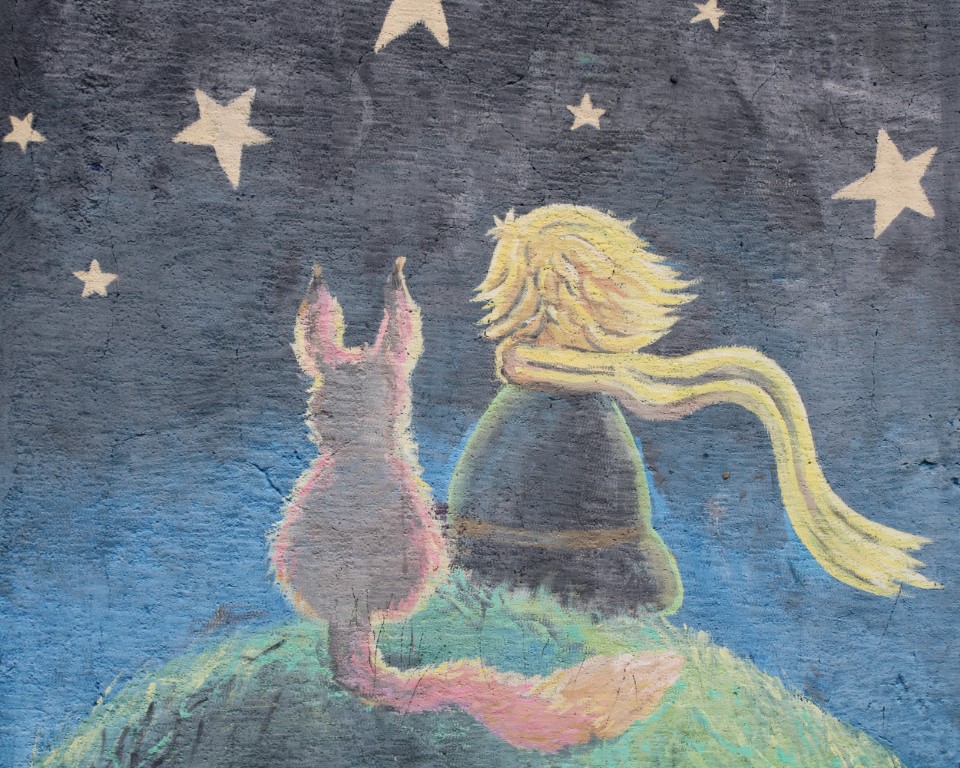
Mural in Mtatsminda Park, Tbilisi
Ah, so nice to be Tamed --
Never again the same.
What style of Wild do you
Think one could retain?

Being tamed would just be aces,
If one could keep some Wild, in traces.

BOOKS: The Crescent Moon by Rabindranath Tagore

The Crescent Moon : Poems and Stories [Paperback] [Jan 01, 2017] Rabindranath TagoreThe Crescent Moon : Poems and Stories [Paperback] [Jan 01, 2017] Rabindranath Tagore by Rabindranath Tagore
My rating: 5 of 5 stars

Available free at Project Gutenberg

Amazon.in Page

This is a collection of forty poems that are all connected by the theme of childhood. Many are in the voice of a child, but others are in a parent’s voice as he contemplates the nature of youth and how life has changed — or simply as he looks upon a sleeping infant. Some are brief stories or vignettes and others are scenes or philosophical reflections. Among the more well-known inclusions are: “Playthings,” “Paper Boats,” “The Gift,” and “My Song.”

This is Tagore at his most playful, but it retains his usual clever musing.

View all my reviews

Jabberwocky by Lewis Carroll [w/ Audio]

'Twas brillig, and the slithy toves
   Did gyre and gimble in the wabe:
 All mimsy were the borogoves,
    And the mome raths outgrabe.

"Beware the Jabberwock, my son!
   The jaws that bite, the claws that catch!
 Beware the Jubjub bird, and shun
    The frumious Bandersnatch!"

He took his vorpal sword in hand:
   Long time the manxome foe he sought --
 So rested he by the Tumtum tree,
    And stood awhile in thought.

And as in uffish thought he stood,
   The Jabberwock, with eyes of flame,
 Came whiffling through the tulgey wood,
    And burbled as it came!

One, two! One, two! And through and through
   The vorpal blade went snicker-snack!
 He left it dead, and with its head
    He went galumphing back.

"And hast thou slain the Jabberwock?
   Come to my arms, my beamish boy!
 O frabjous day! Callooh! Callay!"
    He chortled in his joy. 

'Twas brillig, and the slithy toves
   Did gyre and gimble in the wabe:
All mimsy were the borogoves,
    And the mome raths outgrabe.

BOOK REVIEW: The Storyteller’s Handbook by Elise Hurst

The Storyteller's HandbookThe Storyteller’s Handbook by Elise Hurst
My rating: 5 of 5 stars

Amazon.in Page

Out: June 14, 2022

This is a book, but not one that one reads but rather one that one writes. It contains more than 50 imaginative and fantastical artworks intended to help creative parents build their own stories, while helping their children learn to become storytellers. There is a forward by Neil Gaiman (who has worked with the artist on previous occasions) and an introduction by Hurst, but otherwise there’s almost no text.

The animate subjects of the book are children and animals, but not just any animals. They are mis-sized, misplaced, mythical, imaginary, anthropomorphized, and extinct creatures in search of a clever explanation for their existence and behaviors. The usual suspects of our beloved stories are most well-represented: bears, lions, foxes, rabbits, birds, and fish – for example. But there are also less well-known creatures: mollusks, a mantis, kangaroo, koala, and armadillo. The settings are also designed to fuel the imagination: oceans, hot air balloons, impossibly floating places of all sorts, cities of gothic and fantastical architecture.

If you’re looking for a storybook where you have a graphic prompt to trigger your own story, this is a beautifully illustrated example of such a work.


View all my reviews

BOOK REVIEW: How to Live Like the Little Prince by Stéphane Garnier

How to Live Like the Little Prince: A Grown-Up's Guide to Rediscovering Imagination, Adventure, and AweHow to Live Like the Little Prince: A Grown-Up’s Guide to Rediscovering Imagination, Adventure, and Awe by Stéphane Garnier
My rating: 4 of 5 stars

Amazon.in Page

Out: April 12, 2022

Given my reading of this book, I’m clearly a huge fan of Saint-Exupéry’s “The Little Prince,” and yet I had lukewarm regard for this book and found it a slog to read – despite its short page count and readable style. Don’t get me wrong; the writing is fine and the book raises some interesting points, but still I came away unsure that this book has a reason to exist. Ultimately, I figured out what bothered me is that it’s a little bit like going to hear your favorite comedian and then spending twice as long listening to someone else explain and elaborate upon their jokes. “The Little Prince” is brilliant, but it’s a simple book with a simple theme and simple lessons, and I don’t know what value is added by even a skillfully crafted self-help elaboration upon the book. As far as stars go, I give the book the benefit of the doubt based on the fact [full disclosure] that I almost never like self-help books, and exceptions to that rule only come about if the book can teach me something about which I had no idea or if it is in itself so clever or beautiful of language that I’m moved.

If you liked “The Little Prince” (and, note: you’ll have to have read it for the references in the book to make much sense,) and you like self-help books, this will probably be right up your alley. But if you like “The Little Prince” and aren’t a self-help fan, then just read the original story again.


View all my reviews

BOOK REVIEW: The Adventures of Huckleberry Finn by Mark Twain

The Adventures of Huckleberry FinnThe Adventures of Huckleberry Finn by Mark Twain
My rating: 5 of 5 stars

Amazon.in Page

Whenever someone spouts the platitude, “the original is always better than the sequel,” this is one counter-example that could definitely be shoved in his or her face. That’s not to disparage “The Adventures of Tom Sawyer,” but this book, “The Adventures of Huckleberry Finn,” is the better and more profound story. [Lest you think that’s just my opinion, I think you’d be hard-pressed to find someone who holds a contrary view.]

The book begins with Huck Finn in a comfort zone that has become stifling and boring, but is – basically – a pretty good life. Huck has more money in the bank than he could hope to spend, owing to his past adventures with Tom Sawyer, and he’s being put up by the widow Douglas, a kindly old woman who struggles to make Finn a more genteel and educated variety of boy. While Huck appreciates the widow, he’s becoming antsy and perpetually feels his failings to take to the moral lessons being taught to him. Huck’s internal moral conflict is central to the story, particularly the recurring conflict between what he has been taught is the proper thing to do with respect to runaway slaves, and what he feels is the right thing vis-à-vis his friendship with the escaped slave, Jim.

The trigger that sends Huck into adventure mode from this status quo is the return of his drunken and abusive father, a man who has come to town solely because he heard about the money Huck has sitting in the bank and who wants to get his hands on it to keep himself in booze. Before Huck’s father can get to him and clear out his bank account, Huck sells his stake in the money for a dollar to a prestigious townsman who’s been looking out for him. This draws out the affair, and for a time Huck is living under the thumb of his alcoholic father. When this becomes untenable, Huck fakes his own death and strikes out on the river. On an uninhabited island, he meets up with Jim, a slave who has runaway after hearing that his owner, Miss Watson, has been looking into selling him down the river (literally.)

This leads to Huck and Jim traveling together down the Mississippi River by night (to avoid the risk of Jim being seen and attracting undue attention.) They intend to come to come ashore at Cairo, Illinois being a free state where Jim might have a shot of restarting life. The problems is that running the river at night is dangerous (and sometimes foggy) and it’s easy to miss what one is looking for to stumble into something one doesn’t want. For example, their raft was run into by a steamboat, leading to Huck finding himself washed ashore in the middle of territory where a Hatfield-McCoy style family feud is playing out. And Jim and Huck do “miss their exit” and end up further down river than they would have liked – and that is safe for Jim.

There is an extended period during which a pair of con-men end up traveling with Huck and Jim, putting on shows that are not entertaining, but which they trick people into coming to in large numbers. These two men, who claim to be a Duke and a King, run various cons from town to town, the most extensive (and despicable) one involving making a claim to being the next-of-kin of a deceased man they find out about while traveling. Huck’s moral sensibilities come into play here, as well, as he can no longer tolerate the two men’s con when he sees it will seriously hurt good people. (As opposed to mildly cheating a mixed crowd of the good, the bad, and the ugly.) When one of the men sells out Jim, resulting in the runaway’s capture, Huck goes out to try to free Jim.

In what is the story’s biggest leap, it turns out that the household that has taken possession of Jim are relatives of Tom Sawyer, and they mistake Huck for Tom, who has been due to arrive any day. Of course, Huck doesn’t know who he’s been mistaken for when he arrives, and this creates some comedic gold. When the real Tom arrives, Huck intercepts him and they join together in a scam where Huck continues to be Tom and Tom pretends to be Sid (after pranking his aunt.)

Huck and Tom (“Tom” and “Sid”) take to building a plan to free Jim (despite the fact that Tom knows that Jim was already freed in Miss Watson’s will, when she passed away recently.) The challenge is that Tom insists on going all boy-Don Quixote and developing elaborate plans based on his reading of adventure stories that do not make sense, given the circumstance they face. (i.e. Preparing to extract a knight from the dungeon of a castle, instead of trying to break a man out of a little shack with nothing but a pad-lock and a chain wrapped around the cot leg – such that it could be removed by lifting the corner of the cot up.) This results in Tom gaslighting not only Jim, but also his aunt and uncle, as well as inflicting all sorts of suffering and needless tasks upon Jim. The biggest criticism of the book is probably that this gag goes on way too long, and its comedic value ultimately dwindles as it becomes painful to witness the degree to which it is torturous for Jim and other parties. Huck plays the straight-man, trying to convince Tom to give up on the more ridiculous aspects of his plans, but he fallaciously takes Tom to be his intellectual superior and thus accepts that some things may need to be tolerated. [More than that, he’s steamrolled by Tom’s domineering personality.] It’s an interesting point that Huck is dismayed that Tom is willing to help him free Jim, because Huck thinks Tom should be morally virtuous enough not to help a slave escape (Huck doesn’t know Jim has been freed, only Tom knows that.) Huck has written himself off as an immoral creature, but by any reasonable standard he is the more virtuous of the pair, by far.

It’s worth noting by way of a trigger warning, the book uses the n-word like a million times, and – while the recurring theme revolves around Huck seeing Jim’s humanity through all the indoctrination, he receives to the contrary – the boy nonetheless makes a lot of offensive comments [not to mention those by individuals who are far less evolved on the issue of race.]

This is definitely one of the best specimens of American literature. It has hilarious lines and happenings, shows how exposure to people can help one see humanity where one is being indoctrinated not to, and it has tense moments of adventure. Its dialectic first-person narration doesn’t prevent it from being readable, but makes is more fun to read as well as helps one get into the story and Huck’s character. This is definitely a must read.


View all my reviews