BOOK REVIEW: The Art of Peace by Morihei Ueshiba and John Stevens

The Art of PeaceThe Art of Peace by Morihei Ueshiba

My rating: 5 of 5 stars

Amazon page

The edition of The Art of Peace that I read is divided into three parts. Part I is a brief biography of Morihei Ueshiba, who was known as Ō-sensei to Aikidō practitioners and other admirers. Part II contrasts the art of war to Ueshiba’s art of peace. Part III is a collection of aphorisms and brief statements outlining the art of peace.

Ueshiba is the founder of Aikidō, a martial art that was derived in part from Daitō-ryū Aiki-jūjutsu, but which is distinct from that art in many ways. (e.g. the lack of set forms and emphasis on randori.) Along with Jigorō Kanō, Gichin Funakoshi, and a few others, Ueshiba is one of the pioneers of gendai budō, modern Japanese martial arts that take as their primary aim non-bellicose objectives like sport and self-defense. This is in contrast to the koryū budō (kobudō) which evolved primarily for war fighting. In contrast to Kanō’s Judō, which was first and foremost a competitive sport, Ueshiba’s Aikidō offered a particular approach to self-defense that was purely defensive and in which movement was harmonized to the opponent’s actions so as to perpetrate the least violence possible.

The biographic portion of the book is intriguing, but on a few occasions drifts from biography to hagiography. I feel that the suggestion of supernatural abilities does a disservice in the telling of Ueshiba’s story. By all accounts, Ueshiba was an accomplished and highly skilled martial artist, and I would like to read a full biography of his life (a biography exists, but I can’t comment on how well written it is yet.) Given Ueshiba’s pacifistic views, it would be easy to dismiss him as a pie-in-the-sky idealist who had no idea of the realities of the world. I don’t believe that is the case. However, when the biography tells stories of god-like superpowers, it makes it hard to take the man seriously as a martial artist. Either Ueshiba was skilled as an illusionist / mentalist (a distinct possibility) or some of the stories were embellished to deify the man. The story that comes to mind is one in which Ueshiba voluntarily faced a firing squad and emerged unharmed due to either ninja-like or Hollywood vampire movie style actions. This story is attributed to one of his students, Gozo Shioda, who passed away in the 1990’s.

We may get an indication of the roots of this appeal to the supernatural in an early statement about Ueshiba’s childhood fascination with individuals like En no Gyoja and Kukai who are themselves attributed supernatural abilities in stories. Ueshiba is clearly a man of faith. He suggests life should be lived on basis of 70 percent faith and 30 percent science. Full disclosure: I’m more skeptical than Descartes, and obviously favor an outlook more firmly rooted in science and rationality.

Part two includes extensive quotes from Ueshiba himself. It contrasts the arts of war with Aikidō in mental and physical aspects. A core theme of the book is that the martial arts shouldn’t be about learning to die, but rather learning to live. Ueshiba criticizes the past Shoguns who used the art of war to control people. Ueshiba’s views on the purpose of martial arts are stated in this part. From a physical point of view, Ueshiba emphasizes the lack of forms in Aikidō (Bruce Lee echoed similar sentiments on this subject.) There is an interesting comparison of Ueshiba to swordsman and Zen master Tesshu Yamaoka (about whom John Stevens also wrote a biography.)

Part three reads like the work of an ancient yogi in places, and, in other places, offers the stern admonitions to train hard that one would expect from a martial arts teacher. A recurring theme is that the martial artist should purge himself of pettiness, be it in the form of being judgmental, materialistic, fearful, selfish, or malicious. He goes as far as to say, “Be grateful even for hardship, setbacks, and bad people.”

Another theme is that one should strive to be natural and to make one’s movement natural. Ueshiba’s advice in this book is about virtue and the mind, and rarely strays into the subject of physical tactics. It does offer a little advice about types of distancing, where one should place one’s gaze, the power of circular movement, as well as discussing technique in the abstract. This is not a criticism. There are other books to learn more about physical technique. However, one should be aware that if one would like to know what Aikidō looks like, this isn’t the book for you.

This thin book provided me with a great deal to think about. I’d recommend it for martial artists, as well as for those interested in the life of this extraordinary man.

View all my reviews

BOOK REVIEW: Inside the Lion’s Den by Ken Shamrock

Inside the Lion's Den: The Life and Submission Fighting System of Ken ShamrockInside the Lion’s Den: The Life and Submission Fighting System of Ken Shamrock by Ken Shamrock

My rating: 4 of 5 stars

Amazon page

Inside the Lion’s Den is two (thin) books in one. The first, and longer, part is an autobiography of MMA fighter Ken Shamrock, and the latter part is a guide to his approach to submission fighting.

The first fifteen chapters form the biographical portion of the book. As is common in the modern biography, it doesn’t follow a chronological format. It begins at the height of Shamrock’s UFC career in the mid-1990s and introduces Shamrock and the Lion’s Den (his dōjō in California.) The book does, however, go back in chapter 3 and pick up with Shamrock’s childhood, beginning in 1969 in Savannah, Georgia. Shamrock had a suitably turbulent childhood to merit inclusion in the book. He lived with an abusive father and then a step-father unprepared for such a handful as Shamrock, before he ended up at the ranch of Bob Shamrock who would eventually become his adoptive parent and an important member of his entourage. Ken Shamrock had a raucous and—as is constantly repeated—rage-filled youth.

As might be expected of the biography of a fighter, one trained to psych himself up and psyche opponents out, the book can read a bit narcissistic in spots. Having said that, a fair amount of space in the biographical portion is devoted to topics beyond Shamrock’s fight career. There’s some space devoted to the development of UFC, but even more devoted to Shamrock’s fighters. There’s a chapter that follows a day of tryouts to get a slot as a Lion’s Den fighter. It’s entitled “500 Squats,” reflecting the fact that individuals must first do an insane number of squats as the first round of elimination during the tryouts. Later they’ll have to engage in sparring/rolling with legs burned out as an indicator of how the individual can gut it out. The book offers insight into how an individual goes about breaking into a career in Mixed Martial Arts.

An important theme of the biographical portion of the book is how Shamrock becomes less rage-prone and grows into an adult. This is both the result of the practice of martial arts and his familial relationships–most notably his spousal relationship. This is the human interest part of the story that centers around the man’s most prominent UFC accomplishments.

Perhaps the most important question one can ask about an autobiographical account is whether it’s accurate or not. There’s obviously an incentive to paint oneself in a more favorable light than an objective account might. There’s a professional co-writer of this book, Richard Hanner. One might expect that a professional journalist co-author would lend credulity to the work as that individual has a professional interest–based on reputation–in making sure the details are accurate. Whether Hanner’s presence lends credibility is hard for me to judge (he’s not a national name), but the work does read authentically. Shamrock, unlike politicians, admits many mistakes over the course of his life, and lets the reader know what his takeaway lessons were. Of course, as a public personality, there’s a lot that he couldn’t be duplicitous about if he wanted to, e.g. his fight record and details in the ring.

The last nine chapters are Shamrock’s guide to his submission fighting method. He covers a lot of ground from nutrition to advice for the day of a professional fight. Martial artists will not find a lot of groundbreaking information in this section, but rather will have to dig for nuggets of wisdom in the details. The submission techniques will be well-known to practitioners of judō, jujutsu, and submission fighting. The “crucifix” was the only technique I hadn’t seen before, and for all I know that one may be well-known to Greco-Roman / Pankration wrestlers. The photographs in this section are helpful in communicating Shamrock’s message, but are relatively sparse and small-format compared to the typical martial arts manual.

I enjoyed this book. Shamrock came across as an intriguing multi-dimensional character, and the manual offers a good overview and some important tips on subjects including nutrition, fitness, striking, grappling, and submissions.

View all my reviews

BOOK REVIEW: Travels in Siam, Cambodia, Laos, and Annam by Henri Mouhot

Travels In Siam, Cambodia, Laos, And AnnamTravels In Siam, Cambodia, Laos, And Annam by Henri Mouhot

My rating: 3 of 5 stars

Amazon page

If you can stomach the blatant racism and false notions of the virtue of Imperialism, reading the journals of 19th century naturalists and explorers can be fascinating for modern-day travelers. I will say that Mouhot’s work is less offensive than many of his contemporaries in this regard (e.g. the eugenicist polymath Francis Galton.) That is to say, he tries to be objective, and—when he fails–his condescension is as likely to be vaguely complimentary as not (e.g. noting certain “savages” are surprisingly intelligent.) However, one should remember that this is the journal of a journey that took place in years corresponding to the lead up to the American Civil War. (I should note that these snooty inclinations toward superiority aren’t uniquely Western, the Chinese diplomat Zhou Daguan also viewed the Southeast Asian people with condescension.)

Alexander Henri Mouhot left London on April 27th of 1858, traveled to and throughout Southeast Asia, and died in the jungle on November 10, 1861. The journal was received by the explorer’s brother, Charles Mouhot, who is responsible for seeing it published, and for adding some front matter as well as tying up the end of the journal because Henri Mouhot died fairly abruptly of a feverish ailment that he contracted in the jungle.

In many ways, Mouhot’s work is similar to Daguan’s 14th century Record of Cambodia. Mouhot covers a lot more ground, but they both chronicle the natural, cultural, and commercial environment of these lands. Mouhot prides himself in being a naturalist, and he writes quite a bit about the diverse flora and fauna of these lands as well as of the geography. Mouhot collected many specimens of plants and animals that were unknown in his native France. About mid journey, he lost his collection to a maritime accident. However, he was able to reacquire some of these specimens in the latter portion of his journey.

Mouhot writes extensively about the locals and their customs. As I already suggested, these descriptions are often highly biased. For example, he tends to refer to the indigenous spiritual beliefs of the locals as “superstitions” while he bemoans the fact that these people are “living and dying in utter ignorance of the only true God!” However, for the most part he tries to maintain a scholarly detachment, and often he is complimentary of the local people (e.g. his apparent surprise that some of hill people would be offended by being referred to as savages is an example of his benign condescension.)

Also like Daguan, he discusses the possibilities for trade. It’s clear that one of his intended audiences are those interested in the commercial potential of the region. He writes both about what natural resources these nations contain, and what products they might be sold. He is ambiguous about the local market for European goods, first skeptical and then sanguine. He says that the locals don’t have much need for the goods produced in Europe, but then he suggests that the wealthier individuals do like to emulate European style and fashions. Perhaps, he is saying there are potential consumers among the small slice of wealthy individuals, but that is a limited market. Of course, the desire for commodities from Asia in conjunction with the wish to avoid drawing down precious metals reserves (i.e. forcing Asians to buy Western products) was no small cause of Imperialist shenanigans during that time period.

Among the most interesting chapters are those on Angkor Wat and Angkor Thom. In these chapters, one receives an account of the state of Angkor between Daguan’s era (when the Angkor civilization was still active) and a modern-day Angkor that exists in the wake of successive waves of pillaging by the French (and other treasure hunters), the Khmer Rouge, and Vietnamese soldiers.

Mouhot was also interested in whether Jews had settled and integrated in the area. His theory was that there likely were. He says he sees a “Hebrew character” in some faces, but he acknowledges there is no hard evidence to support his belief and that the locals deny such a presence.

I guess the intrigue in Mouhot’s journal is a picture of this region during an era in which the world was not yet homogenized. Now when one travels to “remote villages,” one often sees people wearing the same mass-produced Western clothing that one sees at home, and they sit around with their smart-phones ignoring each other as at home. Mouhot’s era was one in which one traveled by elephant, boat, or by foot and often advanced no more than ten miles in a day in the jungle. It was an era of discovery. This may account for some of the xenophobic biases of that time; the ways of other people were new.

View all my reviews

BOOK REVIEW: A History of the World in 6 Glasses by Tom Standage

A History of the World in 6 GlassesA History of the World in 6 Glasses by Tom Standage
My rating: 4 of 5 stars

Amazon page

Get Speechify to make any book an audiobook

Standage’s book takes a fascinating look at the effect that six key beverages had in the unfolding of world events, as well as how the beverages themselves made friends and enemies. The drinks in question are beer, wine, spirits, coffee, tea, and cola. There are two chapters for each of these drinks. They follow a chronological order based upon when the respective drink rose to prominence, but within the discussion there is overlap of time periods. For example, both the chapters on spirits and tea consider the effect of those beverages on the American Revolution (i.e. the Whiskey Rebellion and the Boston Tea Party, respectively.)

As the author points out, there’s a natural subdivision to the book, which is that the first three beverages are alcoholic and the last three are caffeinated. There’s another way of looking at it, and that’s the means used to achieve a drink that wasn’t a health hazard. The first three drinks achieve germ-killing by fermentation, the next two by boiling, and the last through technology.

The era of beer is associated with the Agricultural Revolution and the growing importance of cereal grains. Geographically, the region of focus is the Fertile Crescent and Egypt. Among the more interesting points of discussion is the role of beer (along with the related commodities of cereal grains and bread) in the development of written language.

The era of wine is associated with the civilizations of ancient Greece and Rome. Readers of the classics will be aware that wine was much celebrated among the Greeks and Romans, so much so that they developed gods of wine in their mythologies (Dionysus and Bacchus, respectively.) Of course, wine played no small role in Christian mythology as well–e.g. Jesus turns water to wine.

Spirits are related to the Colonial period, though they were first developed much earlier. The author emphasizes that these were the first global drinks. While beer and wine were robust to going bad, they could spoil in the course of long sea voyages.

Alcohol of all kinds has always attracted opposition. This conflict, of course, owes to the fact that people under the influence of alcohol frequently act like idiots. One might expect that the transition to discussion of non-alcoholic beverages would correspond to the end of controversy, but that’s not the case. Each of the beverages brought controversy in its wake. There were attempts to ban coffee in the Islamic world where its stimulative effect was conflated with intoxication. Coca-Cola became associated with capitalism and American influence, and drew its own opposition because of it. It seems there’s no escape from controversy for a good beverage.

The most fascinating discussion of coffee had to do with the role of cafés as corollaries to the internet. Centuries before computers or the internet as we know it, people went to cafés to find out stock values and commodity prices, to discuss scholarly ideas, and to find out which ships had come and gone from port.

The role of tea in world history is readily apparent. Besides the aforementioned Boston Tea Party, there were the Opium Wars. This conflict resulted from the fact that the British were racking up a huge tea bill, but the Chinese had minimal wants for European goods. Because the British (through the East India Company) didn’t want to draw down gold and silver reserves, they came up with an elaborate plan to sell prohibited opium in China in order to earn funds to pay their tea bill. Ultimately, Britain’s tea addiction led to the growing of tea in India to make an end-run around the volatile relations with China.

The book lays out the history of Coca-Cola’s development before getting into its profound effect on international affairs. A large part of this history deals with the Cold War years. While Coca-Cola was developed in the late 19th century, it was really the latter half of the 20th century when Coke spread around the world—traveling at first with US troops. The most interesting thing that I learned was that General Zhukov (a major Soviet figure in the winning of World War II) convinced the US Government to get Coca-Cola incorporated to make him some clear Coca-Cola so that he could enjoy the beverage without the heart-burn of being seen as publicly supporting an American entity (i.e. it would look like he was drinking his vodka, like a good Russian should.) General Zhukov was perhaps the only person to stand in opposition to Stalin and live (the General was just too much of a national hero to screw with.)

There’s also an interesting story about how the cola wars played out in the Middle East. Both Coke and Pepsi wanting access to the large Arab market, and were willing to forego the small Israeli market to pave the way for that access. When Coke finally had to relent due to public outrage and accusations of anti-Semitic behavior, Pepsi slid in and followed Coca-Cola’s policy of snubbing Israel in favor of the Arab world.

I enjoyed this book, and think that any history buff will as well. One doesn’t have to have a particular interest in food and beverage history to be intrigued by stories contained in this book.

View all my reviews

BOOK REVIEW: 98.6 by Cody Lundin

98.6 Degrees: The Art of Keeping Your Ass Alive98.6 Degrees: The Art of Keeping Your Ass Alive by Cody Lundin

My rating: 4 of 5 stars

Amazon page

If you’ve seen the Discovery Channel show Dual Survival, you’re familiar with Cody Lundin. He’s the one who looks like a hippie and is always barefoot. 98.6 is a book designed to prepare readers for a wilderness survival situation. To be clear, this book isn’t about going out for a six-week trek. It’s about going out for a day hike and finding your foot stuck in a bear trap or having your jeep washed away in flashflood. It’s about how to stay alive for as much as a few days while search and rescue teams are looking for you (and how to make sure they do look for you.)

As the title suggests, Lundin focuses on the issue of maintaining the body’s core temperature as the key to short-term survival, and special attention is given to the subjects of hypo- and hyperthermia. Besides dressing appropriately, maintaining core temperature involves requirements such as hydration that may not seem relevant at first blush. The heart of the message is that one has to plan for the worst even on apparently mundane treks or drives into the backwoods. Lundin hammers home the importance of letting others know where one is going and by when one will return. However, the bulk of the space is devoted to suggestions about what to pack in your survival kit.

Lundin takes a light-hearted tone while talking about the dire nature of survival in the wild. Many of the graphics are quirky, caricaturesque line drawings (there are also photos–mostly towards the rear of the book in the discussion of gear and kits.) His writing style is conversational—which is to say that he writes like he talks. While this may induce rage in English teachers, I find it’s only problematic if it leads to misunderstandings. (i.e. In conversation there are fewer opportunities for misunderstanding because there is non-verbal communication and the potential for feedback.) Having said that, I can’t recall any cases in which meaning was unclear, so either Lundin is conscientious about this issue, or his editor did a good job of maintaining his style without losing clarity. The conversational tone involves a lot of analogies and metaphors that are sometimes humorous but sometimes over-the-top.

Lundin’s advice runs toward the pragmatic and the frugal. Survival gadgetry and gear is a huge industry, and Lundin’s guide helps a budget-weary amateur outdoorsman know where it’s worth spending a little extra and where it’s likely to be a waste of money. (In some cases, spending more money will leave one worse off in more areas than the pocket-book.)

Despite his folksy tone, it’s clear that Lundin is no stranger to science. One thing that one will get in his guide that’s uncommon in others is scientific explanations–in lay terms–of why some methods or equipment will or won’t work. This ranges from the physics of space blankets to the psychology of fear to the chemistry of nutrition.

Another strength of this guide is that it gives due attention to the crucial nature of the mind in survival. There are a few early chapters devoted to this. Many guides might give a paragraph to the subject before plowing into survival methods. The problem is that some people may die overwhelmed and unable to keep all that knowledge straight. Tips about keeping one’s head seem worth the space.

In addition to the use of humor and anecdotes, there is a clear attempt to make the information memorable. Lundin uses mnemonic devices to help people ingrain information, and frequently recaps important points. He also has a “Cliff Notes” version at the back of the book that condenses his message down into a few pages.

If you like to spend time outdoors, I’d recommend you pick up this book. Of course, reading a book is not going to keep you alive, you have to practice with the gear you assemble, but the book is an important first step.

View all my reviews

BOOK REVIEW: Flow by Mihaly Csikszentmihalyi

Flow: The Psychology of Optimal ExperienceFlow: The Psychology of Optimal Experience by Mihaly Csikszentmihalyi

My rating: 4 of 5 stars

Amazon page

Recently, I read and reviewed Steven Kotler’s The Rise of Superman, which is about how extreme athletes use a mental state called “the flow” to pull off some miraculous feats (e.g. “hanging righteous air” to use an appropriate term of art.) That book got me intrigued about the flow, and wanting to learn more. The logical next read was the book by the man considered the godfather of flow, the man who coined the term, Mihaly Csikszentmihalyi. Csikszentmihalyi is a Professor of Psychology at the Claremont Graduate University and formerly of the University of Chicago.

A Note on Editions: The book I read is the 2013 edition of a book that was first published in 1990. The two editions have different subtitles. The 1990 edition was entitled Flow: The Psychology of Optimal Experience and the 2013 edition is Flow: The Psychology of Happiness. It’s not hard to imagine what happened. The 1990 version was titled to appeal to scholars, and the former title both has more syllables and suggests that one might be able to use LaGrangian Methods (the calculus of constrained optimization) to maximize bliss—which would be double bliss for an academic. As Csikszentmihalyi’s work attracted widespread attention, there was a need for a title that didn’t sound painfully dull. To be fair, the word “happiness” has gained some purchase in scholarly literature in recent years, but in 1990 saying one was studying “happiness” would be akin to saying one would study the “cuddliness quotient” of kittens (actually the latter, having the word “quotient” in it, would test better with department chairs and funders.)

Flow is a state in which one’s entire mind and body is devoted to overcoming a challenge that is intrinsically rewarding. There’s a lot packed into that definition. First, the task must be difficult but within the skill-level of the individual. If it’s too easy, it’s too boring for flow. If it’s far too challenging relative to one’s skill, it may become frustrating before one can build enough skill to achieve it. Flow states can be achieved via many different kinds of tasks, and the middle chapters of the book are devoted to different types of flow-inducing events. Chapters 5 through 8 address, respectively: physical activities like yoga and the martial arts, mental activities like poetry, word play, and chess, work activities, and solitude and social activities.

Second, tasks must usually be autotelic, or intrinsically rewarding. If the only reason that one is doing an activity is for a paycheck, to stave off nagging, or to attract attention, one will be unlikely to find the flow. That doesn’t mean that one can’t receive external rewards, but the activity has to have something intrinsic that keeps one at it. Csikszentmihalyi’s approach was to interview people to access how happy they were, and what activities allowed them to achieve said happiness. He shares many anecdotes about individuals who were blissful, including people who derived happiness from work activities such as factory work, work that most people would find unpleasant and only tolerable to earn a living. Of course, these happy individuals didn’t just do the job in the manner of the poor schlubs who hated their work-life. Instead, they found ways to make the work challenging and, in doing so, they often made themselves indispensable and gained not only job security but also the respect and admiration of others. What is key is that one’s mindset determines all of this, and the book focuses on the notion of controlling one’s inner life to achieve happiness via the flow.

Third, flow is not achieved in a distracted state; all of one’s being has to be surrendered to the act at hand. Multi-tasking is not conducive to the flow.

The ability to override one’s evolutionarily-programmed instincts is key to being able to obtain a flow state. One must be able to stay on task and devote one’s consciousness to the action at hand. This is the central theme in chapter 2, entitled “The Anatomy of Consciousness.” The book also speaks to a subject that I’m currently interested in, which is how states of mind and body that have been known since ancient times, but whose mechanism of action weren’t well-understood, are explained in the world of modern science. Csikszentmihalyi refers to yogis and Taoist masters as he describes the flow. Flow state isn’t new; it’s just newly put in the context of science, rather than mythology.

I enjoyed this book and found the chapter on the flow in movement and bodily activities particularly educational. Csikszentmihalyi has written a few related books on creativity and the flow applied specifically to sport. I would like to learn more about the neuro-anatomy and neurochemistry of the flow, as this book doesn’t delve into the hard science of the flow, and much of this science has occurred since the time this book was first published anyway.

View all my reviews

BOOK REVIEW: Yoga Sutras by Patanjali [Trans. Charles Johnston]

Yoga Sutras of PatanjaliYoga Sutras of Patanjali by Charles Johnston

My rating: 4 of 5 stars

Amazon page

There are about a billion editions of Patanjali’s The Yoga Sutras. The one I got was a free or very cheap on Kindle, and is, therefore, probably not the best edition. I don’t know that the Kindle version I got still exists because it included a supplemental essay by Swami Vivekananda that the version I linked to on Amazon doesn’t. However, the translation is the same, and is by Charles Johnston.

For many old works, the edition might not matter too much, but for Patanjali’s Sutras it matters a great deal. First, there’s the issue of the quality of the translation. Beyond that, however, is the question of the analysis. The Yoga Sutras are extremely brief, consisting of only 196 aphorisms. Owing to the terse brevity of the Sanskrit language, many of these aphorisms are only a few words long. That means that there isn’t a high degree of precision in the language of the Sutras, and, consequently, there’s a great deal of room for misunderstanding and misinterpretation. It’s for good reason, therefore, that most editions are 90% or greater commentary on Patanjali’s words.

The Sutras are typically divided into 4 chapters (this convention apparently came well after Patanjali wrote them.) The first section lays out the objective of yoga. The central notion is the need for Chitta Vrtta Nirodha, which basically means to transcend the fluctuations of the mind. Patanjali’s point is that the problem faced by mankind is that people’s minds are run amok. There is a need for some system to facilitate correction of all this monkey-mindedness. That’s where Chapter 2 comes in.

The second chapter lays down an outline of Ashtanga Yoga, which is the eight-fold path of Raja Yoga (i.e. Royal Yoga). While modern-day people tend to think of yoga only as pretzel-like physical postures, that’s just one of the eight limbs of yoga. The eight limbs are: commandments (yama), rules (niyama), postures (asana), control of breath (pranayama), withdrawal of the senses (pratyahara), concentration (dhanara), meditation (dhyana), and liberation (samadhi.)

It’s interesting to note that the limb that many think of as yoga, i.e. the postures, is one of the most briefly covered. Most famously, Patanjali says in Ch.2, Sutra #46, “Sukham Sthiram Asanam” (i.e. postures should be stable and effortless.) The massive body of asana that developed in Hatha Yoga were initially just a means to give one the ability to sit still for a long periods of time comfortably enough to get one’s mind in order.

The third chapter talks a little bit about the last three of the eight limbs (i.e. concentration, meditation, and liberation.) However, the bulk of this chapter is devoted to the supposed magic powers that yogis claimed to have had as a result of their work on improving their minds. For skeptics and scientifically-minded individuals (e.g. yours truly), this is where the Sutras take a silly turn. The translation in question came out in 1912, and it’s clear that rationalism was already gaining hold and magic was getting to be a harder sell. I suspect that was the reason for the inclusion of Swami Vivekananda’s essay entitled “The Powers of the Mind”—to capitalize on the gravitas of the renowned yogi to convince people that chapter 3 isn’t bunk.

The fourth chapter wraps up the book neatly–discussing karma and the liberation of the karmic cycle achieved through the state of higher consciousness called samadhi.

If one has more than a superficial interest in yoga, it’s pretty much obligatory to read some edition of Patanjali’s The Yoga Sutras. I didn’t find this edition to be devastatingly poor, but there seems to be a consensus among reviewers that it’s not among the best translations / commentaries.

I would recommend that one read some version of these sutras, be it BKS Iyengar’s Light on the Yoga Sutras of Patanjali, Swami Vivekananda’s edition, or Swami Satchidananda’s version. I don’t have any experience with these other editions, though I have read works by BKS Iyengar and Swami Vivekananda, and found works by both to be well-written and clear. Notwithstanding the parts about magical superpowers, the book does provide a lot of food for thought, and in nice bite-sized pieces.

View all my reviews

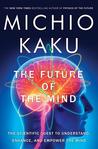
BOOK REVIEW: The Future of the Mind by Michio Kaku

The Future of the Mind: The Scientific Quest to Understand, Enhance, and Empower the MindThe Future of the Mind: The Scientific Quest to Understand, Enhance, and Empower the Mind

by Michio Kaku

My rating: 4 of 5 stars Amazon page

The Future of the Mind continues a line of inquiry that Michio Kaku has been following with his earlier books Physics of the Impossible and Physics of the Future. The central question remains: what sci-fi imaginings might come to fruition, which of them are impossible given the laws of physics in the known universe, and what breakthroughs or discoveries would be necessary to achieve the achievable. Technology is the inevitable gateway to these advanced breakthroughs. Humanity has eliminated gross evolutionary pressures through technology—this might not remain true, but we can certainly not expect X-men style mutations as a result of the foreseeable progression of humanity (which is more likely to be described by the horrible—though probably presagious 2006 movie Idiocracy than it is by the X-men movies.)

The theme of the book, as the title suggests, is the mind. As the most complex system that we know of, the human nervous system offers fertile ground for investigation. Among the sci-fi mainstays considered by Dr. Kaku are telepathy, telekinesis, false memories (think Total Recall), intelligence enhancement, mind control, artificial intelligence, and the nature of alien minds. Along the way he considers the challenges of reverse engineering the brain and whether consciousness could take a non-material form (e.g. embedded in a beam of light.)

As always, Kaku’s book is easy to follow, even for the scientific neophyte. Few others write on the topic with such clarity. While part of Kaku’s book deals with the same concepts covered by Roger Penrose in his book Shadows of the Mind, the Kaku book scores much higher in readability. Of course, the flipside is that Kaku’s book offers less explanatory power. So if one isn’t looking for pop science simplification, The Future of the Mind is probably not for you. However, if you want the jist of the science and have neither the background nor the energy to digest the mathematical and biological nuance, you’ll find this book readable.

Incidentally, Kaku is more optimistic about the ability to computationally replicate consciousness than Penrose, which the latter argues is impossible. Professor Kaku’s optimism runs through all of his books. He takes the stance that if one can imagine it–and figure out a technological or theoretical loophole around the known barriers –one can achieve it. Therefore, some of his discussion of what could come to pass depends upon theories about, for example, black-holes being true. It should be noted that Kaku is quite clear about the differences of opinion that exist about these theories and the role that differences between theory and reality could play in making science fiction into scientific reality.

I enjoyed this book. I’ve been reading a lot about neuroscience lately—entirely on the pop science level- and found this book to be beneficial to my understanding of the subject. It begins by discussing what is known about the brain and consciousness—it turns out that a lot remains unknown, but the technology of recent years has vastly improved our understanding of the brain, and it continues to do so by the day. The book also delves into the depths of what could come to be. There is definitely pragmatic understanding to be gained as well as outlandish, but fun, science fiction ruminations.

For sci-fi fans and writers, it’s definitely worth reading. I had many new conceptions of the future as I read the book. (I might suggest reading Physics of the Impossible first, which gives an overview many “impossible” technologies and explains how few are just flat impossible regardless of technological development and scientific discovery. My review of that book is here.) Many of the ideas covered may seem a bit eccentric, such as what first contact with an alien race would look like. (Kaku is of the notion that the transmission of an immaterial consciousness(es), possibly in conjunction with self-replicating machines would be the likely shape of such an alien presence.)

I recommend this book for almost anyone. We are really only beginning to venture out of the dark ages understanding the mind, and this book provides an interesting map what might be possible.

As I mentioned it, sadly, this may be the more likely future of the human mind:

View all my reviews

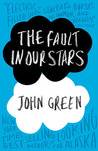
BOOK REVIEW: The Fault in Our Stars by John Green

The Fault in Our StarsThe Fault in Our Stars by John Green

My rating: 5 of 5 stars

Amazon page

The title of this novel about the doomed love affair of two cancer-riddled teens says a great deal, and—while lifted from Shakespeare–it’s well-chosen. The lead character is a sixteen-year-old girl named Hazel who has lungs that, as she puts it, “suck at being lungs.” She meets a boy, Augustus, at support group who is in remission, but who had a leg amputated in the process of achieving his momentary cancer-free status. Hazel takes an immediate liking to the handsome and charismatic Augustus (i.e. “Gus”), but remains standoffish because she is–to use her own words–“a grenade.” Meaning that she is going to die young, leaving her loved ones devastated. She has enough guilt about the fact that she will do this to her parents, but is unwilling to subject Gus to the same fate. Augustus, however, is an ardent and skillful wooer and eventually wears Hazel down with his winning ways and selfless acts.

This isn’t a typical read for me by a long shot. It’s written in the language of YA fiction, and it’s brutally depressing in places. Neither of the aforementioned characteristics usually draw me in. However, despite its sad subject matter, the book has a sense of humor that is essential to keep the story from crushing one’s will to continue reading. Of course, the fact that all the major young characters are dying is a cloud ever-present throughout the book. I will say it’s the most viscerally emotional novel I’ve read in some time. The only books this depressing that I’ve read recently were nonfiction works on Pol Pot era Cambodia and the Holocaust.

The strength of the book is its characters. They may be atypically intelligent, clever, and well-spoken teens, but they are intriguing, likable, and well-developed characters. Besides Hazel and Gus, there is a secondary character named Isaac who has a form of cancer that isn’t highly lethal but which does claim his eyes. Hazel and Gus are in one way polar opposites. Gus, the former star athlete, is ever concerned about his legacy, but the less ambitious Hazel believes that everyone fades into oblivion rapidly. These divergent perspectives of similarly doomed youths give one insight into the varied approaches to experiencing one’s mortality.

Another intriguing character is Peter Van Houten, a one-time American writer living in Amsterdam and the heir to a fortune off which he lives as a professional drunk. Van Houten wrote a single book about a person who dies young, which turns out to be based on his own child and is Hazel’s favorite book. Gus reads the book to please Hazel, but becomes genuinely intrigued with its ambiguous ending. Van Houten is an unpleasant character, but his book is a focal point of the storyline. The couple takes a trip to Amsterdam to try to get answers about the novel’s abrupt ending, and this experience proves to be the pivotal point in their relationship. Van Houten–jackass as he may be–does end up passing on some useful wisdom to Hazel and Gus.

I rate this book highly for being readable, captivating, and gripping. I would recommend it for those who don’t usually read YA, though the language and focus is decidedly geared toward a YA audience.

It should be noted that the film adaptation will come out this summer. For some reason they filmed it in Pittsburgh instead of the story’s real setting—and my one-time home—Indianapolis, Indiana. I’ll try not to hold this against it, too much.

View all my reviews

BOOK REVIEW: The Tao of Bruce Lee by Davis Miller

The Tao of Bruce Lee: A Martial Arts MemoirThe Tao of Bruce Lee: A Martial Arts Memoir by Davis Miller

My rating: 3 of 5 stars

Amazon page

While one expects this to be a biography of Bruce Lee, the first half of it is much more an autobiography of the author that is loosely themed around Bruce Lee’s influence on his life. It’s an unusual book in this regard. However, while my description may induce visions of a dismal read by a self-absorbed author, it’s really not so bad. The latter half of the book is much more tightly focused on the events of Bruce Lee’s life—or, more dramatically, his death.

To be fair, there’s not much material for a Bruce Lee biography. Few lights have shone so bright that, while brief, they provided decades of afterglow. Bruce Lee was just in the news last week as he was made a character in a new MMA video game—over 40 years after his death. (It might seem odd for Bruce Lee to be featured in an MMA game, but while movie Bruce Lee showed us high-flying, high-kicking kung fu, Bruce Lee the founder of Jeet Kune Do emphasized the ability to fight at all ranges, against opponents of any style, and in a pragmatic fashion.) But Bruce Lee the movie star delivered only four completed movies as an adult (though he had a childhood acting career unrelated to Kung fu.) Martial Artist Bruce had only one real fight that anyone knows about and even it remains a subject of great controversy to this day. There are competing claims about who came out on top, to what degree, and how. According to the book, there’s not even much of a sparring record of which to speak.

With the proceeding information in mind, it might not be such a surprise that the author took the tack he did and still produced only the slim volume that he did. Miller’s description of his own life pulls no punches and he spares himself none of the embarrassment incumbent in being a young man seeking to emulate the squealing man with the fists of fury. He doesn’t come across as the narcissist that one might expect from a person who devotes at half of a biography of a global superstar to his own obscure juvenile years. In fact, his profile is of a scrawny kid who got his fair share of wedgies and other bully-induced torments. The autobiographical parts are more homage than self-aggrandizement.

Just as Miller is honest about his own lost pubescence as a scrawny kid, he will win enemies with his frankness about Bruce Lee and those in the gravitational pull of the kung fu superstar. Those who deify Lee will no doubt be displeased to read intimations that he died not on a walk with his wife and from a rare adverse side-effect of a prescription—but non-illicit–drug, and instead died on the bed of a lover from a hash or pot overdose.

Furthermore, Miller tells of how Bruce Lee told his students to stop teaching Jeet Kune Do, because Lee was worried about where it was going. Miller goes on to report about how Bruce Lee’s martial art went awry according to many. Then there is the suggestion that Lee had little first-hand fighting (or sparring) experience on which to build such a combative art in the first place.

However, the overall portrait of Lee is of an exceptional human being, and one who had such a wide range of influence, from fitness to philosophy. While the Bruce Lee physique is now much sought after and regularly seen among movie stars, all the leading men of Lee’s era were doughy by comparison. (One may look no further than his Way of the Dragon nemesis, Chuck Norris.) Lee wasn’t just a movie star and martial artist; he was also a philosopher and thinker. While it’s true that he didn’t produce much in the way of novel ideas, by Hollywood standards he was a regular Algonquin Roundtable member. Lee oozed charisma so powerfully that after all these decades he’s almost as likely to be seen on a T-shirt as Che Guevara—don’t ask me why the Latin American Guerrilla fighter is so popular in silk screen, but that’s beside the point.

To sum it up, this isn’t a book about Bruce Lee, it’s about how his life and death shaped so many other lives—starting with Miller’s. While I didn’t count pages, there seems to be about as much space devoted to the events surrounding Lee’s death as the events of his life. Of course, there’s a bit of sensationalism, but inquiring minds want to know. People are intrigued about how a man who looked to all appearances to be one of the healthiest men on the planet could have died so young. (It’s an interesting irony that Bruce Lee’s almost complete lack of body fat—estimated at under 1%–could well have exacerbated his oversensitivity to whatever substance killed him.)

I’d recommend this book for anyone curious about the life and death of Bruce Lee.

View all my reviews