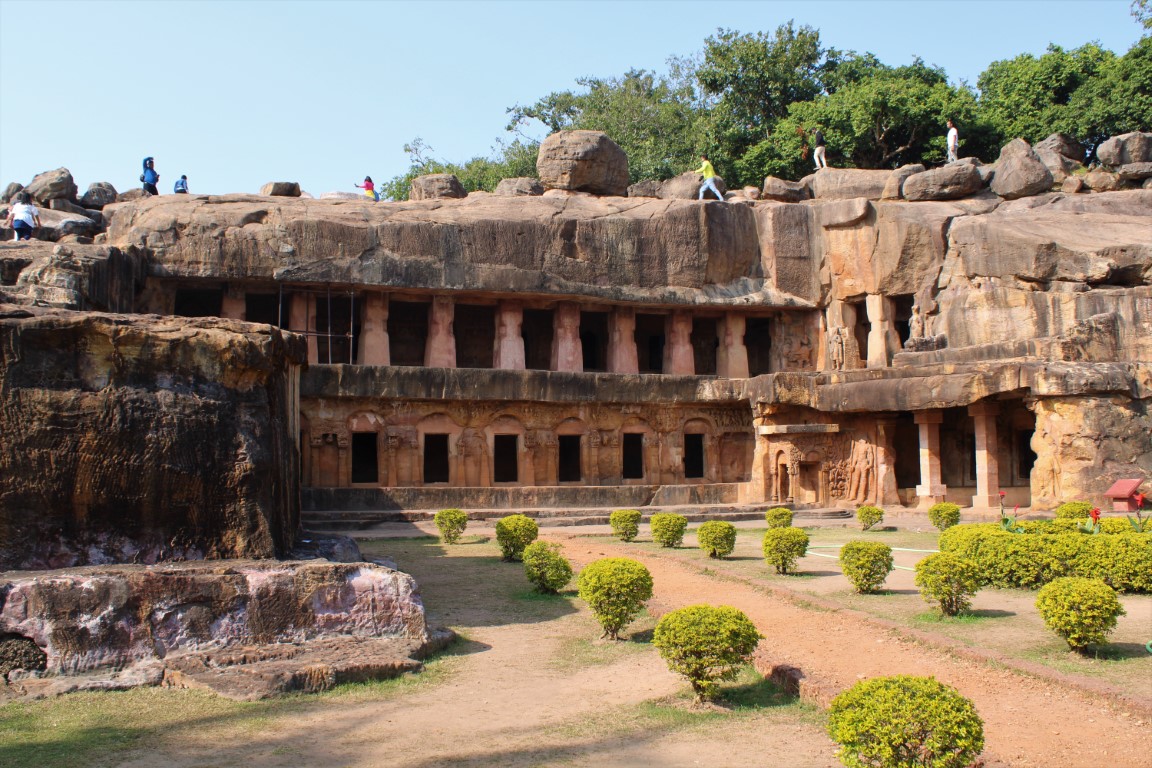
DAILY PHOTO: Jain Caves of Udayagiri

Taken in December of 2021 in Bhubaneswar

Diligent Dangler [Haiku]

the spider waits
at the edge of its web -
conspicuous, but still

DAILY PHOTO: Jagannath Temple, Puri

Taken in December of 2021 in Puri

BOOK REVIEW: The Joy of X by Steven H. Strogatz

The Joy of X: A Guided Tour of Mathematics, from One to InfinityThe Joy of X: A Guided Tour of Mathematics, from One to Infinity by Steven H. Strogatz


My rating: 5 of 5 stars

Amazon.in Page

This is a mile-wide and inch-deep overview of mathematics. That is to say, it shines a light on a wide variety of subdisciplines, running from counting through subjects like topology, using rudimentary examples to give the reader insight into the kind of problems that can be solved. The book employs graphics, intuitive examples, and step-by-step explanation to clarify mathematics for individuals who didn’t get on so well with the subject the first time around.

The book’s thirty short chapters are divided into six sections: numbers (arithmetic,) relationships (roots, powers, etc.,) shapes (geometry,) change (calculus,) data (statistics,) and frontiers (group theory, topology, analysis, etc.) Like most popular mathematics books, formulas and equations are avoided to the extent possible. Even the notes that elaborate for curious readers use mathematical notation sparingly.

If you’re looking to give math a second try, this wouldn’t be a bad overview to get started. I don’t think it would be of much benefit to anyone who’s stayed in touch with mathematics, but it makes a fine light overview of the subject.


View all my reviews

Bhubaneswar Limerick

A crafty langur of Bhubaneswar
lived in the trees above the old bazaar.
He'd watch shoppers straggle
and shopkeepers haggle,
then slip in under everyone's radar.

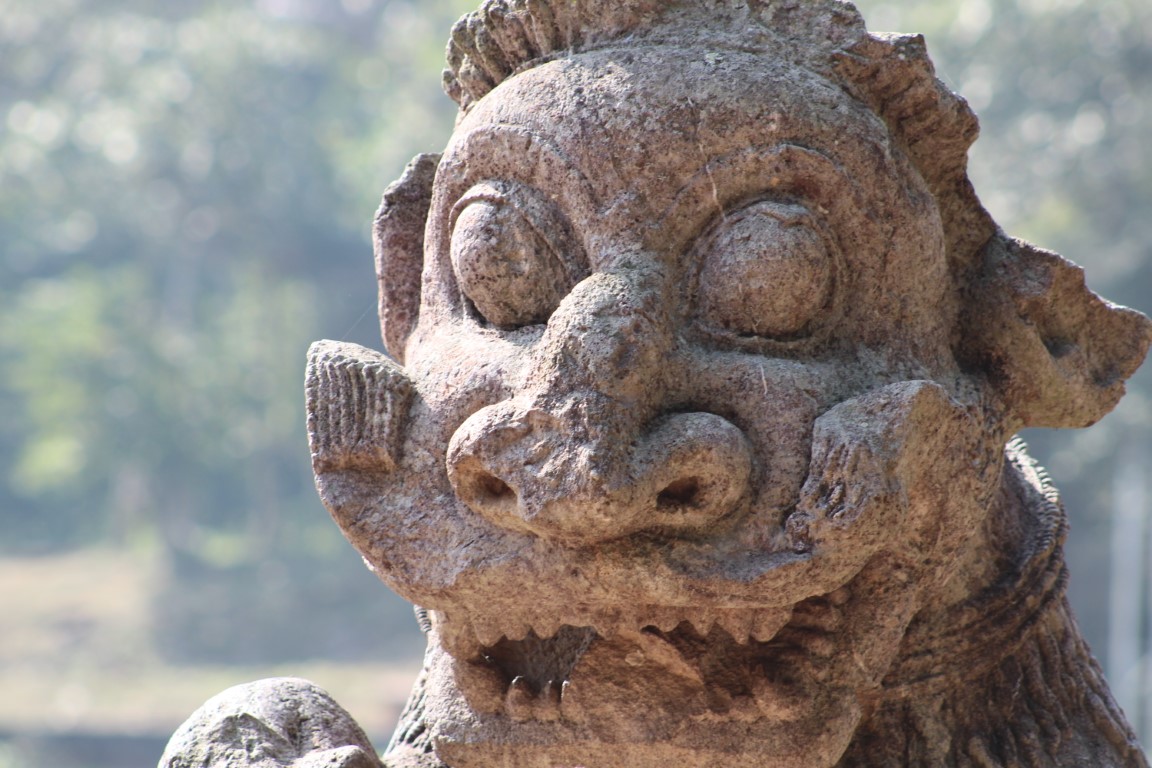
DAILY PHOTO: Odisha’s Mustachioed Lions

Taken in Puri in December of 2021
Taken in Konark in December of 2021
Taken in Bhubaneswar in December of 2021

Darjeeling Limerick

There was a tourist in Darjeeling 
whose fingers and toes lost all feeling.
He didn’t remember
it’s cold in December,
and the dearth of heaters left him reeling.

BOOK REVIEW: I’m a Joke and So Are You by Robin Ince

I'm a Joke and So Are You: Reflections on Humour and HumanityI’m a Joke and So Are You: Reflections on Humour and Humanity by Robin Ince
My rating: 5 of 5 stars

Amazon.in Page

This book examines the intersection between psychology and standup comedy. It investigates questions such as whether comedians are truly disproportionately depressive personalities as a number of high-profile cases have led the public to believe in recent years. It explores issues such as anxiety and imposter syndrome. But it also looks at less pathological issues of the mind, such as the origin of creative ideas.

The tone is light, and stories and jokes are employed throughout. That said, the book is also dealing with scientific and psychological issues, but it doesn’t get into technical minutiae. Ince discusses how ideas in psychology relate to the acts of a number of comedians he’s worked with, including Ricky Gervais and Tim Minchin, but – ultimately – he’s trying to present information that is useful to the reader. Whether the issue is grieving or parenting, the use of humor and comedy is just a tool to address issues most people face.

I enjoyed this book and found it thought-provoking. You won’t necessarily find it to be a laugh-riot, but you’ll learn a thing or two while being amused.

View all my reviews

BOOK REVIEW: Bankei Zen by Peter Haskel [trans.] & Yoshito Hakeda [ed.]

Bankei Zen: Translations from the Record of BankeiBankei Zen: Translations from the Record of Bankei by Yoshito Hakeda
My rating: 5 of 5 stars

Amazon.in Page

This collection of sermons, notes, poems, and letters from the Zen monk Bankei present his iconoclastic views on Buddhism. Bankei’s central teaching revolves around a state of mind that calls Unborn Buddha Mind. The Unborn Buddha Mind isn’t defined neatly (perhaps it can’t be,) though Bankei does refer to the capacity to perceive without consciously directing one’s attention – that is, to achieve spontaneous perception of a sensory input without the error that one might experience in thought, when one’s mind is analyzing and judging.

Bankei presented a distinctive countercultural view, both religiously and culturally. In terms of the teachings and philosophy of Zen, this is most clearly seen in his rejection of many of Zen’s primary methods – e.g. koan (Zen “riddles”) and mondo (a conversational Q&A technique.) Even those techniques Bankei doesn’t reject (e.g. Zazen, seated meditation,) he does deemphasize in contrast to a more workaday focus. Culturally, one can see the difference of Bankei’s approach in his rejection of consensus views of the time, such as that women can’t achieve enlightenment.

The book uses stories, straightforward statements, and poetry to convey a unique approach to practice. The book can be a bit dry and repetitive. (Different media – e.g. sermons and letters – discussing the same teachings will lead to repetition.) That said, if you’re interested in Zen and mindfulness, there is much to be learned via this book. There are even a few teachings directed towards martial artists, and how they can apply the lessons of Zen.


View all my reviews