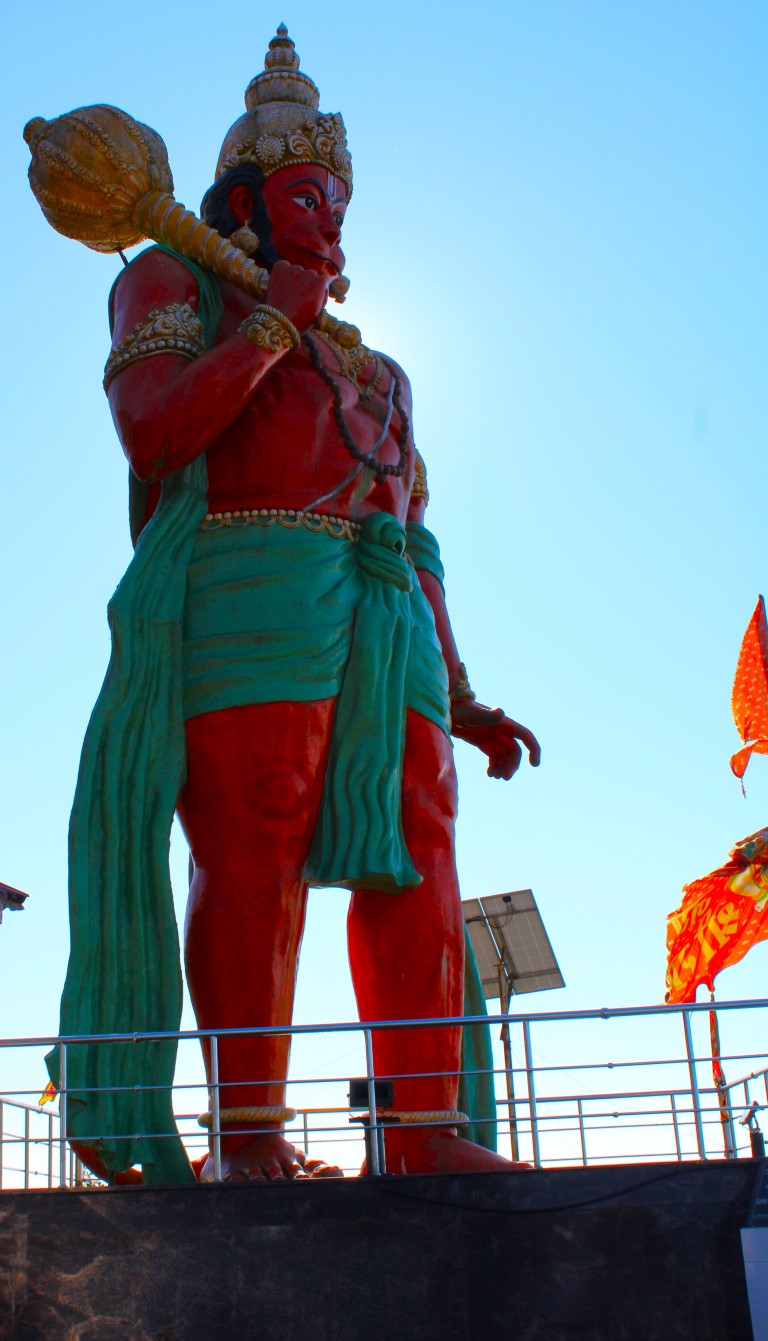
DAILY PHOTO: Chitradurga Fort

Taken on September 11, 2021

DAILY PHOTO: Chandravalli Lake

Taken on September 10, 2021

Two Birds [Haiku]

two birds feed;
one eats, and one wonders
about the other

BOOK REVIEW: What Makes You Not a Buddhist by Dzongsar Jamyang Khyentse

What Makes You Not a BuddhistWhat Makes You Not a Buddhist by Dzongsar Jamyang Khyentse
My rating: 5 of 5 stars

Amazon.in Page

This book provides exposition of the Four Seals (not to be confused with the more well-known Four Noble Truths.) As the title suggests, the author believes that accepting the truth of these four propositions is what distinguishes Buddhist from non-Buddhist (rather than many of the more well-known teachings and practices of Buddhism.)

The Four Seals are easily listed, but are challenging to intellectually grasp (hence the need for a book.) 1.) All compounded things are impermanent. 2.) All emotions are pain. 3.) All things have no inherent existence. 4.) Nirvana is beyond concepts. While I came away from the book with largely the same views on the Seals as when they were presented in the Introduction, I did learn a great deal, and had one epiphany (re: an explanation of Samsara and Nirvana.) [My own views remained: 1.) True to the best of my knowledge; 2.) This remains the most controversial teaching of the lot for me, even with elaborations. I think it does just what we should strive not to do, which is attach a value judgment to things; 3.) & 4.) I don’t know enough to have any firm opinion on these.

I found this book to be well-organized, highly readable, and to use humor and examples to good effect. While I remain “not a Buddhist,” the explanations in the book did move the needle on my way of thinking about a couple things. Along with Walpola Rahula’s What the Buddha Taught, I believe this book is an excellent means to gain greater understanding of an oft-misunderstood religion / philosophy. Check it out if you’re curious about whether you’re a Buddhist (whether or not your currently identify that way.)

View all my reviews

DAILY PHOTO: Sunset over Lake Pichola

Taken in November of 2018 in Udaipur

Balance & the Value of Learning to Fall

I saw something sad in the park this morning. A boy was trying to learn to ride a bicycle, but I could see that he never would — not with his present approach. Why? He had one training wheel, and the bike was leaning about 15-degrees off vertical as he struggled to use the bicycle as a tricycle. I could see that the metal arm that supported the training wheel was starting to bend from the strain — thus making the lean ever more pronounced. [Incidentally, with two training wheels, I think he might rapidly learn to ride because he’d experience tipping from one side to the other, through the balance point.]

I’ve told yoga students before that there are three timelines for learning inversions (upside-down postures, which all require one’s body to learn to balance 180-degrees out of phase with the balance we all mastered as toddlers.) The first timeline is if you are willing to learn break-falls (i.e. how to safely land when — not if, it will happen — one loses balance.) If so, one can learn any inversion (that one is otherwise physically capable of performing) in an afternoon. Second, if one gets near (but not up against) a wall, and only uses the wall when one is falling towards over-rotation, then one can learn the inversion in a month — give or take. Finally, one can lean up against the wall for a million years and one will not spontaneously develop the capacity to independently do the posture. Why? Because one’s center of gravity is outside one’s body, which means one is in a perpetually unstable state, and one cannot stabilize into a balanced position from a state of falling (and leaning is just falling with a barrier in the way.)

Finding balance requires that the body be able to adjust toward any available direction to counteract the beginning of a fall in the opposite direction. I was fortunate to have studied a martial art that required learning break-falls from the outset, this made learning balances (not just inversions, but also arm balances, standing balances, etc.) much easier because there was no great concern about falling. I knew my body could fall without being injured.

Without falling there’s no learning balance, and if you only fall into the under-rotated position, you are still not learning to achieve stable balance. At some point, you will need to experience the dread fall towards over-rotation.

Time to ditch the training wheels.

BOOK REVIEW: A Very Irish Christmas by Various

A Very Irish Christmas: The Greatest Irish Holiday Stories of All TimeA Very Irish Christmas: The Greatest Irish Holiday Stories of All Time by Various
My rating: 5 of 5 stars

Amazon.in Page

Out: September 14, 2021

This anthology contains fourteen previously published pieces by prominent Irish authors, including: Joyce, Yeats, and Colm Tóibín. It’s mostly short fiction, but there are a few poems as well as a couple of excerpts from longer works. All the pieces are set around (or reference) Christmas, but the degree to which that plays into the story varies a great deal. The anthology is very Irish, but not always very Christmassy. Meaning, if you’re expecting a collection of pieces like Dickens’ “A Christmas Carol” where the joy or melancholy of the season is front-and-center throughout and the holiday, itself, is a pivotal story element, you won’t find that in a number of these selections. Often, the season is just an element of ambiance or of short-lived emotional resonance.

That said, the selections are all artfully written and each is intriguing in its own way. In the case of Joyce’s “The Dead” the appeal is the evocative language and creation of setting (though the piece does have more explicit story than, say, “Ulysses.”) Whereas, for pieces like Keegan’s “Men and Women” or Trevor’s “Christmas Eve” the point of interest might be the story, itself. Besides the Irish author / Christmas reference nexus, the included works cover a wide territory including contemporary works (keeping in mind the authors are mostly from the 20th century) and those that hearken back to days of yore. Some are secular; while others are explicitly Catholic.

I enjoyed this anthology, finding it to be a fine selection of masterfully composed writings.

View all my reviews

Yellow Cosmos [Haiku]

butterflies land,
but don't loiter, upon
buttery petals

March of the Myna [Common Meter]

A Myna bird comes marching in;
it'll soon rule the roost.
It seldom fails to have its way
anyplace it's introduced.

The goggle shapes around its eyes
make its stare more intense,
but compare it to a raven;
you'll see it's pure pretense.

Like kudzu and cockroaches,
they can't help but run amok.
Should they come to your neighborhood -
well, that's just your luck.