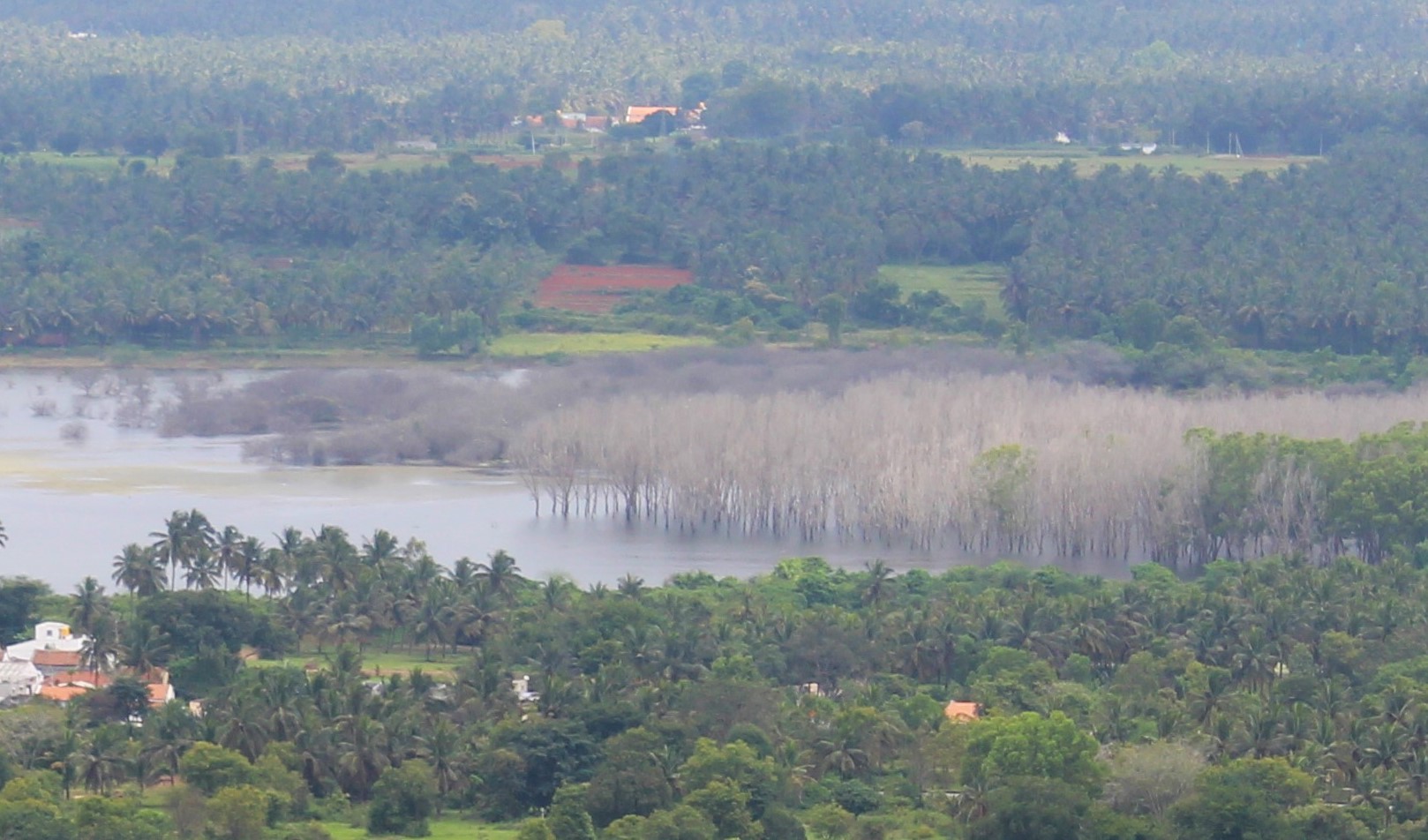
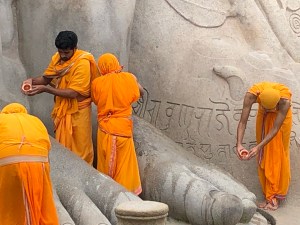
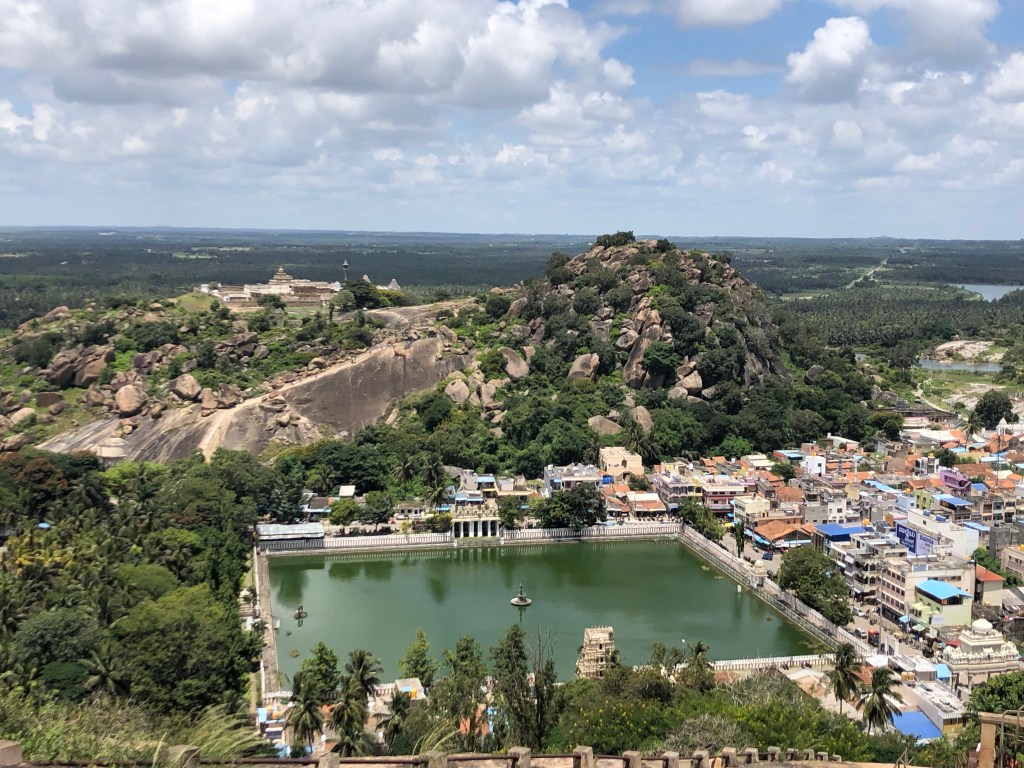
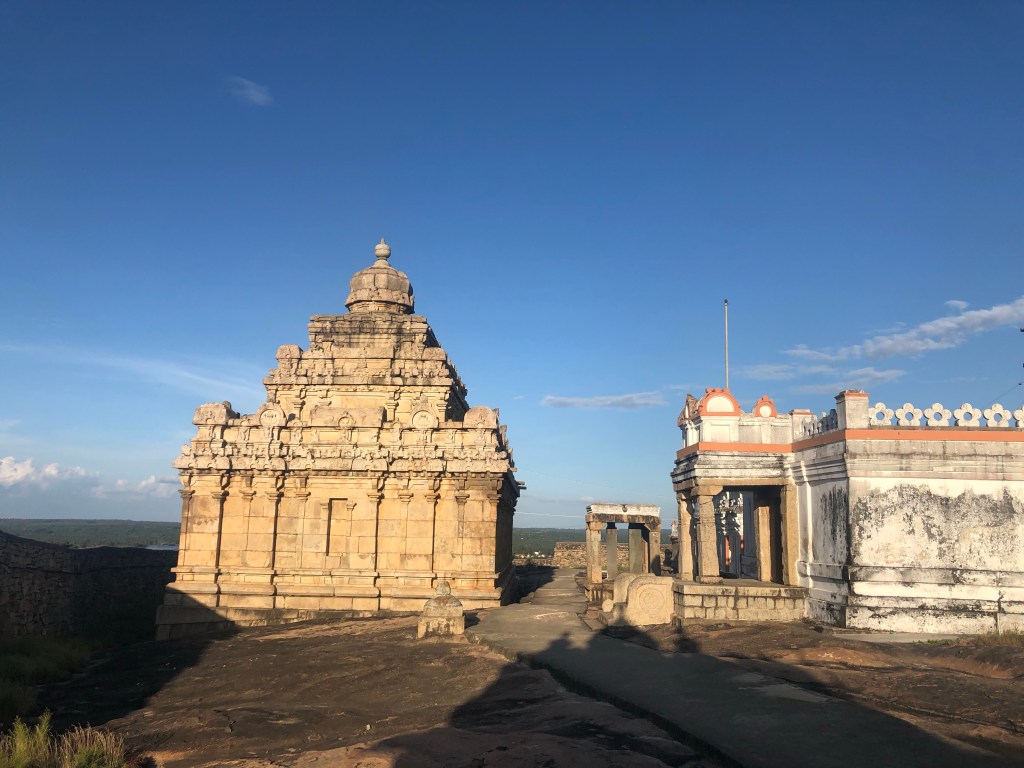
Moksha [Common Meter]

The Sadhu sits upon the ghat,
so free from suffering.
Like butterflies in still moments
with wings not fluttering.

There's no living and no dying,
just a rare kind of dead,
in which bodies move, but minds don't,
and worlds are gently tread.

BOOK REVIEW: The Unreasonable Effectiveness of Mathematics in the Natural Sciences by Eugene Wigner

The Unreasonable Effectiveness of Mathematics in the Natural SciencesThe Unreasonable Effectiveness of Mathematics in the Natural Sciences by Eugene Paul Wigner
My rating: 4 of 5 stars

Available online here

This brief essay asks why math proves so effective for describing / codifying physical laws, and whether our physical theories — built on (phenomenally successful) mathematics — offer the truth, the whole truth, and nothing but the truth.

There’s a popular story in which a drunk man is found on his hands and knees under a lamppost at night when a police officer comes along. The cops says, “What-cha doin’?” To which the drunk replies, “I dropped my keys, and I’m looking for them?” So, the cop says, “Well, they’re clearly not where you’re looking, why not look elsewhere?” And the drunk says, “Cuz this is where the light is.” I think this story can help us understand what Wigner is getting on about, if only we replace the drunk’s “light” with the scientist’s “elegant mathematics.” Wigner reflects upon why it should be that so many laws of nature seem to be independent from all but a few variables (which is the only way scientists could have discovered them –historically, mathematically, and realistically speaking.) On the other hand, could it be that Physics has led itself into epistemological cul-de-sacs by chasing elegant mathematics?

There’s no doubt that (for whatever the reason turns out to be) mathematics has been tremendously successful in facilitating the construction of theories that make predictions that can be tested with high levels of accuracy. However, that doesn’t mean that some of those theories won’t prove to be mirages.

A few of the examples used in this paper are somewhat esoteric and won’t be readily understood by the average (non-expert) reader. That said, Wigner puts his basic arguments and questions in reasonably clear (if academic) language. The essay is definitely worth reading for its thought-provoking insights.


View all my reviews

BOOK REVIEW: Sadhus by Patrick Levy

Sadhus: Going Beyond the DreadlocksSadhus: Going Beyond the Dreadlocks by Patrick Levy
My rating: 5 of 5 stars

Amazon.in Page

I got to the last couple chapters before I realized that this was a novel, and not a work of immersion journalism. I don’t mean to suggest that it wasn’t as compelling as I’d wish a work of fiction to be. On the contrary, it’s a fascinating look into a group of people (Sadhus / renunciants) who are little understood because they exist on the edges of society and can appear strange – if not a little scary – in their countercultural existence. The book reads like an authentic account of the Sadhu experience of a Frenchman who gives up his money and all but a few meager possessions to become a wandering ascetic under the tutelage a philosophically compatible Baba. (Until the fever dream ending instills a bit of surrealism and fourth-wall breaking.) The fact that the lead is demographically and a philosophically like the author, heightens the tendency to believe it’s nonfiction. [It’s quite possibly fictionalized autobiography to some degree, but I couldn’t say to what extent.]

Besides telling a story centered on a wandering Western ascetic in Northern India, the book does double duty in reflecting upon Hindu-Yogic-Tantric philosophy, particularly with respect to metaphysics. The lead character is neither religious nor a believer in the supernatural. Rather, he is (like many of us) in search of an almost defunct variety of a philosophy, the kind practiced by Socrates and some historic and present-day Buddhists, a variety that’s open to questioning and challenging all beliefs and assumptions as the means to better understand one’s world, a variety that recognizes the ubiquity of ignorance with respect to key questions of metaphysics. The story includes a number of Socratic method style conversations, as well as quotes from texts such as the “Avadhuta Gita” and “Ashtavakra Gita.”

I found this story to be compelling and informative, shining a light on a rarely-seen side of India.

View all my reviews

DAILY PHOTO: Chipmunk Bullfighter, Amritsar

Taken in Amritsar in April of 2016

BOOK REVIEW: Genius: A Very Short Introduction by Andrew Robinson

Genius: A Very Short IntroductionGenius: A Very Short Introduction by Andrew Robinson
My rating: 4 of 5 stars

Amazon.in Page

This book examines the myths and realities of that state of capability we call genius. It’s not about “geniuses” as individuals who test well on IQ exams, or who are eligible for Mensa membership, but rather about those luminaries who’ve made breakthroughs that changed the course of their discipline. It considers artistic and literary type geniuses (Shakespeare and Picasso) as well as scientific geniuses (e.g. Einstein and Darwin,) as well as discussing the differences (perceived and real) between these groups and the intriguing rarity of crosscutting figures (e.g. Da Vinci.)

The bulk of the book evaluates characteristics that are (rightly or wrongly) commonly associated with genius, including: heredity, education, intelligence, creativity, madness, personality traits, and discipline. Don’t expect clear and straightforward connections. That’s not the author’s fault. There just aren’t any traits unambiguously linked to genius in an uncomplicated way. One might expect education would be an unequivocal boon to genius, but it can be a hindrance to genius in its training of conformity. There may be a disproportionate number of geniuses with mental health issues, but there are even more without them. Hard work maybe a necessary condition, but it’s clearly not a sufficient one.

The book addresses a few other related subjects, beyond the traits associated with geniuses. For example, the degree to which genius can be defined and what it means if we can (or can’t) do so. Few individuals would be unanimously judged geniuses, and to the degree some are, mightn’t that say more about the public’s role in bestowing genius rather than the individual’s earning the designation. There is also discussion about eureka moments versus slow-builds.

This book is thought-provoking and raises intriguing and counter-intuitive debates. If you’re interested in the perception, the reality, and the interplay between the two with regard to genius, check it out.

View all my reviews

Strange Haze [Haiku]

strange, hazy morning --
the light just right to tune
up the greens

DAILY PHOTO: Jolly Buoy Island, Andaman Islands

Taken at the Mahatma Gandhi Marine National Park in December of 2018
Jolly Buoy Island in MG Marine Sanctuary

Ocean Awe [Haiku]

lost in ocean awe,
still enough that fish gather
in one's shadow

Driftwood Deception [Tanka]

nestled between rocks
the smooth-worn driftwood roots
assume the form
of a pile of writhing snakes,
'til the mind untangles truth

DAILY PHOTO: Tree Growing from Rock

Taken on Neil Island (Shaheed Dweep) in December of 2018