BOOK REVIEW: Why We Run by Bernd Heinrich

Why We Run: A Natural HistoryWhy We Run: A Natural History by Bernd Heinrich
My rating: 5 of 5 stars

Amazon page

This book is actually several different books woven together. It’s part autobiography of the author’s running life, it’s part a study of comparative biology between various creatures with an endurance bent and humans, it’s part an examination of the evolutionary biology of humanity’s proclivity to run, and it’s part guide to preparing to engage in ultramarathons. Often I pan such books as being unfocused, ill-planned, and—most often—attempts to whip an article’s worth of material into a book length piece. However, Heinrich keeps it interesting enough that I don’t feel it necessary to level these criticisms. Still, my first warning to readers is that one has to read on for quite a while before one gets to the book that one thought one bought—i.e. one that answers the title question of “why WE (i.e. people in general and not the author specifically) run.” In short, you’ll need to have an eclectic set of interests to get through the whole book, but some may find reading only part of it gives them all they wanted from the book.

It should be noted that the book is on its second title. The original title was: “Racing the Antelope: What Animals Can Teach Us about Running and Ourselves.” The author explains in the front matter why the original name was changed (apparently some loud and obnoxious writer had a similarly titled book on a different subject and whined about it.) Changing the title wasn’t required because: a.) titles cannot be copyrighted, and b.) it wasn’t exactly the same title anyway. Still the new, more succinct, title may lead one to expect a succinct book, which this isn’t so much.

Some readers will enjoy Heinrich’s writing style; others will find that it ventures too far into flowery territory on occasion. I did enjoy it. However, I can see how a reader might find some of the descriptive sequences to be excessive–particularly toward the beginning of the book.

While there’s some overlapping and interweaving, one can think of the book in three sections. It’s written in twenty chapters. The first six tell the author’s story of getting into running and his youth. The next eight chapters deal in comparative and evolutionary biology. In general, these chapters look at the biology of other creatures as they pertain to said animals’ ability to engage in running (or activities that are like running in that they involve endurance of muscles and the cardiovascular system.) Also included in this section is the evolutionary biology of humans as it relates to becoming a species of runners. This is the core of the book and was the most interesting section for me. In it, Heinrich considers the endurance activities of insects, birds, antelopes, camels, and frogs. Each of these has a particular relevance. For example, camels are masters of endurance under harsh conditions. Frogs tell the story of the difference between fast and slow twitch musculature (relevant to sprinters versus distance runners.) Antelopes are, of course, the exemplars running in the animal kingdom, but the nature of their running is so different from that of humans (i.e. making quick escapes versus pursuing wounded prey.) The last six chapters can be seen as a guide to preparing for ultramarathon races, but it’s also a continuation of the author’s self-examination of his running life from the time he began ultramarathoning.

I’d recommend this book for readers who are interested in the science of human performance. It’s well written, and the insights it offers into the biology of other animals are fascinating. Whether you read the whole book or just the part that pertains to your interests, you’ll take something away from this book.

View all my reviews

DAILY PHOTO: Elephant Sculpture at the National Museum of Cambodia

PhnomPenh (21)

Taken in October of 2012 in Phnom Penh.

Taken in October of 2012 in Phnom Penh.

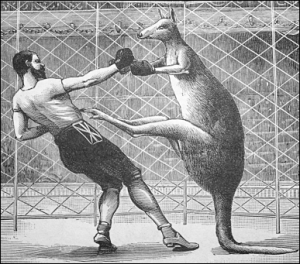
The Most Dangerous Combative Sport? Study Shows Boxing Beats MMA for Brutality

kangaroo_boxingA study by researchers at the University of Alberta found that while mixed martial arts (MMA) fighters are more likely to suffer minor injuries, boxers are more likely to suffer severe injuries like concussions or detached retinas. The study, to appear in the print edition of the Clinical Journal of Sports Medicine, involved 1181 mixed martial artists and 550 boxers who’d fought in Edmonton between 2003 and 2013. This was all fighters who fought professionally in that city in those two sports.

This finding seems counter-intuitive, given that so many more methods of delivering mayhem are allowed in MMA and the protection is less at least with respect to gloves.

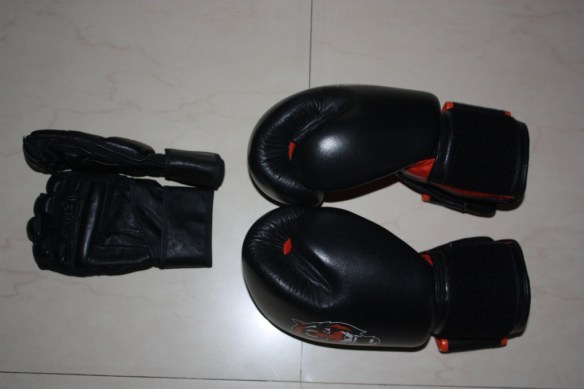
Gloves may be an important factor. This isn’t a result from the aforementioned study, but it’s an idea put forth by MMA boosters. It goes like this, “Yes, the lightweight MMA glove offers less protection to the one being hit, but it also offers less protection to the hand of the one delivering the hit, and, ergo,  an MMA fighter is more likely to moderate his / her punches to avoid the (in this case ironically-named) ‘boxer’s break’ to the bones of said fighter’s hand.”

MMA style gloves on the left and 16oz. boxing gloves on the right

MMA style gloves on the left and 16oz. boxing gloves on the right (the same hand fits inside.)


I haven’t seen any rigorous scientific studies of whether the argument above has merit. There was a National Geographic Fight Science episode that made a comparison of gloves, but it was looking at a little different question. It studied how much force barehand, MMA glove, and boxing glove delivered to a heavy bag. Incidentally, it found minimal difference in force delivered between the two types of gloves, which at least might help to hush those who make a big deal about MMA’s “thin gloves.” However, this doesn’t tell us whether fighters put the same level of force into hitting a bony target when wearing the two types of gloves. Still a YouTube clip of the test is below for your information.


There are other explanations for why MMA fights might be less prone to cause concussions and severe head injuries. For example, there’s less time spent at an optimal distance to deliver strikes with maximal force. Once fighters are in close, there’s less room to get strikes up to speed. Once fighters are on the ground, putting a lot of body weight into a strike may be impossible. While submissions, whether chokes or joint locks, may seem brutal to the home viewing audience, it’s not clear that they result in major injuries to anything but the fighter’s self-esteem. (Though this might be an area that needs to be factored into studies.)

I’d like to see how muay thai compares to the two sports covered in the aforementioned study. I suspect it’s the only combative sport that might beat out these two. (All the nastiness of boxing, none of the close range grappling, plus elbows and shins to the side of the head.) Though, who knows?  Judoka do seem to land on their heads an unfortunate percentage of the time.

I’m curious about what you think about which combative sport is most damaging, and why?

FYI: The citation for the study mentioned above is:
Karpman, Shelby, et al. 2015. Combative Sports Injuries: An Edmonton Retrospective. Clinical Journal of Sports Medicine. To be published. Available on-line at: http://journals.lww.com/cjsportsmed/Abstract/publishahead/Combative_Sports_Injuries___An_Edmonton.99628.aspx. Last accessed: November 13, 2015

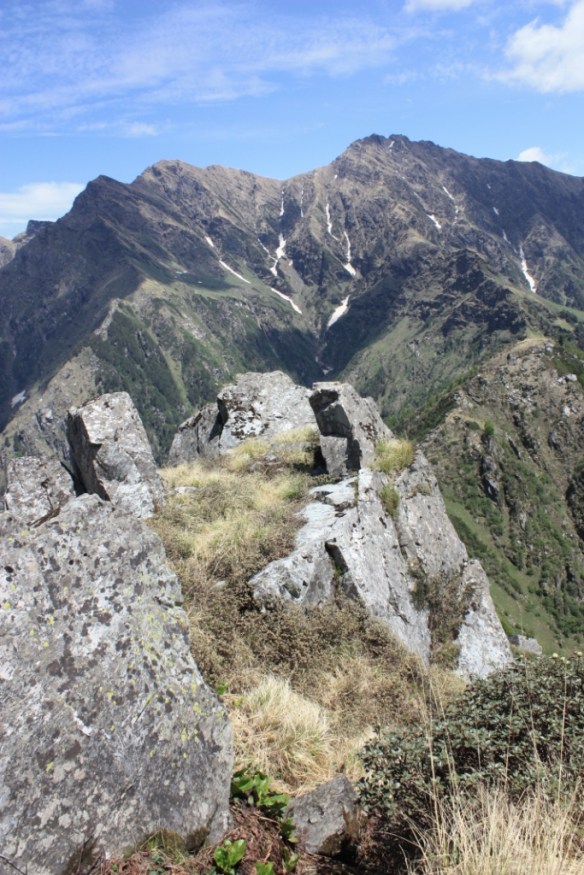
DAILY PHOTO: Rocky Ridgeline

Taken in July of 2015 in Great Himalayan National Park (GHNP) in Kullu District

Taken in July of 2015 in Great Himalayan National Park (GHNP) in Kullu District

BOOK REVIEW: The Haiku Handbook by William J. Higginson

The Haiku Handbook: How to Write, Teach, and Appreciate HaikuThe Haiku Handbook: How to Write, Teach, and Appreciate Haiku by William J. Higginson
My rating: 5 of 5 stars

Amazon page

Many people think that a haiku is any poem of three lines consisting of 5, 7, and 5 syllables, respectively. Those who’ve gotten beyond a high school literature class introduction to the form may also know that these poems are usually observations of the nature world, and, specifically, the seasons. If the preceding sentences sum up haiku for you, but you’re interested in learning more, Higginson’s book will revolutionize your understanding of the art.

As it happens, the most fundamental notions about what makes up a haiku are actually more contentious than one might believe. Take the 17-syllable format. Japanese syllables are—on average—much shorter than English syllables. (e.g. Consider that “squirreled” is one syllable, whereas a long Japanese syllable would be “shi.”) For this reason, many have argued that to have the same sparse sound quality of Japanese haiku, English language haiku should follow a format that is less than 17 syllables. Also, while many people know that haiku are poems about nature, they might not make the connection to the purely descriptive (non-analytical / non-judgmental) approach or the art form. There’s a definite connection between haiku and the Zen mode of thought. The fact that the poems are sensate descriptions doesn’t mean they shouldn’t evoke emotion; on the contrary, they should be evocative on a primal level.

Be the preceding paragraph as it may, Higginson sketches out the evolution of haiku from the traditional greats (e.g. Bashō, Buson, Issa, and Shiki) to modern haiku poets both from Japan and from the rest of the world. The many examples provided offer the reader insight into how various poets have bent and broken the rules of haiku to achieve their own ends. There are, of course, some who wish to keep the form as true to the tradition as possible. Such individuals would like those who want to get unconventional to avoid using the term haiku (or terms for related traditional forms, e.g. “tanka.”) Others, want the freedom to take the art in new and unconventional directions.

The book consists of 16 chapters divided into four parts. The first part charts the evolution of haiku from the early masters to the modern age. The second part gets into the nitty-gritty of composing haiku, and it’s where one will learn about the various thoughts on the form and content of these poems. (Those wanting to learn the craft of writing haiku are directed specifically to chapters 8 and 9, which address the key elements nicely.) The third part is about teaching haiku, and specifically how to introduce it to children in a way that is much more effective than the usual teaching method (i.e. “Hey, kids, a haiku is a poem with 17 syllables arranged in three lines of 5 – 7 – 5 syllables.”) The fourth and final part puts haiku into a context of lesser known, but related, forms of Japanese poetry such at renga, tanka, and senryu. In other words, it reflects on the forms that predated or sprung from haiku. The book also has front and post matter that readers may find useful, including explanations of Japanese pronunciation (the Japanese poems usually feature the Romanized spelling out of the Japanese words as well as an English translation), a list of season words, a glossary, and bibliographic references.

I’d recommend this book for readers and / or writers of haiku who want to learn more about the craft and its progression as an art form. There’s scarcely a page in the book that doesn’t offer example haiku to help make the author’s points more clearly. One needn’t worry that this will be dull exposition that can only help to kill one’s love of haiku. I found the book to be readable and the examples to be well-chosen.

View all my reviews

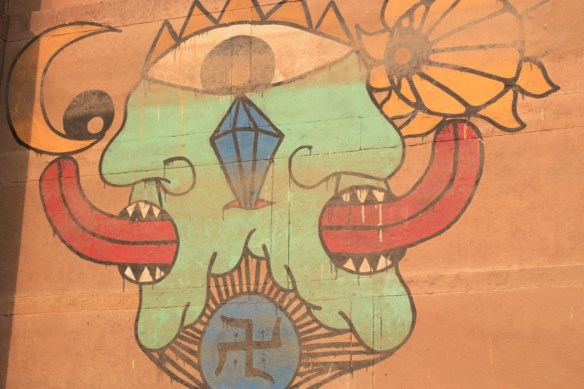
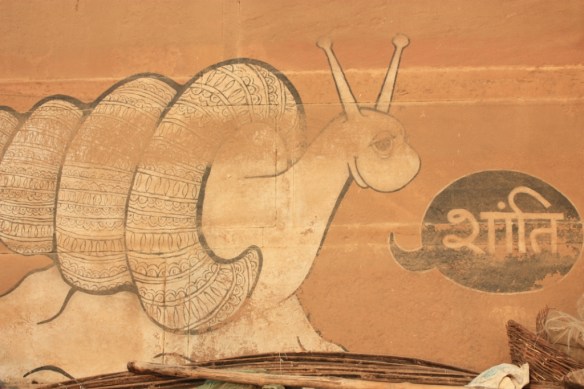
DAILY PHOTO: Ghat Graffiti

Taken on October 24, 2015 in Varanasi

Taken on October 24, 2015 in Varanasi

IMG_3624 IMG_3623 IMG_3622 IMG_3625

DAILY PHOTO: A Corner House in Shimla

Taken in July of 2015 in Shimla

Taken in July of 2015 in Shimla

DAILY PHOTO: Erzsébet Tér Fountain

Taken in December of 2014 in Budapest

Taken in December of 2014 in Budapest

POEMS: Dreary Day Haiku

IMG_2123Clouds chugged landward
Smothering a festive town
In a dense, gray cloak


Dreary days have come
Reminding me of Britain,
the long nightless nights


Drizzle piddles down
Dimpling the sidewalk sheen
With random ripples


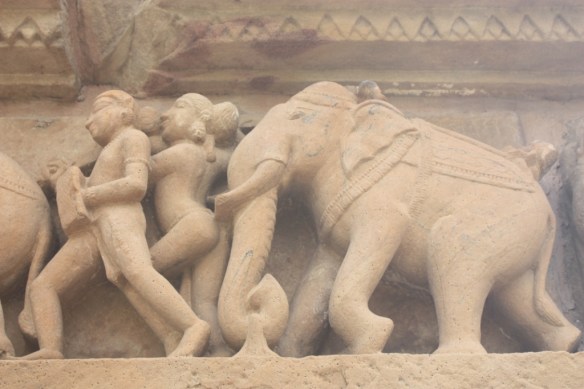
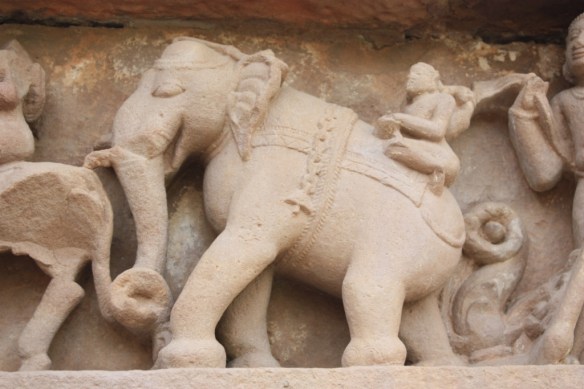
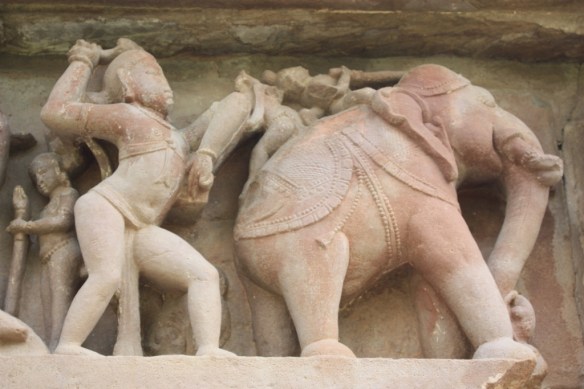
DAILY PHOTO: Elephants on the March

Taken on October 22, 2015 at Khajuraho

Taken on October 22, 2015 at Khajuraho

IMG_3162 IMG_3163