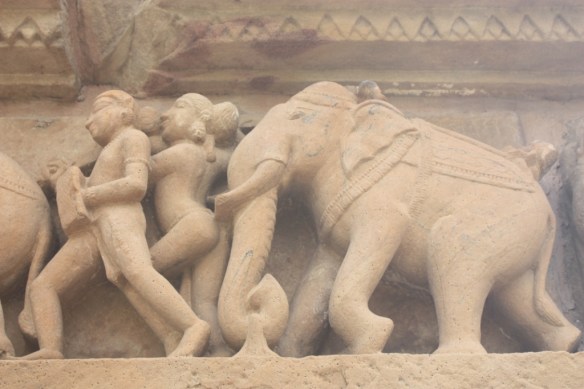
Taken on October 22, 2015 at Khajuraho
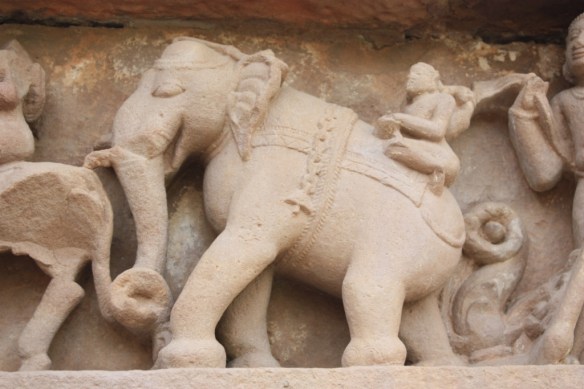
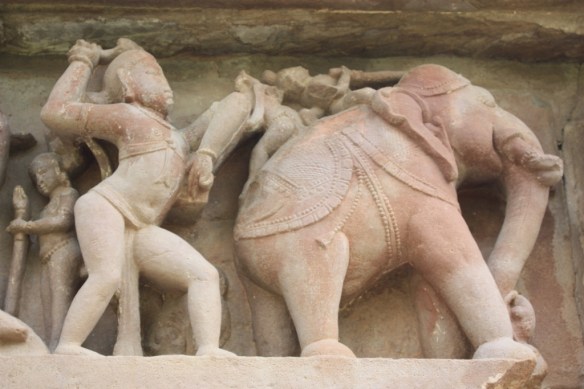

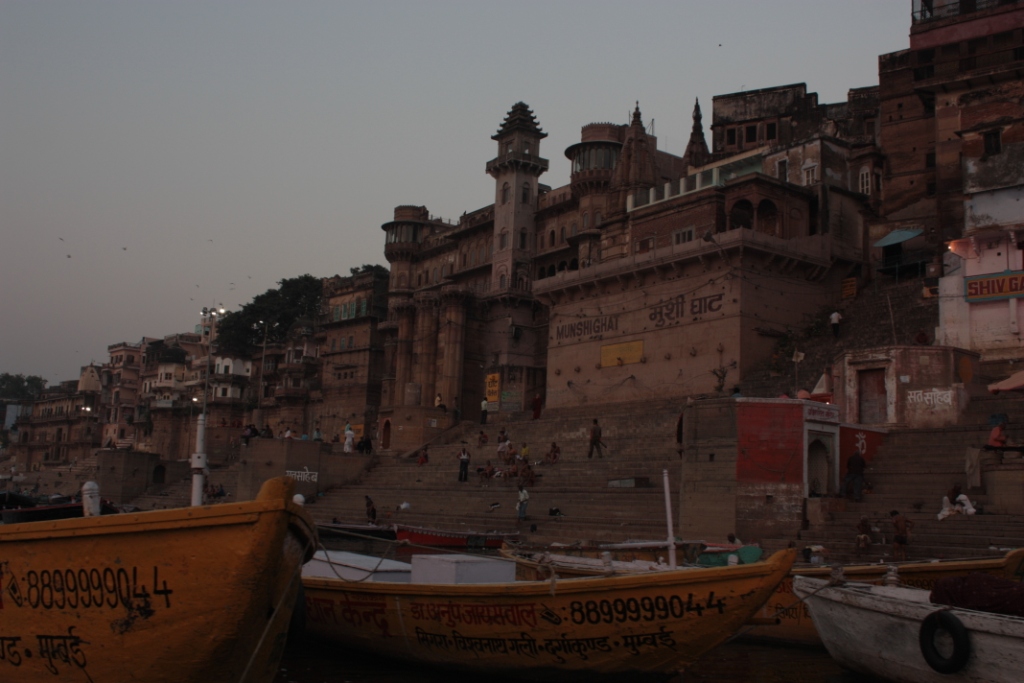
Taken October 24, 2015 in Varanasi

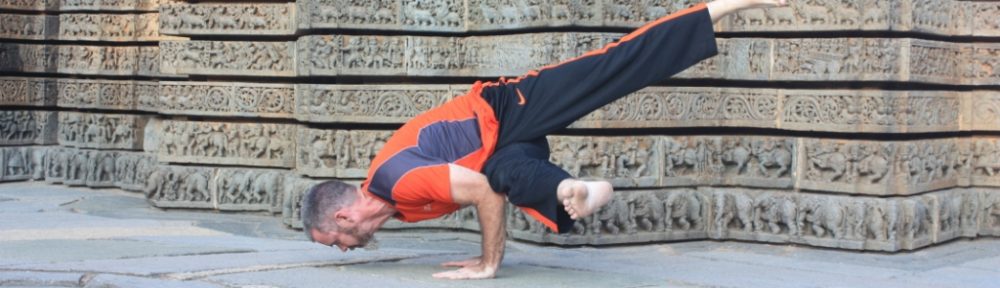
Taken in November of 2013 at Hampi
 Surviving the Extremes: What Happens to the Body and Mind at the Limits of Human Endurance by Kenneth Kamler
My rating: 5 of 5 stars
The title says it all. This is a book about all that can go wrong with the human body when it’s exposed to the most extreme conditions possible—including places where no human can survive without the benefit of modern technology. The medical science provides plenty of tidbits of fascinating food for thought, but it’s the stories of survival (or, sometimes, the lack thereof)—many of which the author, Kenneth Kamler, M.D., was present for—that make this a gripping non-fiction read.
There are only six chapters, addressing survival in the jungle, on the high seas, in the desert, underwater (diving), high in the mountains, and in space. There’s also a prologue that sets up the book with examples from Dr. Kamler’s experiences at high elevation (specifically Mount Everest.) Each chapter is full of illuminating stories about the threats to human life that exist in all of the aforementioned environments. The author is a hand surgeon who made a secondary specialization through expeditions to extreme environments to deal with the maladies that are largely unknown to the average person’s day-to-day existence—from pulmonary edema to exotic Amazonian parasites. A few of the chapters feature mostly stories of Kamler’s own experiences. These include the chapters on the jungle, deep-sea diving, and high altitude climbing. For other chapters Dr. Kamler draws together fascinating cases of survival and perishment in extreme environments such as living in a life raft on the high seas.
Besides considering what might kill you in extreme places, this book also reflects upon a couple of other interesting tangential questions. First, what adaptations (cultural or physical/genetic) do the locals have who live at or near these extremes that allow them to live? A fascinating example of this seen in the explanation of how Sherpas of the Himalayas differ from the Andean Indians who live at high elevations in terms of their biological adaptations to elevation. These two peoples living under similar conditions share some common adaptations, but other adaptations are quite different. On a related subject, Kamler also looks at what adaptations other species have developed to allow them to be so much more successful in some extreme environments (e.g. seals in water.)
Second, the role that x-factors like belief and will to survive play are never shunted aside as irrelevant anomalies by the author. Kamler devotes an epilogue to the subject of will to survive. Dr. Kamler was at one of the camps above base camp on the day of the 1996 Everest tragedy in which 12 perished. Kamler saw and advised on the treatments of Beck Wethers and other severely frostbitten climbers. Wethers’s story is particularly fascinating as he lay freezing in the snow overnight in a blizzard, apparently snow blind—though it later turned out to be an altitude related problem with an eye surgery (radial keratotomy)—before climbing to his feet and shambling into the wind (his only guide to where the camp might be.) Kamler considers the science of how Wethers neurons might have fired to get him to his feet against what seems like impossible odds, but concedes there’s much we don’t understand about what separates survivors from those who succumb.
I found this book to be fascinating and would recommend it to anyone interested questions of what a human is ultimately capable of. If you’re interested in medicine, biology, or survival, you’ll likely find this book engaging.
 The Secrets of Judo: A Text for Instructors and Students by Jiichi Watanabe
My rating: 5 of 5 stars
Every once in a while, one stumbles onto a book that one feels desperately needed writing but which one thought didn’t yet exist. In the case of The Secrets of Judo, the book has been around for almost 60 years. First off, a more telling title for this book would be “The Science of Judo” or “The Physics of Judo.” It’s not a book that deals in arcane knowledge, as its title might suggest, but rather applies science to the skills of throwing, pinning, and submitting seen in judo.
While there’s a brief discussion of the nervous system as it pertains to reaction times, the bulk of the book is classic mechanics applied to judo techniques. The first six chapters (which constitute a little over half the book) provide a background of the relevant principles of both physics (e.g. force, momentum, and center of gravity) and judo (e.g. kuzushi [unbalancing], seiryoken zenyo [maximum efficiency], and ukemi [breakfalls].) The last two chapters provide explanations of how forces are applied to achieve successful throws (ch. 7) and grappling techniques—i.e. pins, chokes, and locks (ch. 8.)
I found this book to be invaluable and would recommend it for anyone who’s interested in grappling arts generally (whether judo or not) or even the science of human movement. The writing is clear. There are some mathematical equations, but just the algebraic formulas seen in basic physics. The graphics (mostly line drawings with a few photos) are useful, especially the drawings of the sequences of techniques which have letter labeled arrows to clarify the lines of force.
I should note that I read the original (1960) edition. Tuttle put out a 2011 edition that is probably what you will get–unless you stumble onto a copy in the used bookstore as I did. From a quick glance at the table of contents of the new edition, it doesn’t look like a major change and I suspect the new edition is at least as good.
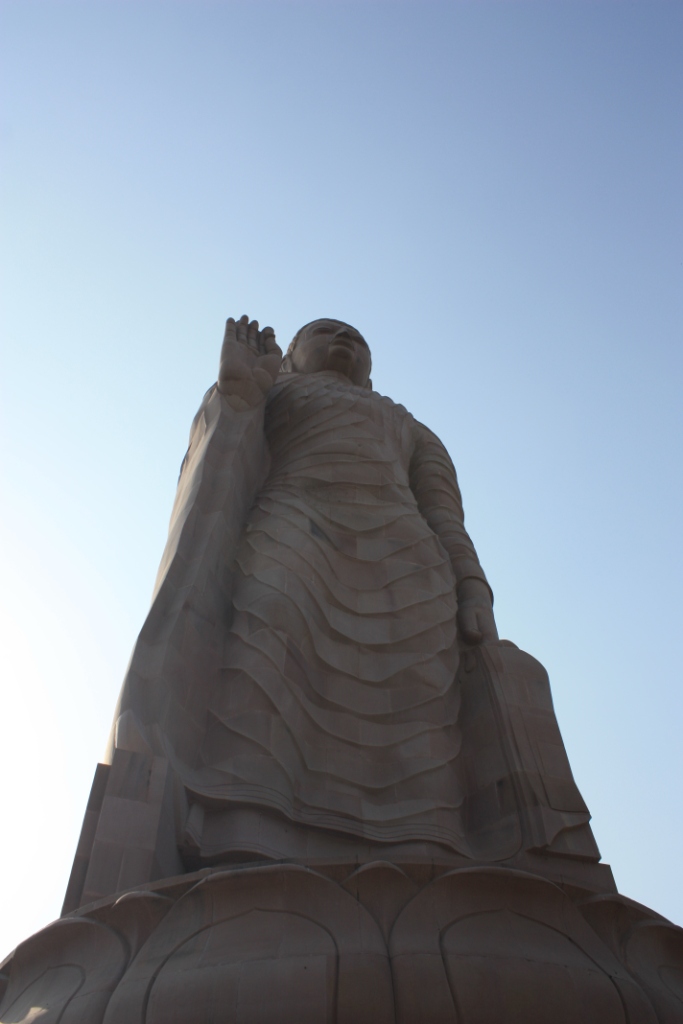
Taken on October 25, 2015 at Wat Thai in Sarnath
Being one of the four most major pilgrimage sites of Buddhism, Sarnath has a number of temples built by members of countries with large Buddhist populations. Among these countries is Thailand. (FYI: There is also a Chinese Temple, a Japanese Temple, and a Tibetan Temple.) While the guidebook advice is that these modern temples are skippable, an exception might be made for Wat Thai, which is both nearby to the [unskippable] Archaeology Museum and has a giant Buddha statue.
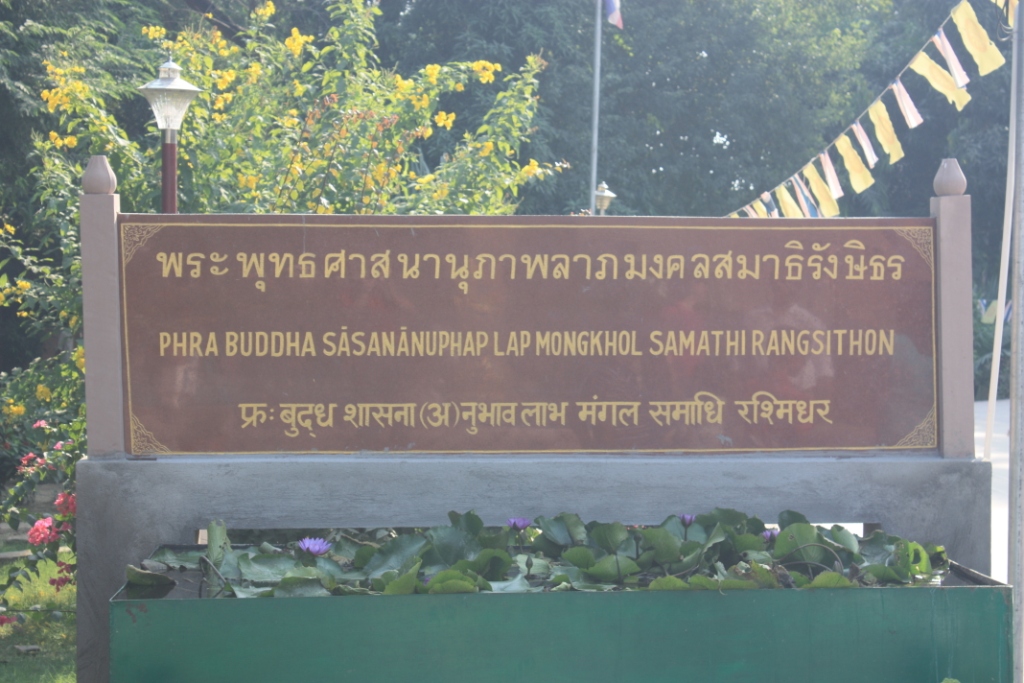
Here is the sign for the giant Buddha.
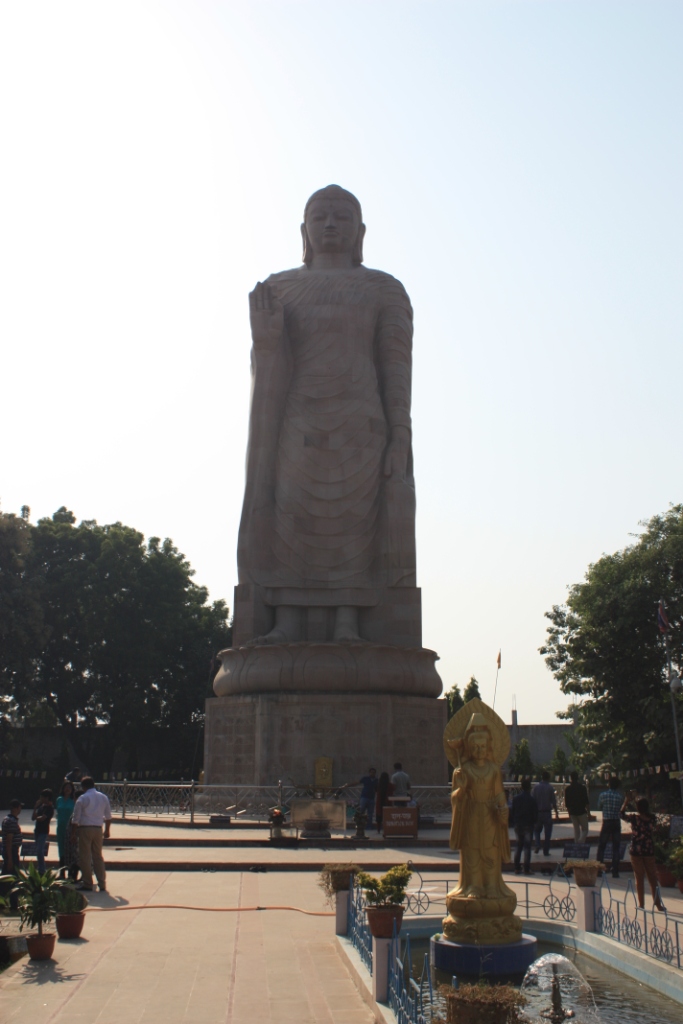
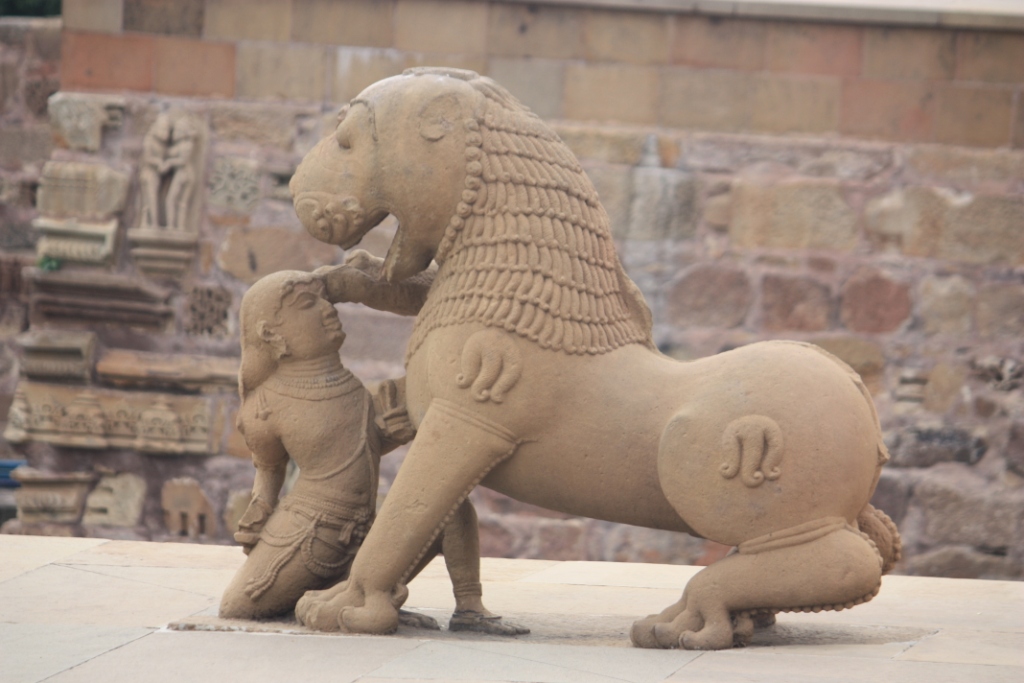
Taken October 22, 2015 at Khajuraho
This mythical beast adorns the plinth at Jagadambi Temple in the Western Group of Temples at Khajuraho. I hope its breath was not foul.
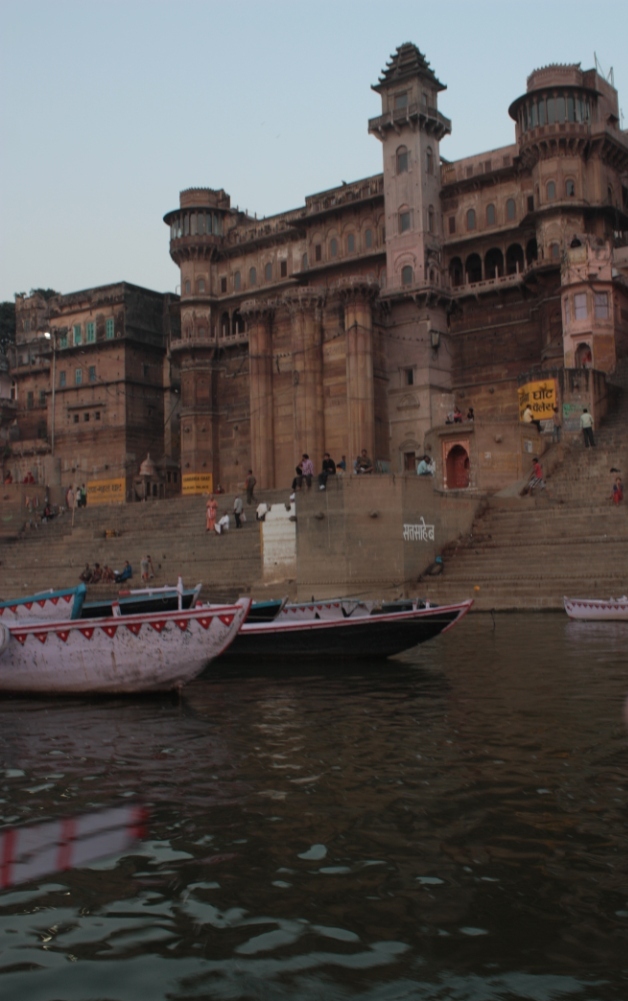
Taken on October 24, 2015 at Varanasi
Back in the day, it was common for Hindu royalty from all over India to maintain a palace in Varanasi so that they could make their Ganges pilgrimage in style. Some of these palaces have deteriorated in abandonment, others have been sold or donated, and a few are still owned by a trusts connected with the original owners.
One of the most grandiose is the one that once belonged to the Raj Darbhanga–a royal family from the Bihar area. The Darbhanga Palace was purchased by Clarks Hotel Group with the intention of putting in a luxury hotel.
 Things Fall Apart by Chinua Achebe
My rating: 4 of 5 stars
Things Fall Apart is about a man who conducts his life ever trying to distance himself from his father. In the process, he sows the seeds of his own destruction. Residing in the small (fictional) Nigerian village of Umuofia in the late 19th century, Okonkwo strives to be hyper-masculine in everything he does. As a young man he becomes a village wrestling champion and, when it comes time to start farming, he’s driven to be the best farmer possible in order to pay off his debts and to be as wealthy as possible. He feels that his father, who was constantly in debt and negligent in his familial duties, was weak and effeminate. On the one hand, Okonkwo’s drive is respect worthy, but, on the other, his need to appear strong in the extreme comes off as a bit pitiful.
There are a couple of crucial events in Okonkwo’s life in which his need to appear manly results in great inner distress. The first occurs when it’s determined that a young man who’s been staying with Okonkwo’s family must be killed. (The young man was sent to Umuofia as a settlement for a wrong between the young man’s father and an Umuofia resident.) Okonkwo has been a father to the young man. Even when a village elder tells Okonkwo to have no part in the killing owing to being like a father to the boy, Okonkwo feels he must participate lest he be seen as effeminate. Of course, Okonkwo is wracked with guilt because he murdered a boy who’d been like a son to him. Later, an accidental discharge of Okonkwo’s firearm kills an innocent young man. The worst part of this for Okonkwo is that an accidental killing is seen as a “woman’s offense.” As punishment, Okonkwo and his family are sent in exile on another village for seven years. Okonkwo isn’t so much torn up by killing another innocent as by the fact that the way it happened makes him look girly in the eyes of others—or so he believes.
Besides the character portrait of Okonkwo, the book is also a commentary on the nature of colonialism and proselytizing missionaries. The first part of the book is set in a pre-colonial state, but in the latter half the rapidly developing tensions between the missionaries and the local villagers is featured. When Okonkwo and his family return to Umuofia after seven years, he finds that white men have built a church and are actively seeking to turn the villagers away from the indigenous beliefs. Of course, for Okonkwo this is just too much, and he can’t believe others are putting up with this. (Adding to his torment is the fact that his son is one of the converts—possibly because that son himself wants to distance himself from the father who murdered his best friend [the boy from the other village.]) Okonkwo is ultimately unable to tolerate that the world has become something so different from what he believes is right, and to continue living means to steer away from the path that he has locked his life into.
This short and thought-provoking book is a great window into pre-colonial Africa and the clash of worldviews that colonization brought. It’s also a cautionary tale about not having sympathy for the failings of one’s father—not to mention the weakness inherent in our own humanity.
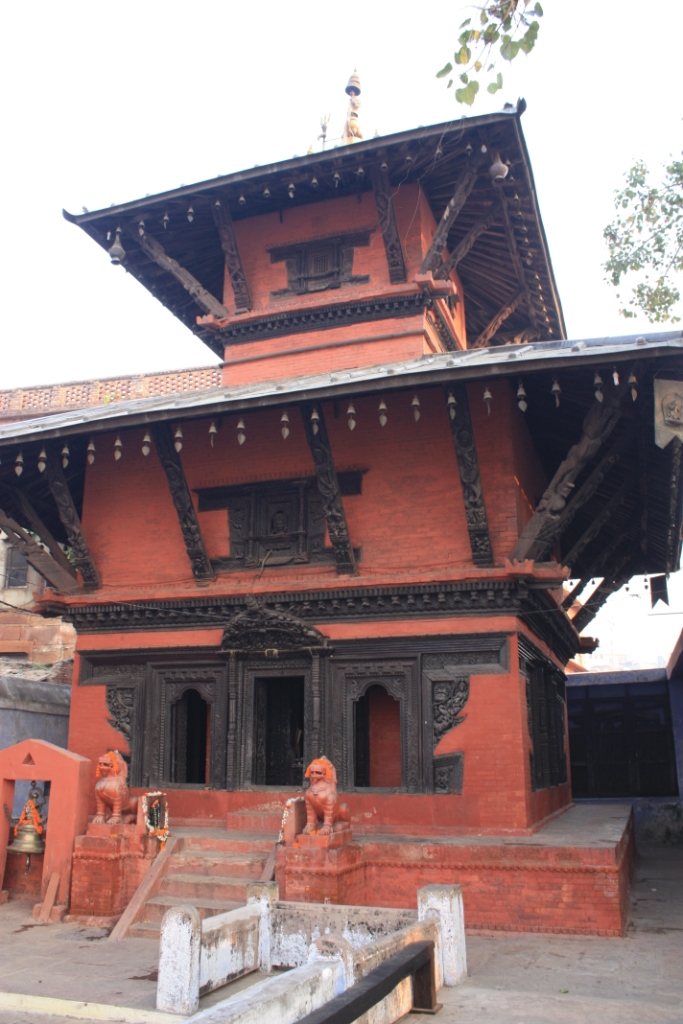
Taken October 24, 2015 in Varanasi
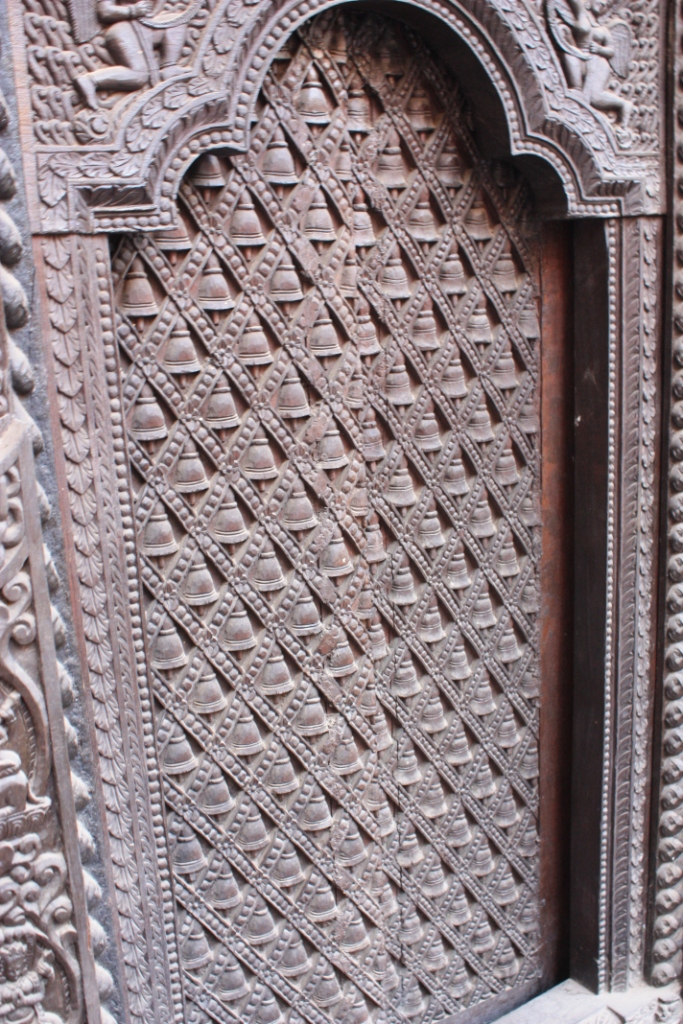
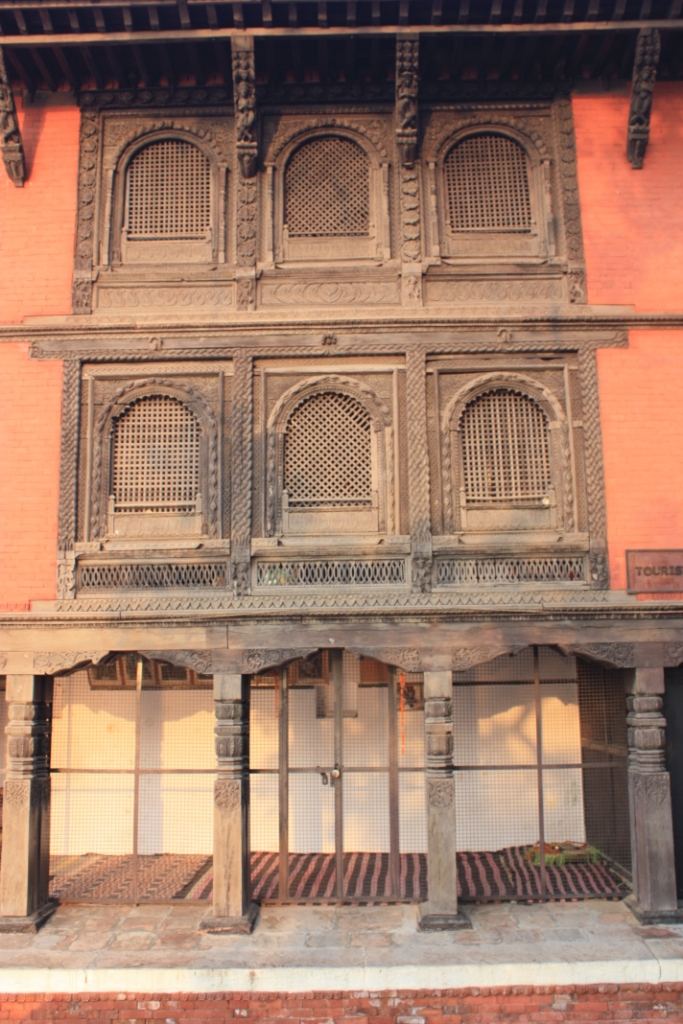
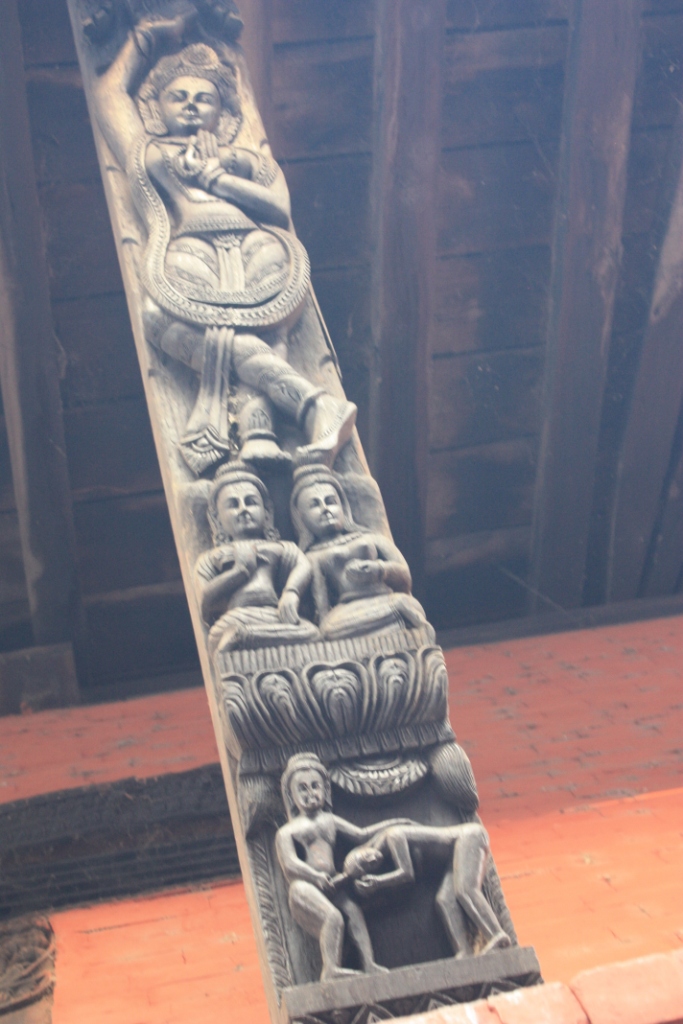
The Nepali Temple (Nepali Mandir) is located near the Lalita Ghat, between the main ghat (Dashaswamedh Ghat) and the big burning ghat (Manikarnika Ghat.) It’s construction is red brick with black wood, and the wood carvings are ornate. This 19th century temple is dedicated to Shiva, and–like the sandstone temples at Khajuraho–feature eroticism as one of its subjects.


