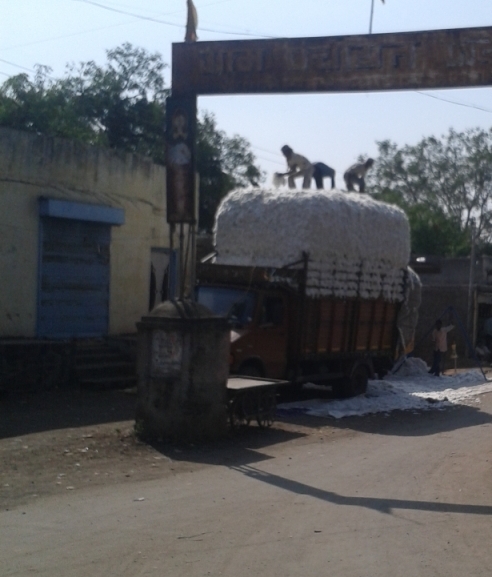
Taken in November of 2014 in Fardapur, India
In India:
Q: “How high can you load that truck?”
A: “How high is the sky?”

Taken in November of 2014 in Fardapur, India
In India:
Q: “How high can you load that truck?”
A: “How high is the sky?”

Taken in October of 2015 in Khajuraho

This is a parade procession that we passed as we were walking out to a couple of the Eastern Group of Temples at Khajuraho.
It was pretty typical, a tractor with a squawky loudspeaker playing music at about 100db beyond the speaker’s rating, pulling a trailer with a figure. There was color throwing and garlands. The works.

Taken in October of 2015 in Varanasi
Manikarnika is the main ghat for cremation on the Ganges in the city of Varanasi. It’s noted by its vast stacks of firewood and steady flame. In Hindu mythology, it’s said to be where Mata Sati’s ear ring fell when Shiva was carrying her to the Himalayas and it’s an important Hindu site for reasons beyond the burial rights conducted there.
[When the caste system was legal] one of India’s wealthiest untouchables ran operations at the ghat. Untouchables being the only caste considered suitable to do this work, but it being a lucrative operation.
Travelers beware, sadly, this area attracts con-artists as well as mourners.
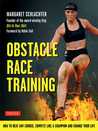 Obstacle Race Training: How to Beat Any Course, Compete Like a Champion and Change Your Life by Margaret Schlachter
My rating: 4 of 5 stars
If you’re a neophyte to the obstacle racing scene, as I am, this is the book for you. That’s not to say that it wouldn’t be useful for someone with some experience, but if you’re a competitive racer looking to shave time off your runs to boost your standings, I suspect you might want more detail on some topics (e.g. details on various approaches for getting over/under/through/around particular obstacles and more explanations of variations on obstacles.) That said, this book hits the Goldilocks zone for someone who has no idea what they are doing, but would like to give some form of obstacle race a try. (i.e. Not so much information as to be overwhelming, but not so little that you’ll be unprepared to have a good run.)
It’s a short book, less than 200 pages, arranged into 18 chapters that are in turn divided into five sections. The first section introduces one to obstacle course racing. While this sport / social event (there are both competitive and non-competitive participants involved in most races and some events are more about comradery than competition) has been growing wildly in popularity in recent years, there will be many readers who are completely unaware of it. However, by the end of these first three chapters you’ll have a thorough sketch of the scene. The rest of the book goes through what one needs to do long before the race (e.g. picking a race, training [general fitness as well as obstacle-specific], and dieting), immediately before the race (e.g. dressing for the race and eating / hydrating for the race), during the race, and after the race (e.g. recovery, choosing a next race, and moving forward with your participation.)
I found this book to be packed with valuable information (e.g. The mantra DON’T WEAR COTTON ON RACE DAY will be forever etched into your brain.) I found Schlachter’s practical, no-nonsense approach to be a breath of fresh air. For example, with respect to diet, her advice is sparse but invaluable. Basically, it boils down to “eat good food in the portions needed for your body.” It may sound like I’m being dismissive, but I’m not. I appreciate her making sense on the subject and not drawing it out with fad baloney diet (figuratively or literally) quackery. (Pet peeve: I really don’t like hearing about people’s ludicrous ideas about how one can eat a pound of bacon a day, but you’ll die if a slice of wheat bread or a wedge of orange goes in your mouth.)
There are several nice features of this guide that I’ll mention specifically. One is that it has a chapter that shares insights from other high performing obstacle course racers. This gives one some useful and varied advice. Second, it actually shows one how to make a couple of obstacles, e.g. walls and spear targets, that are either common or challenging. Finally, it gives one tips for making this an affordable hobby. (If you’re at the stage of reading this book, you’ll probably have to pay the entry fee out of pocket—no sponsors– and have little to no chance of running well enough to earn winnings.)
If you’re considering running an obstacle race, whether a mud run or an obstacle course race, I’d recommend you give this book a read.
 Dodger by Terry Pratchett
My rating: 5 of 5 stars
This book’s protagonist is based loosely on the Artful Dodger character from Charles Dickens’ novel “Oliver Twist.” Pratchett’s Dodger is a brave scamp with a gift for plunging into the middle of precarious situations. One such situation occurs when he rescues a young woman who’s being battered one night on a London side street. The girl, known only as Simplicity, we later find out was attempting to escape an arranged marriage to an awful chap who’s a member of a foreign royal family. Her husband has no intention of letting her go peaceably, and has power, resources, and goons at his disposal. The story is an attempt to resolve this issue in a way that is satisfactory to the girl, for whom Dodger grows fond.
Dodger is a tosher, which is one who scavenges in London’s sewer system in search of wedding rings that were washed down drains or coins that rolled into storm drains. The fact that he’s mostly collecting lost items may make him more palatable / likable than the pick-pocketing Dodger of Dickens’ work. That said, this version of Dodger isn’t above absconding with valuables that seem to be “lying around”–even if they happen to be “lying” on the owner’s desk in the owner’s house. However, it’s clear from the outset that Dodger has a working moral compass. His liberties with earthly possessions don’t interfere with his understanding of what is right and wrong when it comes to treating others as you would like to be treated. This makes for a character who seems more mischievous than felonious.
Like many modern works that are based on Victorian era fiction, this book not only borrows fictitious characters but also individuals from the real world. Pratchett weaves Charles Dickens, Benjamin Disraeli, Henry Mayhew, and Angela Burdett-Coutts into his novel. (If the latter two names don’t ring bells, the former among them was an advocate for the poor and the latter was the wealthiest woman in England at the time, a woman who opened schools for impoverished children.) Except for Dickens [and to some extent Burdett-Coutts], these characters don’t play major roles, but more help to make the reader feel they reside in the world of the novel. [However, the book is dedicated to Mayhew.] There are also other fictional characters, most notably Sweeney Todd—the butcherous barber of penny dreadful fame.
This novel displays generous helpings of Pratchett’s humor and skill in setting the reader into a world that would otherwise feel foreign. One needn’t have read “Oliver Twist” [or any other works] to make sense of the book. It stands alone. [It may be easier if you haven’t read “Oliver Twist,” because you won’t have an ingrown sense of the character.]
I’d highly recommend this book for readers who like light-hearted historical fiction. It’s funny and engaging.

Taken in October of 2013 at Bannerghatta
Ordinarily, when you see someone slack-jawed, they look like an idiot, but something about this guy allowed him to pull it off. Therefore, I gave him a break and did not chastise him for letting his mouth hang open like a moron. But next time…

Taken in Arequipa, Peru in July of 2010
If you think this guy is eyeballing the camera suspiciously, it may be because it’s a resident of the Peruvian Andes. If you don’t know what I mean, check out this article from the National Geographic (particularly item #2.)
Anywhere else and he’d be someone’s fluffy little pet… or I guess a lab test animal–given the colloquial meaning of “Guinea Pig.” (So, maybe things could be worse than to be a Guinea Pig in Arequipa. One could be a Guinea Pig in the lab’s at Pfizer.)
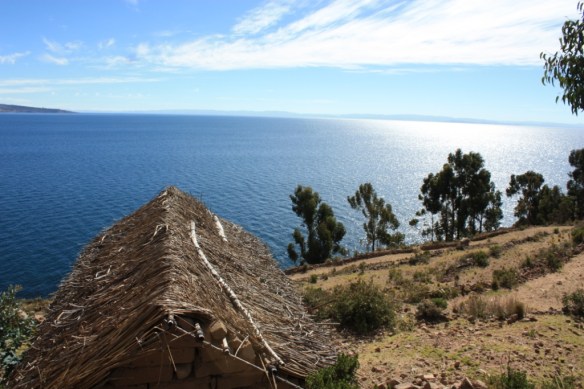
Taken in June of 2010 on Amatani Island

Children’s Day at Cubbon Park in Bangalore

Taken on November 15, 2015 in Cubbon Park
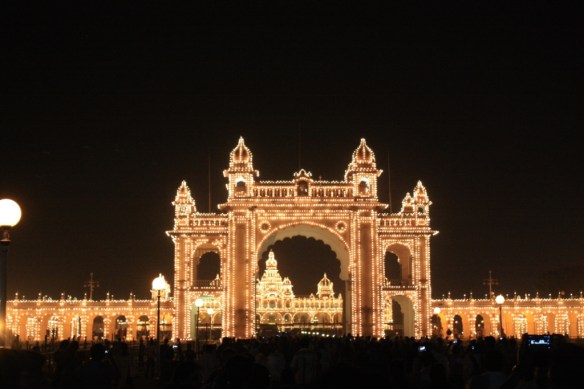
Taken in October of 2014 in Mysore


