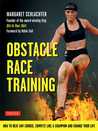
 Obstacle Race Training: How to Beat Any Course, Compete Like a Champion and Change Your Life by Margaret Schlachter
My rating: 4 of 5 stars
Amazon page
If you’re a neophyte to the obstacle racing scene, as I am, this is the book for you. That’s not to say that it wouldn’t be useful for someone with some experience, but if you’re a competitive racer looking to shave time off your runs to boost your standings, I suspect you might want more detail on some topics (e.g. details on various approaches for getting over/under/through/around particular obstacles and more explanations of variations on obstacles.) That said, this book hits the Goldilocks zone for someone who has no idea what they are doing, but would like to give some form of obstacle race a try. (i.e. Not so much information as to be overwhelming, but not so little that you’ll be unprepared to have a good run.)
It’s a short book, less than 200 pages, arranged into 18 chapters that are in turn divided into five sections. The first section introduces one to obstacle course racing. While this sport / social event (there are both competitive and non-competitive participants involved in most races and some events are more about comradery than competition) has been growing wildly in popularity in recent years, there will be many readers who are completely unaware of it. However, by the end of these first three chapters you’ll have a thorough sketch of the scene. The rest of the book goes through what one needs to do long before the race (e.g. picking a race, training [general fitness as well as obstacle-specific], and dieting), immediately before the race (e.g. dressing for the race and eating / hydrating for the race), during the race, and after the race (e.g. recovery, choosing a next race, and moving forward with your participation.)
I found this book to be packed with valuable information (e.g. The mantra DON’T WEAR COTTON ON RACE DAY will be forever etched into your brain.) I found Schlachter’s practical, no-nonsense approach to be a breath of fresh air. For example, with respect to diet, her advice is sparse but invaluable. Basically, it boils down to “eat good food in the portions needed for your body.” It may sound like I’m being dismissive, but I’m not. I appreciate her making sense on the subject and not drawing it out with fad baloney diet (figuratively or literally) quackery. (Pet peeve: I really don’t like hearing about people’s ludicrous ideas about how one can eat a pound of bacon a day, but you’ll die if a slice of wheat bread or a wedge of orange goes in your mouth.)
There are several nice features of this guide that I’ll mention specifically. One is that it has a chapter that shares insights from other high performing obstacle course racers. This gives one some useful and varied advice. Second, it actually shows one how to make a couple of obstacles, e.g. walls and spear targets, that are either common or challenging. Finally, it gives one tips for making this an affordable hobby. (If you’re at the stage of reading this book, you’ll probably have to pay the entry fee out of pocket—no sponsors– and have little to no chance of running well enough to earn winnings.)
If you’re considering running an obstacle race, whether a mud run or an obstacle course race, I’d recommend you give this book a read.
View all my reviews
Share on Facebook, Twitter, Email, etc.

 The Essentials of Obstacle Race Training by David Magida


