Why I’m a Slacker Lately: or, Mysterious India

What's this India I hear so much about?

What’s this India I hear so much about?

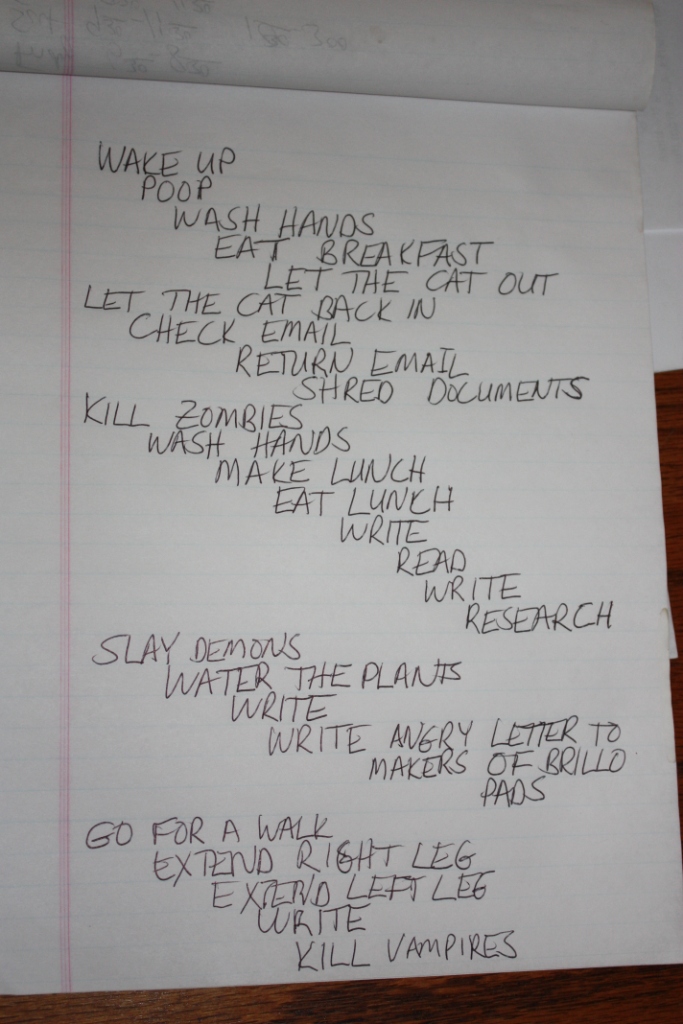
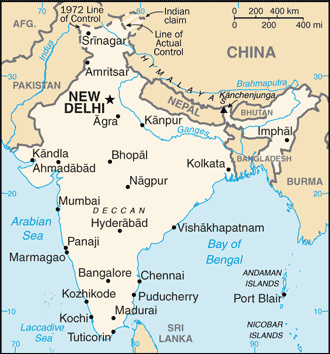
I haven’t been writing, editing, or conducting research much as of late. This has probably gone unnoticed in the vastness of the cyberspace, but in the spirit of blogging I thought I’d answer a question that no one asked. I recently learned that my wife and I will probably be moving to Bangalore, India later in the year. This has kept me physically occupied with home repair and boxing up the house. In my non-labor moments, my mental faculties are largely devoted to understanding the country in which I will be living. I’ve never been there before.

India is a harder nut to crack than one might think. Yes, there is the obvious. At 1.2 billion people, it has the world’s second largest population and is screaming up on China for number one. It’s the seventh largest country by land area. It’s the birthplace of that most excellent yoga that keeps all the twisty people twisty. It’s home of tandoori chicken and naan bread, both of which I love.

However, that’s all superficial. I must sadly admit that–until recently–my in-depth knowledge has come from three sources:

1.) The Jungle Books by Rudyard Kipling

2.) A junior high school field trip to see the film Gandhi, which I had been under the impression was six hours long, but, according to Wikipedia, is only a little over three hours long. I guess that, just as kids think everyone is taller, a kid’s perception of Oscar-winning motion picture run times is greatly distorted.

3.) A ton of reading about the Indo-Pakistani rift and its strategic implications as a graduate student studying International Affairs with a focus on Strategic Studies.

With respect to number 3, the amount of study of this region was not commensurate with the fact that the Indo-Pakistani border region is generally voted “Most Likely Point of Origin for Global Nuclear Winter.” I’m not suggesting that the relationship between India and Pakistan is any more dysfunctional, unstable, or rooted in irrationality than other relationships between nuclear powers. However, the adjacency of the two countries is a problem from the perspective of strategic stability.  When alarms went off in the U.S. or the U.S.S.R. back in the day, there was at least a little time to evaluate and communicate. Being next-door neighbors makes the Indo-Pakistani conflict particularly troubling. That said, they’ve had some pretty big strain tests on their relationship without blowing up the world, so that’s a positive sign.

So why does this country, which should be so front and center in the global consciousness, remain so mysterious? One way we know countries is by those grand competitions through which nations–friends and enemies alike–interact.   In this domain, India really hides its light under a bushel. India has won 26 Olympic medals in 23 games, this is fewer than either Kenya or Jamaica–and both of those countries did it in fewer games. Yesterday, in a post about a book by Nobel Prize-winning Hungarian, Imre Kertész, I may have mentioned that Hungarians have won 12 Nobel Prizes–that’s more than India by a large margin.  Now, while India has had its problems, it’s 100 times more populous than Hungary, and has a history of publishing scientific literature in English (an undeniable advantage in this domain.) Depending upon which country Rudyard Kipling is counted toward, India has either eight or nine Nobel Prize wins. Of course, it would be ridiculous to think that India doesn’t have the human capital to excel in such domains.  While I realize it may not be a representative sample, I think almost every Indian I’ve met in person has had an advanced degree and has been smart as a whip. So it’s certainly NOT true that this is a country that undervalues education.  With a third of the world’s population, statistically speaking, they must be home to physical and mental specimens of humanity that are as impressive as any, but somehow either the will or ability to convert that human capital into winners on the global stage is missing.

I do know a little more about India. It’s the birthplace of both Hinduism and Buddhism, as well as a bunch of other religions. As a martial artist, I’ve heard that  many believe most Asian fighting systems could trace their origins back to India. I don’t know how much truth there is to this belief. Martial arts always evolve into optimization with the local conditions and culture, and, therefore, a lack of superficial similarities doesn’t discount the possibility of such a connection. One of the origin myths the Indo-centric martial arts is the story that Bodhidharma brought a fighting style to China that would be the stepping off point for most of the myriad Asian martial arts. The current consensus among historians seems to be that this part of the Bodhidharma story is not true (See: Meir Shahar’s The Shaolin Monastery.) However, that being said, there is an odd but clear connection between this most pacifistic of world religions, Buddhism, and some of the world’s most kick-ass martial arts. Whether one is talking about China’s Shaolin monks or Japan’s legendary warrior-monk Benkei, it’s clear that some exceptional martial arts have developed in tandem with the spread of Buddhism. Of course, even this just creates more questions, namely: Why should a pacifist religion have legendary fighters sprouting up anywhere near it?

I’m looking forward to getting to know more about India than that it’s huge and its Chicken Vindaloo is scrumptious. It’s a country with a long and intriguing history. I want to see its jungles, its deserts, its mountains, and its beaches. I want to visit its temples and learn from its sages. I’m eager to see its vivid colors and smell [at least some] of its pungent scents. At some point I expect to have some awesome posts about my time there, and hopefully some bold pictures as well. In the mean time, please forgive my slacking.

Early Spring Haiku

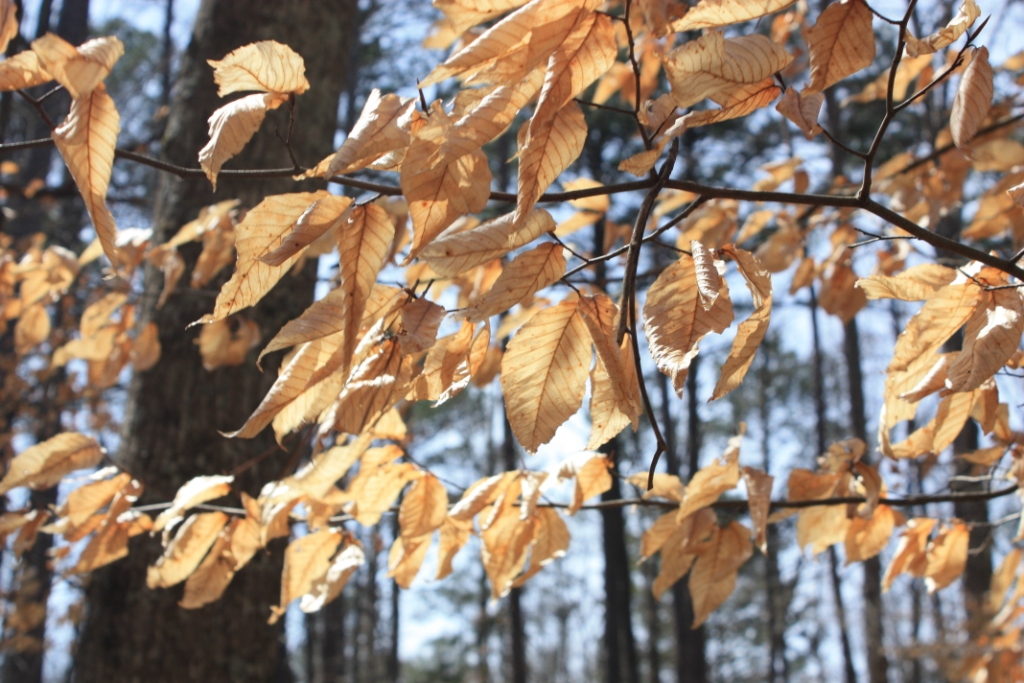
IMG_5325

stalwart Beech tree
still gathering sunlight
on last year’s leaf

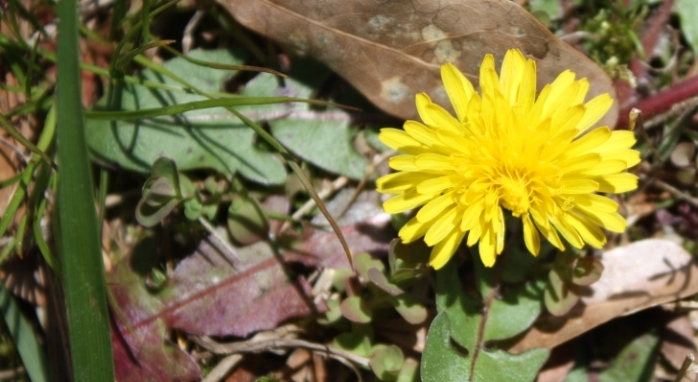
IMG_5315

dandelion
arrives to party first
eager flower

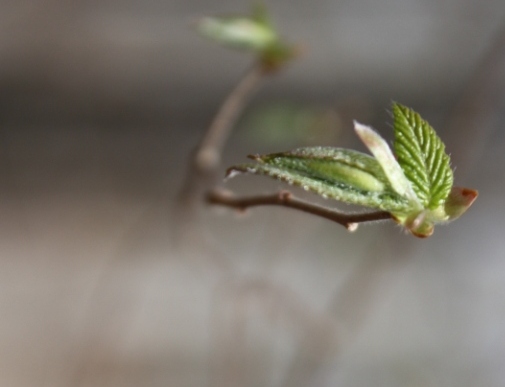
IMG_5346

a bud breaks open
its tiny leaf waves hello
welcoming the spring

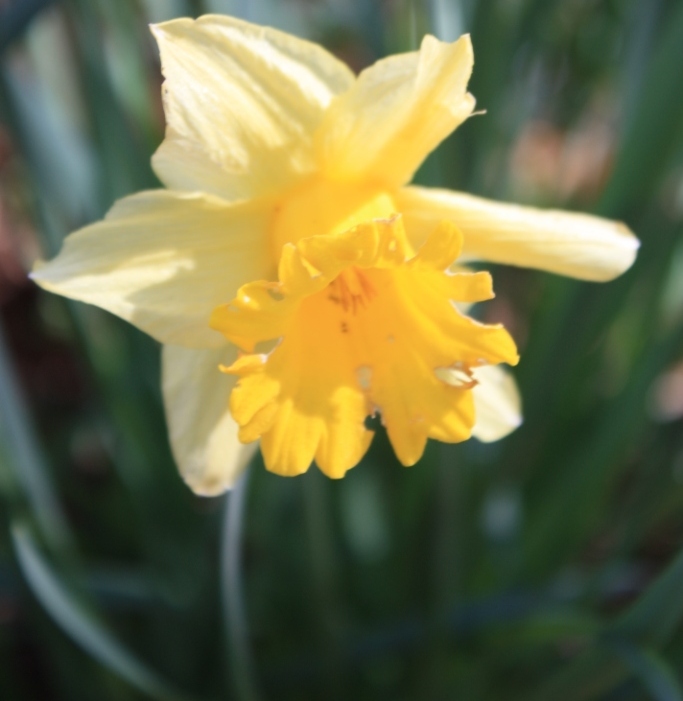
IMG_5350

spring’s urgent leisure
flowers drop a fine pollen
to ride listless winds

POEM: Do They Really Sleep?

Are these sleepy  little villages and hamlets really tucked into bed by eleven?

When my train rolls by and there is nothing on display to my bleary eye

except vacant roads, dark shadows, and the dim glow of night-lights.

Cars are still; people are absent; time is frozen but for the wind-blown hedges.

But do these villages go to sleep, or do they just turn off the lights

and do those things which should not be subjected to the light?

POEM: Overcast Day

Clouds tugged themselves over the city like a thick quilt
adding to the gritty gray inner-city nightmare.
I rode through this monochrome madness
without seeing a person on the sidewalks.
I felt their eyes peer down through ash-covered windows,
like a hand running over the tips of tiny hairs on my back
A high-pitched tone sounded in my ears
filling the void of chirpless birds and dumbstruck relicts

It can’t be long now.

WRITING DEVICES: The Author Cameo in A Dead Hand

I’ll soon finish reading a novel by Paul Theroux called A Dead Hand. I won’t get into the details of the book in this post because I’ll do a review later, but there’s a writing device in it that really intrigued me. Theroux inserts himself into the novel in a cameo role as a competitor to the protagonist. That is to say, the main character is a traveling writer who writes mostly magazine articles, while Theroux a prolific writer famous for travelogues such as The Great Railway Bazaar and Ghost Train to the Eastern Star,  as well as for many novels which are written with a travel writer’s sensibility for location. (A Dead Hand takes place in and around Calcutta, India.)

I enjoyed the author cameo. It would only work well for a writer like Theroux, one who is both well-known and, because of his nonfiction work, who readers have a feel for as a person. Still, I couldn’t think of another novel I’ve read in which this has been done. I’ve only read Theroux’s nonfiction so far, so maybe this is a running gag with him.

Inserting himself offers some opportunity for adding humor. For example, there’s a part in which the main character’s friend, who is also a go-between who introduces the two writers, says, “He [Theroux] said he wanted to take the train from Battambang to Phnom Penh.”

To which the main character replies, “He would. The bus is quicker!”

This technique also gives one the impression that we are getting some inside insight into the writer. When the main character mistrusts the author, how are we to process that?

Granted it’s a little like an actor looking into the camera and talking straight to the audience.

I’m interested to hear if this is a more widespread technique than I’m aware of? Who else does this?

Life by Lists

I remember when I could remember,
but these days I invariably forget.
My life isn’t even in its September
but by absent-mindedness I’m beset.

My keys? My keys? Where are they please?
I’ve searched from ceiling to floor.
My keys? My keys? Where are they please?
No, I’m certain I didn’t ask that before.

Once I juggled a hundred tasks right within my mind.
Now I need write a list if they number more than two.
Buy stock in the makers of legal pads, if you’re so inclined
What were we talking about? There’s something I need to do…

Daily list

Daily list

MICRO-FICTION: Julia Doesn’t Know How Lucky She Is

IMG_2555“Have you completed your mission? The Council grows impatient,” The thought occurred in Safrom’s mind as if he had a split personality rather than an angry disembodied consciousness in his head.

“No, we were very close to planting it last night, but the cat came in squawking and making racket. It woke her up just before we could get it set. Those damn cats will be the death of me.  The preceding night we managed to keep one out all night, but the other slept on the subject maintaining constant vigilance,”  Safrom said aloud as he paced around the sterile white space of his station.

“The subject travels, why don’t you just do it then?” The thought formed.

“Believe me, I would love to, and we make great efforts to do so. But it is not as easy to track a person through thought-space as it is in the physical world. If we can ever get the damn implant installed, that will, of course, change immediately. Most of the time she is not gone long enough for us to find her, and on the few occasions she has been, or we’ve been lucky, she hasn’t slept deeply.”


“RRRrrrarr-eeeow …  RRRARRrrr-eeeow… RRArrra-eeeow,” the noise came from floor level.

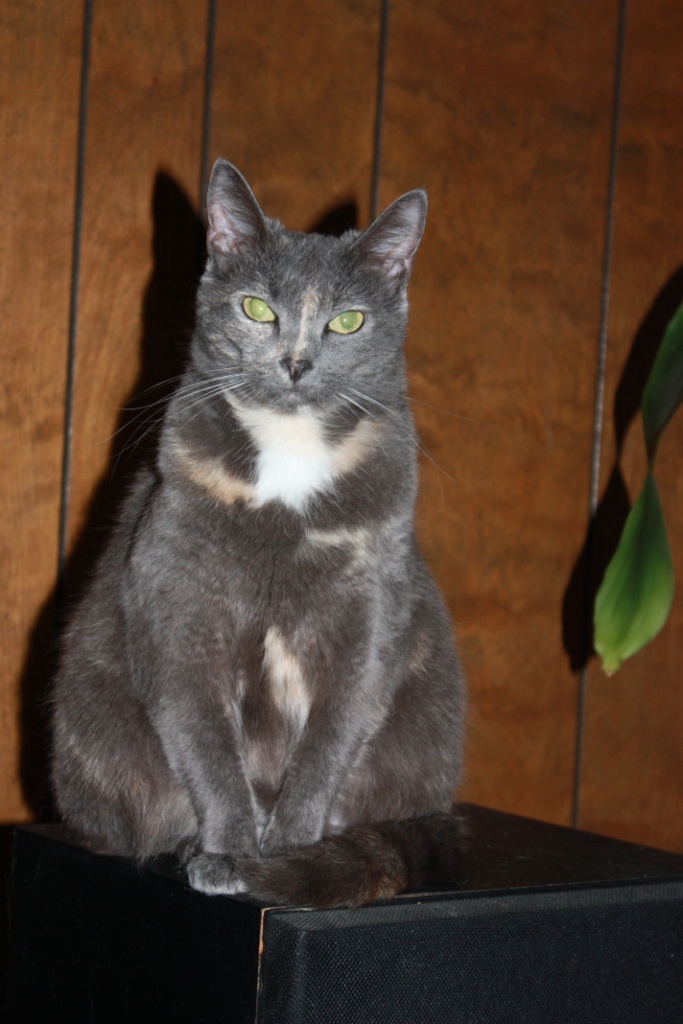
Julia pushed herself upright groggily and swept a shock of black hair out of her face. She stared at the gray cat illuminated by a shaft of streetlamp glow that slanted in through her bedroom window, and said, “Really! You’re really waking me up from a sound sleep in the middle of the night?”

The cat stopped its bellowing and sat back on its haunches, looking at Julia indifferently. Then the shorthair trotted out of the room and down the hall.

Julia lay back down melting into a down pillow and drifted back to sleep while wondering what made her cat do that. What makes a cat that has been fed and is never let out at night, repetitively caterwaul until its owner wakes up, and then it just goes back to its indifferent self?


Julia yawned aloud. “Excuse me. My cat woke me up in the middle of the night three times for no apparent reason.”

“Does it do that a lot?” Erma asked.

“It comes in waves, but, it seems to have it down to a science. It always seems to do it when I’m in the deepest sleep, usually in the middle of a weird dream.” Julia elaborated.

“What was your dream about?” Erma asked.

“Ah, you know, it was a dream. It didn’t make much sense. I was being chased?

“Being chased by whom?”

“I don’t know. I never see them, but it always feels as though they are just about to catch me.”

“Maybe the cat is doing you a favor.”  Erma said in a completely somber tone.

“Yeah, right, maybe.” Julia replied with a grin. She assumed Erma was joking, although there was nothing in the older woman’s expression to indicate that she might be.

Erma changed the subject, “So how is your research coming?”

Julia shrugged and said, “I don’t know. I’m feeling a little overwhelmed as of late. I keep pulling up new material, but, as I do analysis, I don’t seem to be converging on an explanation.”

“It’ll come, you’ve just got to keep at it, and never up. If you never give up, a solution will always present itself.” Erma said with a smile.

“I suppose.”

“You know the thing about cats is…” Erma began.

“What’s that?” Julia inquired.

“Aww, never mind.” Erma said.

Evangelists Meet Max Their Match

BING-BONG.

Without even looking up from his computer, Max knew it was church people. They came around trying to sell him a religion now and again. No one sold aluminum siding, encyclopedias, or ice cream door-to-door anymore. Evangelic proselytizers were the last bastion of door-to-door salesmanship. The sect varied; the approach did not. They were the only ones who ever disturbed his peace.  Well, the only ones who didn’t use the phone.

He went to the door. It was a zaftig woman and a clean-cut young man–both dressed in funeral-like attire.

“Hello!” the pair said with practiced exuberance.

“Hello,” Max parroted with a decided lack of exuberance. Then he added, “May I help you?”

Max didn’t feel like being helpful, but there was the off-chance that it was  a couple of his neighbors who were just looking to borrow a cup of sugar so they could bake cookies for whatever wake they were attending. If so, he’d help them out, but as far as he knew such a request hadn’t happened since 1955. Then he saw their name tags, and not the paper kind. These were black plastic bordered in gold with white letters.

“We’d like to talk to ya ‘bout the Bible,” the woman said.

“Unless it’s the racy bits, I don’t think you’ll hold my interest,” Max said.

“Excuse me?”

“Never mind.”

“Have you ‘cepted Jesus as your personal Lord and Savior?” the woman asked. The young man was silent, apparently just there in case the woman knocked on the door of a Jeffery Dahmer-type.

Max was distracted by the words “personal lord”, and how odd the phrase seemed. Can I get my Messiah in Mocha with a burgundy robe?

After an awkward pause, he said,  “No, I’m an atheologist.”

They gave a coordinated grimace as if he’d dropped a deuce at their feet. “You’re an atheist?”

“No. I said atheologist. An atheist is one who does not believe in God. I believe in God. I just don’t believe in religion.”

“You cain’t have Gawd without religion.” The woman said.

“I beg to differ.”

“How’d ya know Gawd, elsewise?” The woman continued.

Max swept his hand outward in a gesture meant to draw the pair’s attention to the flowering dogwood in his front yard and the sky beyond. Their forehead creases indicated that they were both perplexed. The meaning of his gesture was lost on them.

“You cain’t know Gawd without religion,” the woman repeated, as if Max just hadn’t heard her the first time and if she said it more emphatically he would get it.

“You can repeat a gratuitous assertion ad infinitum, and it will remain an assertion,” Max said.

Neither evangelist gave any indication that they understood what Max was saying.

He sighed, stepped out onto the porch with them, and said, “Look. First, let’s ask what God gives us.” He leaned out under the eaves to look at an azure sky feathered by white wisps of cirrus clouds. This time they followed his gesturing arm and looked out with him at the bounty of nature. “Now, let’s consider what religion offers us. May I?”  He said as he reached for the thin little magazine that they had prepared to leave with him.

Max was taking a risk. He couldn’t know exactly what it the magazine would contain, but he’d seen enough of them to make an educated guess. There it was, right on the cover. He didn’t even have to flip through in search of it. The cover artwork was a dark sketch of a treeless city with brooding clouds drifting at the tops of buildings. The buildings were in ruins, and there were human-shaped lumps on the ground –meant to be either corpses or homeless people. It was a story about the fall of man or the coming apocalypse or some doom upon whose cusp humanity sits.

“Here we have it. Religion doesn’t show us beauty. It wants me to be afraid. It wants to scare me. It wants carnage and chaos to be my lodestar. It shows me horrors so that it can be my life-preserver. It wants to be my life-preserver so that I’ll substitute its will and wisdom for my own. It wants me to believe its leaders are infallible so that I’ll feel good about giving up control. It wants me to behave as its people behave. Most insidiously, it wants me to hate the people who it hates… This is why I don’t believe in religion. Thank you for your time,” Max said as he handed the Doomsday Gazette back to the woman and walked back into his house, leaving the two slack-jawed proselytizers in his wake.

Sharing Stories of the Plaguepocalypse

[I’m recycling this from a Figment competition that I once entered–and lost.]

Day 100, Post-Apocalypse

Day 100, Post-Apocalypse

JB and I worked tediously to find and repair damaged insulation on the main from the solar farm down to our bunker. Breaks or cracks in the insulation meant lost energy that we could not afford, but we had to bury the cheap cable available to us because the Mojave sun degraded it too rapidly otherwise. Burying the line invited a whole new problem because burrowing critters then began to gnaw on it. Whenever there was a power drop, two of our trio had to come out and do line maintenance.  Output should have been at its maximum given it was mid-day during the hottest time of year, but, instead, we were experiencing a sixty percent drop in power.

We wore white from head to toe except for a slit in our ninja-like masks where sunglasses covered the unclothed region and protected our eyes from the harsh rays and glints.  This had always been a harsh land, but changes experienced in recent decades made it far hotter.  I sucked a mouthful of water from the bladder that lay next to my body under my baggy white clothes. The water was hot, like a freshly brewed cup of tea—sans the tea.

“Son-of-a…, sweat is stinging my eyes,”  JB said as he removed his sunglasses, and blotted his eyes with his sleeve.

“Put the shades back on. We can’t have you getting burned retinas,” I said.

“Yeah, yeah, if I go blind who’ll come out here with you to dig up line?” JB’s reply dripped sarcasm.

“Exactly, now you’re getting it,” I said.

JB wiped his eyes once more, and then put the glasses back on. Without the shades, the surroundings looked like the Mars of old movies – cast in a reddish hue.

“I think I’ve got it,” JB called out.

“Looks like it,” I replied, leaning over to look in JB’s newly-excavated hole.

A mole rat skeleton had its teeth buried in the insulation.

After removing the rodent, patching the insulation, and putting the sand back, JB and I walked back to the hatch of our bunker.

JB crouched over the opening. He touched the metal lip of the hatch and immediately yanked his hand away while screaming an expletive. The gloves were not thick; they were for keeping the sun off the skin while holding in as little heat as possible.

JB called down the shaft, “Brit!”

“What ‘cha want,”  Brittany replied.

“How’s our power level, we pulled a fried mole rat off the line,” I asked.

“Yum!…,  The power is back to normal,”  She called back.

I followed JB down the long ladder into the bunker. I pulled the hot hatch closed behind me and secured it against some unlikely foe.

“We need to protect that line somehow,” I said

“I’m just glad we didn’t have to hump out to the transmitter. The last time it broke down I was loopy with dehydration by the time I got back. You sure this is the only place for us to live?” JB said.

Brit came in with two cups of water and handed them to JB and myself.  She said, “I’ve got the loop broadcasting again and the receivers are turned up loud.”

“If you can come up with someplace else where we can tap into the energy necessary to keep broadcasting, I’m all ears,” I responded.

“That’s just it. We’ve been broadcasting all this time, and we’re not getting any reply,”  JB said.

“We also don’t know whether this climate is responsible for our good fortune,” I said.

JB had no response.

“Good fortune? Oh, my, I feel like such a princess.” Brit said curtseying with her fingertips bunched up and wrists kinked as if she were holding up a skirt.

“I mean being alive,” I clarified.

There was a silence.

Brit spoke up, “Remember people?… I love you guys, but I’d give anything to meet a stranger. Remember the last time you saw a crowd of strangers.”


I did, indeed, remember.

I was planning on going to Union Station to get out the Los Angeles. Before I left my apartment, I saw a news story showing the train station among all the other avenues of disembarkation that were thronged with people.  The streets outside the station were flooded with a throbbing, undulating mass of humanity. As in the mosh-pit of a rock concert, there were two primary classes of people: those who were screaming and those who were suffocating. Mixed in among these were glassy-eyed souls who had the good sense to realize they were the walking dead, and to behave accordingly.  There were images from packed train-less platforms, and the grandiose cavernous waiting area.

I packed my gear and donned boots so as to be prepared to hike out of town if necessary. It proved to be a wise move, because I when I arrived at the train station the wall of humanity was impenetrable.

I hated crowds. Crowds were noisy, hot, and chaotic.  My hatred of crowds saved my life. Nature has its weird ways. I had once read about ants that could take down a fully grown cow. They did this by covering the animal benignly, and then, upon a release of a pheromone from the ants on the creature’s head, they all stung at once. This malady, a hemorrhagic fever of some sort, was similarly impossibly intelligent and geared toward wiping out the entire species. It seemed to know when its victims were within a crowd, by what mechanism I cannot imagine, and it would then send them into sneezing and coughing fits that propelled droplets of virulent blood in a fine mist to those all around.

Now I missed crowds, because they were a sign that one’s species wouldn’t die with oneself.

JB and Brit had taken to telling each other their own last crowd stories, which we’d heard before. We’d heard all of each other’s stories.

Well there was one story that I kept for myself. It was the story of the day before I met up with Brit and JB. It was my nadir.

I had been hiking east from the city. My path merged with the I-40 corridor, and it was the most horrific day of my life. I’d always been an avid hiker and had spent long periods on my own before, but these times of solitude were without signs of humanity. As I came upon I-40, there were people all around -in cars and on the ground, but they were all stiff and had rivulets of brown or red running from their noses, mouths, ears, eyes, and presumably the unseen orifices.

When I saw a monastery on a hillside, I thought I was saved.  Surely the isolated monks or nuns were safe and would help out a weary uninfected traveler? I found an old stone church that was post and beam on the inside. Anyway, my hope faded when I found the pews had been used as hospital beds, and all, patient and caretaker alike, were bled out. The only signs of life were rats on the floor, weeds in the mortar joints, and birds in the rafters. That was my moment of greatest loneliness, for if God had abandoned his own house, what hope was there for me.

POEM: Twisted Time

Six months a year
the river flows
away from the sea.
Entropy’s fall?

No.

The fits and starts
of progress are
not rooted in
twisted time.

Here,
blacksmiths exist.
The hammer bounces
on the anvil

Tap-Tap-CLANG
Tap-Tap-CLANG

Ordered repetition,
until the steel begins
to bend and twist
and flex and tear.
It tears like taffy,
taffy glowing orange.

Tap-Tap-CLANG
Tap-Tap-CLANG

What is time for
that glowing rod?
The fire makes
its molecules
race and feud.

The hammer spreads
time into an eternity

of

Tap-Tap-CLANG
Tap-Tap-CLANG

Taken in Hungary in 2008

Taken in Hungary in 2008