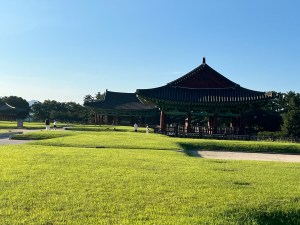
late afternoon sun
penetrates the pavilion —-
causing napper’s turn.

late afternoon sun
penetrates the pavilion —-
causing napper’s turn.

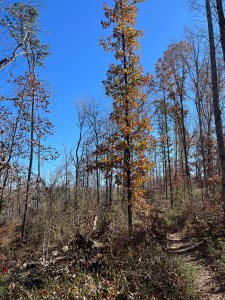
through the Autumn,
one tree holds leaves longer,
then drops them faster.
I assume just a little more of all the things I already do, with a substantial amount of that time being spent in rest.
The thought, “If I didn’t have to rest I could do so much more” is one of modern life’s most cancerous modes of thinking.
Didn’t we all learn during the pandemic that when commutes and other travel / in-person time obligations go away, life fluidly swells to fill the void. Like having to learn Zoom, etc.
Life gives no free lunches, learn to live with it.
Do you need time?
I suppose I do. Without it, instead of life being one thing after the other, it would be everything all at once. The latter seems chaotic. But maybe one could get used to being timeless. I have no basis for comparison. I’ve always been just in time. Come to think of it, it would be nice not to have to conjugate verbs.
What are you doing this evening?
Who can know such things? I’m not a fortuneteller. But as I just came off a travel cycle, a betting person would put his money on something sleep related.
My ideal week would consist of seven days, each day of about twenty-four hours. You could fit four of them in a month with room to spare.
When all is quiet and harmonious, and one anticipates good things are to come.

summer day from shade:
time attunes to floating
clouds and ducks.
Sparrows cast on my desk their shadows in pair,
And willow down falls in my inkstone here and there.
Sitting by the window, I read the Book of Change,
Not knowing when has Spring gone, I only feel strange.
Note: This is the joint translation of Xu Yuanchong and Xu Ming found in the Golden Treasury of Quatrains and Octaves (a Bilingual edition of 千家诗 “Thousands of Poems”) on which they collaborated (i.e. China Publishing Group: Beijing (2008) p. 40)