PROMPT: Topics

Which topics would you like to be more informed about?

I’d love to know why the fundamental equations and constants that govern the universe appear to be tailor-made to generating life?

I’d love to know whether there is other intelligent life in the universe, and – if not – why not? (And, if so, have they visited, are they visiting, do they intend to visit, and – if none of the above – why not?)

I’d love to know whether there is meaning to life other than moving energy to higher states of entropy in a Sisyphean fashion (and any other meaning that one independently chooses for one’s self?)

But I’m doubtful any of that will be clarified in my lifetime, so I guess I’ll have to stick to more down to earth topics, such as: “Is ‘a good life’ a meaningful statement, and – if yes – how does one go about pursuing one.”

PROMPT: Favorite Word

What’s your favorite word?

I like the German word “Schadenfreude,” meaning to take joy in another’s misfortune.

I like the idea that a person can be so in touch with their dark side that they can express that bit of pettiness in a single word. So much of language is obfuscation and deceit. Southerners use four words (i.e. “God bless his soul”) to say a person is an idiot, and – even then – the meaning is masked.

Schadenfreude is authentic, and we need more authenticity in language.

PROMPT: Ideal Home

Daily writing prompt
What does your ideal home look like?

It should be small enough that I won’t acquire new things without asking whether they are necessary, and whether their value exceeds their spatial cost. [And, also, such that it encourages spending time outside.] Besides that, it should be an environment within which one can live healthily.

PROMPT: Writing

Daily writing prompt
What do you enjoy most about writing?

First, the infinite variety of ways it allows one to express oneself. Second, the puzzle of dancing letters into sentences. Finally, the thought that the right combination of letters might cause someone to pee himself.

PROMPT: Curiosity

What are you curious about?

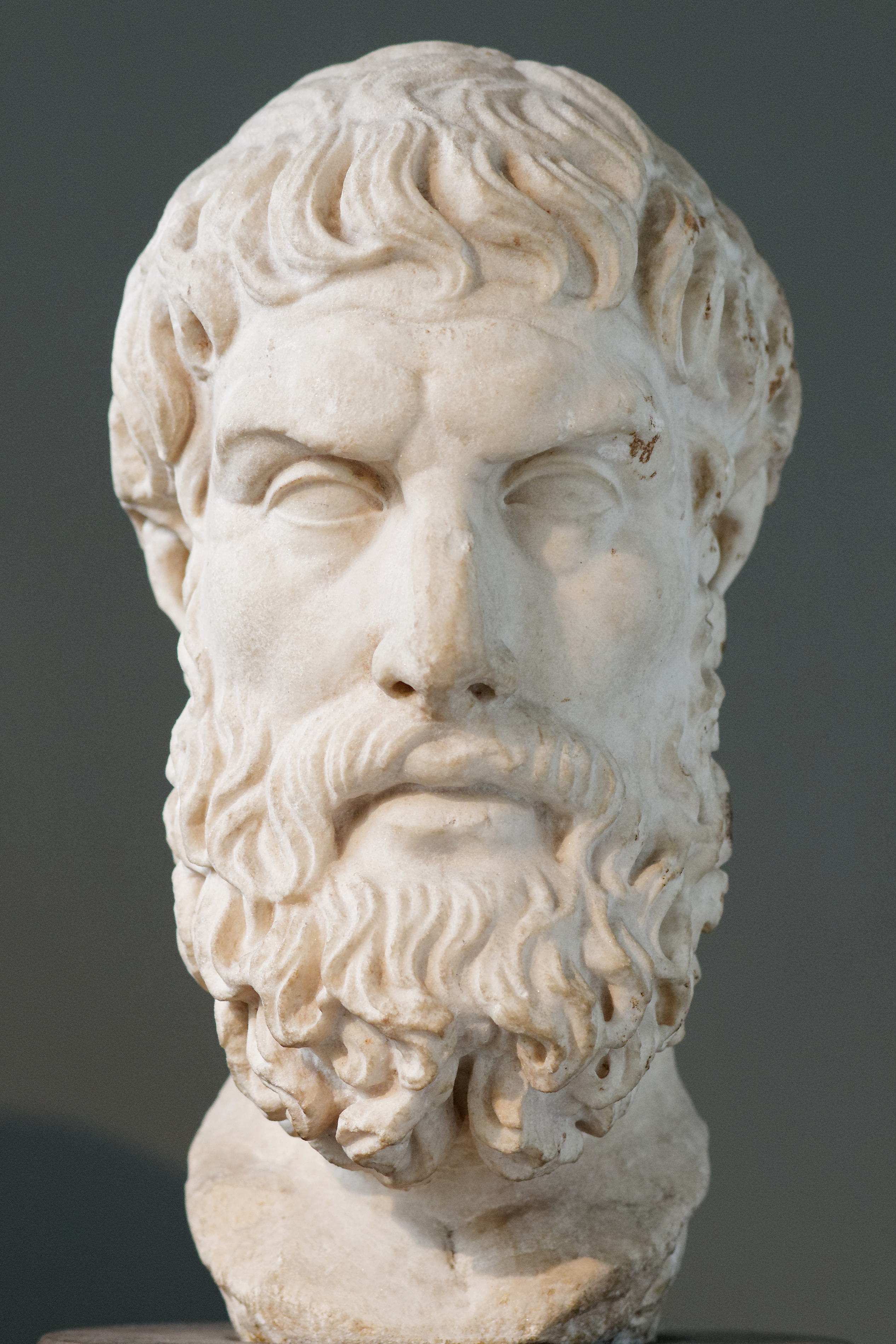
Everything. But I have learned to be less obsessed with the grand metaphysical questions for which no one has any defensible answers – just rank speculation. Socrates convinced me it’s not worth worrying about abstractions while one is still struggling with fundamental questions of how to be human.

Flat Fog [Free Verse]

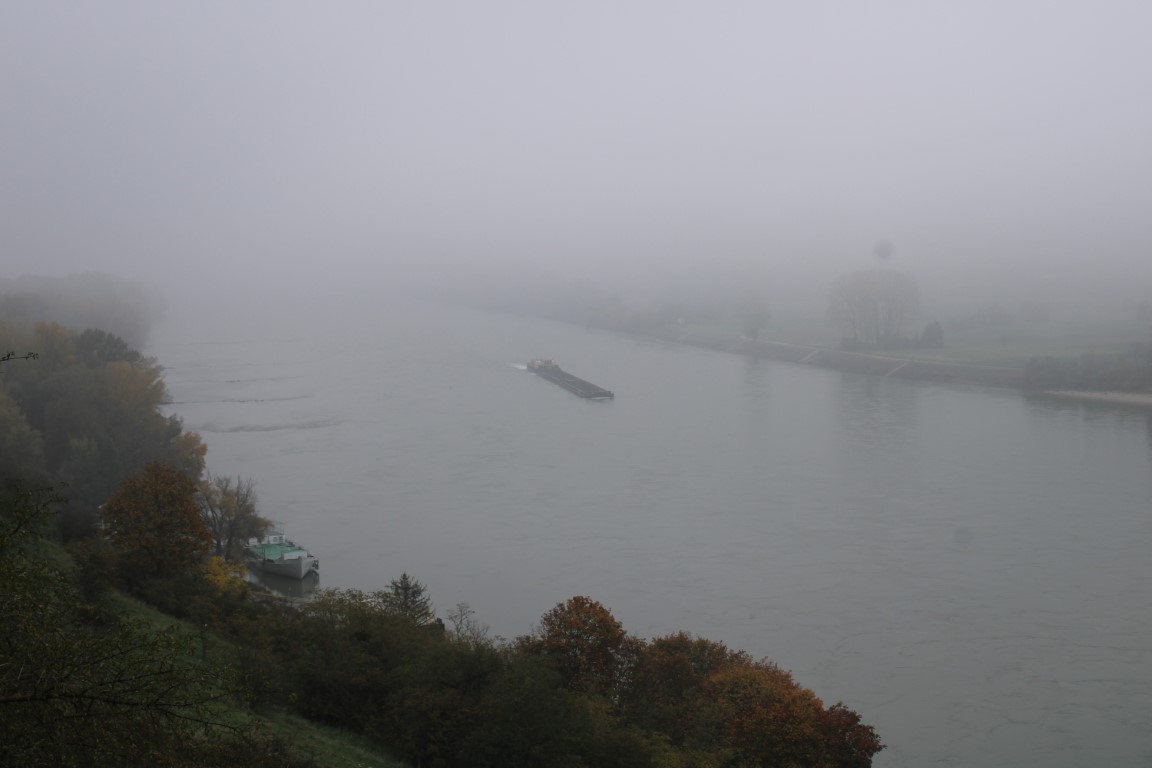
Stationed in East Anglia,
   I remember layered fog,
     fog so thick one couldn't
     see past the hood's end,

but, given a slight rise, 
   one could see all the way
   down the runway -- as if
   it was a cloudless full moon eve.

As one might expect of an airbase,
   (having been built around a flat runway)
   there wasn't much topography.

But sometimes life is like that:
   a tiny rise in perspective 
   allows one to see the world clearly,
 
but a minor dip puts one in a
   soup of unfathomability.

Agents of Wear [Free Verse]

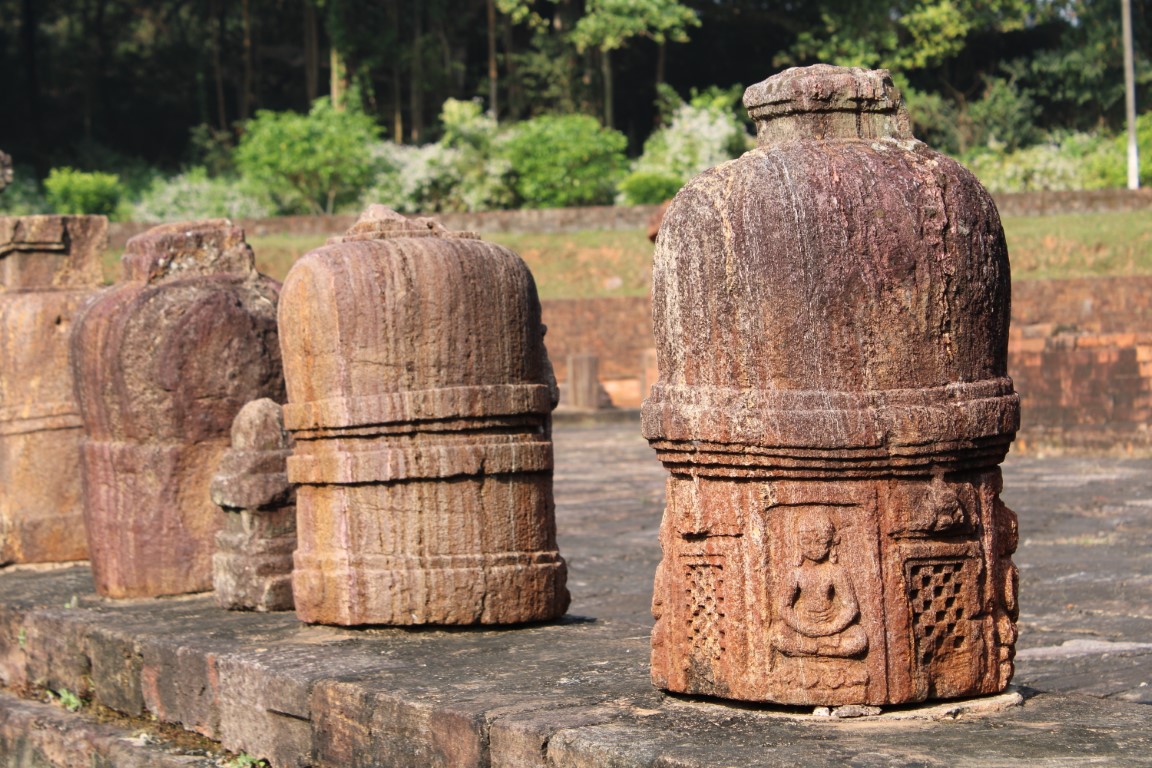
Sun, Rain, Wind,
   & other agents of wear
 that tear down ancient stones
   one grain at a time,

eroding symbolic rocks
   carved with symbols 
   that meant something
   to people in days of yore.

And they mean something
   to people today,
   but whether those meanings 
   match is another question...

Because our understanding 
   of past perspectives 
   is ever eroding:
   just like those rocks,
 but - unlike rock - 
   thoughts and beliefs
   were wisps writ in a
   malleable art: language.

We cling to traditions & lineages,
    but everything is erased. 

PROMPT: Modernity

Daily writing prompt
What would you change about modern society?

Modern mankind traded a life of struggle with occasional moments of terror (e.g. saber-tooth tiger attack) for a life of comfort with constant nagging anxiety (e.g. 40-, 60-, 80-hour work weeks and constant deadlines,) and hasn’t adapted well in the process. As such there are more mental health problems, inability to deal with adversity (or even conflicting ideas,) and an inability to exploit the freedom available. (i.e. The Enlightenment and subsequent liberal movements ensured that government and employers can’t exert undue influence over individuals’ lives, but still most people remain heavily constrained in their pursuit of self-betterment / self-realization by their exhaustion, comfort-addictions, or anxieties.)

There are two interrelated changes that I think would make for a much healthier society. First, education needs to put back some Socratic learning in education — i.e. active engagement of students with thinking and questioning [versus memorizing and skill practicing.] Presently, we have people graduating from colleges who may or may not be prepared for a job of corporate minionship, but who – upon hearing an idea that they find disagreeable – are unable to do anything but be angry or scared or anxious [i.e. from an idea.] An education that challenged students to contend with ideas (be they ideas that seem uncomfortable or feel reprehensible) through dialogue and critique, would convey some of the emotional intelligence (the lack of which has hamstrung our species, a species that may have intellectual intelligence out the wha-zoo.)

Second, we should have some sort of true coming-of-age ceremony of the variety only a few indigenous / tribal societies still do. I don’t mean a Bar Mitzvah or Quinceañera where the child is thrown a party and then they collect envelopes of cash. I mean the kind in which one goes out in the woods for seven days and stays alive solely of one’s own abilities. It’s true that we would have fewer human children, but the ones who came back would not only be more capable but would also be more in command of their emotional and mental selves. [And, to be perfectly frank, the last thing this planet needs are more humans running around — especially ones who need a vast carbon footprint to merely stay alive.]

Finally, we all need an intervention for phone / computer addiction: maybe two weeks in which there is no internet availability, whatsoever.

PROMPT: Certainty

Daily writing prompt
List 10 things you know to be absolutely certain.

Every source of information is flawed and / or of limited value as a source of truth.

There is beauty everywhere (but to see it one has to let go of one’s compulsion to attach value judgements to everything.)

People who know more things for certain are wrong about more things.

A better life comes of being content with less than of having more.

There is a force, we’ll call it gravity, that keeps my feet to the floor (or insists that I either fall or expend energy to break the surly bonds.)

With respect to that which one can’t know for certain, it’s closer to truth to remain ignorant than to be deluded.

The world that I perceive isn’t the world, itself.

All else being equal, a diverse group of people is stronger, smarter, better looking, and more effective than a homogenous one.

If the same level of effort were put into fostering emotional intelligence as is put into mental intelligence… what a wonderful world it would be.

One who hands you knowledge but tells you to drop it like a hot rock if it doesn’t stand up to your own experience and rationality is more trustworthy than one who hands you knowledge and insists you hold onto it with white-knuckled intensity.

The Abyss [Free Verse]

Nietzsche said:

“And if thou gaze long
   into an abyss,
  the abyss will also
    gaze into thee.”


I must admit
   the first several times
    that I read this quote,
  I couldn’t tell if it was wise,
    or just had the patina of
     wisdom that comes from 
     parallel sentence structure.

Crisscrossing subject and object
    lends a ring of sagacity.

“If you can’t take 
    Mohammad to the mountain,
  the mountain must come to
    Mohammad.”


“Ask not what your country 
    can do for you,
  but what you can do 
     for your country.”


“If you can’t get the carrots 
    out of the refrigerator,
  get the refrigerator 
     out of the carrots.”


Yes, that last one is nonsense, 
    but it’s not nonsense like:

“The banana pirouetted fuchsia
     all over the underside of
      an A-sharp chord.”

The carrot quote probably took
     your mind some time —
      if only milliseconds —
       to relegate to the
        trash heap. 

That’s why this sentence structure 
     is beloved by godmen &
      politicians: because you can 
       sound wise even if you’re 
       kind of an idiot.

So, I was ready to classify Nietzsche’s 
     quote pseudo-wisdom when I realized 
      that my smartphone was the Abyss, 
       and it was certainly staring back at me.

  It stared through all the data collection &
     neuroscientific and psychological
      research designed to keep 
       a person scrolling.

Maybe Nietzsche was on to something
    that even he didn't fully understand.