


My first computer was my brain interfaced with a No. 2 pencil. Yes, I date that far back in the technology stream.
PROMPT: First Computer
Reply

My first computer was my brain interfaced with a No. 2 pencil. Yes, I date that far back in the technology stream.
If you could un-invent something, what would it be?
Being acquainted with the Law of Unintended Consequences, there isn’t a thing I’d un-invent. You start arrogantly messing in the natural progression of things, and you never know what kind of monster you’ll birth.
Once upon a time, I might have said nuclear weapons (still a strong contender for ender of our species.) Then again, who knows what kind of horrific World War III we might have had, had we not been forced to sober up a little.
Well, as we all know that voice-activated “digital assistants” (e.g. Siri and Alexa,) have both become insanely popular that they and spy on you around the clock, gathering information to sell to “big data” marketing firms, I propose a service that would involve coming to your house and making noises and statements that would turn the collected “information” into disinformation. The best part is, the package could be tailored to your desires and preferences. If you’re a milquetoast person but don’t like that reputation, you could get the Orgy Pack which would make your house sound like a non-stop bacchanal. If you’re really a mobster, there could be the sounds of meetings to set up a church bingo night. The possibilities are endless.
Remember, until the Robot Uprising, don’t let yourself be punked by the machines. Subscribe to DISINFORMATION DAILY today.
Less productive but more peaceful… Except, perhaps, for the cursing every time I chiseled a typo into the granite.

So many historic figures
 whose look we think we know.
  Did Jesus of Nazareth sport
   hippie hair & a halo?

Perhaps, he did have quite long hair
 but not the tawny blonde
  of which so many "portraitists"
   seemed to be quite fond.

The Shakespeare that we recognize
 is drawn from memory.
  Kings oft declared true depiction
   a form of treachery.

Past commoners' appearances
 are lost in bygone days.
  We know Van Gogh from a mad mind,
    and know him thirty ways.

Do you know whose look we do know?
 Every teen now alive.
  There're pics from every angle
   stored on redundant drives.
I looked up what “Black Acid” is because it was mentioned in a Hunter S. Thompson book I was reading (i.e. “Kingdom of Fear”) and it sounded like a thing one should steer clear of if one doesn’t want to regain consciousness pantless in a ditch with no recollection of the last several hours. Well, you can’t avoid something if you don’t know what it is. Because “Knowledge is Power!”
How would you design the city of the future?
For the robots to rest comfortably over our cold, dead bones.
Modern mankind traded a life of struggle with occasional moments of terror (e.g. saber-tooth tiger attack) for a life of comfort with constant nagging anxiety (e.g. 40-, 60-, 80-hour work weeks and constant deadlines,) and hasn’t adapted well in the process. As such there are more mental health problems, inability to deal with adversity (or even conflicting ideas,) and an inability to exploit the freedom available. (i.e. The Enlightenment and subsequent liberal movements ensured that government and employers can’t exert undue influence over individuals’ lives, but still most people remain heavily constrained in their pursuit of self-betterment / self-realization by their exhaustion, comfort-addictions, or anxieties.)
There are two interrelated changes that I think would make for a much healthier society. First, education needs to put back some Socratic learning in education — i.e. active engagement of students with thinking and questioning [versus memorizing and skill practicing.] Presently, we have people graduating from colleges who may or may not be prepared for a job of corporate minionship, but who – upon hearing an idea that they find disagreeable – are unable to do anything but be angry or scared or anxious [i.e. from an idea.] An education that challenged students to contend with ideas (be they ideas that seem uncomfortable or feel reprehensible) through dialogue and critique, would convey some of the emotional intelligence (the lack of which has hamstrung our species, a species that may have intellectual intelligence out the wha-zoo.)
Second, we should have some sort of true coming-of-age ceremony of the variety only a few indigenous / tribal societies still do. I don’t mean a Bar Mitzvah or Quinceañera where the child is thrown a party and then they collect envelopes of cash. I mean the kind in which one goes out in the woods for seven days and stays alive solely of one’s own abilities. It’s true that we would have fewer human children, but the ones who came back would not only be more capable but would also be more in command of their emotional and mental selves. [And, to be perfectly frank, the last thing this planet needs are more humans running around — especially ones who need a vast carbon footprint to merely stay alive.]
Finally, we all need an intervention for phone / computer addiction: maybe two weeks in which there is no internet availability, whatsoever.
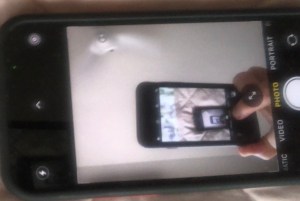
Nietzsche said:

“And if thou gaze long
   into an abyss,
  the abyss will also
    gaze into thee.”


I must admit
   the first several times
    that I read this quote,
  I couldn’t tell if it was wise,
    or just had the patina of
     wisdom that comes from
     parallel sentence structure.

Crisscrossing subject and object
    lends a ring of sagacity.

“If you can’t take
    Mohammad to the mountain,
  the mountain must come to
    Mohammad.”


“Ask not what your country
    can do for you,
  but what you can do
     for your country.”


“If you can’t get the carrots
    out of the refrigerator,
  get the refrigerator
     out of the carrots.”


Yes, that last one is nonsense,
    but it’s not nonsense like:

“The banana pirouetted fuchsia
     all over the underside of
      an A-sharp chord.”

The carrot quote probably took
     your mind some time —
      if only milliseconds —
       to relegate to the
        trash heap.

That’s why this sentence structure
     is beloved by godmen &
      politicians: because you can
       sound wise even if you’re
       kind of an idiot.

So, I was ready to classify Nietzsche’s
     quote pseudo-wisdom when I realized
      that my smartphone was the Abyss,
       and it was certainly staring back at me.

  It stared through all the data collection &
     neuroscientific and psychological
      research designed to keep
       a person scrolling.

Maybe Nietzsche was on to something
    that even he didn't fully understand.






 Tiger Riding for Beginners