BOOK REVIEW: Free Will by Sam Harris

Free WillFree Will by Sam Harris

My rating: 2 of 5 stars

Amazon page

I had high hopes for Sam Harris’s book Free Will, but they didn’t pan out. It’s a very short book (less than 100 pages) on the subject of free will–or the lack thereof. While I’m normally a huge fan of brevity and conciseness, Harris could have put some more pages to good use. My two principal complaints regard the lack of information: a. substantiating the notion that free will is always and everywhere an illusion as Harris asserts; b. suggesting what logic is at the root of decision if our conscious thoughts are irrelevant. (If they were random synaptic firings our behavior wouldn’t be nearly so consistent. Self-preservation of genes? The hand of god? You won’t know from this book.)

Harris might claim that that’s not the purpose of this book, that one should familiarize oneself with the vast literature on the topic before getting to this book. In that case, my complaints remain two-fold. First, he shouldn’t take on such a bold and presumptuous title as Free Will (no subtitle) if he’s not going to educate us from the ground up on the titular topic. Second, if the reader has done all the scholarly reading on the subject, why should we care about Harris’s opinions?

I will say that if you liked Matrix Revolutions, the third Matrix movie, you will love this book. SPOILER: In that movie, we find out that Neo is the central element of an elaborate plan to fool people into thinking they have some control over their own lives. In Harris’s book, Neo is replaced by the conscious mind.

There’s a scientific literature supporting the notion that free will is an illusion–though Harris only touches on it. This conclusion has been reached by observing that subconscious parts of the brain involved with decision-making light up well in advance of the conscious parts of the brain. [On a note unrelated to the book: we also know that individuals with damage to the emotional centers in the brain become unable to make decisions because all options hold the same weight.] The most illuminating example offered is an experiment in which participants were asked to press a button to select a letter or number of their choosing from among a string of changing letters / numbers. Some subjects felt the scientists had mastered precognition (a class III impossibility according to physicists–i.e. impossible according to the laws of physics as we know them.) What was really happening was an exploitation of the lag between when the individual’s subconscious decided and when their consciousness became aware of their decision.

Harris briefly mentions a couple of these neuroscience experiments, but then expects that the reader will treat the free will illusion as law. That is, we are to accept that always and everywhere people’s subconscious minds decide some measure before their conscious minds. Maybe there has been a broad enough scientific investigation of the topic to safely conclude that free will is always and everywhere an illusion–but Harris does make this point.

Harris tells us about couple of studies in which, a.) there’s no cost differential between the different options; (i.e. is it possible that the mind treats decisions about picking a spouse or a house differently than picking a letter or number for which there is no objectively better or worse option?) b.) those studied are a random sample of individuals who have no particular expertise with their minds—probably mostly college undergrads. (If I drew a random sample of people and asked each to lift 300 lbs over his or her head. If no one could do it, would I be safe in concluding that lifting 300 lbs was something forever beyond the capacity of every member of the human race? In other words, what if exercising conscious control over decision-making requires training and expertise with the mind.)

There are a couple of red-flags for me about Harris’s approach to the subject. First, Harris scoffs at the suggestion that it might be that the conscious can overrule the subconscious, and seems to deem this as unworthy of study because it would just be the subconscious making a second decision instead of the conscious truly vetoing. Anytime a scholar is dismissive of another scholar’s attempts to further probe into a question signals that a pet theory has become a sacred cow.

Second, Harris suggests that anyone who truly studied his own mind in action couldn’t help but realize the fallacy of free will. People who can’t imagine that others see the world differently than them are also a point of concern when it comes to getting sound information. Could it possibly surprise Mr. Harris to learn that there are people who’ve spent far more time alone with their minds than he, who’ve concluded quite the opposite?

Alright, I may have overstated Harris’s position when I suggested the conscious mind is relegated to a Matrix Revolutions-style (and Rube Goldberg-esque) machine for tricking us into thinking we have choice and control over the direction of our lives. I suspect Harris would agree that evolution doesn’t over-engineer, and a conscious mind that is just part of a trick would be the vastest act of over-engineering in the history of the universe. (Unless the universe is a hologram, as some physicists are now suggesting–presumably based on the notion that their math works out in 2-D.)

I just don’t have a good idea of what purpose Harris thinks the conscious mind serves. His central point seems to be that we still need to keep putting rapists and murders in jail so they can be kept off the streets. We just shouldn’t bear any ill-will toward them because they had no control over their decisions. However, if we set a tone with our conscious thought stream, then whether the individual’s decision to act was conscious or not they would have culpability by virtue of stage-setting. If we don’t have any control over our conscious thought stream then there would be no benefit to courses of study that help one improve one’s state of mind, but there’s also a scientific literature showing that people who begin meditative practices, yoga, and the like do see tangible positive changes. (Not to mention that Harris should give all the money back for the books he has sold about meditation, i.e. Waking Up.) If we have conscious control of our thought stream, but that thought stream is irrelevant, then we should be walking around in a constantly perplexed state.

To add to the confusion, Harris uses the term “choices” to refer to his “decisions,” but according to his paper he doesn’t make any choices. He—like all of us—are slaves to some unknown–or at least unexplained–process. Black boxes aren’t persuasive.

I can’t say I’d recommend this book, unless you’ve read extensively on the topic and are rounding out your reading experience. This book isn’t the ideal starting point for engaging this subject—as it seems when you are reading the blurb–because you’re as likely to come away more confused than when you began reading.

View all my reviews

BOOK REVIEW: How Pleasure Works by Paul Bloom

How Pleasure Works: The New Science of Why We Like What We LikeHow Pleasure Works: The New Science of Why We Like What We Like by Paul Bloom

My rating: 3 of 5 stars

Amazon page

Paul Bloom’s book is about why we take pleasure in peculiar actions, proclivities, and objects. These are the pleasures that aren’t readily or directly explained by our evolutionary hardwiring. Evolution has programmed us to experience pleasure with sex and eating to encourage procreation and nourishment. In other words, those who experienced pleasure with sex had sex more often, and passed on their genes more successfully. Those who had a healthy appetite, ate more, became stronger, survived, and passed on their genes.

However, just because the pleasure of sex is readily understood through biology, doesn’t give us insight into the panoply of activities that people find pleasurable in a sexual way that have no value for procreation whatsoever. Bloom uses the example of masochism, but there are all sorts of kinky fetishes out there that one might also consider. It’s the peculiar pleasures that Bloom tries to explain. This is not to suggest that Bloom’s book is entirely about food or sex. He addresses each of those subjects with a chapter of its own, but they aren’t the sum total of the book. Both he and I, no doubt, rely heavily on food and sex because they are such fundamental pleasures and ones whose domains have blossomed far beyond the dictates of biology.

So what does the book address besides food and sex? It examines why people collect things that were once owned by famous people? Bloom sites a study showing that Joshua Bell anonymously playing violin in the subway in street clothes can barely garner a collective $32 in an afternoon, even having been passed by people who will pay $200 each to hear him later that evening as he wears a tuxedo in a concert hall, though playing the same songs on the same $3.5million violin. Why do we sit around watching television and movies? If any of these pleasures seem self-evident, I would encourage you to ask yourself why they should be? It’s by no means clear that we should value something more highly because of who previously owned it, and it’s certainly not clear why we should get value by watching others play act lives that seem more interesting than our own.

The theory that Bloom presents is called essentialism. It’s the idea that each of these things that give us pleasure represents the essence of something or someone in our minds. So a person who pay’s 500 times the going rate for a used guitar solely based on the fact (x-factor) that it once belonged to John Lennon is, according to Bloom, imagining that there’s some sort of essence of Lennon that rubbed off onto the guitar. Yes, the guy buying the guitar could be buying it entirely based on economic considerations, but the only reason there’s an economic benefit (economic rents in economist terminology) to be made is that there are people out there (many of them) who desire to possess a famous artist’s instrument even though it costs them far more than an equivalent guitar not owned by a famous person. Things become even clearer when one looks at an item like JFK’s tape measure—i.e. a mundane item that is not tied to the man’s fame. (Said tape measure sold for an absurd amount.)

Bloom discusses art forgeries to elaborate this concept of “essence” versus the intrinsic value (i.e. the beauty of the art.) There are many cases of paintings being sold for millions because they were believed to be painted by a certain “artistic genius” and then they become trash when it’s discovered that they were painted by a nobody—a nobody who’s genius was clearly sufficient to convince all the experts that he was some other genius for a while, mind you. If what we cared about was the beauty of the painting, its value would have nothing to do with its origins. In this example, it might seem to be all about rarity (a dead artist paints no more, and, thus, has a limited stock of paintings), but there is reason to believe that’s not the whole story.

We can see the value of these essences ubiquitously. There have been a number of blind taste test experiments that show that oenophiles (wine lovers/experts) can’t tell nearly as much about a wine’s delicate intricacies when they don’t have its label on hand. Famously, there was the CEO of Perrier who couldn’t pick his own company’s water out of a blind line up of waters, though insisting it was a superior product. (It took him five tries out of seven waters.) Even after that event there were people willing to spend twice as much for Perrier because it gave them some pleasure that was completely delinked from its taste or nutritional characteristics.

Bloom’s thesis is interesting, and he presents a lot of fascinating examples in this book. What the book doesn’t really explain is how come certain essences act heavily on some people and not at all on others. It also seems like a theory that begs for another level of explanation. Why should such essences exist, i.e. what is their root cause? The latter may prove difficult given the degree to which individuals vary in their peculiar pleasures from one to the next.

I found this book to be intriguing, and would recommend if for people with interests in the oddities of human behavior.

View all my reviews

BOOK REVIEW: Sleep: A Very Short Introduction by Lockley & Forester

Sleep: A Very Short IntroductionSleep: A Very Short Introduction by Steven W. Lockley

My rating: 4 of 5 stars

Amazon page

This is one book in a large series of books put out by the Oxford University Press. All of these “Very Short Introduction” books are brief summaries of the state of research on a given topic in the arts, sciences, or humanities. Based on this book, I’d say the series is geared toward a readership of educated non-specialists. I say “educated” because the book did get into some technical areas, and while it doesn’t presume any particular knowledge of the science of sleep, it does use a scientific vocabulary with occasional academic sentences (i.e. packed with precise detail and lacking concern about readability.) That said, I’d say the readability is higher than the journal articles from which the information for the book was drawn. I suspect I’ll read more from this series. They are cheap on Kindle, provide a concise injection of the basics for a wide range of topics, and are pleasantly readable if you’re used to reading academic literature.

This particular book is about sleep. While, on average, sleep takes up one-third of a person’s life, it’s a subject that is often taken for granted. Like water, one doesn’t really think about it until one isn’t getting enough. However, as the book discusses in detail, all sorts of problems are associated with sleep deprivation, insomnia, and parasomnias (i.e. sleep events like sleepwalking, night terrors, nightmares, bedwetting, sleep-eating, and groaning.)

The book is written in nine chapters covering: the history of sleep, sleep generation and regulation, a brain on sleep, reasons we sleep, variation in sleep throughout one’s life-cycle, the nature of poor sleep, the connection between sleep and health, and the effect of our shift to a round-the-clock society.

There are a number of fascinating questions addressed by this book including:
1.)What does sleep do for us?
2.)Have people always tended to sleep eight hours per night?
3.)Why are some people morning people and others night owls?
4.)Why does one feel drowsy after lunch, but not necessarily when it’s time to hit the sack?
5.)How long can one go without sleep?
6.)Do all animals sleep?
7.)How do sleep and hibernation differ?
8.)Why do teenagers and the elderly have such odd (but different) sleep habits?
9.)Why do people sleepwalk, sleep-eat, groan in their sleep, or have night terrors?
10.)What is the effect of long-term insomnia on health?
11.) What happens to sleep if one has no rising and setting sun cues?
12.)What is jetlag and how can one fight it?

I learned some interesting facts, such as:
1.) On average, women report more insomnia, but, paradoxically, tend to sleep better than men.
2.) Pre-industrial people slept for about 10 hours a night on average, it’s believed.
3.) Many parasomnias occur mostly during REM (Rapid Eye Movement) sleep.
4.)The government can deprive prisoners of sleep for 7.5 days without it being considered torture (then they have to allow a full 8 hours sleep before another 7.5 day period started.)
5.) Long-term insomnia has been linked to heart-disease.
6.)Shift workers have a 50% greater incidence of breast and prostate cancer than day-workers.
7.)Visiting teams win 46% of the time if they are in their home time zone, 44% if they are traveling ‘with their body clock,’ and only 37% if they are traveling against their body clock.

I found this book interesting and informative. However, there are many books on the subjects of sleep and dreams that are more catered to a popular audience. Such books delve into intriguing cases and don’t dig as deeply into the minutiae of the science of the subject. I’d recommend this book, but not for readers who get bogged down or bored with scientific and technical discussions. If you’re looking for a book that’s loaded with pithy facts and fascinating stories, you can find a book closer to the mark by journalists who focus on science writing and who’ve got more flare for creative writing.

View all my reviews

BOOK REVIEW: If You Meet the Buddha on the Road, Kill Him! by Sheldon Kopp

If You Meet the Buddha on the Road, Kill Him: The Pilgrimage Of Psychotherapy PatientsIf You Meet the Buddha on the Road, Kill Him: The Pilgrimage Of Psychotherapy Patients by Sheldon B. Kopp

My rating: 4 of 5 stars

Amazon page

If Kopp’s title seems gratuitously bellicose and totally inappropriate for a book about psychotherapy, you may not recognize that it’s a quote from the 9th century Zen (Chán) Buddhist master, Linji Yixuan. In reality, the quote isn’t bellicose and is quite apropos of Kopp’s message. Linji was just saying that if one collects sacred cows, one is unlikely to be liberated from delusion and find a quiet mind. Kopp’s primary point is that patients tend to deify their therapists, thinking of therapists as people who can “fix them.” In reality, the therapist is a flawed human who can only help guide the patient on a personal pilgrimage. However, when patients find out that the therapist isn’t a sage who can make them feel better as if by magic without any real change on the patient’s part, they become disillusioned and the wheels can roll off any progress they may have made.

Pilgrimage is the central metaphor of Kopp’s book. The psychologist uses an interesting approach, without which I doubt I would have read this book. He uses pilgrims of classic literature as models. The second, and by far the largest, part of the book lays out the various paradigms of pilgrim. The use of works like Gilgamesh, Macbeth, Don Quixote, Dante’s Inferno, Kafka’s The Castle, and Conrad’s Heart of Darkness makes for a work of interest to more than just psychotherapists. Kopp skillfully employs the wisdom of both the Eastern and Western worlds, often in pithy stories that have been around for centuries.

In addition to all the well-known tales that Kopp relies upon, the latter part of the book has some interesting personal stories from when Kopp was working as a therapist in a prison.

I think this book offers some intriguing food for thought regardless of whether one is either a psychotherapist or a psychotherapy patient.

View all my reviews

BOOK REVIEW: The Bhagavad-Gita Translated by Barbara Stoler Miller

The Bhagavad GitaThe Bhagavad Gita by Anonymous

My rating: 4 of 5 stars

Amazon page

The Bhagavad-Gita is a philosophical poem, the title of which is translated as “Song of the Lord.” It’s often read as a stand-alone work, but it’s included in the sixth book of longest known epic poem, entitled the Mahabharata.

In The Bhagavad-Gita, Krishna teaches the warrior-prince Arjuna about sacred duty (dharma.) The setting is the battlefield at Kurukshetra as a war is about to get underway. Arjuna asks his charioteer, Krishna, to halt the vehicle between the opposing armies. Arjuna is struck with a crisis of conscience. He doesn’t want to fight and kill the men on the opposing side–some of whom are related to him by blood and others of whom are well-respected elders. Arjuna can see no virtue in the war.

Krishna, after briefly mocking what he describes as Arjuna’s newly developed cowardice, goes on to offer his explanation of why it is that Arjuna should fight. The first argument is that nobody really dies because consciousness is reborn. This makes sense if you believe in reincarnation… otherwise, not so much. A concise restatement of this argument is presented in the 11th teaching: “I am time grown old, creating world destruction, set in motion to annihilate worlds; even without you, all these warriors arrayed in hostile ranks will cease to exist. Therefore, arise and win glory! Conquer your foes and fulfill your kingship! They are already killed by me. Be just my instrument, the archer at my side!”

Another of Krishna’s argument is that if Arjuna fails to fulfill his duty he will be thought less of by others. This is an odd argument to make as Krishna makes a more compelling case for ridding oneself of ego, whereas this seems to be saying that one should put what others think of one above doing what one believes is right. That sounds a lot like succumbing to ego rather than eliminating. In the 12th teaching, in fact, Krishna tells us that the best of men are “Neutral to blame or praise…” This suggests that perhaps one shouldn’t be moved by what others will think of one.

At the core of Krishna’s argument is that one cannot escape the Karmic cycle by engaging any acts but those that are selfless. Like the reincarnation argument. One may find this logic compelling or not depending upon whether one believes in Karmic theory. Karma is the idea of cause and effect. If you do good, you’ll receive good effects and if you do bad you’ll experience bad effects. Ultimately, however, the goal is to break free of the Karmic cycle and, in theory, the only way to do that is to engage in acts that are selfless—hence doing your sacred duty. If your driver isn’t God, it’s not entirely clear how you know what your sacred duty is, at least not by way of this work. (Presumably, God talks to kings and princes, and kings and princes tell the unwashed masses what they are supposed to do. If you happened to have already done away with such a system—as most of the planet has—you may have trouble with this logic.) However, if one takes the lesson to be that one should not be consumed with personal gain when one acts, one has an argument of more general appeal.

Another argument is that devotion to God is all important, not a man’s actions in any absolutist sense. From the 9th teaching, “If he is devoted to me, even a violent criminal must be deemed a man of virtue, for his resolve is right.”

It should be noted that Krishna delivers a number of lessons beyond the need to comply with one’s dharma, and, in my opinion, many of these ancillary lessons are more compelling than Krishna’s explanation of why Arjuna must fight.

One such lesson is to concern oneself with the journey and not the destination. Krishna states it as such, “Be intent on action; not the fruits of action…” Furthermore, there are a great many teachings that will be familiar to Buddhists, such as the need for non-attachment and moderation.

The poem contains lessons of Samkhya (e.g. discussion of the three gunas) and Yoga. It describes concepts from the three original forms of yoga (predating yoga as a fitness activity by centuries): those being of action yoga (karma yoga), knowledge yoga (jnana yoga), and devotional yoga (bhakti yoga.) While The Bhagavad-Gita predates the formulation of eight limbs of yoga as described by Patanjali, it does address certain among them in varying detail. Early on, it speaks about pratyahara—withdrawal from the senses—in considerable detail. There are also references to pranayama (breath/energy control exercises) and most of the yama and niyama are listed among the virtues in the latter part of the teachings. Of course, samadhi (liberation / yoga’s 8th limb) is a central concept in this work.

While The Bhagavad-Gita remains widely cited and relied upon for guidance to this day, it’s not without its controversial elements. In the fourth teaching, Krishna explains how he created the caste system. Of course, Krishna might not have intended it to be the stain it became.

The Miller translation that I read has a few nice ancillary features. There is an introduction that offers background and context for those who have little knowledge of Indian history or mythology. There’s also a glossary that goes into detail about terms that are frequently used in the work. It’s not that there are Sanskrit words mixed into to the text. The glossary explains what the English words should be taken to mean in the context of the Hindu worldview.

What is most intriguing, however, is the afterword which is entitled, “Why Did Henry David Thoreau Take the Bhagavad-Gita to Walden Pond?” Of all the thinkers that have cited The Bhagavad-Gita, the use of Thoreau and Emerson as examples raises intriguing questions. The Thoreau of Civil Disobedience and the Emerson of Self-Reliance would seem to be as far from the message of The Bhagavad-Gita as possible. Krishna is telling Arjuna to ignore his conscience, and just do what God tells him to do—be a selfless instrument of destruction. Thoreau and Emerson both preached that one’s conscience should always be one’s ultimate guide. Thoreau went to jail because he refused to pay taxes that would support the war with Mexico. I suspect Krishna would say to Thoreau, “Hey, I’m throwing this war, and you’d damn well better do your part.” However, there are ideas in The Bhagavad-Gita that work with the American Transcendentalist philosophers. The idea of removing self-interest and egotism as a way to eliminate delusion before one makes one’s own decision is a consistent suggestion.

I have mixed feelings about The Bhagavad-Gita. Like many (most?) sources of religious doctrine, I think the central message of The Bhagavad-Gita is just another means by which to keep the masses under the control of an elite—and, specifically, fighting the wars of the royalty. However, I–like Thoreau and Emerson—also see a great deal of insight into how to be a better person in this poem.

I think The Bhagavad-Gita is worth a read, regardless of how you may ultimately feel about its message. It offers a concise summary of key ideas in Indian philosophy and psychology. It will give one a better understanding of the Indian worldview, and may teach you something about how to live in the process.

View all my reviews

TODAY’S RANDOM THOUGHT: “That” Doesn’t Make You So Mad

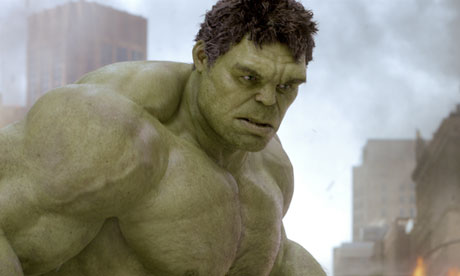
Source: Avengers Movie

Source: Avengers movie

“That makes me so mad!” One hears it all the time. It has to be among the most commonly uttered phrases in the realm of emotional experience. And, of course, it’s completely and utterly wrong. Your anger is a wholly contained neurochemical response. To credit something external with your anger is to grant that person or thing power over you–to enslave yourself. (Stoic philosopher, and former slave, Epictetus was known to piss off gentlemen citizens by asking them if they were “really free.”)


This isn’t to say there isn’t just anger.  However, think about what emotions are. Our emotions are a system evolutionarily evolved to allow us to make decisions with limited or no information. Without emotions our species, if we ever came to be, would have likely become extinct by way of “paralysis by analysis.” We know that happens to people who have neurological damage that keeps them from experiencing emotion. You might think they would become cold and rational Mr. Spocks, but the defining characteristic of such people is that they become paralyzed by indecision. It turns out that we make a lot of decisions with limited information or from an inability to determine a clear winner by way of facts and reason. Emotion plays and important role in those cases.


Chances are that if your immediate gut reaction to something is anger, you probably haven’t worked out a rational argument for your preference. If one has a clear line of reasoning rooted in fact, anger isn’t necessary to justify a position or decision. If your gut reaction to something is emotional, see whether you can  noodle out a rational reason before you swing into too rash an action…. unless the crosstown bus is careening at you.


BOOK REVIEW: Flow by Mihaly Csikszentmihalyi

Flow: The Psychology of Optimal ExperienceFlow: The Psychology of Optimal Experience by Mihaly Csikszentmihalyi

My rating: 4 of 5 stars

Amazon page

Recently, I read and reviewed Steven Kotler’s The Rise of Superman, which is about how extreme athletes use a mental state called “the flow” to pull off some miraculous feats (e.g. “hanging righteous air” to use an appropriate term of art.) That book got me intrigued about the flow, and wanting to learn more. The logical next read was the book by the man considered the godfather of flow, the man who coined the term, Mihaly Csikszentmihalyi. Csikszentmihalyi is a Professor of Psychology at the Claremont Graduate University and formerly of the University of Chicago.

A Note on Editions: The book I read is the 2013 edition of a book that was first published in 1990. The two editions have different subtitles. The 1990 edition was entitled Flow: The Psychology of Optimal Experience and the 2013 edition is Flow: The Psychology of Happiness. It’s not hard to imagine what happened. The 1990 version was titled to appeal to scholars, and the former title both has more syllables and suggests that one might be able to use LaGrangian Methods (the calculus of constrained optimization) to maximize bliss—which would be double bliss for an academic. As Csikszentmihalyi’s work attracted widespread attention, there was a need for a title that didn’t sound painfully dull. To be fair, the word “happiness” has gained some purchase in scholarly literature in recent years, but in 1990 saying one was studying “happiness” would be akin to saying one would study the “cuddliness quotient” of kittens (actually the latter, having the word “quotient” in it, would test better with department chairs and funders.)

Flow is a state in which one’s entire mind and body is devoted to overcoming a challenge that is intrinsically rewarding. There’s a lot packed into that definition. First, the task must be difficult but within the skill-level of the individual. If it’s too easy, it’s too boring for flow. If it’s far too challenging relative to one’s skill, it may become frustrating before one can build enough skill to achieve it. Flow states can be achieved via many different kinds of tasks, and the middle chapters of the book are devoted to different types of flow-inducing events. Chapters 5 through 8 address, respectively: physical activities like yoga and the martial arts, mental activities like poetry, word play, and chess, work activities, and solitude and social activities.

Second, tasks must usually be autotelic, or intrinsically rewarding. If the only reason that one is doing an activity is for a paycheck, to stave off nagging, or to attract attention, one will be unlikely to find the flow. That doesn’t mean that one can’t receive external rewards, but the activity has to have something intrinsic that keeps one at it. Csikszentmihalyi’s approach was to interview people to access how happy they were, and what activities allowed them to achieve said happiness. He shares many anecdotes about individuals who were blissful, including people who derived happiness from work activities such as factory work, work that most people would find unpleasant and only tolerable to earn a living. Of course, these happy individuals didn’t just do the job in the manner of the poor schlubs who hated their work-life. Instead, they found ways to make the work challenging and, in doing so, they often made themselves indispensable and gained not only job security but also the respect and admiration of others. What is key is that one’s mindset determines all of this, and the book focuses on the notion of controlling one’s inner life to achieve happiness via the flow.

Third, flow is not achieved in a distracted state; all of one’s being has to be surrendered to the act at hand. Multi-tasking is not conducive to the flow.

The ability to override one’s evolutionarily-programmed instincts is key to being able to obtain a flow state. One must be able to stay on task and devote one’s consciousness to the action at hand. This is the central theme in chapter 2, entitled “The Anatomy of Consciousness.” The book also speaks to a subject that I’m currently interested in, which is how states of mind and body that have been known since ancient times, but whose mechanism of action weren’t well-understood, are explained in the world of modern science. Csikszentmihalyi refers to yogis and Taoist masters as he describes the flow. Flow state isn’t new; it’s just newly put in the context of science, rather than mythology.

I enjoyed this book and found the chapter on the flow in movement and bodily activities particularly educational. Csikszentmihalyi has written a few related books on creativity and the flow applied specifically to sport. I would like to learn more about the neuro-anatomy and neurochemistry of the flow, as this book doesn’t delve into the hard science of the flow, and much of this science has occurred since the time this book was first published anyway.

View all my reviews

BOOK REVIEW: The Rise of Superman by Steven Kotler

The Rise of Superman: Decoding the Science of Ultimate Human PerformanceThe Rise of Superman: Decoding the Science of Ultimate Human Performance by Steven Kotler

My rating: 5 of 5 stars

Amazon page

This is NOT a book about the comic book hero. It’s a book about a mental state called “the flow” and how adventure and extreme athletes have used it to make tremendous strides in their sports. The characteristics of the flow include extreme focus, time dilation / time distortion, a vanishing sense of self, extremely high performance, fearlessness, and a falling away of everything non-essential to the task at hand.

Kotler is by no means the first author to write about the flow. The term was inaugurated by a book entitled Flow first published in 1990 by a University of Chicago Psychology professor named Mihaly Csikszentmihalyi. Csikszentmihalyi coined the term in the process of conducting a study on happiness. He found that happy people tended to engage in activities in which they could immerse themselves and find the zone. Contrary to the early part of Kotler’s book–in which it sounds like adventure athletes cornered the market on flow–Csikszentmihalyi says that said activity could be work or hobby and that the flow is to be found in poetry writing, yoga, martial arts, copy writing, or potentially any activity in which the skill level and challenge are both high.

(To be fair, Kotler does get around to recognizing that extreme athletes neither invented nor exclusively exploit the flow. However, his—well-taken—point is that such athletes are unusually good at finding, and dropping deep into, the flow in part because risk-taking behavior is an important trigger. And for free climbers [rock climbers without ropes], mega-ramp skateboarders, and bodysuit skydivers sometimes there are only two possible states of existence—the flow and being scraped off a rock.) It should be noted that some of the elements of flow sound a lot like the states that have been described by various mystical religious traditions for centuries, e.g. the dissolution of a feeling of separation between self and the rest of the universe. Warning: religious readers may find it disconcerting to read that there are scientific explanations for states that were once attributed to communion with god or the like.

While I’ve given Kotler’s book high rating, I haven’t yet given one reason to read it—and I do recommend people read it. First, while Csikszentmihalyi is the “father” of flow research, his methods were decidedly low tech–i.e. surveys and interviews—but Kotler reports on more recent studies involving neuroanatomy, neuroelectricity, and neurochemistry. Second, while Kotler delves into the science of the flow, he does so in a manner that is approachable to non-scientists. Finally, all of the narrative accounts of extreme athletes interspersed with the more technical commentary make for a very readable book, even if one is not particularly knowledgeable of—or interested in—such sports. I gave this book a high rating both for its food-for-thought value, and because of its high readability.

I will admit that I was not so enamored of the book when I first began it, and other readers may find the same irritation. For one thing, Kotler’s adoration of extreme athletes comes off sounding like diminishment of mainstream athletes and others involved in “flowy” activities. A prime example of this is seen in Chapter 1. Kotler gives us an endearing description of how gymnast Kerri Strug won the gold in the 1996 Olympics by sticking a landing on a shattered ankle. However, he then comes off a bit douchey when he suggests that Strug’s achievement pales in comparison to Danny Way’s skateboard jumps at the Great Wall of China.

For another thing, in his zealousness to prove that extreme sports practitioners are full-awesome while mainstream athletes are “meh,” Kotler makes some comparisons that seem apples and oranges to a neophyte such as me. If they are fair comparisons, he certainly doesn’t explain why they should be considered so. The best example of this is when he states that Olympic divers took decades to achieve increases in rotation that extreme skiers and skateboarders surpassed in much less time. This seems unreasonable for two reasons. First, divers have a very standard distance in which to achieve their acrobatics. In other words, they don’t get to build a “mega-platform” that’s 50% taller like Danny Way creates “mega-ramps” that were bigger than ever before. Of course, if you can increase the distance between yourself and the ground you can increase your spins, rotations, or whatever much more quickly (yes, your danger goes up vastly, I’m not diminishing that.) Second, the divers gained zero advantage from technological improvements, but the same cannot be said for skiers and skateboarders. In other words, if you go from skis made of oak to ones made of carbon nanotubes (that are 50 times stronger and 1/100th of the weight) of course you’re going to make gains faster.

Perhaps, I’m overstating Kotler’s disdain for mainstream athletics, but that’s what happens when one uses a national hero as a set up to show how much more awesome a relatively unknown skateboarder is (among skateboarders Way is extremely well-known but he’s not a household name as the Olympian was–at least for a short time in the late 90’s.) I suspect that Kotler was just trying to convince a general audience that the athletes he’s speaking about aren’t pot-smoking knuckleheads who are as likely to be seen on America’s Funniest Home Videos crushing their nads on a handrail as setting a new world record. These men and women are serious people engaged in serious activities, and they give it their all. They do deserve more respect for that than they are probably given by broad sectors of the populace. Perhaps, the importance of what these folks are achieving does need to be conveyed because the demographic that reads books and the one that follows extreme sports probably has wide wings of non-overlapping area. (I’m not saying skateboarders are illiterate or bookworms don’t skate–just that the Venn diagram has substantial areas of mutual exclusivity.)

As I indicated above, in each chapter we get both some insight into the nature of the flow and its triggers and stories of adventure / extreme athletes that serve as examples of what’s being discussed. In chapter 2 we learn what the flow looks like in terms of brain waves (i.e. high theta/low alpha, or between meditation and a relaxed / resting state of wakefulness.) In chapter 3, we learn about the neuroanatomy of the flow in terms of what areas of the brain it lights up, and what areas shut down–which is more important to flow states. In chapter 4, we learn about the neurochemistry of the flow and that a cocktail of dopamine, norepinephrine, endorphins, anandamide, and serotonin makes up the chemistry of flow, but, critically, not so much with the adrenaline. The subsequent chapters deal with triggers of the flow, and what conditions best set up achievement of this state of mind.

Chapter 9 stands out as an important, but quite different, portion of the book. It deals with the downside (or dark side) of the flow. This has a lot to do with the fact that the aforementioned internal substances (and the flow state in general) are quite addictive. While it’s unfair to say, and unlikely, that the extreme athletes Kotler writes about (i.e. the ones at the top of their games) are drug addicts as some might assume of skate boarders, snow boarders, and the like, it may not be unreasonable to say that they have a kind of monkey on their backs—albeit a perfectly legal one rooted in their own neurochemistry.

As I’ve said, I recommend this book for anyone who is interested in this state of mind. One needn’t be interested in extreme sports to get a lot out of the book.

View all my reviews

BOOK REVIEW: The Introvert Advantage by Marti Olsen Laney

The Introvert Advantage: How to Thrive in an Extrovert WorldThe Introvert Advantage: How to Thrive in an Extrovert World by Marti Olsen Laney

My rating: 4 of 5 stars

Amazon page

A number of books have come out about introversion in recent years. Most of these books seek to dispel common myths about being introverted, such as:

a.) Introverts can and should change teams to the extroverted
“light side” as soon as possible.

b.) There’s something psychologically wrong (re: neurotic or even psychotic) with being introverted.

c.) “Introverted” is synonymous with:

1.) Shy (i.e. having social anxiety disorder)
2.) Schizoid
3.) Anti-social
4.) Self-centered (in the pejorative sense–a more neutral meaning could be said to be true by definition.)

This isn’t to say that one can’t be both introverted and any of the above, but one can also be extroverted and any of the above (including, believe it or not, shy—i.e. it’s possible to be an extrovert with social anxiety disorder.)

Where Dr. Olsen Laney’s book tries to carve a niche is in teaching introverts how they can conduct their lives in an extrovert-centric world so as to maximize their effectiveness and minimize their exhaustion. One will note that her advice doesn’t advocate attempting to become extroverted. In fact, one of the most interesting and informative sections of the book is chapter 3, which explains the differences in brain chemistry that result in introversion or extroversion. While some of the conditions mistaken for introversion–such as shyness–can be overcome or trained away, introversion is hardwired into the brain.

The book’s ten chapters are organized into three parts. The first part explains just what defines an introvert, what traits commonly mistaken for introversion aren’t introversion, and the physiological roots of introversion. The second part consists of four chapters that delve into problems faced by introverts in four critical domains: relationships, parenting, socializing, and work. The final three chapters present the prescription for modifying one’s behavior to keep one’s energy up in the face of the demands of modern life. It’s really all about energy—how we use it and replenish it differently. The external world—most notably interaction with other people but also anything of a chaotic environment—drains the energy of introverts faster than that of extroverts.

As one reads through the book, there are many tips for mitigating the negative effects of common introvert characteristics seen as problematic in an extrovert’s world. It should be noted that some of these are genuine problems (i.e. how one metabolizes food) and others are a matter of perspective (i.e. lack of conviction v. open-mindedness.) These “problems” include: difficulty making quick decisions, difficulty with word retrieval, lack of investment in one’s own ideas (“wishy-washy” in extrovert lexicon, but arguably open-minded), tendency toward over-stimulation, lack of inclination to engage in [prolonged] eye contact, proclivity to metabolize food quickly with resultant blood sugar drops, proclivity towards sedentariness, and a tendency to fail to delegate work and reward job completion—if one happens to be the boss.

I found this book to be enlightening. There were many ideas I found myself agreeing with (e.g. using hobbies and activities as a means of controlled interaction.) There were only a few pieces of advice that I thought poor (i.e. picking a weekend day to lay in bed or on the couch all day—reading or otherwise.) While it may seem logical that movement would drain energy in contradiction of the goal of restoring energy, I find being sedentary beyond a certain number of hours to be a huge energy drainer and that periodic movement is necessary and restorative to keep my energy level robust. (And I’m about as introverted as one gets by the criteria established in the book, most of which apply to me.) Of course, there are variations among introverts–just as among extroverts—not only with respect to the degree of introversion but also with respect to specific characteristics experienced. (e.g. Some introverts may not find that all of the criteria in the preceding paragraph apply to them.)

I’d recommend this book not only for introverts, but for those who interact with introverts in key ways (e.g. familial relations, significant others, bosses, employees, etc.) Non-introverts may find some sections are more helpful and necessary than others, and may not find they need to read from cover to cover.

View all my reviews

BOOK REVIEW: Mind Over Medicine by Lissa Rankin

Mind Over Medicine: Scientific Proof That You Can Heal YourselfMind Over Medicine: Scientific Proof That You Can Heal Yourself by Lissa Rankin

My rating: 4 of 5 stars

Amazon page

This book is one of many that challenge the conventional approach to medical care in which a patient is a passive character who just goes to the doctor and does (or ingests) whatever the doc tells them to. In the vein of works by Deepak Chopra and Bernie Siegal, this book is written by medical doctor who has different beliefs on healing. So what’s the niche of Mind Over Medicine, given that there are already a number of prominent medical doctors preaching the same message? That message is that your body is a healing machine and will do MOST (not ALL, none of these individuals advocates abandoning modern medical science) of the heavy lifting of healing, if you create the right conditions. Rankin presents results from scientific studies as the thrust of her book. I’m not really that familiar with Siegal, but you’ll find Rankin’s work a great deal less spiritual and more scientific than the works of Deepak Chopra.

There’s a lot of scientific interest in understanding why some people experience spontaneous remissions from the most lethal of ailments while others succumb to diseases that most people weather with ease. While many people will chalk it up to divine will or chakra nudging or having one’s demons expunged, these aren’t satisfying answers for the scientifically minded individual. However, neither is the extreme skeptic’s suggestion that these are just randomly distributed flukes of nature—and it’s a waste of time to try to explain the outliers. The latter being unsatisfying because phenomena like the placebo effect are well documented.

So what conclusion does Rankin draw from the scientific literature. As suggested earlier, the conclusion is that the body is extremely good at healing what ails it, but it has to be in the right mode to have this healing take place. What’s the right mode? It has to be in relaxed mode, or, in scientific parlance, the parasympathetic system must be engaged. The problem is that when a person is under stress, the body switches into a fight or flight mode. Humanity hasn’t really come to grips with the fact that work deadlines, fears about ailments, or fears that our spouse may be cheating aren’t really the same as our ancestor’s experience of being chased by a saber-tooth tiger. When that ancestor was being chased by a tiger, his or her body shut down everything that wasn’t germane to immediate survival (e.g. digestion is interrupted, blood isn’t evenly distributed but goes to lungs and skeletal muscles, etc.) The tiger chase is over shortly, and the body returns doing its regular at-rest functions (e.g. digesting, healing, etc.) However, if we let our stressors kick us into that immediate survival mode–and just having a disease can be stressing enough in itself–then our healing can be severely or completely curtailed.

Can faith healing, karma cleansing, chakra fluffing, or sugar pills contribute to healing? Sure, but not in the way that the faithful thinks. These systems–each of which has proponents who’ll swear they witnessed first-hand the power of faith or magic or invisible energy (and they are probably not lying)–work because the person who firmly believes in these therapies is able to relax and let their bodies can do what they do.

Does this mean that those who don’t believe in religion or cosmic energy manipulation are out of luck? No. You just skip the middleman and engage in activities such as meditation, yoga, tai chi, or breathing exercises that allow you to put the body in a relaxed state. Secular meditation works just fine if practiced consistently, and particularly if one confronts, addresses, and eliminates the long-terms stressors in one’s life.

At the heart of the book is a discussion about how to go about performing one’s own diagnosis and writing one’s own prescription. As I mentioned earlier, this isn’t about cutting the doctor out. In this case one is diagnosing one’s stressors and prescribing activities to eliminate them. This doesn’t mean one should pass up medical treatment or doctor’s advice. However, it may entail switching doctors if you have a doctor that firmly believes you are incapable of getting better—you don’t need any doubts about your body’s ability to do its thing being foist upon you.

I’d highly recommend this book for scientifically-minded individuals interested in learning how they can help their bodies get into a state conducive to healing.

View all my reviews