BOOKS: “Introducing Freud Wars: A Graphic Guide” by Stephen Wilson & Oscar Zarate

Introducing the Freud Wars: A Graphic Guide (Graphic Guides)Introducing the Freud Wars: A Graphic Guide by Stephen Wilson
My rating: 4 of 5 stars

Publisher’s Website

I’ve always been fascinated by a question about Sigmund Freud. I can’t think of another scholar in modern times who managed to become not only a household name but virtually synonymous with his discipline while being so spectacularly wrong on so many levels. Sure, if you go back to ancient times, you have individuals with similar name recognition (e.g. Plato and Aristotle) who made some major league intellectual boners, but that was ancient times — pre-scientific method and in an age when employment of any rationality at all set one apart. The question of interest is: How did Freud pull it off?

This book helps one better understand the issue, and to answer a crucial related question: “Did the establishment, in Freud’s day, swallow his ideas hook line and sinker?” The answer is “no,” and that is the central theme of the book, the opposition faced by Freud in his day. Wilson frames the debate, presenting both sides. (And sometimes three sides, for there were a number of “super-Freudians” who felt that Freud didn’t lean hard enough into his own ideas about childhood sexuality being the key to an individual’s adult psychology.) It should be noted that this series has a book that is on Freud and his work. I haven’t read that book, but presumably it focuses less on Freud’s detractors and the nature of their criticisms and more on the entirety of Freud’s ideas (not just the most intensely refuted among them.)

This book focuses heavily on Freud’s controversial sex-centric ideas, particularly those involving infant sexuality, the Oedipal complex, transference, penis-envy, and hysteria. It does touch upon other Freudian ideas, such as dream interpretation and the “Superego,” but these are much less intensely explored, probably because they were less controversial. (Which is not to say they were correct, but that they were less potentially damaging.)

I found this book interesting, and believe I had a better grasp of Freud and his ideas and even had a more sympathetic view of him by the end.

View all my reviews

Psychoanalyst Limerick

There once was a renowned psychoanalyst
Who found childhood events were always the catalyst.
A patient who lived happily
'Til a recent tragedy,
Learned it all stemmed from thoughts as a neonatalist.

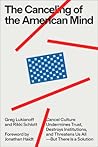
BOOKS: The Canceling of the American Mind by Greg Lukianoff & Rikki Schlott

The Canceling of the American Mind: Cancel Culture Undermines Trust and Threatens Us All―But There Is a SolutionThe Canceling of the American Mind: Cancel Culture Undermines Trust and Threatens Us All―But There Is a Solution by Greg Lukianoff
My rating: 5 of 5 stars

Amazon.in Page

This book presents an in-depth exploration of cancel culture in its many varied manifestations, from both the left and the right of the American political spectrum. The biggest part of the discussion is with respect to the educational system, and particularly higher education. Sadly, this is because the institutions that used to be among the most formidable bulwarks of free speech, expression, and academic freedom have increasingly become untenable to multiple points of view. (The authors point out that there have been more dismissals of faculty members for cancel culture speech and expression issues than there were during the McCarthy era for political stance.)

However, the book doesn’t restrict itself to education, but also investigates cancelations in journalism, publishing, the scientific community, standup comedy, and the medical and psychiatric communities. The authors also present cases of the effect that wokeness and other expression limiting activities are having in these areas. One of the most disturbing revelations to me was the role of wokeness in psychotherapy and the negative effect it may have on people getting the help they need.

The book presents a series of cases in detail to advance the discussion. It also has a couple chapters that examine the tactics that are used to apparently “win” debates by silencing / demoralizing the opposition while avoiding any actual contest of ideas. The authors go through tactics favored by the Right as well as those by the Left. (Though it’s clear that, in a race to the bottom, both sides adopt the approaches of the other side that seem to be effective. e.g. the Left is getting into book banning (historically a Conservative tactic) and the Right is getting into cancelling and shout-downs (usually Progressive tactics.)) I think it was smart to have two authors, one from the left and one from the right, in order to help ensure balance in the project. That said, as the Left has been in the cancel culture vanguard, they come up more often.

Some have called this a sequel to “The Coddling of the American Mind,” with which it shares a co-author, Greg Lukianoff. I don’t know that I’d think of it that way. While it does address some of the same issues as background, psychology and child development are not at the fore in this book (Jonathan Haidt – the other co-author of “Coddling” is a psychologist,) but rather are the legal, cultural, and political issues.  

This is probably the most important book I’ve read this year (and, being late November, it’s likely to retain that status) and I’d highly recommend it for all readers.

View all my reviews

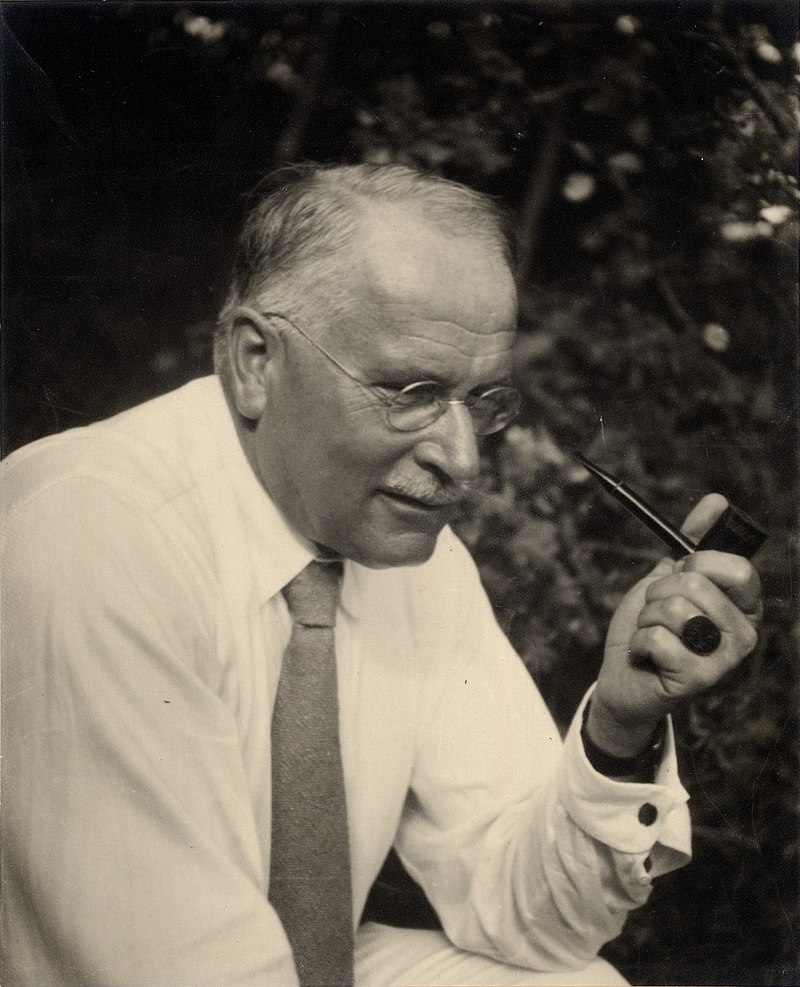
Jung Limerick

There was a psychiatrist named Jung
 who thought the Unconscious was far-flung --
  like Sandman's "The Dreaming"
  that you've seen on streaming:
 farfetched and fictional -- with heroes, unsung.

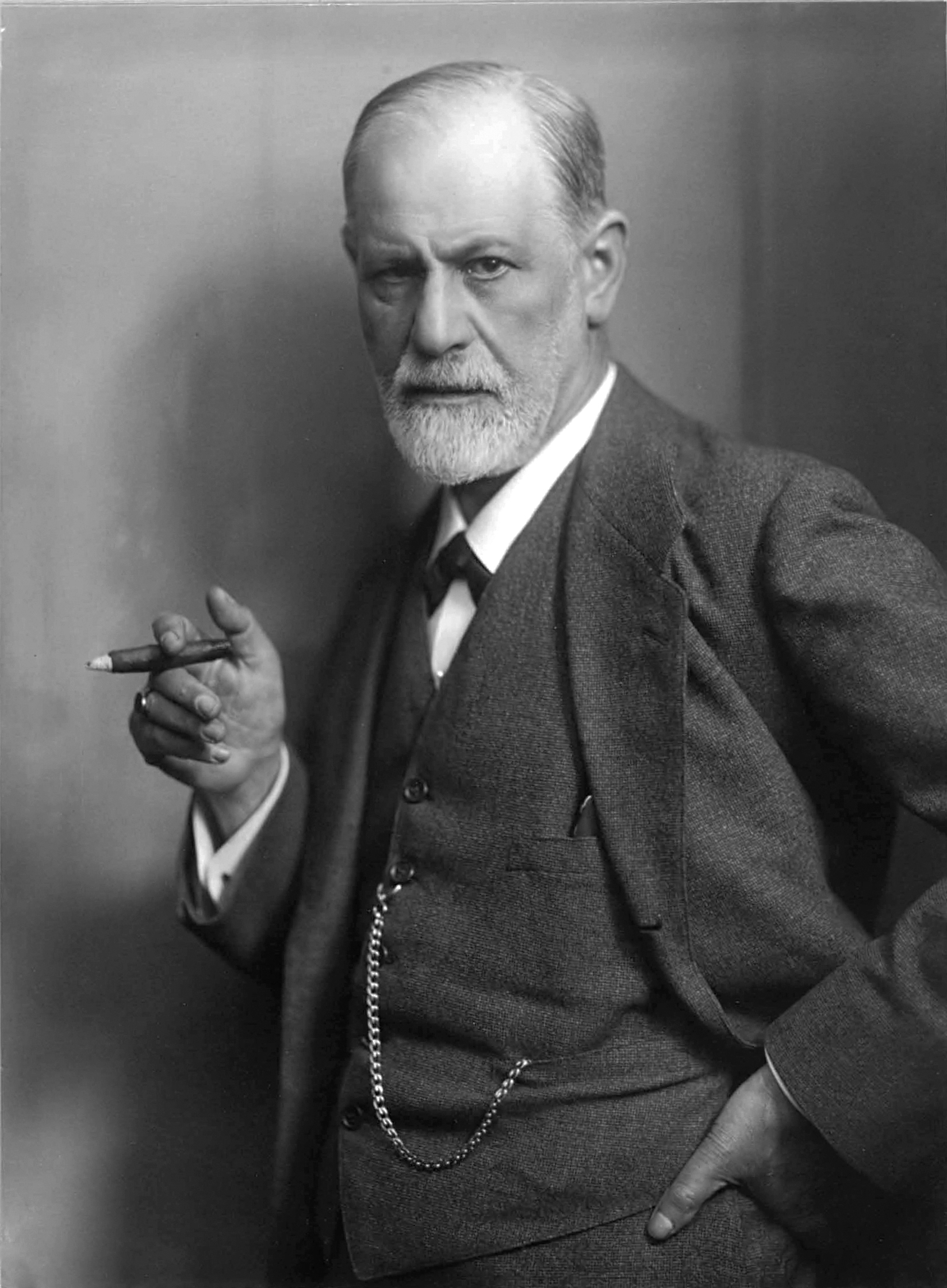
Freud Limerick

There once was a psychiatrist named Freud 
 who thought all were obsessed with filling a void...
   a void in the pants!
   Though some looked askance,
 and those whose cigars weren't cigars were annoyed.

Vienna Limerick

There was a famed therapist from Vienna
who knew the source of all angst and each dilemma.
"Sexy thoughts of your mom
made you fear the A-bomb!"
"Uh, it started last week when I fell from an antenna."

BOOK REVIEW: Ten Days in a Mad-house by Nellie Bly

Ten Days in a MadHouse: The Original 1887 Edition ( Nellie Bly's Experience on Blackwell's island )Ten Days in a MadHouse: The Original 1887 Edition by Nellie Bly
My rating: 5 of 5 stars

Amazon.in Page

Free Public Domain Version Here

This late 19th century work of immersion journalism tells the tale of Nellie Bly getting herself put into (the aptly nefarious sounding) Blackwell’s Island Insane Asylum for ten days (after which time her editor got her released.) Unlike the famous Rosenhan Experiment in 1973, in 1887 Bly had to get herself committed, and had her editor not gotten her released she might have been institutionalized indefinitely. Disturbingly, yet fortunately for Bly, it took no great acting skills to convince the authorities that she was mentally ill, pretending to be poor and having no husband got her at least 90 percent of the way to being institutionalized. Like the Rosenhan Experiments, Bly’s story showed that nobody seems to have any great capacity for determining sanity from insanity, not even the people with advanced degrees and board certifications on the subject.

At first, I wasn’t sure how skewed Bly’s account would be. She does show some bias in practically deifying journalists. She was confident that no psychiatrist would be able to discover her ploy, but she seemed sure that any journalist could out her through the briefest of conversations. So, when she complained the food was “inedible,” I considered that the same has always been said about any institutional food – from military mess halls to college cafeterias, and usually it’s perfectly adequate. That said, one of the asylum staff members did acknowledge the food was pretty horrific. Ultimately, I think the story was probably accurate because, sadly, it rings true. Bly had intended to get herself put in the violent ward, but had second thoughts after hearing and seeing what she did, being concerned that she might be seriously injured by the rough treatment those patients received.

This short book is riveting. If you enjoy nonfiction, this piece is definitely worth reading.

View all my reviews

Nellie Bly Limerick

There was a reporter named Nellie Bly:
decided she'd give the asylum a try.
'Twas just for a story.
Doctors lost all glory
when they couldn't tell a nut from a spy.

BOOK REVIEW: Introducing Jung: A Graphic Guide by Maggie Hyde

Introducing Jung: A Graphic Guide (Introducing...)Introducing Jung: A Graphic Guide by Maggie Hyde
My rating: 4 of 5 stars

Amazon.in Page

I find Jung’s ideas fascinating. Don’t get me wrong; I don’t believe most of said ideas have scholarly merit, but they’re brilliantly creative and eccentric. Some will say this would’ve been a radically different book if it’d been written by a psychologist or the like (rather than by an astrologer.) I don’t disagree. It’d likely have focused more on his work in personality types and on the unconscious mind (i.e. the work that people in psychology still talk about, whether they like it or not,) and also probably would’ve barely footnoted his ideas about “the uncanny,” synchronicity, and astrology. In short, its priorities would’ve been reversed, and it’d be a book that’s more boring but more relevant to those who are interested in Jung’s long-run influence on psychiatry / psychoanalysis.

For my purposes, I prefer the book as it is. I shouldn’t give the false impression that the author only addresses Jung’s mysticism, or that she completely avoids pointing out where Jung’s ideas were controversial and what critiques were leveled against him. The book comes across as a serious description of Jung’s work (albeit focusing relatively intensely on dream analysis, collective consciousness, and the more out-there aspects of his work.) I will say, I’ve read a few books from this series now, and Hyde does seem more a cheerleader (less a dispassionate scholar) than most of the other authors. It’s fascinating to read about Jung’s criticism of Freud. Don’t get me wrong, I’d agree that Freud was sex-obsessed, but Jung’s accusations of Freud being too concerned with one ill-supported idea does create a bit of a pot / kettle situation.

I enjoyed this book. I found the descriptions of Jung’s ideas compelling, if unpersuasive. However, I’d argue that if you specifically want to know about what ideas are still being talked about in classrooms (mainstream, not the New Age-y ones,) there’re probably better books. However, if you’re curious about Jung the mystic, this is a great place to start.


View all my reviews

On Intrusive Thoughts & Shoving Someone in Front of a Train

The other day I read that a man had pushed a person onto the tracks in front of an oncoming train. 

The week before that, I'd read in a book by Robin Ince that a person who -- having had a baby thrust into his hands -- has intrusive thoughts of throwing said baby out of the nearest window is [believe it, or not] the best person to ask to hold one's baby.

The argument goes like this, the person having these intrusive thoughts is being intensely reminded by his or her unconscious mind that under no circumstances -- no matter what unexpected or unusual events should transpire -- is he to throw the baby out the window (or otherwise do anything injurious.)

I've heard that, at some point, virtually everyone has some type of awkward intrusive thought such as the thought of pushing a stranger in front of a train. 

Most never do it, nor truly want to do it.

Then this one time... someone did.