Wen Fu 3 [文赋三]: “The Writing Process” by Lu Ji [陆机] [w/ Audio]

After choosing one's scope of thought,
Turn the words and note their order.
Embrace the hot ones, feel their burn;
Knock on lines and hear their timbre.
Use the branches to shake the leaves,
And waves can be traced to their source.
Make the hidden come visible;
Make the difficult seem simple.
A tiger's transformation startles --
Birds take flight on sight of dragons.
Sometimes words nest into each other;
Sometimes, jaggedly, they won't mesh.
With a clear, contemplative mind
Hordes filter through to easy speech.
Heaven and Earth contained within:
All things flow from the brush with ease.
Starting timidly with dry mouth,
Ending with a wandering brush.
Meaning is borne by a stout trunk,
Language hangs like leaf and fruit.
Make words and intended meaning match
As moods show clearly on a face.
When happiness comes, laugh & smile,
And with sorrow let loose a sigh.
At times words flow spontaneously;
At times one bites one's brush, musing.

The Original in Simplified Chinese:

然后选义按部,考辞就班。
抱暑者咸叩, 怀响者毕弹。
或因枝以振叶,或沿波而讨源。
或本隐以之显,或求易而得难。
或虎变而兽扰,或龙见而鸟澜。
或妥帖而易施,或岨峿而不安。
罄澄心以凝思,眇众虑而为言。
笼天地于形内,挫万物于笔端。
始踯躅于燥吻,终流离失所于濡翰。
理扶质以立干,文垂条而结繁。
信情貌之不差,故每变而在颜。
思涉乐其必笑,方言哀而已叹。
或操觚以率尔,或含毫而邈然。

Wen Fu 2: “Introspection” [文賦二] by Lu Ji [陆机] [w/ Audio]

Close your eyes and listen with care.
Turn all your attention inside.
Let your soul ride the Eight Borders
At a galloping stride.

Inner space brightens, becomes more
Compact, as one views the expanse.
Words pour forth to cleanse the soul,
As the Six Arts lend a fragrance.

Float, swim, and dive in the abyss,
Heedful for words as it all soaks in...
Sometimes the right word must be hooked,
And hauled up where it can be spoken.
But, other times, words are like birds,
That fly themselves out of the clouds,
To be downed by one swift arrow --
Quite willingly freed of their shrouds.

Mine for lines lost ages ago --
Rhymes unsung for ten centuries.
Thank tight buds for the sweet flowers
That they - soon enough - will be.

See past and present concurrently,
At once, touch mountain and sea.

The Original in Simplified Chinese:

其始也,皆收视反听,耽思傍讯,精骛八极,心游万仞。

其致也,情曈曨而弥鲜,物昭晣而互进。

倾群言之沥液,漱六艺之芳润。

浮天渊以安流,濯下泉而潜浸。

于是沈辞怫悦,若游鱼衔钩,而出重渊之深;
浮藻联翩,若翰鸟缨缴,而坠曾云之峻。

收百世之阙文,采千载之遗韵。

谢朝华于已披,启夕秀于未振。

观古今于须臾,抚四海于一瞬。

Wen Fu 1: “Poetic Experience” [文賦一] by Lu Ji [陆机] [w/ Audio]

The poet stands in the Center
And stares into deep mysteries.
He's nourished by reading Classics
And tombs of the men in Histories.
He sighs as four seasons pass by
And thinks upon ten-thousand things.
He's saddened by Autumn's leaf drop
And gladdened by the tender Spring.
He feels Winter's frost on his heart,
Though his mind may be up in a cloud.
And when he sings of ancestors'
Heroic deeds, he belts the song aloud.
He combs through great literature
Just as he roams the forest wild,
But in search of a "natural" --
Shown in elegant phrase and style.
And it's just such thoughts and feelings
That set my brush and mind wheeling.

The Original Chinese:

佇中區以玄覽,頤情志於典墳。
遵四時以嘆逝,瞻萬物而思紛。
悲落葉於勁秋,喜柔條於芳春,
心懍懍以懷霜,志眇眇而臨雲。
詠世德之駿烈,誦先人之清芬。
游文章之林府,嘉麗藻之彬彬。
慨投篇而援筆,聊宣之乎斯文。

“The Joy of Words” by Lu Ji [w/ Audio]

Writing is joy --
so saints and scholars all pursue it.

A writer makes new life in the void,
knocks on silence to make a sound,
binds space and time on a sheet of silk
and pours out a river from an inch-sized heart.

As words give birth to words
and thoughts arouse deeper thoughts,
they smell like flowers giving off scent,
spread like green leaves in spring;
a long wind comes, whirls into a tornado of ideas,
and clouds rise from the writing-brush forest.

Translation by Tony Barnstone and Chou Ping in The Art of Writing (1996) Boston: Shambhala.

“A One-String Harp” by Lu Ji [w/ Audio]

When an author composes too short a poem,
it trails off with a lonely feeling
like looking down at solitude with no friends
or peering into the vast sky, disconnected.
One string on a harp is crisp and sweet
but sings without resonance and harmony.

Translation by Tony Barnstone and Chou Ping in: The Art of Writing (1996) Boston: Shambhala Publications.

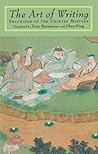
BOOKS: “The Art of Writing” Trans. / Ed. by Tony Barnstone and Chou Ping

The Art of Writing: Teachings of the Chinese MastersThe Art of Writing: Teachings of the Chinese Masters by Tony Barnstone
My rating: 5 of 5 stars

Publisher Website

This thin volume is packed with insights on writing — especially, but not exclusively, poetry. It consists of four chapters. The first two are the ars poetica of Lu Ji and Sikong Tu, respectively (i.e. The Art of Writing and The Twenty-Four Styles of Poetry.) The second half of the book consists of two chapters of collected sayings and poetry commentary excerpts.

I haven’t read a book so dense with quotable lines in a while. Some of the advice offered is universal and timeless (e.g. avoid cliches and read voraciously,) but some of it reflects a uniquely Chinese perspective rooted in Taoist and Zen sentiments (e.g. how to use wu wei [effortlessness] in one’s writing and so forth.)

There is a preface and each of the sections has its own editorial opening, but these never feel like padding (which often happens with books that come out to less than a hundred pages of content.) Instead, this ancillary material is concise and helps to offer historic and cultural context.

I’d highly recommend this book for writers and those interested in Eastern aesthetics and literature. That said, you don’t necessarily have to be interested in both. Any writer could pick up some beneficial tips while reading this book, and it’s compact, highly readable, and even humorous in places.

View all my reviews

“Broadminded” [Poetry Style #23 (旷达)] by Sikong Tu [w/ Audio]

One may live a century --
Short span though it may be:
Joys are bitterly brief
And sorrows are many.
You may take a wine jug
On your wisteria rounds:
See flowers grow to the eves
As sparse rains wet the grounds.
And when the wine is gone,
One strolls with cane and croons.
We become wizened with age;
South Mount, fair through countless moons.

NOTE: The late Tang Dynasty poet, Sikong Tu (a.k.a. Ssŭ-k‘ung T‘u,) wrote an ars poetica entitled Twenty-Four Styles of Poetry (二十四诗品.) It presents twenty-four poems that are each in a different tone, reflecting varied concepts from Taoist philosophy and aesthetics. Above is a crude translation of the twenty-third of the twenty-four poems. This poem’s Chinese title is 旷达, which has been translated as: “Illumed” [Giles,] “Big-hearted and Expansive [Barnstone and Ping,] “Expansive,” and “Open-minded.”

“Transcendent” [Poetry Style #21 (超诣)] by Sikong Tu [w/ Audio]

With no god, but with spirit;
With no mass of tiny things;
Up on high, with the white clouds --
Borne aloft on breezy wings.
From afar all seems in place.
When you arrive it's not there.
Just like acting with the Way
Leaves customs beyond repair.
Chaotic mountain woodlands,
Sweet green moss in the sunshine.
Keep reciting your mantra,
Till it's lost among the pines.

NOTE: The late Tang Dynasty poet, Sikong Tu (a.k.a. Ssŭ-k‘ung T‘u,) wrote an ars poetica entitled Twenty-Four Styles of Poetry (二十四诗品.) It presents twenty-four poems that are each in a different tone, reflecting varied concepts from Taoist philosophy and aesthetics. Above is a crude translation of the twenty-first of the twenty-four poems. This poem’s Chinese title is 超诣 and it’s been translated as “The Transcendental” and “Super”

“Sad” [Poetry Style #19 (悲慨)] by Sikong Tu [w/ Audio]

Strong winds ripple water;
Forest trees are laid low...
A bitter urge to die --
One can't come; one can't go.
Ten decades flow, stream-like;
Riches are cold, gray ash.
Life 's a death procession --
Unless you're adept and brash,
And can take up the sword
To hasten the anguish...
No rustling dry leaves, or
Leaky roof as you languish.

NOTE: The late Tang Dynasty poet, Sikong Tu (a.k.a. Ssŭ-k‘ung T‘u,) wrote an ars poetica entitled Twenty-Four Styles of Poetry. It presents twenty-four poems that are each in a different tone, reflecting varied concepts from Taoist philosophy and aesthetics. Above is a crude translation of the nineteenth of the twenty-four poems. This poem’s Chinese title is 悲慨, and it has been translated as: “Despondent,” and “Sorrowful.”

“Tortuous” [Poetry Style #17 (委曲)] by Sikong Tu [w/ Audio]

Climbing Taihang Mountain,
On the green winding way.
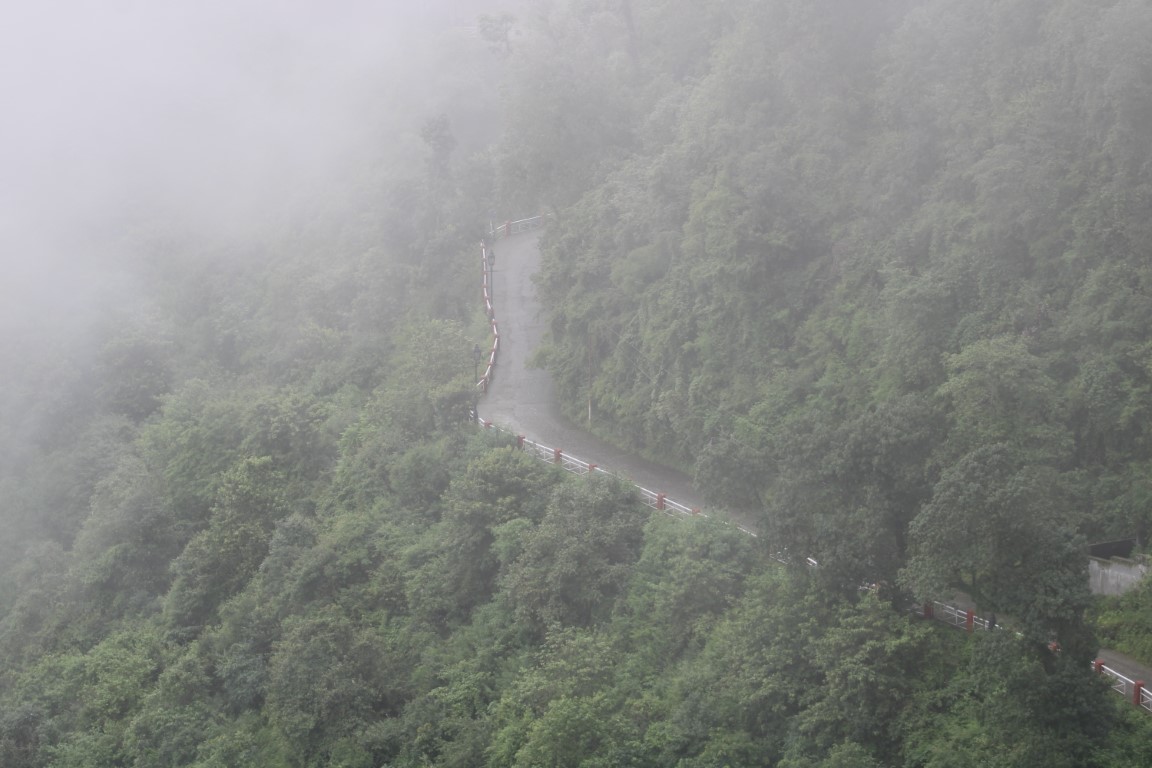
The jade-lined trail in fog,
Floral scents from the gray.
Stuck in unflowing time,
'Til a song sung bright and gay...
I'm steered back to my past
With the grace of ghosts at play.
Skirting roiling waters,
A Roc soars after prey.
The Tao is unbounded --
Round or square as it may.

NOTE: The late Tang Dynasty poet, Sikong Tu (a.k.a. Ssŭ-k‘ung T‘u,) wrote an ars poetica entitled Twenty-Four Styles of Poetry. It presents twenty-four poems that are each in a different tone, reflecting varied concepts from Taoist philosophy and aesthetics. Above is a crude translation of the seventeenth of the twenty-four poems. This poem’s Chinese title is 委曲, and has been translated as: “Grievance” and “In Tortuous Ways.”