BOOKS: “A Dome of Many-Coloured Glass” by Amy Lowell

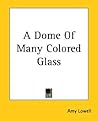
A Dome Of Many Colored GlassA Dome Of Many Colored Glass by Amy Lowell
My rating: 5 of 5 stars

Project Gutenberg Page

This was Lowell’s first published collection (1912,) and my 5-stars notwithstanding, it is not everyone’s cup of tea. I think I understand why this is. If you read some of Lowell’s more popular and highly anthologized poems, you might find that this collection is unlike them in several ways. Many of those popular poems are highly imagist, emulate East Asian sparseness, and are free verse. These poems are by and large metered and rhymed verse and I would not be the first to say that they often feel conventional and pedestrian. As I was reading the final section, “Verses for Children,” I figured out what other key feature of Lowell’s poetry was largely missing from the lyric poetry and sonnets that preceded these Children’s poems — playfulness. [Fortunately, it’s on display in the kid’s poems.]
.
With all that said, there are some spectacularly evocative images presented within these poems. I particularly enjoyed poems like: “New York at Night” and “A Japanese Wood-Carving.” As I don’t have the aversion to metered verse that many poetry readers seem to have today, I wasn’t as dismayed by the collection as some readers seem to be. Though I will admit that the collection doesn’t just play it safe with form, it also infects the tone and content of the poems.

Still, I found the collection readable and pleasant reading. (But maybe this is because I like a good scavenger hunt for golden nuggets of beautiful verse.)

View all my reviews

“Excelsior” by Henry Wadsworth Longfellow [w/ Audio]

The shades of night were falling fast,
As though an Alpine village passed
A youth, who bore, 'mid snow and ice,
A banner with the strange device,
Excelsior!

His brow was sad; his eye beneath,
Flashed like a falchion from its sheath,
And like a silver clarion rung
The accents of that unknown tongue,
Excelsior!

In happy homes he saw the light
Of household fires gleam warm and bright;
Above, the spectral glaciers shone,
And from his lips escaped the groan,
Excelsior!

"Try not the Pass!" the old man said;
"Dark lowers the tempest overhead,
The roaring torrent is deep and wide!"
And loud that clarion voice replied,
Excelsior!

"Oh stay," the maiden said, "and rest
Thy weary head upon this breast!"
A tear stood in his bright blue eye,
But still he answered, with a sigh,
Excelsior!

"Beware the pine-tree's withered branch!
Beware the awful avalanche!"
This was the peasant's last Good-night,
A voice replied, far up the height,
Excelsior!

At break of day, as heavenward
The pious monks of Saint Bernard
Uttered the oft-repeated prayer,
A voice cried through the startled air,
Excelsior!

A traveller, by the faithful hound,
Half-buried in the snow was found,
Still grasping in his hand of ice
That banner with the strange device,
Excelsior!

There in the twilight cold and gray,
Lifeless, but beautiful, he lay,
And from the sky, serene and far,
A voice fell like a falling star,
Excelsior!

“Broadminded” [Poetry Style #23 (旷达)] by Sikong Tu [w/ Audio]

One may live a century --
Short span though it may be:
Joys are bitterly brief
And sorrows are many.
You may take a wine jug
On your wisteria rounds:
See flowers grow to the eves
As sparse rains wet the grounds.
And when the wine is gone,
One strolls with cane and croons.
We become wizened with age;
South Mount, fair through countless moons.

NOTE: The late Tang Dynasty poet, Sikong Tu (a.k.a. Ssŭ-k‘ung T‘u,) wrote an ars poetica entitled Twenty-Four Styles of Poetry (二十四诗品.) It presents twenty-four poems that are each in a different tone, reflecting varied concepts from Taoist philosophy and aesthetics. Above is a crude translation of the twenty-third of the twenty-four poems. This poem’s Chinese title is 旷达, which has been translated as: “Illumed” [Giles,] “Big-hearted and Expansive [Barnstone and Ping,] “Expansive,” and “Open-minded.”

“Stanzas for Music” by Lord Byron [w/ Audio]

There be none of Beauty's daughters
With a magic like thee;
And like music on the waters
Is thy sweet voice to me:
When, as if its sound were causing
The charmed ocean's pausing,
The waves lie still and gleaming,
And the lull'd winds seem dreaming:

And the midnight moon is weaving
Her bright chain o'er the deep;
Whose breast is gently heaving,
As an infant's asleep;
So the spirit bows before thee,
To listen and adore thee;
With a full but soft emotion,
Like the swell of Summer's ocean.

“Fragmentary Blue” by Robert Frost [w/ Audio]

Why make so much of fragmentary blue
In here and there a bird, or butterfly,
Or flower, or wearing-stone, or open eye,
When heaven presents in sheets the solid hue?

Since earth is earth, perhaps, not heaven (as yet) ---
Though some savants make earth include the sky;
And blue so far above us comes so high,
It only gives our wish for blue a whet.

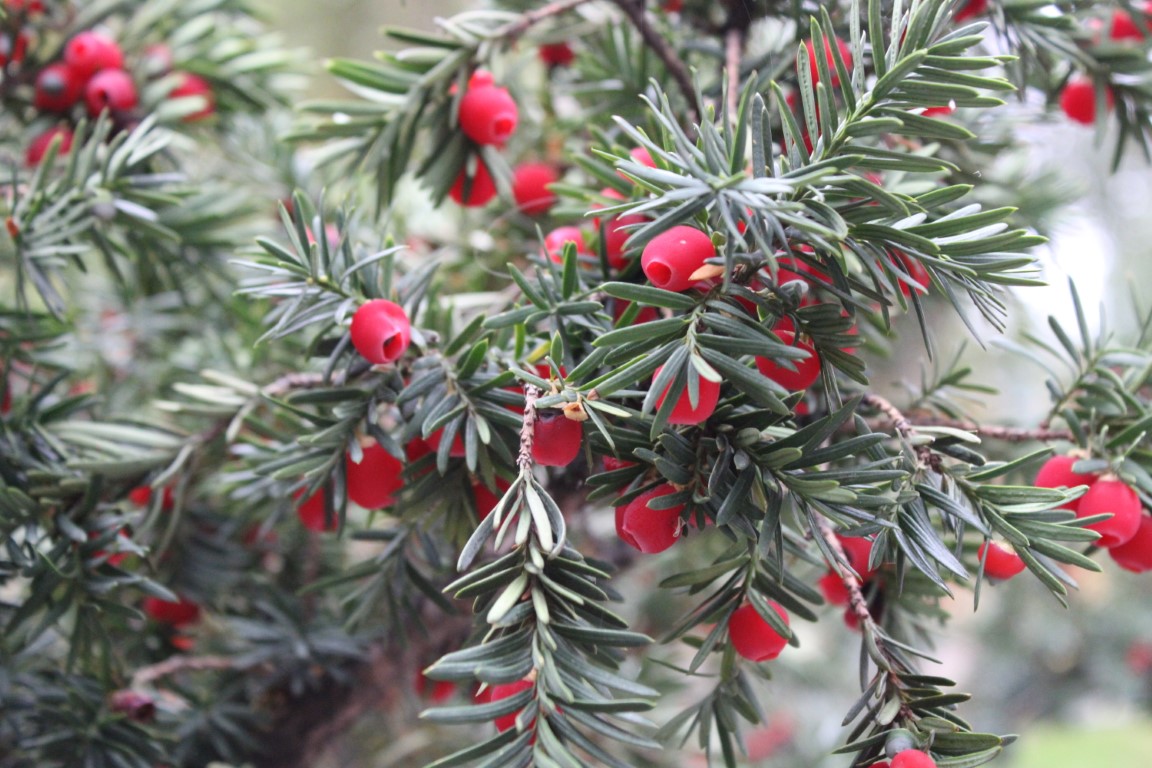
Yew [Lyric Poem]

Oh, the Yew tree --
Such a beauty!...
But on that Yew,
You'd best not chew:
It'll kill you painfully.

“Transcendent” [Poetry Style #21 (超诣)] by Sikong Tu [w/ Audio]

With no god, but with spirit;
With no mass of tiny things;
Up on high, with the white clouds --
Borne aloft on breezy wings.
From afar all seems in place.
When you arrive it's not there.
Just like acting with the Way
Leaves customs beyond repair.
Chaotic mountain woodlands,
Sweet green moss in the sunshine.
Keep reciting your mantra,
Till it's lost among the pines.

NOTE: The late Tang Dynasty poet, Sikong Tu (a.k.a. Ssŭ-k‘ung T‘u,) wrote an ars poetica entitled Twenty-Four Styles of Poetry (二十四诗品.) It presents twenty-four poems that are each in a different tone, reflecting varied concepts from Taoist philosophy and aesthetics. Above is a crude translation of the twenty-first of the twenty-four poems. This poem’s Chinese title is 超诣 and it’s been translated as “The Transcendental” and “Super”

“I felt a Funeral, in my Brain” (340) by Emily Dickinson [w/ Audio]

I felt a Funeral, in my Brain,
And Mourners to and fro
Kept treading -- treading -- till it seemed
That Sense was breaking through --

And when they all were seated,
A Service, like a Drum --
Kept beating -- beating -- till I thought
My mind was going numb --

And then I heard them lift a Box
And creak across my Soul
With those same Boots of Lead, again,
Then Space -- began to toll,

As all the Heavens were a Bell,
And Being, but an Ear,
And I, and Silence, some strange Race,
Wrecked, solitary, here --

And then a Plank in Reason, broke,
And I dropped down and down --
And hit a World, at every plunge,
And Finished knowing -- then --

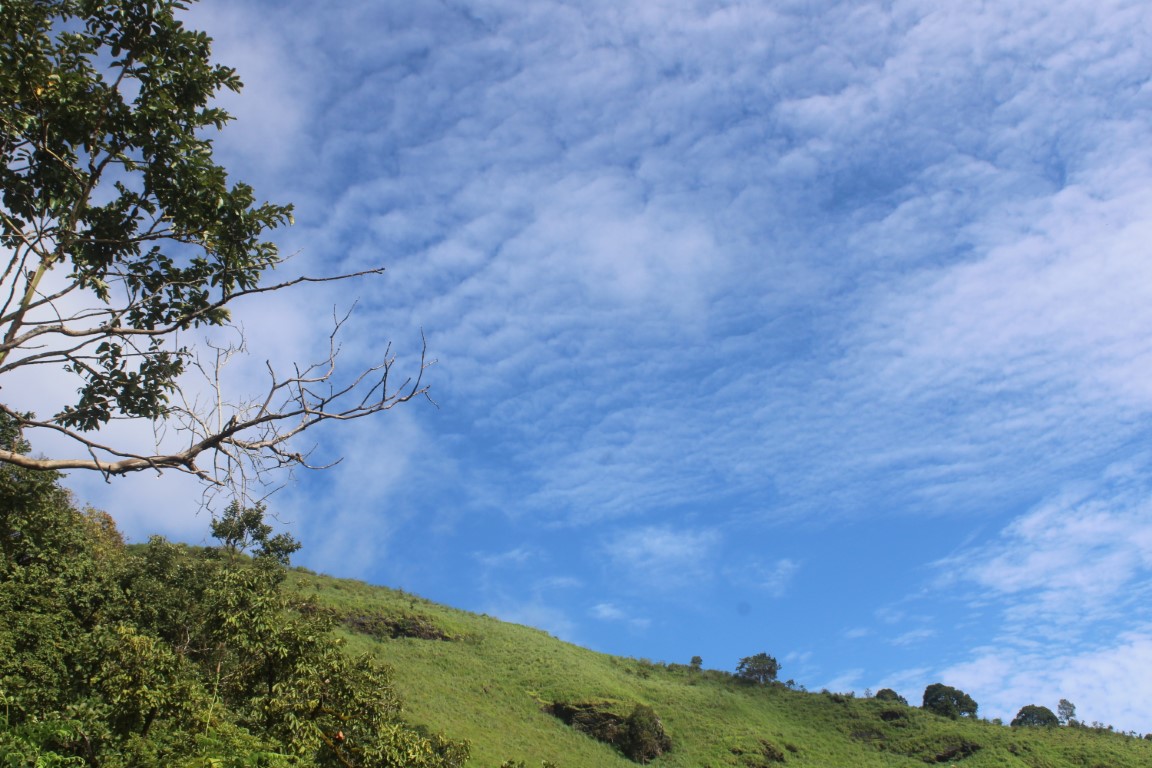
Cloud Deception [Lyric Poem]

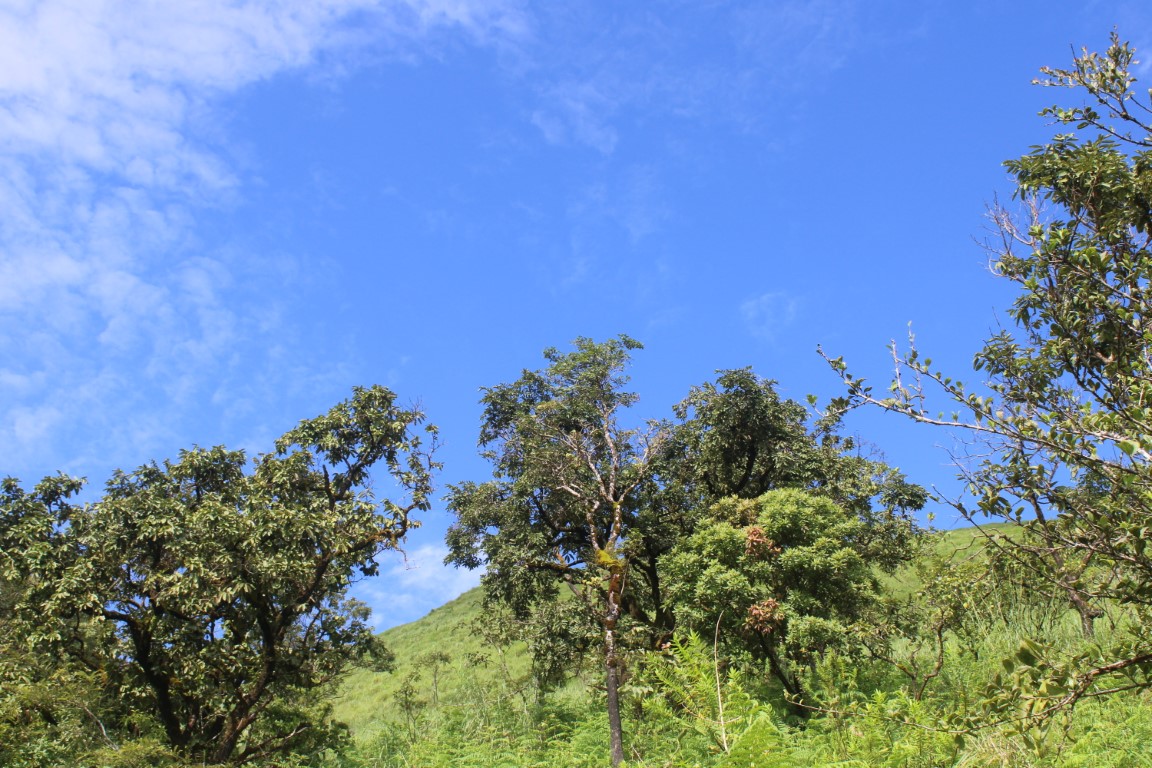
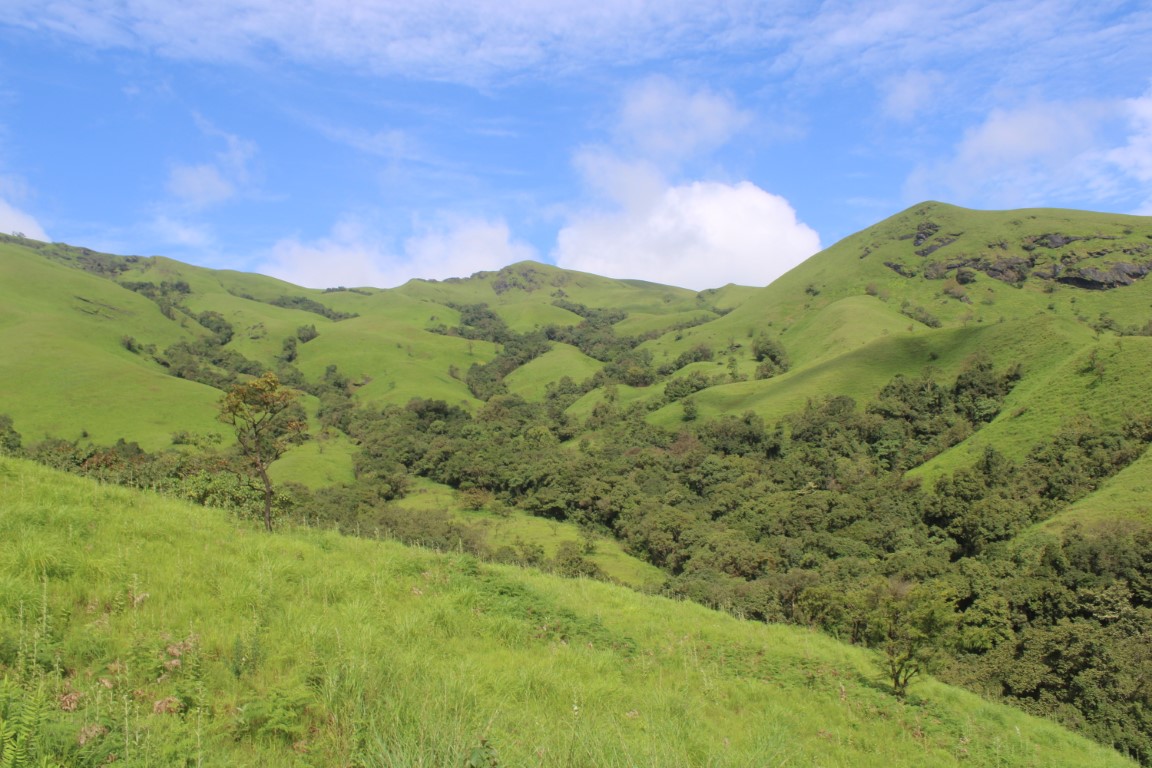
Hiking to the hilltop
To get a better view,
I found myself in clouds
That edged the sky of blue.

Standing upon a cliff,
(How high? I cannot know,)
I doubt cloud would catch me,
If I'd let myself go.

But it looked so fluffy,
Like it could bear my weight,
But then the sky 'd looked clear
From down the valley strait.

I guess the moral is:
One just can't trust the sky;
If you leap into the clouds,
It's certain that you'll die,
& when you think the sky clear
You may be denied.

“Gathering Leaves” by Robert Frost [w/ Audio]

Spades take up leaves
No better than spoons,
And bags full of leaves
Are light as balloons.

I make a great noise
Of rustling all day
Like rabbit and deer
Running away.

But the mountains I raise
Elude my embrace,
Flowing over my arms
And into my face.

I may load and unload
Again and again
Till I fill the whole shed,
And what have I then?

Next to nothing for weight,
And since they grew duller
From contact with the earth,
Next to nothing for color.

Next to nothing for use,
But a crop is a crop,
And who's to say where
The harvest shall stop?