BOOK REVIEW: Gotham Writers’ Workshop: Writing Fiction by Various

Writing Fiction: The Practical Guide from New York's Acclaimed Creative Writing SchoolWriting Fiction: The Practical Guide from New York’s Acclaimed Creative Writing School by Alexander Steele

My rating: 4 of 5 stars

Amazon page

This workbook-style guide to writing fiction is put out by the well-known New York City creative writing school. With 11 chapters, it delivers lessons on all the elements of fiction including: character development, plotting, establishing point of view, honing description, building realistic dialogue, varying pacing, establishing voice, determining a work’s theme, and carrying out revisions. It also has a chapter that goes into the business of writing (as opposed to the craft of writing which is the bailiwick of the first ten chapters.)

There are a couple of features of this book that set it apart from the vast canon of writers’ guides. First, this isn’t a single author work, which means the reader has access to a much broader pool of experience than one would in a single author text. It also means that an author can be assigned a topic according to his or her strengths as a writer.

Second, across the chapters, they use Raymond Carver’s Cathedral as an example work, and they provide that story in an appendix for those who haven’t read it. It’s not that the authors exclusively use this short story for examples. But it’s useful to have a common story and to include it because there are so many great stories and novels available that no matter how well-read one’s readership, there will be works that some haven’t read. (e.g. Much as I should’ve, I haven’t yet read nor seen the movie Gone with the Wind–a common exemplary work because it’s a beloved book, a movie, and because pop culture references [e.g. The Simpsons] have made the gist of it available to even those slackers who’ve neither read the book nor seen the movie.) There’s a reason why writers’ book authors often use movies to describe story elements, because there are many fewer movies than books and vastly fewer good movies—thus a higher likelihood of a common experience. Yes, there are a few works common across most school curricula, but there’s no better way to ensure that a book doesn’t get read thoroughly than to assign it as required reading.

A third useful feature of this book–but not one that is in any way unique to it–is that it offers writing exercises throughout to help build one’s skills through practice. This is where the value of such a book truly lies. The advice such books offer are almost always the same—sometimes hackneyed but almost always valuable. (A lot of tired advice is tired because it bears repeating owing to the constant infusion of new writers who repeat the same errors.) A final useful element of the book—but also one that features in many similar guides—is a checklist in the appendices that allows one to rapidly consider the book’s key questions as they apply to one’s own writing project.

I’d recommend this book as one of the most useful writers’ guides that I’ve read.

View all my reviews

READING REVIEW: April 24, 2015

I completed three books this week. The first was Richard Wiseman’s Night School. I wrote a lot about this book in my last Reading Report. Night School examines what happens when we sleep, what happens when we don’t, and a host of events that happen in and around our sleeping life (i.e. nightmares, night terrors, sleep walking, etc.)  The notion that dreams and nightmares are our subconscious working out waking life problems is well established, but there was some interesting discussion of how to change one’s dreamscape (i.e. lucid dreaming) that was fascinating.

NightSchool


The second book I finished was Sam Harris’s Free Will. I had high hopes for this book, but they didn’t pan out.   It’s a very short book (less than 100 pages) on the subject of free will–or the lack thereof. There’s a well-established scientific literature supporting the notion that free will is an illusion. This conclusion was reached by observing that subconscious parts of the brain involved with decision-making light up well in advance of the conscious parts of the brain. The most illuminating example offered is an experiment in which participants were asked to press a button to select a letter or number of their choosing from among a string of rotating letters / numbers. Some subjects became convinced that the scientists had mastered precognition (a class III impossibility according to physicists–i.e. impossible according to the laws of physics as we know them.)  What was really happening was an exploitation of the lag between when the individual’s subconscious decided and when they became aware of their decision.

While I’m normally a big fan of brevity, Harris could have put some more pages to good use. First, he barely mentions a couple of the neuroscience experiments, and expects that the reader will treat this all as law. That is, we are to accept that always and everywhere people’s subconscious minds decide some measure before their conscious minds. Harris also scoffs at the suggestion that perhaps the conscious can overrule the subconscious. He seems to deem this as not worthy of study because it would just be the subconscious making a second decision. So we learn about a couple of studies in which a.) the decision-maker has no stake in the decision (is it possible the mind treats decisions about picking a spouse or a house differently than picking a letter or number in which there is no more costly outcome?) b.) those studied are a random sample of individuals who have no particular expertise with their minds. (If I drew a random sample of people and asked each to lift 300 lbs over his or her head. If no one could do it, would I be safe in concluding that lifting 300 lbs was something forever beyond the capacity of every member of the human race? In other words, what if exercising conscious control over decision-making requires training and expertise with the mind.) Maybe all of this has been studied (e.g. high stakes cases and cases with monks and meditators), and we can safely conclude that free will is always and everywhere an illusion–but Harris didn’t make this point. He concludes we will take it as a given just as he has. (Much like he suggests that anyone who truly studied their mind would understand this point already. Would it surprise Mr. Harris to learn that there are people who have spent far longer alone with their minds than he, who have concluded quite the opposite?)

Second, if the conscious mind is just a Matrix Revolutions-style (and Rube Goldberg-style) machine for tricking us into thinking we have choice and control over the direction of our lives (what happened to evolution not over-engineering?), what guides all of these “decisions?” Given that they produce, I might point out, a fairly orderly world. Harris doesn’t answer this. One might guess that he would point to Dawkinesque suggestion that it’s all about genes advancing their own agenda. (A proposition that seems to me has trouble explaining a corporeal who throws himself on a grenade to save his comrades.) I shouldn’t put words in the author’s mouth. Quite frankly, I have no idea whether he believes there are rules or some guide to these subconscious decisions, because he doesn’t tell us. (Maybe he thinks they are random neuronal firings, but I doubt it.) From what I’ve heard of his other books, he doesn’t think it’s a god making these decisions–a sentiment I share. However, there must be something underlying these decisions, and an author writing about this topic should at least make some effort to address it. Black boxes aren’t persuasive.

FreeWill


The final book I finished this week is entitled The Sensual Body. This is a book that discusses a number of systems of movement and bodily activity as means to increase bodily awareness. Among the systems included are Tai chi, Eutony, Kum Nye, running, Aikido, and massage. It’s an interesting overview, but without sufficient detail of anything in particular to be of practical value. It’s the kind of book one might read to see what kind of classes one should take or what more focused books would be of benefit.


Besides the aforementioned books, I spent most of my reading time on two books that look at two very different subjects from the viewpoint of neuroscience. The first is Wired for Story, and it’s a how-to book for writers that sets itself apart by explaining how humans are hardwired by evolution to love stories. Just as a few notes produce an infinite variety of music. There is an inherent limiting / shaping structure to stories that is ignored at the writer’s peril. Much of the advice offered isn’t that different from other books on writing or storytelling, but one gets insight into which advice one should really treat as inviolable because it touches upon something fundamental to our human nature.


Wired for Story


The other book is the only book I purchased this week. It’s entitled Brainwashing: The Science of Thought Control and is by Kathleen Taylor. So far the book is intriguing. The chapters I’ve read so far provide an overview of brainwashing and cults. The middle section of the book delves into the neuroscience behind brainwashing, and the final section gets into practical matters such as how one can make oneself resistant to thought control techniques.


Brainwashing_Taylor


BOOK REVIEW: The Memorable Thoughts of Socrates by Xenophon

The Memorable Thoughts of SocratesThe Memorable Thoughts of Socrates by Xenophon

My rating: 4 of 5 stars

Amazon page


Xenophon gives us an alternative to Plato’s accounts of the lessons of Socrates. As you probably know if you are reading this, Socrates left nothing behind by way of written teachings. All we know of the great philosopher’s teachings come from the accounts of his students. Xenophon’s version (Memorabilia of Socrates) is stylistically different from Plato’s dialogues(e.g. Euthyphro, Apology, Crito, and Phaedo), though Socrates’ wisdom and method (questioning) remain consistent.

I enjoyed Plato’s dialogues on the last days of Socrates more than Xenophon’s Memorabilia. This owes to Plato’s narrative approach, which tells us the story of Socrates’ trial, conviction, and execution. Philosophy is more palatable embedded in a story. However, all of these works (Xenophon’s and Plato’s) are short, readable translations, and so it is worth reading all of them to get a broader access to the thoughts of Socrates.

As with Apology, Xenophon conveys Socrates thoughts on piety and corruption of the youth (these were the charges raised against Socrates that resulted in his hemlock sentence.) Socrates maintained that he was pious, but he did think it a weakness to trouble the gods with questions that men should be able to solve for themselves. His emphasis on self-reliance and fortitude is part of why we so respect Socrates. One sees the imprint of Socrates on the school of Stoicism that would come later. In Memorabilia, Socrates openly mocks those men who cannot bear adversity as well as their slaves. (Yes, Socrates wasn’t so infallibly wise as to see the folly of slavery. I no more advocate paleomania [irrational exuberance for old thinkers / ideas] than I do neomania [irrational exuberance for new ideas.] Still, people live in the context of their times, and if one expects a person to be ahead of their time in all aspects, one will be disappointed.)

Socrates discusses governance and politics frequently in this volume. To a large extent, this is by way of trying to convince men that he believed would be good for governance to participate, and convincing those who he believed wouldn’t be effective leaders (e.g. Euthydemus) not to participate. Toward the end of book (part IV) he talks about the various forms of government (e.g. Monarchy, Aristocracy, Plutocracy, Tyranny, and Democracy.) These ideas no doubt informed Plato’s illumination of eight forms of government in The Republic.

What I appreciate most about Socrates was his groundedness and appreciation of the importance of the body. One can read a lot of philosophy without hearing mention of the body (beyond the thought that it might be an illusion created by the program that runs our brain-in-a-vat system.) One gets the idea that proponents of this discipline largely think of the body as a cart that drags around their great, big, lovely brains. Not so with Socrates. In fact, he rebukes philosophers for not taking care of themselves. He mentions the importance of nutrition, exercise, and sleep [this is where he’s ahead of his time.] Also, Socrates recognizes the damage done by having too great an attachment to comfort. (Here one sees an interest point of overlap with Eastern philosophies that derive from yoga–with its niyama of tapas [austerity and self-discipline.] By the way, that isn’t the only correlation between the Eastern and Western mindset we see in Socrates. e.g. At one point, a wealthy man complains about the poor behavior of his servant, to which Socrates asks upon whom this condition should reflect poorly—the master not the servant. Confucius made a similar statement to this one.)

I think this classic is well worth reading. It’s short, readable, and offers a great deal of food for thought. If you don’t have time for multiple accounts of Socrates’ teachings, you might be kept more enthralled by the Platonic dialogues, but surely you can make time for Socrates.

View all my reviews

READING REPORT: April 17, 2015

This wasn’t a big week for reading, but I’ve completed about 60% of a book by Richard Wiseman entitled Night School: Wake up to the power of sleep. (I may or may not finish it over the weekend.) This book examines topics such as sleep deprivation, sleepwalking, dreams, nightmares, night terrors, and the power and purpose of sleep. I like that this book crosses boundaries. There are a number of dry self-help books to teach one about how to sleep. There are also a number of creative nonfiction books with fascinating historical and scientific tidbits about sleep, but which have no practical implications beyond providing some intriguing cocktail party banter.  This book crosses streams to good effect. It also helps keep one’s attention by using the “night school” premise to interactive ends. There are little quizzes along the way that serve as summaries and encourage one to retain key information.

NightSchool


I only bought one book this week, and that was a short, technical book by Loren Fishman M.D. entitled Pain in the Butt: Piriformis Syndrome: Diagnosis, Treatment, and Yoga Fishman is a medical doctor who uses yoga therapeutically–primarily for musculoskeletal afflictions like back pain, scoliosis, plantar fasciitis, arthritis, and–obviously–piriformis syndrome.

PainInTheButt


That’s all for this week. I hope to have more to mention next week.


BOOK REVIEW: The Painted Word by Phil Cousineau

The Painted Word: A Treasure Chest of Remarkable Words and Their OriginsThe Painted Word: A Treasure Chest of Remarkable Words and Their Origins by Phil Cousineau

My rating: 4 of 5 stars

Amazon page

The Painted Word is a collection of interesting words with definitions, insight into each word’s origins and evolution, and interesting or humorous usages. These aren’t all GRE words (massive and mostly useless words that have little value beyond impressing admissions committees.) Many of the words will be familiar to readers without huge vocabularies. On the other hand, there will be words that are new to even New York Times crossword puzzle solvers.

As the title suggests, there’s a little bit of an art-related theme. However, I’m not sure I would have noticed this if it hadn’t been for the title. There are a number of colors included among the words—colors known mostly to interior decorators and not to most heterosexual men. There are also a few artistic styles (e.g. intimism.) However, the bulk of the words aren’t clearly related to the fine arts. Many of the entries are loan words, i.e. words that have been used in English literature or other English-language media but which are of foreign origin.

I’ll include a few of the words that captured my own interest:

Autologophagist: one who eats his / her own words
Bafflegab: language that misleads—intentionally or not
Cataphile: a lover of catacomb crawling
Inkhorn: an over-intellectualized word
Lambent: shining with soft light on the surface of something
Millihelen: the amount of beauty that would result in the launch of a single ship.
Monogashi [Japanese]: the sigh or sadness of things
Sonicky: A great sounding word—coined by Roy Blount Jr.
Oculogyric: eye-rolling
Phlug: belly-button lint
Snollygoster: a shrewd but corrupt politician
Ubantu [Bantu / Xhosa]: the interconnectedness of all things

This book is full of fun insights and statements. I learned that “hush puppies” were literally carried to throw to noisy dogs to get them to stop barking. There are many interesting and humorous quotes. For example, Brendan Behan said, “Critics are like eunuchs in a harem; they know how it’s done, they’ve seen it done every day, but they’re unable to do it themselves.” Brief vignettes are used to help give depth of understanding to words. One such story is about a Luddite looking upon the operation of a steam shovel who said to his friend, “Were it not for that steam shovel, there would be work for hundreds of men with shovels…” to which his friend replied, “or thousands of men with teaspoons.”

I enjoyed this book. You don’t have to be fascinated by the minutiae of semantics to find it readable and interesting. It’s not as much like reading a dictionary as one might suspect.

View all my reviews

BOOK REVIEW: The Wit and Wisdom of Master Yoda by Yoda

The Wit and Wisdom of Master Yoda: Master Yoda QuotesThe Wit and Wisdom of Master Yoda: Master Yoda Quotes by Yoda

My rating: 1 of 5 stars

[I normally put a link here to the books I review, but wouldn’t want anyone to accidentally buy this one by mistake.]

This review is the same rant I put in my weekly reading review today. If you saw it there, don’t bother reading onward.

This book was a stinker, and I can’t recommend it for anyone–though its saving grace is that it’s slim and thus only wastes a tiny bit of one’s time. What the author apparently did was to watch a Star Wars movie marathon and pull every Yoda line out and collect them together. This is a sad effort in two ways. First, while Yoda isn’t a lead in the movies (and, therefore, has a limited number of lines), there’s a vast canon of Star Wars books, and it doesn’t look like the author trolled any of them for quotes. Second, some of the lines are neither witty nor wise. Occasionally, Yoda has a line equivalent to, “take a left at the second light,” and the author includes such banal quotes. Furthermore, some of the quotes appear a second time in either reduced or extended form. Beyond all these complaints, the author doesn’t even take the time to put together meaningful front matter to tell the reader something interesting that they don’t already know, and thus doesn’t establish his worth in producing such a book. (Also, he doesn’t seem to know accepted protocol for writing quotes inside quotes–i.e. use of single quotes. Which I guess means he probably didn’t just cut and paste all the quotes because then they would have been grammatically correct.) He also could have at least provided told us which movie each quote was from. It’s a lazy effort. It succeeds spectacularly in being lazy. If you’ve seen the movies (or have basic cable so that you can readily do so by way of one of the frequent Star Wars marathons) you’ll gain nothing from this book.

View all my reviews

BOOK REVIEW: The New Rules of Posture by Mary Bond

The New Rules of Posture: How to Sit, Stand, and Move in the Modern WorldThe New Rules of Posture: How to Sit, Stand, and Move in the Modern World by Mary Bond

My rating: 4 of 5 stars

Amazon page

This book’s author, Mary Bond, was a UCLA-trained dancer who became an Ida Rolf-trained Rolfer. If that sentence makes no sense, you’re probably unaware Dr. Ida Rolf and her self-named system. Rolfing was popular decades ago, but fell out of favor—possibly owing to its reputation for being agonizing. (However, I did recently read an article suggesting renewed interest in this practice.) Rolf’s system is generically called Structural Integration, and it’s intended to better align the body with respect to the force of gravity. The heart of the practice (though not addressed in this book) is a massage-like system that focuses on fascia (connective tissue) rather than musculature (as massage generally does.)

[This paragraph is background, but isn’t about the book per se. Feel free to skip it if you are familiar with structural integration or don’t care.] It should be noted that Rolfing is controversial. I’m not sure what to make of this controversy. On the one hand, the system hasn’t been helped by zealous advocates and practitioners. In any such system, zealots often suggest their beloved system is a panacea for all that ails one. Furthermore, the more hippie-esque practitioners try to reconcile / unify Structural Integration with ancient systems like Ayurveda or Traditional Chinese Medicine (TCM.) This neither helps to validate those ancient systems nor improves the case of Rolfing as a methodology rooted in science. On the other hand, not even yoga has been free of haters. There is a sector of humanity that is openly hostile to the notion that the only way for many people to feel better is for them to do the work of improving their bodies (e.g. posture, range of motion, strength, etc.) (i.e. If your problem is rooted in your shoulders not being over your hips or you have an imbalance in your core between your ab and back muscles, there is no pill nor surgery to cure you—you’ve got work to do. And—it should be noted–both of my examples can cause a person to feel like crap in a number of different ways.) Another element of controversy is that Structural Integration places special emphasis on fascia (connective tissue.) While it’s not clear from scientific evidence that fascia deserve special attention, I’m also not sure that Rolfers don’t have a point when they note that everyone else completely ignores this tissue.

Having written all that, The New Rules of Posture isn’t a book about Rolfing as massage-like practice. Instead, as its subtitle (how to sit, stand, and move in the modern world) suggests, this is a book about how one can improve one’s posture, breathing, and movement (i.e. most notably walking). It’s arranged as a workbook, and it contains over 90 exercises and observations for the reader to perform. The author calls these exercises “explorations” and “practices”; the latter are more extensive and are more likely to require revisiting.

The ten chapters are arranged into four parts: awareness, stability, orientation, and motion. Each part has two or three chapters. The author divides the body into six zones (pelvic floor, breathing muscles, abdomen/core, hands, feet, and head)—the first three of which are associated with stability and the latter three with orienting the body. The six middle chapters (parts 2 and 3) are each tied to one of these zones. The book uses vignettes and side-bars in an attempt to make the material more palatable to readers who aren’t deeply interested in the topic.

The author gives attention to a wide variety of modern-day activities that can have an adverse impact on bodily alignment such as driving, computer time, and rushing about. I suspect this book will offer something useful to almost anyone.

The book’s graphics are line drawings—some are anatomical drawings and others demonstrate postural problems or exercises. The drawings are clear, well drawn, and useful. In addition to the usual front and back matter, there’s a brief bibliography and a resources appendix.

I’d recommend this book for yoga teachers and those interested in the body generally and movement and postural improvement specifically. If you’re having problems that you think may be linked to postural problems, this isn’t a bad place to start thinking about how one might improve one’s situation. It’s very readable and clear.

View all my reviews

READING REPORT: March 27, 2015

I finished The Painted Word this week. This book is a collection of words that the author finds noteworthy and intriguing as well as the definitions, origins, and interesting usages. There’s a loose theme of art (as the title might suggest), but it’s not particularly blatant and one might miss it if there weren’t quite a so many names of colors that probably didn’t appear in your Crayon box. There are also painting plates used as the books only graphics. Many of the words are one’s that will be well-known to the average reader, but others might be new additions to one’s vocabulary such as: bafflegab (misleading language), farteur (a professional and/or musical farter), and gymnophoria (the uneasy feeling that someone is undressing one with their eyes.)

Painted Word


I purchase a few new books this week, including: The Stationary Ark (a book by Gerald Durrell about running a zoo), Submission (a Story of O-style tell-all / novel by another Parisian woman), Dodger by Terry Pratchett (Pratchett recently passed away. I’ve only read one of his books to date [the first disc world book], but enjoyed it more than any fantasy book I’ve ever read [not my favorite genre.] This one is apparently Dickensian.), and 100 Films to See before you Die (The nice thing about this one is that it’s written by Anupama Chopra for the Times of India, and–therefore–features not only Indian [Bollywood and other] and Hollywood films but also other global films. I suspect that if I got the same book by an American author it would be 98 to 100% Hollywood–i.e. with maybe a couple French films thrown in if it was a particularly pretentious American film critic.)

Terry_Pratchett_Dodger_cover Anupama-Chopra-2330913 StationaryArk Submission


The only book that I spent significant time on that I haven’t mentioned in past Reading Reports was Gotham Writers Workshop: Writing Fiction. I read about half of this book a while back, before I got distracted by other readings (in truth, I got burned out on writing books.) However, I’ll now try to plow through this to the end, as well as a few of the other writing books that I’m pretty far into. It’s really a good book on the elements of fiction writing.

GWW_WritingFiction


Besides those, I’ve been reading a book, Yoga Education for Children, Vol. 1, that I introduced last week. It’s the text for the yoga teacher training that I’m currently attending (RCYT). I’m about 2/3rds of the way through it.


YogaEdforChildren


BOOK REVIEW: The Book of Ninja [The Bansenshukai] Trans. by Anthony Cummins and Yoshie Minima

The Book of Ninja: The Bansenshukai - Japan's Premier Ninja ManualThe Book of Ninja: The Bansenshukai – Japan’s Premier Ninja Manual by Antony Cummins

My rating: 4 of 5 stars

Amazon page

The Bansenshukai is a 17th century manual of ninja tradecraft and fieldcraft compiled by Fujibayashi Sabuji. If you’re doing related research or are a geek about historic warriors and / or spies, you’ll likely find this book intriguing–and parts of it even fascinating. However, it’s important to note that this translation’s title The Book of Ninja may conjure up expectations of stories of derring-do and assassinations set in medieval Japan. This isn’t that book. This book contains an extensive discussion of morals, guidance as to how commanders should employ ninja, how to don a disguise and impersonate your way into enemy territory, technical discussion of how to infiltrate long-obsolete fortifications, insight into how to pick medieval Japanese locks, and instructions for how to make torches and rope ladders. This book won’t teach you how to be a ninja. (a.) I suspect no book could do that, b.) This one holds back a lot of secrets, and c.) Most of the information is obsolete from a practical stand point. (However, it’s likely to have many ideas of a strategic or philosophic nature that one might find thought-provoking.)

Why is this book important and interesting (though–as I’ve suggested–some of its content seems patently boring)? We live in an era of information overload, and it’s difficult to fathom how little is truly known about the ninja of medieval Japan. We live during a time in which even the most secretive agencies document everything always (even if they sometimes manage to shred or burn that information.) In their heyday, the ninja weren’t big on writing down true and interesting information for fear it would fall into the wrong hands. Lack of documentation and false documentation were key elements of security. There are only a few manuals like this one in existence, and the Bansenshukai is considered by many to be chief among them by virtue of being the most extensive. (FYI- The other well-known manuals are the Shoninki and the Ninpiden, both of which also have English language translations available. Beyond these manuals, there are some surviving familial scrolls.) It should be noted that these manuals were written after the warring states period (though before the Meiji Restoration) when there was a fear that this information might be lost precisely because it was historically conveyed via word of mouth. And, it should be noted, throughout the work there are frequent statements to the effect of “there is an oral transmission”—meaning that key parts haven’t been written down and are only to be taught in person by hands-on instruction.

The Bansenshukai is organized into 22 volumes. The first volume is background and introductory information. The second and third volumes are more philosophical, dealing with achieving the “correct mind,” the former dealing with morality and the latter offering perspective on life and death.

The fourth through seventh volumes are designed to educate military commanders about how they might get the best use of ninja.

The next group of volumes (8 – 10) cover Yo-nin, which is the act of infiltrating enemy territory in the open through use of disguise and deception. The Japanese term yo is the same as the Chinese term yang, or sunny side—as opposed to yin (in in Japanese) which means the shady side. So these volumes offer advice for operating out in the open—in the light of day, so to speak. The previous volumes are contrasted with the next set of volumes (11-15), the In-Nin, which deals with covertly breaking into enemy houses and castles. Together the Yo-nin and In-nin chapters are likely to be the most interesting to the general reader–excepting the last of these (vol. 15, which deals with lock picking.) While I said that this book isn’t full of stories of legendary exploits, I don’t mean to suggest Fujibayashi didn’t use vignettes to reinforce his points (there are plenty of them)—just that these stories aren’t told to entertain but to educate.

The next two volumes are entitled Tenji I and Tenji II, and they discuss what the author considered the opportunities bestowed by heaven. The first of these chapters is mostly Chinese astrological hokum in painful detail. The second is a primitive primer on meteorology—which I suspect is a mix of good and bad advice based on the science of that time and place. (These people were exceptionally observant but the product of superstitious times, and so one can imagine fact and fiction being muddled together.) At any rate, I found the second chapter to have some quite interesting information of which I’d like to know more about the veracity.

The final set of volumes are on ninja tools (i.e. ninki.) These include chapters on climbing tools like rope ladders, water crossing devices like inflatable seats, breaking and entering tools, and many recipes for incendiary and explosive materials. Like the chapter on locks and lock picking, these chapters will mostly be of value to individuals with a heavy interest in the history of technology—with a particular focus on Japan and / or East Asia. In many ways the ninja were by necessity technologically advanced by the standards of that time in Japan’s history (keeping in mind that because of literally centuries of war, Japan wasn’t at the cutting edge of a spectrum of technology in the 17th century as they are today—though they made swords that at least rivaled if not surpassed those anywhere else in the world, but swords were on the way out or passé by that time in many places.)

There’s an additional text on strategy that forms an appendix to The Bansenshukai. To the front, there’s an explanation of Japanese locks of the time, written by a historian of such minutiae. There’s also front matter by the translator, providing valuable background material. Each chapter is heavily endnoted. These endnotes are generally explanatory in nature. While the text is quite readable given its era, there’s much that requires further explanation. Sometimes the notes elaborate on a statement in the text and sometimes they suggest that an explanation is unknown—either way that information can be quite beneficial. The graphics are simple drawings (I believe they come from the original text), and in some cases they wouldn’t be useful without the explanation of the text.

One will note a heavy Chinese influence in The Bansenshukai. There are frequent references to Sun Tzu and many of the vignettes use to illustrate points involve tales from China—though there are also many that feature Japanese warriors as well—e.g. Kusunoki Masashige, a samurai famous as a paragon of loyalty but who was also known for his use of ninjutsu and unconventional tactics, features prominently throughout the work—though it’s unknown how many of these tales are fact and how many legend.

If you’re still curious about the contents of this book after hearing what it is and isn’t, I’d highly recommend it. There’s a lot of thought-provoking information in the book, and if you’re doing research on the subject this book is essential reading. I should also point out that while I’ve suggested that much of the information is obsolete in the modern era, it’s not all so. There are some interesting perspectives on strategy, tactics, philosophy, and ethics in this book. [Plus, if you want to be the office ninja, it’s a must-read along with Machiavelli’s The Prince.]

View all my reviews

READING REPORT: March 13, 2015

Welcome to a special–not really–Friday the 13th edition Reading Report. Were I one to plan ahead, I might have read something horrifying for this week, but I’m afraid there’s nothing to inspire dread… well, I don’t really know what your dread threshold is, but unless you have phobias about good posture or classic literature, I think you’re safe.


I bought The New Rules of Posture this week, and spent a lot of my reading time with my nose in it. It’s one of those books that has one periodically getting up to try some movement or postural experiment, but I’m about 2/3rds of the way through nonetheless. It’s written by a dancer turned Rolfer, and offers good insights on the subjects of posture and breathing for those of us who are interested in evaluating and improving such things. The line drawings, many anatomical in nature, are helpful and the readability is high for a such a book. I suspect I’ll finish it in the upcoming week and will have a review up within a couple weeks.

NewRuleofPosture


I finished only one book this week, Why Do People Get Ill? I’ve mentioned this book in earlier reports, and will soon be doing a review, so I won’t spend much time on it now. It’s essentially about the roles that stress and the inability to articulate one’s feelings about illness play in catching a disease as well as its progression.

WhyDoPeopleGetIll_Leader&Corfield


As one can see, I’ve been on a body-mind nexus reading kick lately. I’m trying to educate myself about anatomy, physiology, and related biological sciences as a means to improve  the operation of body and mind. In addition to the featured titles above, some of the other books I’ve been reading during the past week include: Zen and the Brain (there was a fascinating chapter on indigenous opioids–i.e. morphine-like substances produced within the body–among this week’s chapters), The Trigger Point Therapy Workbook, and The Sensual Body.

Zen&Brain

TriggerPtTherapy

TheSensualBody


Moving beyond the body / mind books, I did do some reading that wasn’t research related. I’m about 40% through The Painted Word, having read the entries for the letters D, E, and (part of) F. My favorite word from the week was “dromomania” which means an intense passion for travel or wandering. As in, “I, Bernie Gourley, have a bad case of dromomania.”

Painted Word


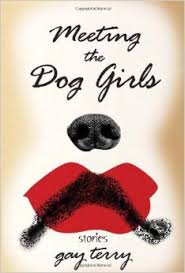
The short story collection that I’m currently reading (I try not to neglect this medium) is Meeting the Dog Girls. I read about half-a-dozen stories this week (most of them are short, and a few of them–it could be argued–don’t really constitute stories), and I’m about 20% of the way through. Absurdism is a prevailing theme, though in some stories more than others. So far, I’m enjoying this collection. It’s mostly light and easily digestible reading, but has some intense moments.

Meeting the Dog Girls


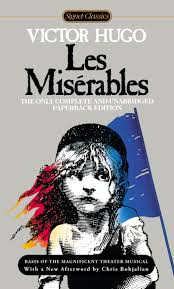
With respect to novels, I slipped away from Mo Yan’s Life and Death are Wearing Me Out, and resumed reading Victor Hugo’s Les Misérables–a book which I started a while back. I’ve got to admit that reading 19th century literature can be a struggle, and–at the risk of offending–Hugo could’ve used a modern-day editor. (I realize that an alternative interpretation is that modern-day people–myself included–could use an attention span.) I’m only about 10% in, but I got through a powerful moment during which the gendarmes bring Jean Valjean before the Bishop. If you’ve read it (or seen one of the movie or theatrical adaptations) you’ll know what I’m talking about.

LesMiserables


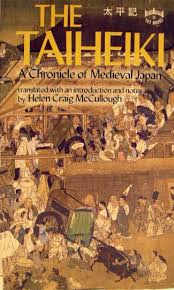
The only other book I spent any significant time was The Taiheiki, and if–like me–you think reading a translation of 19th century French literature can be a challenge, try reading a translation of 14th century Japanese literature. As I’ve mentioned, this book is research for the novel I’m working on. The challenge is the vast cast of characters. It’s a blend of history and fiction, and if you don’t know who was allied with whom during the war between Emperor Go-Daigo and the Hojo, it’s hard to figure out who you should be rooting for–unless it’s talking about the legendary warrior Kusunoki Masashige or one of the few other really well-known samurai.  (Kusunoki was the lord of a small and inconsequential province and his name would likely have been lost to history–despite being a brilliant General–had he not become Japan’s national paragon for the virtue of loyalty.)

Taiheiki