BOOK REVIEW: Principles of Tibetan Medicine by Dr. Tamdin Sither Bradley

Principles of Tibetan MedicinePrinciples of Tibetan Medicine by Tamdin Bradley

My rating: 3 of 5 stars

Amazon page

Full disclosure: let me first state that I’m a scientific-minded person and skeptic by nature, and if you’re expecting a review by a true believer, you may be disappointed.

A couple of questions may arise from the disclosure above. First, why do I feel I need to make such a commentary? Well, because this is a book about a system of medicine (i.e. gso-ba rig-pa) that developed within a country that was isolated for centuries and in which every aspect of knowledge was infused with and influenced by religious belief—both pre-Buddhist and Buddhist. Because of this, while some of the advice offered is surely sound, some of it is—from a skeptic’s point of view—bat-shit crazy. For example, there are herbal and dietary preparations to aid in digestion that may be completely sound and reasonable, and then there is the idea that Zombie spirits (one of 18 types of evil spirits) cause constant shivering.

The second question is, “If I’m not a believer, why read the book and review it?” For one thing, as I indicated above, I don’t think that just because the beliefs behind the “theory” of this system of medicine are baseless, it means that there is nothing in the book that is true or of value. The theory is that there are three kinds of energy (Loong, mKhris-pa, and Bad-Kan) and that excesses or deficiencies cause health problems. But it’s a 2500 year old system of healing; certainly they learned a thing or two in the process. It’s quite possible that they have learned things that scientific medicine has not. (Consider for example, Tibetan Buddhist monks have repeated and verifiably demonstrated capabilities—i.e. consciously controlling autonomic systems, that Western medicine would have thought impossible.)

The analogy that I always use is with kid’s Christmas presents. Parents hide the presents, and tell the kids that if there’s any tampering with them the kid won’t get anything but a lump of coal (you say that was just my parents?) Anyway, the kids find the packages, but are afraid to invasively tamper with them. Therefore, they feel the heft of them, they shake them, and they listen to said shakes. From that limited investigation, they develop a theory. The theory may be spot on, it may be completely wrong, or over several gifts it’s probably a combination of wrong and right. However, the question of whether the present does what it’s supposed to (i.e. bring joy) is not closely connected to the child’s theory, because it’s based on the parent’s observation of what the kid likes. That, my friends, is why systems of healing that are based on notions that are empirically wrong sometimes produce good results.

Second, while I’m a believer in science, I don’t always believe that Western medicine (rooted in science as it may be) consistently does a good job. Part of this is the fault of economists, policy types, as well as lazy patients who’ve created a system in which medicine only pays off if it can cut one open or give one an expensive medication. This leaves room for alternative systems of medicine that may not be so scientific, but that allow for the fact that changing patient behavior is often key to improving health.

I’ve taken a long time to get to the actual review, but I thought the reader should know from whence this reviewer was coming. The book is a little under 200 pages long. Its 11 chapters are logically oriented, and it’s easy to navigate the book. The author writes in a readable style, and jargon and foreign terminology aren’t a problem. It doesn’t have an index, but each chapter is broken up into many smaller subunits–so finding what one is after shouldn’t be hard.

The chapters cover the history of Tibetan Medicine, the nature of gso-ba rig-pa, the theory of Tibetan Medicine, causes of illness, human anatomy and physiology (not of the physical body as we know it), common diseases and illnesses, treatment techniques involving changing diet and behavior, medicinal treatment, representative case histories, and the nature of the Tibetan Medicine physician.

It’s not clear who the target audience for this book is. It’s not a self-help book as the implication is that the patient should see a doctor of Tibetan Medicine and not self-prescribe. Furthermore, while the book provides a good overview of Tibetan Medicine, it’s not an all-inclusive description by any means. The book seems to have been written primarily to make individuals aware of Tibetan Medicine and to give enough insight into the system that readers can differentiate it from Traditional Chinese Medicine or Indian Ayurvedic Medicine, both of which display similarities and differences.

I’d recommend this book if you’re interested in alternative approaches to healing, or if you’re interested in Tibetan culture in detail.

View all my reviews

BOOK REVIEW: The Medical Care of the Judōka by Anthony J. Catanese

The Medical Care of the Judoka: A Guide for Athletes, Coaches and Referees to Common Medical Problems in JudoThe Medical Care of the Judoka: A Guide for Athletes, Coaches and Referees to Common Medical Problems in Judo by Anthony J. Catanese

My rating: 4 of 5 stars

Amazon page

I’d recommend this book for anyone who holds a position of responsibility in a dōjō or a combative sport gym, including: teachers, coaches, senior students, trainers, etc. It’s intended for those involved with sport judō, but because there aren’t a lot of sport or martial art-specific books of this nature this may be one of one’s best option to get this information. I haven’t stumbled upon other books like this, but performing a search did result in similar books either generic to martial arts or for other martial arts. However, all of the others that I saw were either old / out-of-date, only available in hardcopy (usually at great expense), or were not by physicians. This book is available on Kindle and is quite inexpensive.

While it’s geared toward sport judō, many of the injuries will be common across martial arts. This is truer of grappling-oriented martial arts, but things like mat infections, students with various chronic ailments, and participants being knocked unconscious. (The latter is covered extensively, but arguably being even more of a concern for strikers.)

The book is useful in two ways. First, it discusses first aid and treatment for common injuries in the martial arts. It’s not a first aid manual, and will not replace training. (In fact, the book assumes it’s talking to someone who’s in a position where they’ve had at least minimal training / experience.) However, it may provide useful information about what injuries one should make sure to be trained in when shopping first aid courses. It also gives one ideas about differences of opinion on certain approaches to treatment or the decision as to whether a given participant is safe to participate.

Second, the book discusses whether prospective students with common chronic ailments can safely participate, and under what circumstance. In many cases, this book goes about this by saying what the judō rulebook says. While this may not be a perfect guide for practitioners of other arts, it may give a reasonable idea about how serious one should take a given disease or infirmity.

The book consists of 20 chapters. Most of the chapters cover common injuries and ailments in judō, generally arranged by anatomical systems. However, there are also chapters covering nutrition/hydration, issues for athletes going abroad / older participants / and special needs athletes, drugs and doping considerations, injury rehabilitation issues, psychological challenges, and the traditional Japanese methods of resuscitation and first aid (kappo and katsu.)

In addition to the core chapters, there is some useful ancillary material. First, there are vignettes interspersed throughout the book that could be beneficial. These vignettes reflect the benefit of having an author who is a medical doctor, a long-time judōka, and an experienced match physician. The vignettes may be more likely to stick in one’s head than the blander presentation of information, and these sidebars often address unusual cases. Also, there are two glossaries—one that deals with martial art / sports terminology, and one for medical terminology.

While written by a physician, this book is not written exclusively for other doctors or medical experts. That is to say, it’s easily readable by a lay audience. Medical jargon, when used, is explained the first time in the text, so one doesn’t need to keep jumping to the glossary.

At least the Kindle version is graphics free. That would be problematic if it was a first aid manual, but that’s not this book’s purpose.

As I said in the beginning, if you have responsibilities for the well-being of martial arts students / athletes, you should read this book.

View all my reviews

BOOK REVIEW: Yogic Management of Common Diseases by Dr. Swami Karmananda

Yogic Management Of Common DiseasesYogic Management Of Common Diseases by Satyananda Saraswati

My rating: 4 of 5 stars

Amazon page

The title of this book gives one a nutshell description. It’s a book that discusses what yoga practices are beneficial for various common ailments. These practices include not only asana (postures), but also pranayama (breathing exercises), shatkarma (cleansing practices), yoganidra (a relaxation technique), meditational practices, and dietary and other yogic lifestyle practices. The book also discusses both the medical and yogic explanations of various diseases, and provides enough background on the relevant anatomy and physiology to give a layperson an understanding of the basic causes of each disease (if known.)

The book covers about 37 classes of disease, and is arranged into seven parts by bodily system (head and neck, cardiovascular system, respiratory system, gastro-intestinal tract, joints and musculo-skeletal system, urogenital system, and a miscellaneous ailments section that deals with skin diseases and varicose veins.) Some chapters deal specifically with one disease, while others cover two or more related ailments (e.g. Bronchitis and Eosinophilia, Sinusitis and Hay Fever, or skin diseases.)

This book has a number of strengths. First, it’s grounded in a scientific view of these ailments and isn’t selling yoga as a panacea. As suggested above, the title was carefully chosen. It’s “Yogic Management of Common Diseases.” The word “Management” is a critical one. If you’re looking for a book about how yoga can single-handedly cure your Stage IV lung cancer, this isn’t the book for you. If you’re looking for a book on how yoga can help you live a better life if you have arthritis, diabetes, or are hernia prone—possibly in conjunction with medication or other medical treatments—this may be the book for you.

Second, the diseases covered seem to have been carefully chosen. The selection of common ailments is not just to appeal to a broad audience. Many of these ailments are caused by common lifestyle problems that offer relatively easy fixes. Other diseases may not offer any fix per se, and, therefore, the ability to live a high quality of life with the affliction may be valuable. Also, I know a number of the diseases covered are particularly promising candidates for a yogic solution / mitigation.

Having given the strong points, I will say there are a couple of weaknesses to the book as well. First, it’s not illustrated in any way. Given that there is a lot of discussion of biology and anatomy, there are places where a picture might be worth a thousand words. I will note that this isn’t a book for a yoga newbie. It uses Sanskrit names for practices without so much as a glossary. That said, yoga teachers and intermediate/advanced students will probably not find this much of a problem because they will have built an appropriate vocabulary or have the necessary reference close at hand. I didn’t deduct for the lack of explanation, because the book is clearly intended for established practitioners (the Introduction warns as much.)

The second weakness is that there’s no explanation of why the listed practices should work particularly well for the given disease. I think the book does a great job of explaining the nature of the disease for a non-expert reader. However, then it just lists practices by type (asana, pranayama, relaxation, diet, etc.) In some cases, the reader can easily make the connection, but in others it’s not so clear why one should do practice “X” for disease “Y.” I do realize that drawing these connections could be space-intensive and technical. The book is a nice slim 245 pages, and it could rapidly grow to an untenable length. However, I’m concerned that some of the recommendations might not be rooted in experience and observation.

I would recommend this book for yoga teachers and intermediate / advanced practitioners who are interested in yoga as a component of building a healthy body. If you are new to yoga, you will probably want to first familiarize yourself with many of the classic asana, pranayama, and shatkarma practices of yoga—otherwise you’ll have to look up terminology constantly.

It should be noted that this book is put out by the Bihar School (of Swami Satyananda Saraswati fame), and the same publisher has put out a number of books that delve much more deeply into specific ailments. (At least some of these are written by the same author, Dr. Swami Karmananda.) Also, let me say that while the school self-publishes through its Yoga Publications Trust, it puts out books on a large-scale, of high-quality, and they appear to be available globally through Amazon and the like. (Swami Satyananda Saraswati alone was extremely prolific and wrote the APMB, which is one of the seminal reference works on yoga.)

View all my reviews

Wat Po v. Chiang Mai Massage: A North / South Divide?

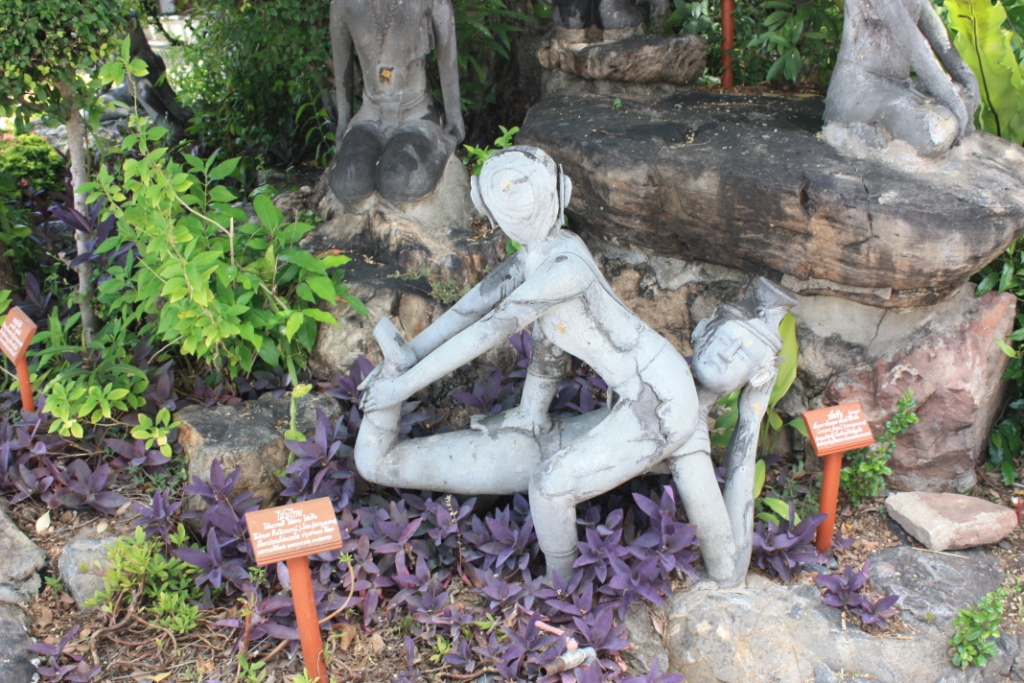
One of the sculptures in the Thai Yoga outcrop at Wat Po.

One of the sculptures in the Thai Yoga outcrop at Wat Po.

In September I attended the General Thai Massage and Foot Massage courses at Wat Po. The teacher from whom I first learned Thai Massage (a.k.a. Thai Yoga Bodywork or Nuad Bo Rarn) was trained in Chiang Mai by various teachers, and the style he teaches reflects that northern heritage. I was curious to see how the style of massage varied in the south from the northern approach that I had already learned. Would I be in uncharted waters? Or would the Wat Po course merely be a refresher of what I had already learned? These questions were on my mind as I began the course.


The answer turned out to be somewhere in between. The Wat Po approach wasn’t radically different from what I had already learned, but neither was it a carbon copy. One could clearly see the common origin of these styles. For yoga practitioners, a reasonable comparison would be to imagine you studied Bihar yoga, and then you sat in on an Ashtanga Vinyasa class. Most of the postures would be similar if not the exact same—e.g. a downward dog is a downward dog. However, the sequence is a little different, you may run into a posture or two that you hadn’t seen before, and there will be many little differences in points of emphasis and so on. The same could be said of two martial arts that have a recent common ancestor art. (However, I think martial arts evolve more rapidly than other systems of movement because there is a life and death urgency to adapt to local conditions, and so martial arts can diverge rapidly.)


I won’t get into every little difference in this post. For one thing, the first course I took was a 60 hour (10 day) course, and the Wat Po course was only half as long (5 day / 30 hours.) Therefore, some of the apparent differences might have more to do with the need to conform to time limitations than true stylistic differences. The Wat Po course was designed to impart a sequence that could be done in an hour-and-a-half bodywork session. The first course I took taught some material that was redundant in the belief that one could tailor one’s sequence to the recipient’s needs and / or the masseuse’s preferences.


As an example, at Wat Po we didn’t learn any massage of the chest or abdomen, but I was shown (in fact, I was recipient of) the Wat Po approach to abdominal massage and it was pretty much the same as I’d learned previously. In my earlier learning, the approach to energy lines was to stretch (longitudinally) the limb, then apply palm pressure, then work the line (typically with the thumbs), and then one would repeat the palm pressure and finish with a repeat of the stretch. At Wat Po, they went straight for the energy line (sen) and followed that with the palm pressure work. I have no way of knowing whether this difference was more due to timing or style.


Before getting into the differences, I will talk a little about similarities. The general approach was the same (e.g. the recipient is fully clothed in a light, comfortable garment(s)) and the massage is ideally given on a thin, dense mattress/pad on the floor–rather than on a table. The general principles of sequencing were the same. Namely, one began at the feet and worked in the direction of the head. Also, when working on a limb, one began at the distal end, worked toward the torso, and then back toward to the starting point. Also, energy line work was done before the stretches.  There were four positions in both styles: supine, side, seated, and prone, and—unlike many other forms of massage—the supine position was at the fore (i.e. neither style emphasized the prone position and back work over the supine in the way other varieties of massage often do.) Both styles of massage (as probably all massage) began with a brief introduction and questioning designed to make sure the individual didn’t have any contraindicated conditions. Both styles of Thai massage began with a moment of prayer or contemplation—this is similar to some styles and different from others and speaks to the traditional nature of Thai massage.


IMG_0031

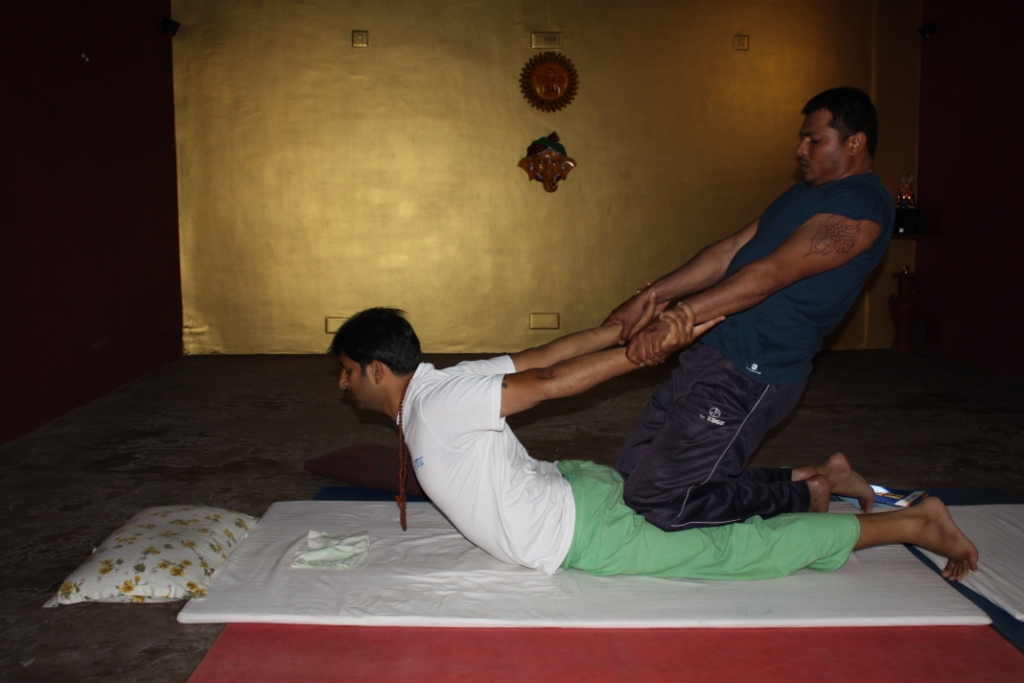
The side and seated sequences were the most similar between the two styles.  I learned more in these sequences in the longer (Chiang Mai) course, but what was included in the Wat Po course was largely the same. Where the stretches were of the same type, they tended to be virtually identical. By that I mean to say that both styles had stretches that weren’t taught in the other style, but where that was not the case, the stretches were indistinguishable. For example, the pictured variant on sarpasana / bhujangasana [snake / cobra backbends] was done in the same manner in either style. (I learned more stretches in the first—Chiang Mai–course, because it was longer.)  Over all, the energy lines (sen) tended to be identical, but there weren’t always the same number of them, nor were the same ones always emphasized. There were some differences in the feet lines that I’ll get into below.


Now let’s get to the differences. Starting with some small differences, the manner of palm pressure work was different between the two systems. In the Wat Po style, there was always one fixed point that one hand locked in place while the other hand applied palm pressure. I had previously learned to use both hands in a rhythmically alternating series of palm pressure applications.


One little difference that I found interesting involved the technique of closing the little flap over the ears at the end of the face and head massage (both styles close off the ears.) I had been taught to very gently release pressure so as to avoid any kind of popping that might disturb the recipient. However, at Wat Po the instructor taught to vigorously pull the fingers away—resulting in a pop. My guess would be that the idea was to get the recipient’s attention so that one could transition them from the face massage (which notoriously puts people to sleep) to a wakeful state so they could follow instructions for the stretches that followed. (We were taught face massage as part of the seated sequence. Previously, I had learned that this was an option, but that it was easier to do the face massage from supine so you didn’t have to worry about the recipient falling asleep and possibly falling over literally.


A final little difference was how the blood stop was done for the lower extremities. At Wat Po, they did the leg blood stop with both legs straight, whereas I had previously learned this technique with an open groin, i.e. the knee pointed out. (Both ways work about the same, but I think it might be a little less awkward to do it with the groin open as one is not in as close of proximity to the recipient’s privates.) The blood stop for the arm was identical.


The energy lines are one of the most fundamental aspects of Thai massage, and one would expect little variation in them between styles. This proved largely, but not entirely, true. For example, the leg lines were the same (as one might expect because one cannot stray too far from some lines without getting onto bone.) Also the points at the top of the shoulder, around the neck, the base of the skull, and the scapulae were the generally the same–except more or fewer points might be employed from one style to the other.


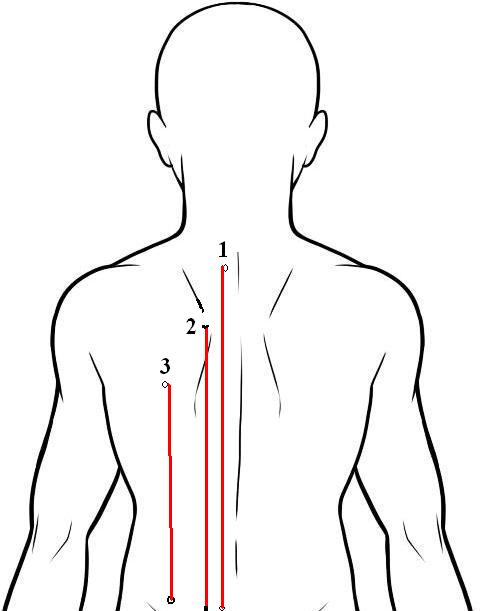
The arm lines were almost the same. The line on the back of the arm was the same, and the line that goes up the middle of the inner arm was the same. However, there was a second inner line that ran in line with the little finger along the lower edge of the arm (presuming the arm is straight out from the shoulder as it is for massaging the inner arm in both styles.) The lines of the back that were used were different. In my (not very accurate) diagram, the lines 1 and 3 were emphasized in the Chiang Mai style, but 1 and 2 were the lines used in the Wat Po system.


Back diagram_CM


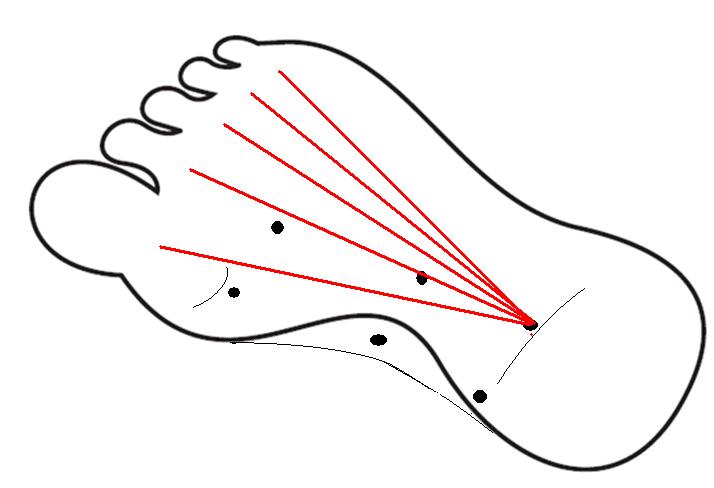
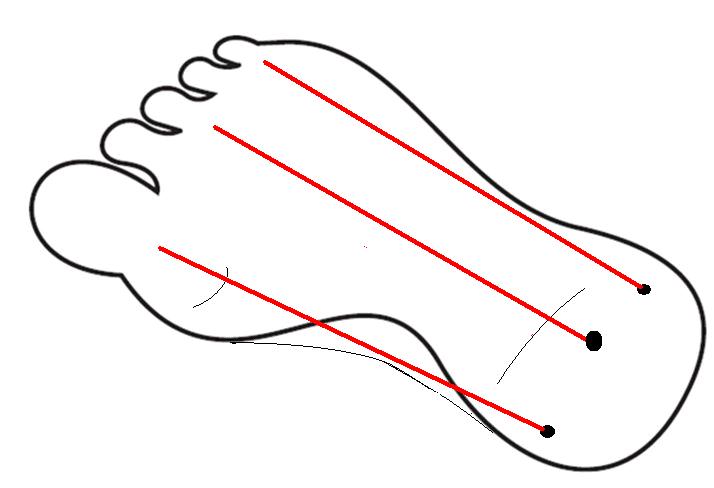
The greatest divergence in lines and points was in the area of the feet. The best example of this can be seen in the lines of the sole. In the Chiang Mai style I’d previously learned there were five lines that radiated from a point where the heel transitioned into the arch about midway across the foot and went toward the base of each toe. The Wat Po style had three lines that were more or less parallel in line with the big toe, middle toe, and the little toe.  See diagrams.


The Chiang Mai 5 lines of the sole.

The Chiang Mai 5 lines of the sole.

The Wat Po 3 lines of the sole.

The Wat Po 3 lines of the sole.


In summary, the difference between these two styles wasn’t that great. In many cases the techniques were exactly the same, in most they were marginally different, and only rarely were they completely different.  I don’t really have a preference between the two styles. I think which would be a better experience comes entirely down to the skill of the masseuse / masseur.

BOOK REVIEW: Your Brain on Yoga by Sat Bir Khalsa

Your Brain on YogaYour Brain on Yoga by Sat Bir Khalsa

My rating: 4 of 5 stars

Amazon page

This Harvard Medical School Guide presents the findings of many scientific studies on the benefits of yoga, and it does so in a manner suitable for the layman. The book is written by Dr. Sat Bir Khalsa, a long time practitioner of Kundalini Yoga and a neuroscience researcher at Harvard, and is co-authored by a science writer trained in journalism.

I became aware of Khalsa’s work when reading William Broad’s The Science of Yoga, a book that is complimentary of Dr. Khalsa and his studies—a favor which Khalsa doesn’t return as he rejects Broad’s work as being overly sensationalist. The book does talk about Khalsa’s research, such as a study with young musicians at Tanglewood that examined how the practice of yoga increased their equanimity. That said, this isn’t merely a summation of Dr. Khalsa’s work. It’s what in academia would be called a literature review, but “literature review” implies a far more dismal reading experience than one gets from this book. It does present anecdotes in a way that is useful for a layman’s book, but would not be well-respected in an academic setting. This work isn’t designed for medical colleagues but rather to be of benefit to run-of-the-mill yoga students and teachers.

This is a very short book at only about 50 pages. The book consists of five chapters after an introduction which sets the stage and gives some relevant background on Dr. Khalsa. Chapter one delves into the effect of stress on the body and mind, and how yoga (and meditation more generally) has been shown to help counter the effects of bad stress (not all stress is inherently bad, as is addressed in the chapter.) Chapter two examines the effect of yoga on the body and in countering a number of common ailments. The third chapter considers how yoga might actually help one to be smarter and more creative. Chapter four presents the results of studies of how yoga can counter depression and improve one’s mood. Chapter five is in a different vein, and might well have been included as an appendix. The last chapter gives an overview of the various types of yoga to assist readers new to yoga on what style might best meet their needs and disposition. This is a nice feature for those new to yoga, but also for veteran practitioners who’ve practiced one style and might not be aware of the wide range of styles out there. (A few of the styles mentioned are popular in India, but I don’t think are as well-known in the West.)

For such a thin book, this work covers a wide range of topics including–but not limited to–the effects of yoga on sleep, the immune system, neural plasticity, memory, math skills, and mood. A nice feature of the book is a series of brief exercises that one can practice to help reduce stress or achieve a desired goal. These practices are generally located at the end of chapters. Finally, while this book isn’t written primarily for doctors and other scientists, it’s endnoted so those interested in tracking down the studies the book references can readily do so.

I’m a big fan of applying a scientific approach to the study of ancient methods such as yoga. I would, therefore, recommend this book for yoga teachers and students who are interested how precisely these practices can assist them. It’s extremely short and easily digested. It’s in no way overbearing with medical jargon and is readily understood by anyone with a basic education in biological science.

View all my reviews

The Prostate Exam

Before moving to India, I got a stem to stern medical checkup. This included the dreaded  first prostate exam (emphasis on “prostate exam” not on “first” as I don’t suspect the process gets any more pleasant.) When my wife and I had both been on my work insurance, we had a HMO that said they didn’t do prostate exams for white males until they were 65 and older (or postmortem, if they died of prostate cancer, whichever came first.) That should’ve been a clue that they were a bunch of bean-counting quacks, but as I was less than eager to get said exam I took their word for it.


Anyhow, the area where I lived was fairly close to Emory University, and my new doctor’s office was even closer. (For those of you unfamiliar with Atlanta or Georgia–Emory has one of the preeminent medical schools in the Southeast and for some specialties the country) When I got my physical, after the preliminaries conducted by the nurse, I was next seen by what–for lack of a better term–I’ll call a junior doctor (ER went off the air too long ago for me to remember the proper terminology). This was a poised and professional young woman–I know not whether a medical student or recent graduate from Emory medical school.


She reviewed my medical history and did a few rudimentary “stick out your tongue and say ‘ahh'” kinds of things.   Then she told me that my doctor–a man I’d never met before–would be into look me over and write the prescriptions for the meds that I needed for coming to an area prone to malaria and other plagues.


She then asked, “If you’d prefer, your doctor can do your prostate exam. Otherwise, I’ll do it. Do you have a preference?”


I said, “Having never met the man, and at the risk of sounding sexist, I’m going to assume that you’ve got daintier hands. Ergo, you’ve got the job.”   To which she replied, “Yeeeah, me,” in the feeblest monotone voice, her tone suggesting that she might not be as thrilled by the prospect as her words would have indicated.


I had the exam. It was quick, painless, but–I’ll not lie–not without the inevitable awkwardness associated with one person having a hand–or part thereof–lodged in another person.


For those of you who know me, it goes without saying that my doctor turned out to be the most petite homuculus of a man. (You know what they say about what happens when you ASS-U-ME, U get the hand of  a bigger ME in your ASS.) However, you pays your money and you takes your choice. I wouldn’t have felt comfortable asking the doctor and intern to place their palms together to see who had bigger digits.

Antifragility and First World Diseases

Antifragility

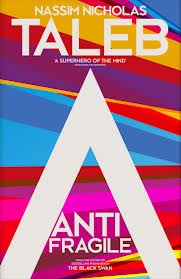
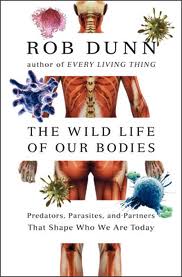
TheWildLifeofOurBodiesI was sitting at an outdoor cafe as I thought about how to write this post. I’d just finished reading chapter 5 of the Rob Dunn book entitled The Wild Life of Our Bodiesand was reflecting upon how interesting it was to be reading two books whose central premise–in broad brush strokes–was the same. As I was ruminating, a family of four–a couple and their two daughters, an infant and a preschooler/kindergartener–came and sat down at an adjacent table.

For a while the preternaturally-cute infant crawled around on the table top, but as the mother became concerned that the wriggly little child might fall or spill scalding coffee, she eventually set the child down. The child proceeded to crawl around on the ground–ground on which one could easily imagine pigeons trolling for crumbs. [Full-disclosure: I didn’t actually see any pigeons, or even any noticeable filth on the ground for that matter, and–while this is India–it was a major coffee chain attached to the side of a popular up-scale shopping mall, and so that particular ground was probably at least hosed down daily.] The child crawled on all-fours, except that she had the plastic number placard which told the waitress where to bring the order in one of her hands, and she would alternate between dragging it across the ground and–when she got tired of crawling–she would roll onto her rump and pop a corner of the placard into her mouth.

If reading the preceding scene made you a bit queasy, you should be reading one [or both] of books mentioned above. Doing so gave me a totally different perspective on this event. There was a point when I–like many–would have assumed the little girl would get some sort of ailment and that her parents would pay in lost sleep for letting the kid crawl on the ground in an urban public space, but I’m now more inclined to think that probably nothing will happen, and she could–theoretically–end up better off for the wear. I’m not advocating wallowing in filth, but I have come to see biological stressors in a new light. I wouldn’t go so far as to advocate letting a child crawl around sticking things in his or her mouth that have been on the ground at a cafe, but it would no longer surprise me to hear that this child lived a healthier life than children of germophobic (properly “mysophobic”) first-world moms who are about one cookie-off-the-kitchen-floor from forcing their children to live in a bubble.

The reader may be wondering two things: 1.) how these books could mitigate one’s queasiness, and 2.) what the books even have in common. If  you’re familiar with Nassim Nicholas Taleb, it’s likely you associate him with criticisms of the misuse of statistical methods, and the failure to understand under what conditions the usefulness of these methods break down. While Taleb does consider a wide range of examples in his popular books Black Swan,  Fooled by Randomness, and–most recently and most relevantly–Antifragilethe world of business is where Taleb’s background lies and where much of his discussion is centered. The Dunn book, one the other hand, fits squarely in the domain of biology and medicine.

Both of these books take as their core idea that there are systems that must face constant and occasionally serious challenges to grow stronger, and that the removal of these challenges can have adverse and sometimes dire consequences. Taleb looks at such systems in a broad and general sense, and coins a term, “antifragile”, to describe such systems. A system is antifragile if it gets stronger (i.e. in some way better) when subjected to stresses. This shouldn’t be confused with robustness, which is being indifferent to stressors. Robust systems can take or leave stressors, but antifragile systems need them or they become weakened. Dunn’s book deals with a specific example of an antifragile system, our guts. The biologist suggests that our war on parasites and germs has created a whole raft of problems never before seen. It’s probably not a new idea to most readers, as there are ongoing arguments about the risks of our antibacterial frenzy.

While first-world dwellers tend to take a superior view of those poor third-worlders and their myriad ailments–a number of which have been stamped out in the developed world–Westerners may not even be aware that there are a number of ailments that exist almost exclusively in the first world. Increasing evidence is developing that certain forms of diabetes and allergies are linked to “clean living.”  Interestingly, while one might readily imagine how a digestive tract ailment like Crohn’s Disease is tied to insufficiently populated digestive ecosystem, there’s reason to believe that diverse issues such as autism and anxiety disorders may also be linked to loss of internal predators and the imbalances their loss causes.

It’s not entirely a coincidence that I’m reading these books concurrently. I’ve been interested in the issue in a broad sense as of late. How does the craving of comfort weaken a population? What are the risks of indiscriminately weeding the stressors out of one’s life? (As seems to be a major objective of modernity.)  Of course, stressors are not eliminated, but instead stressors that are relatively feeble may become the 800 lb. gorilla of stressors.

BOOK REVIEW: Mind Over Medicine by Lissa Rankin

Mind Over Medicine: Scientific Proof That You Can Heal YourselfMind Over Medicine: Scientific Proof That You Can Heal Yourself by Lissa Rankin

My rating: 4 of 5 stars

Amazon page

This book is one of many that challenge the conventional approach to medical care in which a patient is a passive character who just goes to the doctor and does (or ingests) whatever the doc tells them to. In the vein of works by Deepak Chopra and Bernie Siegal, this book is written by medical doctor who has different beliefs on healing. So what’s the niche of Mind Over Medicine, given that there are already a number of prominent medical doctors preaching the same message? That message is that your body is a healing machine and will do MOST (not ALL, none of these individuals advocates abandoning modern medical science) of the heavy lifting of healing, if you create the right conditions. Rankin presents results from scientific studies as the thrust of her book. I’m not really that familiar with Siegal, but you’ll find Rankin’s work a great deal less spiritual and more scientific than the works of Deepak Chopra.

There’s a lot of scientific interest in understanding why some people experience spontaneous remissions from the most lethal of ailments while others succumb to diseases that most people weather with ease. While many people will chalk it up to divine will or chakra nudging or having one’s demons expunged, these aren’t satisfying answers for the scientifically minded individual. However, neither is the extreme skeptic’s suggestion that these are just randomly distributed flukes of nature—and it’s a waste of time to try to explain the outliers. The latter being unsatisfying because phenomena like the placebo effect are well documented.

So what conclusion does Rankin draw from the scientific literature. As suggested earlier, the conclusion is that the body is extremely good at healing what ails it, but it has to be in the right mode to have this healing take place. What’s the right mode? It has to be in relaxed mode, or, in scientific parlance, the parasympathetic system must be engaged. The problem is that when a person is under stress, the body switches into a fight or flight mode. Humanity hasn’t really come to grips with the fact that work deadlines, fears about ailments, or fears that our spouse may be cheating aren’t really the same as our ancestor’s experience of being chased by a saber-tooth tiger. When that ancestor was being chased by a tiger, his or her body shut down everything that wasn’t germane to immediate survival (e.g. digestion is interrupted, blood isn’t evenly distributed but goes to lungs and skeletal muscles, etc.) The tiger chase is over shortly, and the body returns doing its regular at-rest functions (e.g. digesting, healing, etc.) However, if we let our stressors kick us into that immediate survival mode–and just having a disease can be stressing enough in itself–then our healing can be severely or completely curtailed.

Can faith healing, karma cleansing, chakra fluffing, or sugar pills contribute to healing? Sure, but not in the way that the faithful thinks. These systems–each of which has proponents who’ll swear they witnessed first-hand the power of faith or magic or invisible energy (and they are probably not lying)–work because the person who firmly believes in these therapies is able to relax and let their bodies can do what they do.

Does this mean that those who don’t believe in religion or cosmic energy manipulation are out of luck? No. You just skip the middleman and engage in activities such as meditation, yoga, tai chi, or breathing exercises that allow you to put the body in a relaxed state. Secular meditation works just fine if practiced consistently, and particularly if one confronts, addresses, and eliminates the long-terms stressors in one’s life.

At the heart of the book is a discussion about how to go about performing one’s own diagnosis and writing one’s own prescription. As I mentioned earlier, this isn’t about cutting the doctor out. In this case one is diagnosing one’s stressors and prescribing activities to eliminate them. This doesn’t mean one should pass up medical treatment or doctor’s advice. However, it may entail switching doctors if you have a doctor that firmly believes you are incapable of getting better—you don’t need any doubts about your body’s ability to do its thing being foist upon you.

I’d highly recommend this book for scientifically-minded individuals interested in learning how they can help their bodies get into a state conducive to healing.

View all my reviews

BOOK REVIEW: Auschwitz by Miklos Nyiszli

Auschwitz: A Doctor's Eyewitness AccountAuschwitz: A Doctor’s Eyewitness Account by Miklós Nyiszli

My rating: 5 of 5 stars

Amazon page

Auschwitz is the account of a Jewish medical doctor who performed autopsies at the crematoria of Auschwitz at the behest of the infamous Dr. Mengele. It’s gut-wrenching reading. One is constantly reminded of the words of another famous Holocaust chronicler, Viktor Frankl, who said, “We who have come back, by the aid of many lucky chances or miracles – whatever one may choose to call them – we know: the best of us did not return.” That’s a sad fact with which Dr. Nyiszli had to live. Nyiszli lent his expertise to many despicable acts in the process of surviving, and it’s to his credit that he had the courage to write this work. He was the only one who could have told much of this story, and it’s a story that he felt the world must know–even if it meant rehashing the nightmare scenario of his life during the holocaust years, even if he was not always to be seen at his most virtuous.

While Nyiszli was a man of science who tried to stick to the objective task of conducting autopsies, his results were routinely perverted to support Nazi pseudo-science—the pseudo-science used by Nazis to justify elimination of the Jews and other despised classes of humanity. Nyiszli stayed alive first-and-foremost because Dr. Mengele valued Nyiszli’s expertise, and perhaps the credibility that expertise offered to the Nazi’s insane attempts to emulate science.

Sometimes by just answering basic scientific questions, Nyiszli was contributing to the advancement of dire atrocities. There’s no better example than when Mengele asked Nyiszli how one could obtain a skeleton from a corpse. These skeletons displayed deformities, and were thus to be sent to the Kaiser Wilhelm Institute for Anthropology, Human Heredity, and Eugenics to support the absurd assertion that Jews were genetically degrading. Of course, as Nyiszli points out the disease these two people were afflicted with was no less common among blond-haired, blue-eyed Aryans than it was among the Jewish people. At any rate this resulted in two corpses (made corpses by force, not nature) being boiled to remove the skeletons so they could be sent to an institute as pseudo-evidence.

Nyiszli’s forthcomingness is astounding. Nyiszli performed many objectionable actions at the behest of Mengele, but it’s clear he couldn’t have survived disobeying the Nazi doctor. However, there were also times when Nyiszli acted on his own in a way that was, arguably, detestable. After Auschwitz was abandoned, Nyiszli used his former position–and Mengele name-dropping)-to cut in line to get into an encampment (essentially a refugee camp) so he could get a shower and food for the night when others were left out in the cold.

I don’t mean to make Nyiszli look evil. He did many virtuous things in the process of surviving as well. This included sneaking medical supplies from the crematoria infirmary (where there was abundance) to barracks infirmaries (where there was a dire shortage.) He did his best to save those he could. It’s to Nyiszli’s credit that he shows us a complete picture. One expects such a book to be distorted when it comes to the author, but Nyiszli’s book seems honest.

This is an important book as it lets us peer into one of the darkest hours of humanity, and gaze upon a terribleness that would have been lost to posterity. The book gives a chilling account of what it must have been like to be in the gas chambers, told by someone who saw the aftermath in person. Nyiszli saw the piles of bodies reaching to the ceiling—dog piles in which the weakest were trapped on the bottom as the strongest tried to climb over women and children to get a gulp of good air. (Another proof of Frankl’s thesis.) Nyiszli also describes how one little girl, in a freak occurrence, managed to survive the chambers owing to an air pocket, only to have the SS finish the execution by cruder means.

I think everybody should read this book, but I’ll offer a warning that it’s not for the faint of heart. One has to keep righteous rage in check to just get through the book. However, to ignore this wicked moment in history is to fail to see the traps humanity is capable of falling into through simple refusal to do the right thing or a willingness to try to feel better about oneself by casting aspersions on those with slightly different physical features.

View all my reviews

Chi: The Power of What Isn’t

Every morning I start my day with chi kung (a.k.a. qi gong), and many days I do tai chi (tai qi.) For those who are unfamiliar, chi is usually defined as “life force” or “life energy.” However, defining chi is neither simple nor will one find a consensus agreement. Some say chi is  “breath,” at which point its existence becomes a much less controversial, but also less explicative, concept. Others would say that chi is much more broadly dispersed than the “living” so “life force” is an understated definition.

Chi Kung are exercises combining breathing, movement, meditation, visualization, and self-massage that are used to keep one healthy. Because yoga also contains these components (e.g. breathing, movement, and meditation; though with very different specifics) some have even been known to call chi kung “Taoist yoga.” The idea behind these exercises is that chi is lost through living (some activities more than others), and can become blocked in the channels through which it is believed to move. Various exercises are used to replenish and ensure healthy circulation of the chi. Tai chi is a series of martial arts forms that are also considered to have the effect of replenishing and / or enhancing chi.

Two questions may leap to mind, especially among those who know me as a skeptic. First, do you believe in chi–despite the lack of evidence that it exists? (When I mention this lack of evidence, I am obviously not defining chi as breath or bodily fluids, in which case the most rabid skeptic would have to acknowledge its existence. However, then an entirely different set of questions is raised about the vast and complicated nature of chi kung exercises needed to circulate oxygen, which travels through blood vessels and not through channels or meridians. In other words, there’s no reason not to abandon a lot of the Traditional Chinese Medicine (TCM) / Taoist conceptions of health if one considers a narrow definition of chi.) Second, if you don’t have any reason to believe that chi is a real thing, why bother with the exercises?

First, no, I don’t believe in chi as a substance or physical entity in the way that your average Taoist priest does. I don’t mock or ridicule those who do, and I acknowledge it could always turn out that they were right and I was wrong and that my current state of ignorance combined with an incorrect deference to Occam’s Razor led me astray.

However, I have a pretty high standard for believing a person, place, or thing exists. I need to be able to observe it.  If I can’t perceive it directly, but there is some indirect sign it exists, then that indirect sign needs to be the simplest possible explanation I can imagine given my current state of knowledge. (Yes, I realize that Occam’s Razor isn’t a law, it can always be that an unlikely explanation is the correct explanation. I also know the raft of indirect signs of chi, and, yes, I’m saying I can imagine simpler explanations than an energy source that is immeasurable but powerful enough have bodily effects.) While I don’t believe in chi (or meridians, or the yet undiscovered organ called the “triple heater”) as physical things, I do believe in conceptual chi which is an object of visualization.

Moving on to the second question, I practice these exercises because they make me healthier.

This, of course, raises another question, “How can these exercises be effective if chi is not real?”

Now I have to go Socratic on my hypothetical questioner. The Socratic dialogue goes like this:

S: Have you ever been to a scary movie?

A: Of course, I have. What kind of a troll has never seen a scary movie?

S: I’m Socrates. I’ll ask the damned questions around here, thank you very kindly.

So while you were watching said movies, did you ever get startled? That is, did your pulse ever pound a bit harder; did you ever take a gasping breath; did your hands ever grip the armrest with white knuckles; or did you ever get butterflies in your stomach?

A: Of course, that’s part of the horror movie watching experience.

S: So, then, you were under the impression that the events you were watching were actually happening, and that the killer might come out into the theater after you at any moment?

A: No, of course not. Don’t be absurd!

S: And yet this thing that was not real–that was just symbolic or conceptual–had actual physiological effects?

[At this point Socrates breaks into his superiority dance.]

I think visualizing chi flow has positive benefits both mentally and physically. The mental benefits may be clear. The physical benefits result from putting oneself in the moment and conducting activities (deep breathing and movement) that help one de-stress. This process of de-stressing helps one to be healthier. Does it matter that one does the exercises as they have been handed down from ancient China? Probably not, but I believe that trial and error (even without complete information about anatomy and physiology) yield some impressive results. Of course, there are many other systems (e.g. yoga) that can work equal wonders using an approach that is quite different in its detail. (I also don’t believe in Chakras, but can imagine great benefits from behaving as if they exist.)

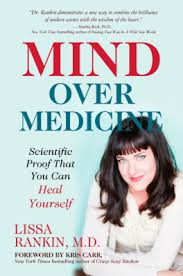
MindOverMedicineI just started reading a book by a medical doctor named Lissa Rankin. Rankin’s book, entitled Mind Over Medicine, presents evidence from a large body of scientific literature suggesting the mind often plays a major role in wellness by way of mechanisms that aren’t yet fully understood, but which defy the traditional view of Western medicine.

Rankin was intrigued by the vast number of anecdotal cases of what doctors call “spontaneous remissions.” Spontaneous remissions are when a patient becomes healthy in a way that defies explanation (i.e. they had no treatment, they had insufficient treatment, and they had an illness for with the body’s immune system is normally believed incapable of doing the job on its own.) She wasn’t satisfied with these one-off stories involving placebos, fake surgeries, busted radiology equipment, faith healing, etc, but rather wanted to see what the scientific literature contained by way of scientific double-blind studies on the subject.

She found there was evidence to support mind over matter when it came to illness, and that there was a fledgling explanatory literature. She also learned that while there was a large database of spontaneous remissions, there had not yet been an attempt to determine whether there were common characteristics of those who showed the “placebo effect” (getting well while being in the placebo group of a double-blind study) or other spontaneous remissions.

My point is that there is good reason for skeptics to consider that there may be a lot more to health and well-being than our current paradigm suggests.