“Retort” by Paul Laurence Dunbar [w/ Audio]

"Thou art a fool," said my head to my heart,
"Indeed, the greatest of fools thou art,
To be led astray by the trick of a tress,
By a smiling face or a ribbon smart;"
And my heart was in sore distress.
Then Phyllis came by, and her face was fair,
The light gleamed soft on her raven hair;
And her lips were blooming a rosy red.
Then my heart spoke out with a right bold air:
"Thou art worse than a fool, O head!"

“Drunk in the Fairyland” by Huang Tingjian [w/ Audio]

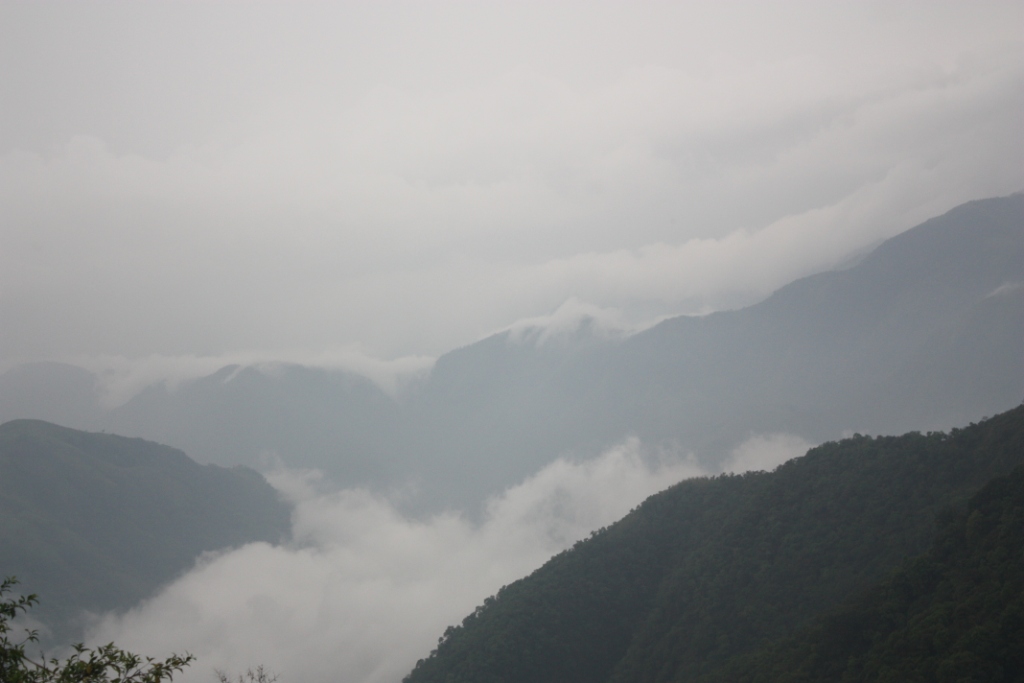
In the face of heavy morning cloud again
And drizzling evening rain,
Leaning on each other, rugged the hills remain.

The Gorge of Witch and lofty peaks
Lock in the Southern Palace rosy cheeks.

In spring the halberds move in force,
Maids in fair dress welcome heroes on horse,
To the riverside town they go only.

I come to the wasteland a thousand miles away,
With my shadow so lonely.

How can I become cheerful and gay?

It is said the Southern land is so high,
It nearly scrapes the sky.
To the capital I stretch my eye,
I see but misty water far and nigh.

When I drank in the hall,
My friends were talents all.

Songstresses sang with rosy face
And dancers danced with grace,
Drunk, they intoxicated the place.

Hearing the cuckoo's home-going song
All the night long,
Could I resist my yearning strong?

Translation: Xu Yuanchong [translator]. 2021. Deep, Deep the Courtyard. [庭院深深.] Cite Publishing: Kuala Lumpur, pp. 191-192.

“Ode on Solitude” by Alexander Pope [w/ Audio]

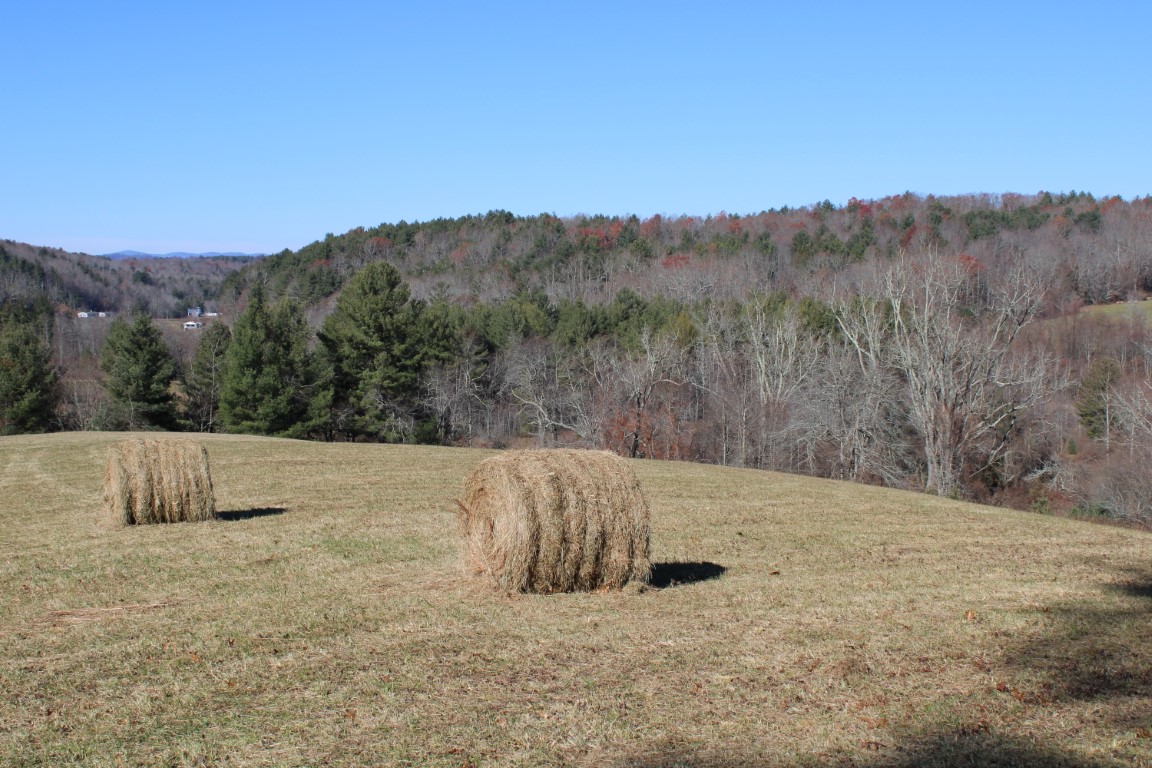
Happy the man, whose wish and care
A few paternal acres bound,
Content to breathe his native air,
In his own ground.

Whose herds with milk, whose fields with bread,
Whose flocks supply him with attire,
Whose trees in summer yield him shade,
In winter fire.

Blest, who can unconcernedly find
Hours, days, and years slide soft away,
In health of body, peace of mind,
Quiet by the day,

Sound sleep by night; study and ease,
Together mixed; sweet recreation;
And innocence, which most does please,
With meditation.

Thus let me live, unseen, unknown;
Thus unlamented let me die;
Steal from the world, and not a stone
Tell where I lie.

BOOKS: “One Hundred Poems of Kabir (1915)” Translated by Rabindranath Tagore

One Hundred Poems of KabirOne Hundred Poems of Kabir by Kabir
My rating: 4 of 5 stars

Amazon.in Page

Kabir was a fifteenth century Indian poet and mystic. This collection was translated by the Bengali Indian Nobel Laureate Rabindranath Tagore, and Tagore’s stylistic imprint is felt in these poems. The poems are overwhelmingly of a mystic / spiritual nature. Kabir was non-sectarian but extremely oriented towards mystic belief. He references the Koran and Vedas alike, but is more likely to communicate in secular, if mystical, terms.

How much the godly emphasis works for the reader will vary greatly. For me it was a bit excessive, often reading more like prayers than poems, but your results may vary.

The only thing I found actually disturbing was the repeated romanticization of sati, a practice in use during Kabir’s lifetime in which widows would be burned alive on their husband’s funeral pyre. Kabir repeatedly writes of sati as if it was always a completely voluntary act of raw passion and connection and was never motivated by being old and destitute (not to mention being societally pressured or, even, physically forced into it.)

The poems are well composed and engaging, and if you can get past the periodic sati propaganda, it’s a pleasant, almost euphoric, read.

View all my reviews

“Because I Could Not Stop for Death” (479) by Emily Dickinson [w/ Audio]

Because I could not stop for Death —
He kindly stopped for me —
The Carriage held but just Ourselves —
And Immortality.

We slowly drove — He knew no haste
And I had put away
My labour and my leisure too,
For His Civility —

We passed the School, where Children strove
At Recess — in the Ring —
We passed the Fields of Gazing Grain -
We passed the Setting Sun -

Or rather - He passed us -
The Dews drew quivering and chill -
For only Gossamer, my Gown -
My Tippet - only Tulle -

We paused before a House that seemed
A Swelling of the Ground -
The Roof was scarcely visible -
The Cornice - in the Ground-

Since then - ‘tis Centuries - and yet
Feels shorter than the Day
I first surmised the Horses’ Heads
Were toward Eternity -

“There Is a Bird in the Tree” by Kabir [w/ Audio]

On this tree is a bird:
It dances in the joy of life.
No one knows where it is:
And who knows what the burden
Of its music may be?
Where the branches throw a deep shade,
There does it have its nest:
And it comes in the evening
And flies away in the morning,
And says not a word
Of that which it means.
None tell me of this bird
That sings within me.
It is neither coloured nor colourless:
It has neither form nor outline:
It sits in the shadow of love.
It dwells within the Unattainable,
The Infinite, and the Eternal;
And no one marks
When it comes and goes.
Kabir says, “O brother Sadhu!
Deep is the mystery.
Let wise men seek to know
where rests that bird.”

NOTE: This is the translation by Rabindranath Tagore from the 1915 text, One Hundred Poems of Kabir. This is poem #30 (XXX) of that volume.

“There was a little girl” by Henry Wadsworth Longfellow [w/ Audio]

There was a little girl,
Who had a little curl,
Right in the middle of her forehead.
When she was good,
She was very good indeed,
But when she was bad she was horrid.

“Earthly Anecdote” by Wallace Stevens [w/ Audio]

Every time the bucks went clattering 
Over Oklahoma
A firecat bristled in the way.

Wherever they went,
They went clattering,
Until they swerved,
In a swift, circular line,
To the right,
Because of the firecat.

Or until they swerved,
In a swift, circular line,
To the left,
Because of the firecat.

The bucks clattered.
The firecat went leaping,
To the right, to the left,
And
Bristled in the way.

Later, the firecat closed his bright eyes
And slept.

“Placid” [Poetry Style #2] by Sikong Tu [w/ Audio]

It thrives in silence and with calm --
ephemeral and gossamer.
It's ever-flowing harmony,
gliding with a solitary crane,
wisping like the gentle breezes
that rustle and billow one's robe,
trilling softly like a bamboo flute.
How does one become one with it?
A chance meeting, lucked into, but
don't lunge forward, or it'll vanish.
When you think it's attainable,
it twists in your hand and is gone.

NOTE: The late Tang Dynasty poet, Sikong Tu (a.k.a. Ssŭ-k‘ung T‘u,) wrote an ars poetica entitled Twenty-Four Styles of Poetry. It presents twenty-four poems that are each in a different tone, reflecting varied concepts from Taoist philosophy and aesthetics. Above is a translation of the second of the twenty-four poems.

“Meeting at Night” by Robert Browning [w/ Audio]

I
The grey sea and the long black land;
And the yellow half-moon large and low;
And the startled little waves that leap
In fiery ringlets from their sleep,
As I gain the cove with pushing prow,
And quench its speed i' the slushy sand.

II
Then a mile of warm sea-scented beach;
Three fields to cross till a farm appears;
A tap at the pane, the quick sharp scratch
And blue spurt of a lighted match,
And a voice less loud, thro' its joys and fears,
Than the two hearts beating each to each!