Transcendent Mango [Haiku]

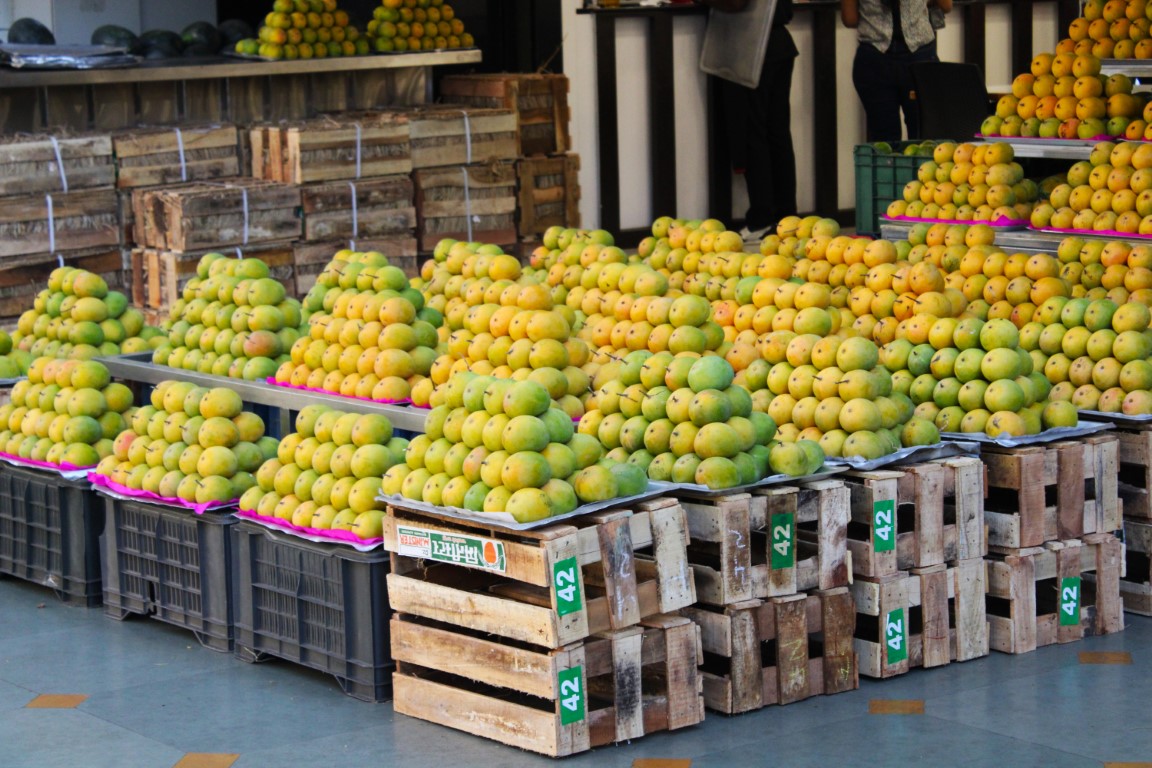
the season is here,
 and everyone seeks the
  transcendent mango.

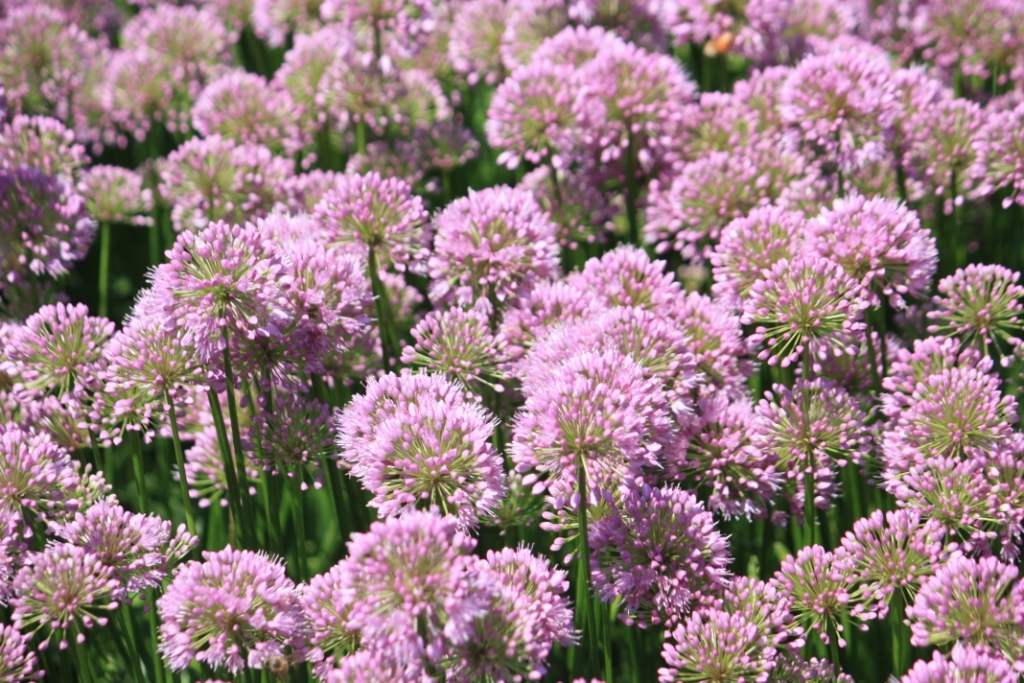
DAILY PHOTO: Onion Fields

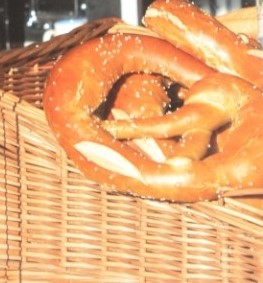
Limerick of the German Baker

There was a royal baker in Germany
 whose bread the king despised fervently.
The king issued a decree:
 Death, or bread passing light times three!
The baker twisted dough so three holes showed,
                  and bestowed it earnestly.
Fruit Beauty [Common Meter]

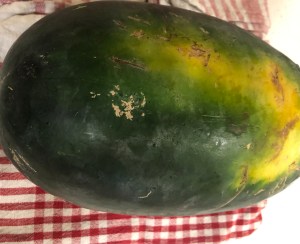
The flawless deep green melon rind
houses a pink, bland flesh.
The rind - pitted, yellowed, lumpy -
hides fruit: red, sweet, & fresh.

Love Won [Senryū]

ordered black coffee, 
they brought a plate of cookies,
well-played, love won.

BOOK REVIEW: Made in Chicago by Monica Eng & David Hammond

Made in Chicago: Stories Behind 30 Great Hometown BitesMade in Chicago: Stories Behind 30 Great Hometown Bites by Monica Eng
My rating: 5 of 5 stars

Amazon.in Page

Release Date: March 21, 2023

Chicago is a food city. Once famous for its stockyards and still a major transit point for the products of America’s breadbasket, the city is home to a diverse people, a gathering of migrants and immigrants who brought a wide variety of foods from their homelands and put the necessary twists on them to make them salable to Chicagoans while using available ingredients. This book features entries on thirty foods and beverages that are products of Chicago ingenuity, be they dishes that were wholly invented in the Windy City or one’s that have a distinctive Chicago-style variant. Foodies know exactly what is meant by Chicago-style hot dogs, pizza, or tamales.

If all you know about Chicago cuisine is that ketchup on a hot dog is considered a sin, you’ll learn about some colorfully named Chicago inventions such as: “the Jim Shoe,” “the Big Baby,” and “the Mother-in-Law,” as well as many others that are more prosaically named, if equally calorically dense. One also sees the mark of Chicago’s immigrant story in the Akutagawa, Flaming Saganaki, Gam Pong Chicken Wings, the Maxwell Street Polish, and Chicago Corn Roll Tamales.

Each chapter discusses the nature of the respective dish, its influences, the [often contentious] origin of each item, where one can obtain said dish, and (for most) includes a recipe for making one’s own home variant. So, it’s mostly food history, but with a bit of cookbook, as well. There are pictures throughout, of the foods and in some cases of the location that invented or popularized each dish.

Be forewarned, while Chicago is a city that loves food, it’s not a place that’s wild about nutrition or moderate serving sizes. In fact, I feel certain that many people attempting to consume every item in this book in, say, one month’s time would drop dead of a coronary shortly thereafter (if not during.) Most of these dishes are foods done fast and served with an allowance of fat, sugar, and / or meat suitable for a family (for several days.)

If you’re a traveler (or a Chicagoan) and want to know more about quintessential windy city foods and where you can sample them, you must read this book.


View all my reviews

The Rice Gamut [Haibun]

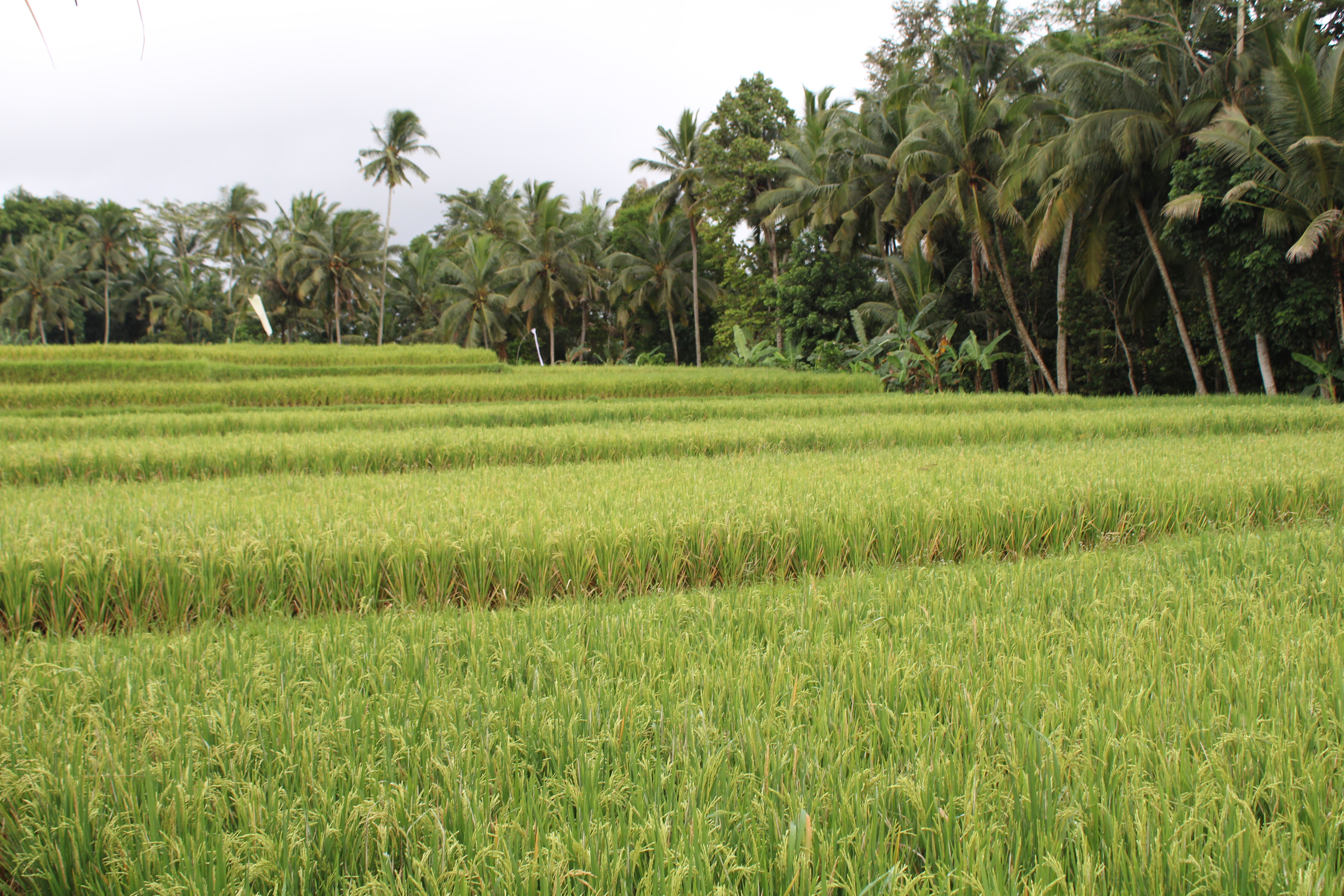
Terraced rice fields. Some, in rectangular blocks. Others, following valley contours. In the tropics, all stages exist at once: The mirrored surfaces of flooded but unplanted paddies. The orderly stubble of freshly planted fields. The max saturation green fields, densely packed with verdancy. The tawny fields of heavy-headed ripe rice. One may pass all of these (and gradations, thereof) as one walks the narrow lanes that dissect farmland. People, birds, and animals transit the slender paddy levees, lending color to a monotony of vibrancy. Sometimes, a weather-beaten man or woman wades in the field -- feet wide and bent at the waist. Nowadays, people come from far away (sometimes even paying admission) to see these fields -- to see so much green packed under blue skies and to let that photosynthetic glory wash over them. 

mirrored paddy --
flooded but unplanted; a
child studies himself

lush green fields.
crows on the paddy dike
command the eye

tawny rice.
stalks bent under
grain-swollen heads 

Belize City Limerick

There was a chef from Belize City
who tried way too hard to be witty.
He liked to serve pork,
but when it was on fork,
tell his guests it was rat, just not itty-bitty.

NOTE: Gibnut [a.k.a. Paca] is a huge rodent eaten in Belize. It’s been called the “royal rat” because it was once served to Queen Elizabeth II.

Bratislava Limerick

A multiethnic gourmand of Bratislava 
liked to go downstairs for a hot java,
then over to Hungary
for torte topped with berry,
and on to Vienna for a slice of baklava.

BOOK REVIEW: The One-Straw Revolution by Masanobu Fukuoka
The One-Straw RevolutionThe One-Straw Revolution by Masanobu Fukuoka
My rating: 5 of 5 stars

Amazon.in Page

I kept running into references to this book in my readings about food and farming, and, eventually, I figured it must be a must-read. One topic that’s of interest to me (and should be of interest to everyone) is how [or, perhaps, whether] humanity can be sustainably fed, given the realities of human nature. Fukuoka (d. 2008) was at the vanguard of what’s been called the “natural farming” movement (a term he admitted he didn’t love.) He spent decades growing rice, other grains, and fruits in rural Shikoku, Japan, using a minimalist approach.

The book mixes philosophy, biography, commentary on food / nutrition, and instruction in Fukuoka’s approach to agriculture. Guided by a philosophy of “wu wei” (i.e. “effortless action,”) Fukuoka figured out how to reduce the amount of effort and resources put into farming, while maintaining crop yields that were competitive with the standard farming model. His approach appears backwards, lazy, and unlikely to succeed. He didn’t plow his fields. He planted by casting seed into the previous crop before harvesting it (note: he alternated rice with winter grains.) He didn’t weed, but rather let white clover grow freely and used the stalks and chaff from one harvest as cover for the next (again, rotating crops,) a cover that biodegraded into nutrients. He used no chemicals, neither fertilizer nor insecticide. And yet, important details of his approach kept his yields up while using minimal resources to maximum effect by operating in accord with nature (e.g. no insecticides seems to risk infestation, but it also means that you haven’t killed the creatures that eat pests.)

Fukuoka’s philosophy combines the principles of nature, Buddhist & Taoist concepts, and – believe it or not — something reminiscent of Nihilism (without calling it such.) There are parts of the book that some might find disagreeable. For example, Fukuoka uses an analogy that draws on the Mahayanist view of the distinction between Mahayana and “Hinayana” that Theravadins may find offensive (fyi: the older branch of Buddhism considers “Hinayana” to be derogatory and believes it’s a label based on a mistaken belief.) [To be fair, Fukuoka explicitly stated that he belonged to no religion and he claimed no expertise on the subject.] More likely to take offense are scientists and agricultural researchers, a group who takes it from both barrels. [Fukuoka says his opposition to scientists is that they fill the same role in society as the discriminating mind plays in mental activity, and he values the non-discriminating mind.]

I found this book to be loaded with food-for-thought. It raises a number of questions that aren’t answered inside (e.g. is Fukuoka’s approach scalable?,) but it’s a fascinating and highly readable introduction to natural farming. I’d highly recommend it for those interested in the subject.


View all my reviews