Bratislava Limerick

A multiethnic gourmand of Bratislava 
liked to go downstairs for a hot java,
then over to Hungary
for torte topped with berry,
and on to Vienna for a slice of baklava.

BOOK REVIEW: The One-Straw Revolution by Masanobu Fukuoka

The One-Straw RevolutionThe One-Straw Revolution by Masanobu Fukuoka
My rating: 5 of 5 stars

Amazon.in Page

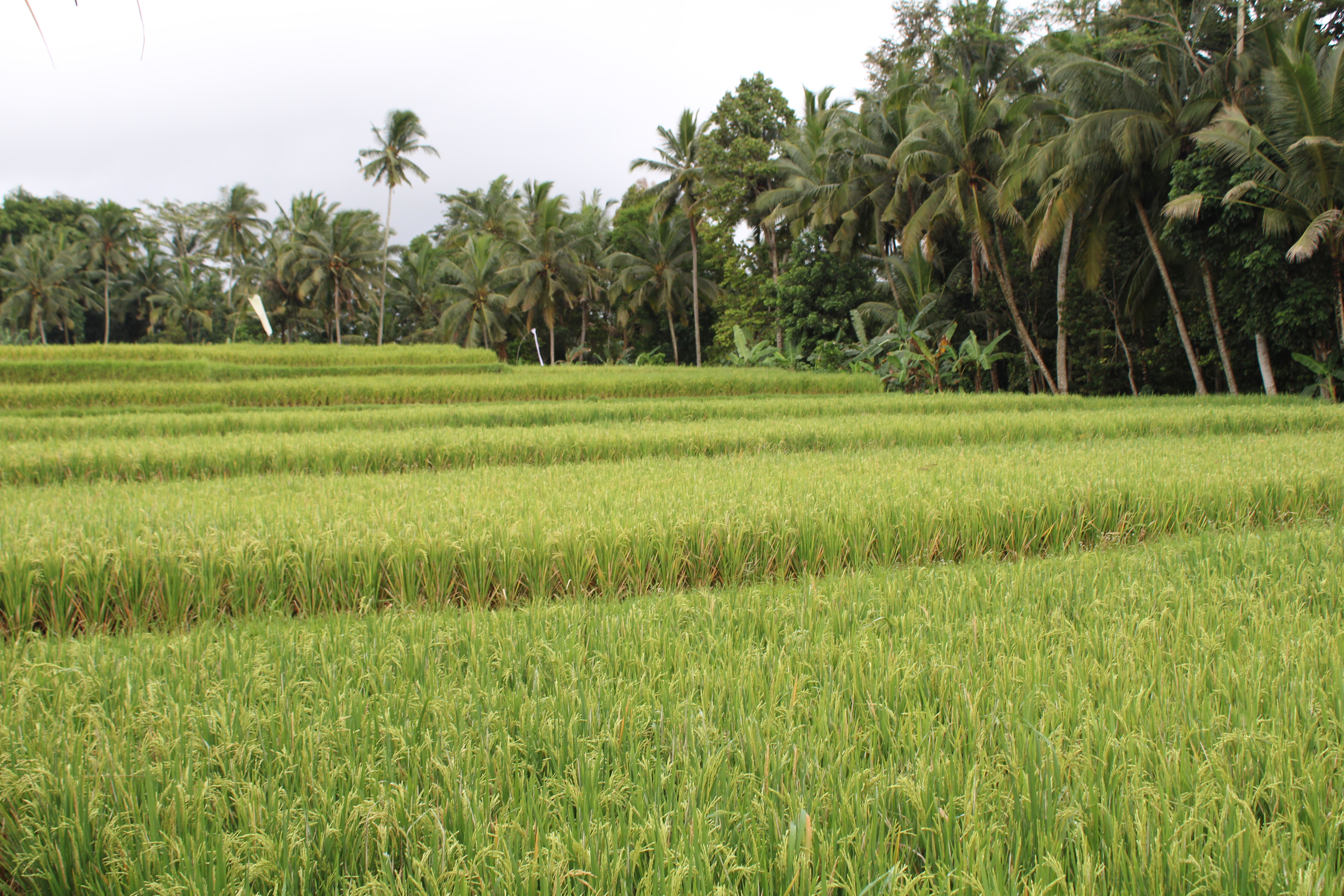
I kept running into references to this book in my readings about food and farming, and, eventually, I figured it must be a must-read. One topic that’s of interest to me (and should be of interest to everyone) is how [or, perhaps, whether] humanity can be sustainably fed, given the realities of human nature. Fukuoka (d. 2008) was at the vanguard of what’s been called the “natural farming” movement (a term he admitted he didn’t love.) He spent decades growing rice, other grains, and fruits in rural Shikoku, Japan, using a minimalist approach.

The book mixes philosophy, biography, commentary on food / nutrition, and instruction in Fukuoka’s approach to agriculture. Guided by a philosophy of “wu wei” (i.e. “effortless action,”) Fukuoka figured out how to reduce the amount of effort and resources put into farming, while maintaining crop yields that were competitive with the standard farming model. His approach appears backwards, lazy, and unlikely to succeed. He didn’t plow his fields. He planted by casting seed into the previous crop before harvesting it (note: he alternated rice with winter grains.) He didn’t weed, but rather let white clover grow freely and used the stalks and chaff from one harvest as cover for the next (again, rotating crops,) a cover that biodegraded into nutrients. He used no chemicals, neither fertilizer nor insecticide. And yet, important details of his approach kept his yields up while using minimal resources to maximum effect by operating in accord with nature (e.g. no insecticides seems to risk infestation, but it also means that you haven’t killed the creatures that eat pests.)

Fukuoka’s philosophy combines the principles of nature, Buddhist & Taoist concepts, and – believe it or not — something reminiscent of Nihilism (without calling it such.) There are parts of the book that some might find disagreeable. For example, Fukuoka uses an analogy that draws on the Mahayanist view of the distinction between Mahayana and “Hinayana” that Theravadins may find offensive (fyi: the older branch of Buddhism considers “Hinayana” to be derogatory and believes it’s a label based on a mistaken belief.) [To be fair, Fukuoka explicitly stated that he belonged to no religion and he claimed no expertise on the subject.] More likely to take offense are scientists and agricultural researchers, a group who takes it from both barrels. [Fukuoka says his opposition to scientists is that they fill the same role in society as the discriminating mind plays in mental activity, and he values the non-discriminating mind.]

I found this book to be loaded with food-for-thought. It raises a number of questions that aren’t answered inside (e.g. is Fukuoka’s approach scalable?,) but it’s a fascinating and highly readable introduction to natural farming. I’d highly recommend it for those interested in the subject.


View all my reviews

Kuala Lumpur Limerick

There was a durian seller from K.L.
asked to leave the market 'cause of the smell.
"Buyers 'll find you with ease
from the scent of bad cheese,"
said the contrite landlord in his farewell.

Dreaming Evil Clowns [Spencerian Sonnet]

My lungs were burning as I ran through town,
and tried to escape the streets of cobbled stone
and he from whom I ran, that evil clown,
whose paint obscured a face I once had known,

but how could I know something that's unknown
and, thinking that, I knew it made no sense,
though I knew it true deep within my bones.

Then stirred by eyes so burning and intense,
I picked a pointy stick for my defense,
and chucked it at the creature's beastly heart.
I missed its heart by width of a ten-pence.
The clown, in turn, tossed it back like a dart.

Awaking to sharp pains in my frail chest,
the clown had slayed me, or so I guessed.

Sourdough [Kyōka]

sourdough starter --
for those thinking of 
having a child,
but who can't be trusted
with a dog or a cat

BOOK REVIEW: Real Food Fermentation, Revised and Expanded by Alex Lewin

Real Food Fermentation, Revised and Expanded: Preserving Whole Fresh Food with Live Cultures in Your Home KitchenReal Food Fermentation, Revised and Expanded: Preserving Whole Fresh Food with Live Cultures in Your Home Kitchen by Alex Lewin
My rating: 5 of 5 stars

Amazon.in Page

Out: December 21, 2021

This is an expanded edition of a book that explores the process of fermenting a wide range of foods and beverages, including – new to this edition – sourdough bread. It’s a great book for a neophyte such as myself as it covers all the basics without getting too arcane (though it does include natto and some other regional foods that may not be widely familiar.) The book provides step-by-step instructions for making sauerkrauts (and variations such as Kimchi,) yoghurt & kefir, fermented fruit condiments, beverages (alcoholic and non-,) bases / starters (e.g. vinegar,) and sourdough products (including, but not limited to, bread.) It describes some of the challenges one may run up against as well as showing what equipment one will need. It also proposes some of the ways a curious person might experiment with variations.

Color photos are used to clarify the production processes as well as to show appetizing finished products that will whet one’s appetite.

If one is looking to get into a narrow domain of fermentation, e.g. making beer or other alcoholic beverages, one may want to look elsewhere for a more specialized and in-depth guide (of which there are many.) However, this book may introduce one to ideas for brewing adventures one wouldn’t have otherwise considered.

This book is an awesome choice for someone looking to get into or to expand their food fermentation activities. It’s well-organized, beautifully presented, and – as I mentioned – not overwhelming. With the mounting evidence of the benefits of fermented foods, this is a great guide to learn more about how one can best begin producing such foods at home.


View all my reviews

BOOK REVIEW: Fiber Fueled by Will Bulsiewicz

Fiber Fueled: The Plant-Based Gut Health Program for Losing Weight, Restoring Your Health, and Optimizing Your MicrobiomeFiber Fueled: The Plant-Based Gut Health Program for Losing Weight, Restoring Your Health, and Optimizing Your Microbiome by Will Bulsiewicz
My rating: 4 of 5 stars

Amazon.in Page

This book advocates a high-fiber (i.e. plant-based) approach to eating. The book pairs a pop-sci dimension (explaining the science of why more fiber and plant-based foods would benefit most readers,) with a self-help dimension that supplies readers with a program by which they can pursue such a diet.

The book explains how the body’s microbiome breaks down fiber, producing Short-Chain Fatty Acids (SCFAs,) and discusses all the great things these molecules do for us. Speaking of the body’s microbiome, the book discusses how to keep it operating at its best, explaining all you need to know about prebiotics, probiotics, and postbiotics. It also explores the benefits of fermented foods, and the pros and cons of a range of other foods.

I liked that the book, by-and-large, takes both a scientific / pragmatic approach. For example, Bulsiewicz rejects the hype that everyone needs to abandon gluten (not just those with Celiac Disease.) I can’t say that the book is perfectly scientifically-objective. It does advocate that everyone quit dairy products. The author does present some of the evidence of benefits of dairy, but dismisses these as studies that must be supported by the dairy industry. [While I’m sure the dairy industry does fund studies, I doubt that they have a lock on the scholarly debate, i.e. sending out milk-goons to break the knee-caps of researchers.]

I didn’t find the dietary plan (Ch. 10) to be useful. While I eat a high-fiber / plant-dominant diet, I don’t take the extreme position that all non-plant food must be eliminated. That stance makes some of the recipes impractical. One needs a neighborhood Whole Foods to get some of the ingredients.

That said, the book offers a great explanation of why one should eat more foods that feed one’s microbiome, and it’s an excellent resource for those wishing to learning more.

View all my reviews

BOOK REVIEW: Dare Eat That by Divya Anand

Dare Eat That: A Guide to Bizarre Foods from Around the WorldDare Eat That: A Guide to Bizarre Foods from Around the World by Divya Anand
My rating: 4 of 5 stars

Amazon page


This book takes one on a journey, sampling exotic foods of the world. The author describes experiences eating bizarre dishes in nine countries: the US, India, the UK, Luxembourg, Thailand, Australia, Cambodia, Vietnam, and Singapore. The foods include insects, balut, reptiles, game animals and fowl, and a wide range of seafood (including blowfish, a type of sushi prepared with surgical precision to avoid tainting the meat with a lethal poison.)

The book is organized by country in the order listed above. Some countries have many sub-chapters and others have as few as one depending upon how extensive the travels and how much unusual food was on offer. The book presents tables for each dining location, showing the cost, taste, and “fear factor” for each of the exotic dishes. Of course, the taste and fear ratings are inherently subjective. I know, among the items I’ve eaten, my subjective ratings would often be a little different. However, there is an inescapable cultural — as well as individual — bias to such ratings. By cultural bias I don’t just mean at a country level, but if you grew up in a coastal region versus a landlocked one, your ratings would probably vary considerably. That said, I thought it was a nice way to give the reader a quick insight into the experience of each food.

The biggest disadvantage of this book is that the experience is once removed. That is, the author is mostly reporting her spouse’s experience. As a vegetarian who shifted to eating chicken, she tried very few of the foods first hand (though, among those she did try was durian melon – proving she’s not a coward, because durian is nastier than much of the insect, seafood, and game food.) Still, because of this distance from the experience, the description could probably be more vivid in places. On the other hand, there is an amusing tension created between the husband who is an intense bizarre food foodie and the author who is squeamish about meat markets that adds to the entertainment value of the book.

Besides the aforementioned tables, the book is loaded with pictures — including a section of color plates — and has maps and diagrams as well.

I found this book interesting, readable, and – as a traveler – a potential reference source. If you’re a traveler and / or interested in exotic cuisine, you should check it out.

View all my reviews

POEM: Ode to Cheese

“Poets have been mysteriously silent on the subject of cheese.” — G.K. Chesterton

Ah, Mister Chesterton, I must concur.
The Camembert love is lacking, Monsieur!
If there’s a way to make bacon better,
surely it’s smothering it in Cheddar.

On bread and water, prisoners endure,
but brie with bread is the height of grandeur.
What, say you, is more addictive than crack?
Just a cracker topped with Monterey Jack.

Yes, poets obsess on love and death,
but you can smell the Roquefort on their breath.
[OK, there’s no budget for Roquefort,
truth is, it’s a canned cheese of some sort.]

BOOK REVIEW: Food: A Very Short Introduction by John Krebs

Food: A Very Short IntroductionFood: A Very Short Introduction by John R. Krebs
My rating: 4 of 5 stars

Amazon page


This volume in the Oxford University Press AVSI series examines human eating habits. The first chapter puts the human diet in the context of evolution, reflecting upon how we got where we did in terms of food consumption. Here one gains insight into where the Paleo-diet fad is flawed, and one learns how cooking had a huge influence on human evolution.

The second chapter delves into the issue of likes and dislikes in food. We see that there are species-wide commonalities, but there are also differences both at an individual and cultural group level. e.g. Why is spice so common in the tropics and so rare in the great white north?

The third chapter looks at the ways food can do us in and what we’ve done – besides [and including] the aforementioned cooking – to reduce the threat of food gone awry. The penultimate chapter examines nutrition and how we get what we need from food.

The last chapter takes a bit of a turn, but investigates the fascinating topic of how (and whether) we will continue to feed our species. Readers will likely remember the name Malthus from either history or economics classes. He was an economist who suggested humanity was in dire straits, vis-à-vis food. Malthus noticed that population was growing geometrically while agricultural output grew arithmetically, and he reasonably noted that this was unsustainable. Of course, Malthus failed to foresee the huge technological advances from fertilizer to mechanization. However, that doesn’t make his concerns forever moot – perhaps just tardy. It remains far from clear whether the limited land space and resources can take billions more humans – especially without killing off all the other species. (Especially, if we aren’t willing to give up eating resource-intensive foods like cow in favor of less intensive one’s like grasshopper.)

The book has some graphics as well as both a “references” and a “further reading” section.

If you’re interested in food in a general sense, I’d recommend this as a great way to take in the outline of the topic.

View all my reviews