BOOK REVIEW: The New Rules of Posture by Mary Bond

The New Rules of Posture: How to Sit, Stand, and Move in the Modern WorldThe New Rules of Posture: How to Sit, Stand, and Move in the Modern World by Mary Bond

My rating: 4 of 5 stars

Amazon page

This book’s author, Mary Bond, was a UCLA-trained dancer who became an Ida Rolf-trained Rolfer. If that sentence makes no sense, you’re probably unaware Dr. Ida Rolf and her self-named system. Rolfing was popular decades ago, but fell out of favor—possibly owing to its reputation for being agonizing. (However, I did recently read an article suggesting renewed interest in this practice.) Rolf’s system is generically called Structural Integration, and it’s intended to better align the body with respect to the force of gravity. The heart of the practice (though not addressed in this book) is a massage-like system that focuses on fascia (connective tissue) rather than musculature (as massage generally does.)

[This paragraph is background, but isn’t about the book per se. Feel free to skip it if you are familiar with structural integration or don’t care.] It should be noted that Rolfing is controversial. I’m not sure what to make of this controversy. On the one hand, the system hasn’t been helped by zealous advocates and practitioners. In any such system, zealots often suggest their beloved system is a panacea for all that ails one. Furthermore, the more hippie-esque practitioners try to reconcile / unify Structural Integration with ancient systems like Ayurveda or Traditional Chinese Medicine (TCM.) This neither helps to validate those ancient systems nor improves the case of Rolfing as a methodology rooted in science. On the other hand, not even yoga has been free of haters. There is a sector of humanity that is openly hostile to the notion that the only way for many people to feel better is for them to do the work of improving their bodies (e.g. posture, range of motion, strength, etc.) (i.e. If your problem is rooted in your shoulders not being over your hips or you have an imbalance in your core between your ab and back muscles, there is no pill nor surgery to cure you—you’ve got work to do. And—it should be noted–both of my examples can cause a person to feel like crap in a number of different ways.) Another element of controversy is that Structural Integration places special emphasis on fascia (connective tissue.) While it’s not clear from scientific evidence that fascia deserve special attention, I’m also not sure that Rolfers don’t have a point when they note that everyone else completely ignores this tissue.

Having written all that, The New Rules of Posture isn’t a book about Rolfing as massage-like practice. Instead, as its subtitle (how to sit, stand, and move in the modern world) suggests, this is a book about how one can improve one’s posture, breathing, and movement (i.e. most notably walking). It’s arranged as a workbook, and it contains over 90 exercises and observations for the reader to perform. The author calls these exercises “explorations” and “practices”; the latter are more extensive and are more likely to require revisiting.

The ten chapters are arranged into four parts: awareness, stability, orientation, and motion. Each part has two or three chapters. The author divides the body into six zones (pelvic floor, breathing muscles, abdomen/core, hands, feet, and head)—the first three of which are associated with stability and the latter three with orienting the body. The six middle chapters (parts 2 and 3) are each tied to one of these zones. The book uses vignettes and side-bars in an attempt to make the material more palatable to readers who aren’t deeply interested in the topic.

The author gives attention to a wide variety of modern-day activities that can have an adverse impact on bodily alignment such as driving, computer time, and rushing about. I suspect this book will offer something useful to almost anyone.

The book’s graphics are line drawings—some are anatomical drawings and others demonstrate postural problems or exercises. The drawings are clear, well drawn, and useful. In addition to the usual front and back matter, there’s a brief bibliography and a resources appendix.

I’d recommend this book for yoga teachers and those interested in the body generally and movement and postural improvement specifically. If you’re having problems that you think may be linked to postural problems, this isn’t a bad place to start thinking about how one might improve one’s situation. It’s very readable and clear.

View all my reviews

Know Thyself by Way of a Bigger Vocabulary

Painted WordI just finished a book on words, The Painted Word. It’s amazing what one can learn about oneself by expanding one’s vocabulary. I found out that I engage in sciamachy and omphaloskepsis on a regular basis. I now know that I’m a obsimath with a borderline case of abibliophobia and a full-blown case of dromomania.


What about you? Do you know your value in millihelens? If so, is said value jolie laide or conventional? Have you ever had gymnophoria? Do you groak? When you engage in omphaloskepsis, do you ever find a phlug?


Key:
Sciamachy = shadowboxing
Omphaloskepsis = navel gazing / deep introspection
Obsimath = like a polymath, but learning later in life
Abibliophobia = fear of running out of reading material
Dromomania = a crazed passion for travel
Millihelen = the beauty required to launch a single ship (re: Helen of Troy)
Jolie laide = unconventional beauty
Gymnophoria = queasy feeling someone is undressing you with their eyes
Groak = stare at some else’s food hoping to be offered some
Phlug = bellybutton lint

READING REPORT: March 27, 2015

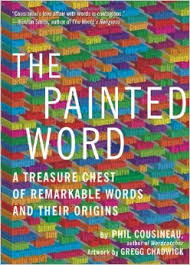
I finished The Painted Word this week. This book is a collection of words that the author finds noteworthy and intriguing as well as the definitions, origins, and interesting usages. There’s a loose theme of art (as the title might suggest), but it’s not particularly blatant and one might miss it if there weren’t quite a so many names of colors that probably didn’t appear in your Crayon box. There are also painting plates used as the books only graphics. Many of the words are one’s that will be well-known to the average reader, but others might be new additions to one’s vocabulary such as: bafflegab (misleading language), farteur (a professional and/or musical farter), and gymnophoria (the uneasy feeling that someone is undressing one with their eyes.)

Painted Word


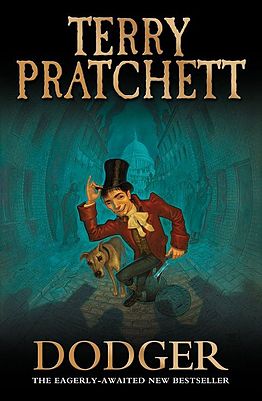
I purchase a few new books this week, including: The Stationary Ark (a book by Gerald Durrell about running a zoo), Submission (a Story of O-style tell-all / novel by another Parisian woman), Dodger by Terry Pratchett (Pratchett recently passed away. I’ve only read one of his books to date [the first disc world book], but enjoyed it more than any fantasy book I’ve ever read [not my favorite genre.] This one is apparently Dickensian.), and 100 Films to See before you Die (The nice thing about this one is that it’s written by Anupama Chopra for the Times of India, and–therefore–features not only Indian [Bollywood and other] and Hollywood films but also other global films. I suspect that if I got the same book by an American author it would be 98 to 100% Hollywood–i.e. with maybe a couple French films thrown in if it was a particularly pretentious American film critic.)

Terry_Pratchett_Dodger_cover Anupama-Chopra-2330913 StationaryArk Submission


The only book that I spent significant time on that I haven’t mentioned in past Reading Reports was Gotham Writers Workshop: Writing Fiction. I read about half of this book a while back, before I got distracted by other readings (in truth, I got burned out on writing books.) However, I’ll now try to plow through this to the end, as well as a few of the other writing books that I’m pretty far into. It’s really a good book on the elements of fiction writing.

GWW_WritingFiction


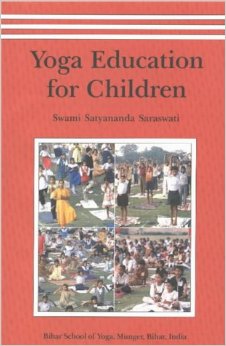
Besides those, I’ve been reading a book, Yoga Education for Children, Vol. 1, that I introduced last week. It’s the text for the yoga teacher training that I’m currently attending (RCYT). I’m about 2/3rds of the way through it.


YogaEdforChildren


BOOK REVIEW: Why Do People Get Ill? by Darian Leader and David Corfield

Why Do People Get Ill?Why Do People Get Ill? by David Corfield

My rating: 4 of 5 stars

Amazon page

This book’s title might suggest that it’s about the germ theory of disease or genetic anomalies, but it’s actually about why some people exposed to germs or carcinogens don’t get ill, while other people become ill at the drop of the hat—even when they have no exposure to the immediate cause of illness. (e.g. A Japanese study found that hypersensitive subjects had skin reactions when exposed to a harmless leaf when they were told that it was from a lacquer tree [i.e. that it was mildly toxic.]) It’s well established that stress plays a role in one’s level of health. Of course, it’s not merely the presence of stress, but the nature of it and how it’s dealt with that matter. Our bodies are supremely skilled at conquering invaders and repairing damage as long as our parasympathetic nervous system is engaged sufficiently for our body to do the work of fighting infection and healing. Leader and Corfield’s core argument is that it’s how we worry rather than what we worry about (or even whether we worry) that influences proclivity to become ill. More specifically, the authors propose that the inability to communicate feelings can play a significant role in one’s propensity for illness.

The authors review many interesting studies from medical literature. For example, rhinovirus may be a necessary condition for a cold, but it’s not a sufficient condition. In other words, many exposed individuals never become symptomatic. The same has been shown for tuberculosis, malaria, and a host of other ailments. (It may be true for all ailments.) Another fascinating study found that sporadic bombing in London’s suburbs correlated with higher ulcer rates than the constant bombardment in the city. This suggested that the predictability of a stressor was important vis-a-vis its health effects—apparently more important than the presence or severity of the stressor. Also, there are the many studies about the correlation between certain times / events and disease onset (the most well-known of these is that the most frequent time of death from heart attack is between 8 and 9 in the morning on a Monday.)

Leader and Corfield make a compelling argument in support of their thesis that’s rooted in an extensive review of the scientific literature on the quirky complexities of illness. I’m not certain that I’m completely convinced that what they believe is most important is what is in reality most important. (To be fair, it’s not a matter of deficiency of approach so much as the complexity of disease onset and the difficulty of establishing a hierarchy of importance.) However, the beautiful part of the scientific approach is that even if one doesn’t buy the authors’ arguments hook-line-and-sinker, the book is still a valuable read because it presents a great deal of research–as well as some interesting food for thought on the present state of the medical establishment. I suspect the authors didn’t win many friends with medical doctors, given the strong critique they present. Leader and Corfield point out, what most of us have long suspected, that the money-makers in healthcare are expensive pharmaceuticals and surgery, and that this has created a dangerous incentive. Of course, the authors’ point is that this has undermined the value that psychological approaches might have, but the same could be said to be true for postural realignment therapies or other neglected approaches to treatment. The last chapter is a searing critique of the state of the medical profession that suggests that doctors are disproportionately ill-conditioned to listen to patients and to get to the root causes of their ailments.

The book’s organization is reasonable, but could have been improved. There’s a great chapter on the immune system, but it’s chapter 11 of 15 chapters. It would have been useful to move that text closer to the front of the book so that readers would have access to this primer as they considered why the solution might be found internally rather than in the medicines and surgeries that they are conditioned to believe are in virtually all cases necessary.

Of course, I understand that the authors’ thrust is on the psychological rather than the biological/physiological front, and this undoubtedly played into the organizational decisions. It may be true that the book isn’t about how a body can knock out ailments, but why it occasionally fails to; however, understanding how we defeat illness is an important part of the backstory.

There are important chapters on heart conditions and cancer. These are important not only because those diseases are major killers, but because these are the nasty diseases that many will be skeptical of the relevance of mind-body factors. In other words, many will accept that our attitude and approach to stress may be relevant in whether one breaks out in hives, catches the flu, or gets an ulcer—but may not except that a force as powerful as cancer can be swayed by one’s mindset and behaviors.

I’d recommend this book for anyone interested in how good health can be fostered.

View all my reviews

READING REVIEW: March 20, 2015

I started a Registered Children’s Yoga Teacher (RCYT) training course this week, and so it’s not been a big week for reading. The only new book I acquired and have begun reading is that course’s text, Yoga Education for Children, Vol. 1. That book is put out by the Bihar School (Swami Satyananda), which has done a vast amount of work and research about educating children through yoga.

YogaEdforChildren


I will probably finish Mary Bond’s The New Rules of Posture over the weekend, which I only have two chapters left to complete. I discussed that book in last week’s reading report.

NewRuleofPosture

Other than that I’ve been plugging away at some of the books that I’ve mentioned in previous reports when I have a moment here or there.  It’s been sort of a technical week for reading. I hope to have more to say next week.

BOOK REVIEW: The Book of Ninja [The Bansenshukai] Trans. by Anthony Cummins and Yoshie Minima

The Book of Ninja: The Bansenshukai - Japan's Premier Ninja ManualThe Book of Ninja: The Bansenshukai – Japan’s Premier Ninja Manual by Antony Cummins

My rating: 4 of 5 stars

Amazon page

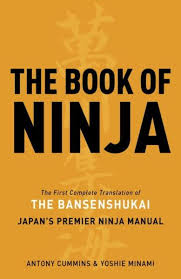
The Bansenshukai is a 17th century manual of ninja tradecraft and fieldcraft compiled by Fujibayashi Sabuji. If you’re doing related research or are a geek about historic warriors and / or spies, you’ll likely find this book intriguing–and parts of it even fascinating. However, it’s important to note that this translation’s title The Book of Ninja may conjure up expectations of stories of derring-do and assassinations set in medieval Japan. This isn’t that book. This book contains an extensive discussion of morals, guidance as to how commanders should employ ninja, how to don a disguise and impersonate your way into enemy territory, technical discussion of how to infiltrate long-obsolete fortifications, insight into how to pick medieval Japanese locks, and instructions for how to make torches and rope ladders. This book won’t teach you how to be a ninja. (a.) I suspect no book could do that, b.) This one holds back a lot of secrets, and c.) Most of the information is obsolete from a practical stand point. (However, it’s likely to have many ideas of a strategic or philosophic nature that one might find thought-provoking.)

Why is this book important and interesting (though–as I’ve suggested–some of its content seems patently boring)? We live in an era of information overload, and it’s difficult to fathom how little is truly known about the ninja of medieval Japan. We live during a time in which even the most secretive agencies document everything always (even if they sometimes manage to shred or burn that information.) In their heyday, the ninja weren’t big on writing down true and interesting information for fear it would fall into the wrong hands. Lack of documentation and false documentation were key elements of security. There are only a few manuals like this one in existence, and the Bansenshukai is considered by many to be chief among them by virtue of being the most extensive. (FYI- The other well-known manuals are the Shoninki and the Ninpiden, both of which also have English language translations available. Beyond these manuals, there are some surviving familial scrolls.) It should be noted that these manuals were written after the warring states period (though before the Meiji Restoration) when there was a fear that this information might be lost precisely because it was historically conveyed via word of mouth. And, it should be noted, throughout the work there are frequent statements to the effect of “there is an oral transmission”—meaning that key parts haven’t been written down and are only to be taught in person by hands-on instruction.

The Bansenshukai is organized into 22 volumes. The first volume is background and introductory information. The second and third volumes are more philosophical, dealing with achieving the “correct mind,” the former dealing with morality and the latter offering perspective on life and death.

The fourth through seventh volumes are designed to educate military commanders about how they might get the best use of ninja.

The next group of volumes (8 – 10) cover Yo-nin, which is the act of infiltrating enemy territory in the open through use of disguise and deception. The Japanese term yo is the same as the Chinese term yang, or sunny side—as opposed to yin (in in Japanese) which means the shady side. So these volumes offer advice for operating out in the open—in the light of day, so to speak. The previous volumes are contrasted with the next set of volumes (11-15), the In-Nin, which deals with covertly breaking into enemy houses and castles. Together the Yo-nin and In-nin chapters are likely to be the most interesting to the general reader–excepting the last of these (vol. 15, which deals with lock picking.) While I said that this book isn’t full of stories of legendary exploits, I don’t mean to suggest Fujibayashi didn’t use vignettes to reinforce his points (there are plenty of them)—just that these stories aren’t told to entertain but to educate.

The next two volumes are entitled Tenji I and Tenji II, and they discuss what the author considered the opportunities bestowed by heaven. The first of these chapters is mostly Chinese astrological hokum in painful detail. The second is a primitive primer on meteorology—which I suspect is a mix of good and bad advice based on the science of that time and place. (These people were exceptionally observant but the product of superstitious times, and so one can imagine fact and fiction being muddled together.) At any rate, I found the second chapter to have some quite interesting information of which I’d like to know more about the veracity.

The final set of volumes are on ninja tools (i.e. ninki.) These include chapters on climbing tools like rope ladders, water crossing devices like inflatable seats, breaking and entering tools, and many recipes for incendiary and explosive materials. Like the chapter on locks and lock picking, these chapters will mostly be of value to individuals with a heavy interest in the history of technology—with a particular focus on Japan and / or East Asia. In many ways the ninja were by necessity technologically advanced by the standards of that time in Japan’s history (keeping in mind that because of literally centuries of war, Japan wasn’t at the cutting edge of a spectrum of technology in the 17th century as they are today—though they made swords that at least rivaled if not surpassed those anywhere else in the world, but swords were on the way out or passé by that time in many places.)

There’s an additional text on strategy that forms an appendix to The Bansenshukai. To the front, there’s an explanation of Japanese locks of the time, written by a historian of such minutiae. There’s also front matter by the translator, providing valuable background material. Each chapter is heavily endnoted. These endnotes are generally explanatory in nature. While the text is quite readable given its era, there’s much that requires further explanation. Sometimes the notes elaborate on a statement in the text and sometimes they suggest that an explanation is unknown—either way that information can be quite beneficial. The graphics are simple drawings (I believe they come from the original text), and in some cases they wouldn’t be useful without the explanation of the text.

One will note a heavy Chinese influence in The Bansenshukai. There are frequent references to Sun Tzu and many of the vignettes use to illustrate points involve tales from China—though there are also many that feature Japanese warriors as well—e.g. Kusunoki Masashige, a samurai famous as a paragon of loyalty but who was also known for his use of ninjutsu and unconventional tactics, features prominently throughout the work—though it’s unknown how many of these tales are fact and how many legend.

If you’re still curious about the contents of this book after hearing what it is and isn’t, I’d highly recommend it. There’s a lot of thought-provoking information in the book, and if you’re doing research on the subject this book is essential reading. I should also point out that while I’ve suggested that much of the information is obsolete in the modern era, it’s not all so. There are some interesting perspectives on strategy, tactics, philosophy, and ethics in this book. [Plus, if you want to be the office ninja, it’s a must-read along with Machiavelli’s The Prince.]

View all my reviews

READING REPORT: March 13, 2015

Welcome to a special–not really–Friday the 13th edition Reading Report. Were I one to plan ahead, I might have read something horrifying for this week, but I’m afraid there’s nothing to inspire dread… well, I don’t really know what your dread threshold is, but unless you have phobias about good posture or classic literature, I think you’re safe.


I bought The New Rules of Posture this week, and spent a lot of my reading time with my nose in it. It’s one of those books that has one periodically getting up to try some movement or postural experiment, but I’m about 2/3rds of the way through nonetheless. It’s written by a dancer turned Rolfer, and offers good insights on the subjects of posture and breathing for those of us who are interested in evaluating and improving such things. The line drawings, many anatomical in nature, are helpful and the readability is high for a such a book. I suspect I’ll finish it in the upcoming week and will have a review up within a couple weeks.

NewRuleofPosture


I finished only one book this week, Why Do People Get Ill? I’ve mentioned this book in earlier reports, and will soon be doing a review, so I won’t spend much time on it now. It’s essentially about the roles that stress and the inability to articulate one’s feelings about illness play in catching a disease as well as its progression.

WhyDoPeopleGetIll_Leader&Corfield


As one can see, I’ve been on a body-mind nexus reading kick lately. I’m trying to educate myself about anatomy, physiology, and related biological sciences as a means to improve  the operation of body and mind. In addition to the featured titles above, some of the other books I’ve been reading during the past week include: Zen and the Brain (there was a fascinating chapter on indigenous opioids–i.e. morphine-like substances produced within the body–among this week’s chapters), The Trigger Point Therapy Workbook, and The Sensual Body.

Zen&Brain

TriggerPtTherapy

TheSensualBody


Moving beyond the body / mind books, I did do some reading that wasn’t research related. I’m about 40% through The Painted Word, having read the entries for the letters D, E, and (part of) F. My favorite word from the week was “dromomania” which means an intense passion for travel or wandering. As in, “I, Bernie Gourley, have a bad case of dromomania.”

Painted Word


The short story collection that I’m currently reading (I try not to neglect this medium) is Meeting the Dog Girls. I read about half-a-dozen stories this week (most of them are short, and a few of them–it could be argued–don’t really constitute stories), and I’m about 20% of the way through. Absurdism is a prevailing theme, though in some stories more than others. So far, I’m enjoying this collection. It’s mostly light and easily digestible reading, but has some intense moments.

Meeting the Dog Girls


With respect to novels, I slipped away from Mo Yan’s Life and Death are Wearing Me Out, and resumed reading Victor Hugo’s Les Misérables–a book which I started a while back. I’ve got to admit that reading 19th century literature can be a struggle, and–at the risk of offending–Hugo could’ve used a modern-day editor. (I realize that an alternative interpretation is that modern-day people–myself included–could use an attention span.) I’m only about 10% in, but I got through a powerful moment during which the gendarmes bring Jean Valjean before the Bishop. If you’ve read it (or seen one of the movie or theatrical adaptations) you’ll know what I’m talking about.

LesMiserables


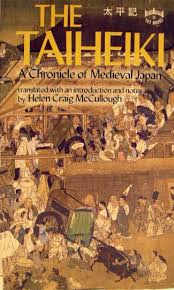
The only other book I spent any significant time was The Taiheiki, and if–like me–you think reading a translation of 19th century French literature can be a challenge, try reading a translation of 14th century Japanese literature. As I’ve mentioned, this book is research for the novel I’m working on. The challenge is the vast cast of characters. It’s a blend of history and fiction, and if you don’t know who was allied with whom during the war between Emperor Go-Daigo and the Hojo, it’s hard to figure out who you should be rooting for–unless it’s talking about the legendary warrior Kusunoki Masashige or one of the few other really well-known samurai.  (Kusunoki was the lord of a small and inconsequential province and his name would likely have been lost to history–despite being a brilliant General–had he not become Japan’s national paragon for the virtue of loyalty.)

Taiheiki

BOOK REVIEW: Antifragile by Nassim Nicholas Taleb

Antifragile: Things That Gain from DisorderAntifragile: Things That Gain from Disorder by Nassim Nicholas Taleb

My rating: 4 of 5 stars

Amazon page

Nassim Nicholas Taleb has a gift for uncovering simple and fascinating topics that have remained buried–not because they are unfathomable, but–because of the institutional blinders and group-think present in academia (at least within the social sciences.) I don’t mean to diminish what Dr. Taleb does by saying these are simple ideas, it takes a great intellect to not only recognize the ideas others have missed but to clarify them for a broad audience and to unravel the challenging ideas that must be made clear as one moves beyond the crux of the idea. Furthermore, it takes a bold writer to push these ideas out into the open against brute institutional antagonism. (If Taleb hadn’t written books that were highly readable and that presented the ideas in a manner readily digested by a broad audience, he’d likely still be being completely ignored by academicians.)

By “simple” I mean ideas that can be captured in a single sentence—often a pithy one at that. In his second book (his first work for popular audiences), Fooled by Randomness, the idea was that randomness is more pervasive than most people imagine and that false explanations are often built for chance occurrences. Black Swan told us that statistical forecasting fails catastrophically when one has “800 pound gorillas” in the data set (e.g. if one is comparing countries—a situation in which one will virtually always be in, as Taleb calls it, “Extremistan.”) The book in question, Antifragile, is built around the notion that some entities get stronger when subjected to stressors and disorder.

One can see many “antifragile” elements in one’s own body. A muscle subjected to exercise often gets tiny tears in fibers, but when the body does its repair work those fibers will be stronger than ever before. Wolff’s Law tells us that bones subjected to an increased load will increase their density. In fact, our bodies are testaments to the concept of antifragility on many levels. For this reason, Taleb uses many examples from the field of medicine—in addition to those from disciplines more closely related to his own, e.g. finance, economics, and risk. A lot of the medical discussion deals with the proclivity of Western medicine towards interventionism (in contrast to the “first, do no harm” motto often heard.) An example with which many people are familiar is that of the over prescription of antibiotics. While there are obviously cases for which antibiotics are necessary and beneficial, prescribing them willy-nilly robs the body of antifragility (i.e. if the body defeats the infection itself, it has inborn resistance.)

As with other of Dr. Taleb’s writings, I found Antifragile to be interesting as well as informative. The author does a good job of providing examples to elucidate and bolster his arguments and puts it all together in a readable package. He also does a great job of pulling examples and discussions from a number of different fields. This book doesn’t read like it’s about an Economics or Business subfield as much as it’s a book that can teach you something applicable to whatever your field might be. The book also covers a number of other critical but related ideas, such as the value of heuristics in decision-making, how antifragility can be increased (and fragility reduced), and the ethical issues involved.

My primary criticism is that the book overdoes the jabs at scholars and economists. I can understand where Taleb might have some pent-up rage against many academics. He has certainly had to weather a lot of equally petty assaults from the academics who loath him. The work of many a social scientist and economist looks pretty silly to those who grasp the concepts Taleb is presenting. Still, we got it. Halfway through the book, one wonders why Taleb is still so vigorously and maniacally whipping such a skeletal horse. While it’s hard to imagine anyone less strong-willed than Dr. Taleb could get these messages out in the face of the institutionalized opposition he faced, the flip side is that he will probably strike you as a pretentious jackass on occasion.

The book is organized into seven sections (each of multiple chapters.) It begins by describing antifragility and then proceeds through relevant concepts like optionality, nonlinearity, via negativa, and ethics. The book has handy appendices for those who prefer graphic or mathematical representations. (Like all popular science / social science works, there’s an attempt to keep the overly technical and visually intimidating material out of the body of the work.) There is also a works cited section.

I’d recommend this book for those interested in wonky type books.

View all my reviews

READING REPORT: March 6, 2015

This will be a brief reading report. I finished just one book this week, as well as purchasing only one book.


Bansenshukai

The book that I finished was a translation of the Bansenshukai, which is a 17th century ninja manual written / compiled by Fujibayashi Sabuji. The Japanese title means “10,000 Rivers Flow into the Sea,” but this English translation by Anthony Cummins and Yoshie Minami was re-titled The Book of Ninja. I ran into a hard-copy of this book in a Kuala Lumpur bookshop, but ended up purchasing the much cheaper Kindle e-book. I read about half of the book months ago, and only got around to finishing it this week.


There’s much that will forever remain unknown about the ninja and their medieval practices. The Bansenshukai is one of three well-known manuals that survived into the modern era–along with the Ninpiden and the Shoninki (each of which also has at least one English translation.) It should be noted that these manuals were generally written after the heyday of ninja activity, and still the most common sentence in this book is some variant of the phrase “There is an oral teaching”, meaning that important details have been kept out to preserve secrecy. This is a book of tradecraft, don’t expect thrilling exploits of the ninja, much of the book deals with minutiae about medieval lock picking and recipes for incendiaries. While the English translation title may beckon images of black-clad ninja stealthily rolling over the top of a wall to dispatch an unsuspecting sentry via death from above, the bulk the material is much more mundane. This is a great book for people who geek out on Japan’s Warring States period or who are doing research regarding this topic (I fit in both categories as my novel takes place in part in medieval Japan.)


FreeWill

The book I bought is Sam Harris’s Free WillHarris is a neuroscientist who studies issues that have historically been considered the domain of religion and spirituality, but he does so from a scientific point of view. What one believes about free will is likely to form the bedrock of one’s personal philosophy of life, so this is a very important topic, and I have high hopes for learning something new from this book.


The only other book that took a significant portion of my time is one that I introduced earlier:

WhyDoPeopleGetIll_Leader&CorfieldLeader and Corfield explored the immune system and issues related specifically to cancer in the chapters that I read this week. It was a pleasant turn for the book into a more scientific and less psychobabbly landscape. I continue to be intrigued by this book and it’s title question.


That’s it for now. I’ll be posting reviews for The Book of Ninja as well as last week’s Antifragile in the upcoming week.

BOOK REVIEW: The Mandala of Sherlock Holmes by Jamyang Norbu

The Mandala of Sherlock Holmes: The Adventures of the Great Detective in India and TibetThe Mandala of Sherlock Holmes: The Adventures of the Great Detective in India and Tibet by Jamyang Norbu

My rating: 2 of 5 stars

Amazon page

I gave this book the lowest rating that I’ve ever given a book I reviewed. However, there’s a selection bias at work. I don’t finish (and rarely start, for that matter) books that are so horrible that they’d get a lesser rating. Ergo, any book that I finish and review has some redeeming qualities. I’ll leave it to the reader to determine whether these redeeming qualities will outweigh the deficiencies of story in this book.

The Mandala of Sherlock Holmes takes our beloved detective out of London and onto a trip from Bombay to Shangri La by way of Shimla (India) and Lhasa (Tibet.) It’s one of several pieces of Great Hiatus fan fiction out there. (I recently saw an addition that took Holmes to Japan.) Fans of Sherlock Holmes will be aware that Sir Arthur Conan Doyle became tired of the character at one point and killed him off (along with Professor Moriarty) at Reichenbach Falls. Holmes was “revived” several years later due to popular demand (and—perhaps—Doyle’s need for funds), leaving fans / authors to speculate what the detective did during his time in hiding (i.e. the so-called Great Hiatus.) This particular work tells us that Holmes spent his time in the Himalayas. It’s as good a setting as any, given that fascination with the esoteric Himalayan world was building in the West during this time. In an interesting feature, Norbu’s book brings in a fictional character from Rudyard Kipling’s Kim, Hurree Mookherjee, to serve as Holmes’s sidekick. (FYI: Kim was published during the Great Hiatus years.) The story involves shadowy plots against both Holmes and a young 13th Dalai Lama (this was the predecessor of the current Dalai Lama) that are incidental to obtaining a powerful mandala.

I’ll begin with the strengths of the work before I tear into what I found objectionable about the book. The author, Jamyang Norbu, clearly did his research, and there are some fascinating tidbits and insights into that era of South Asia history. As a Tibetan, Norbu, paints an intriguing travelogue of the territory that Holmes and Hurree traverse. Also on a positive note, I’d rate the readability of this work to be high. It doesn’t follow the 19th century so closely that it falls into the purple prose and general verbosity of that century’s literature, and I think that’s a good thing. The author manages to create a bit of the feel of 19th century literature without falling off the abyss.

The book’s negative qualities are disproportionately loaded toward the back of the book. (Part of what keeps one reading and engaged is that it seems like the book could turn out well.) Let me begin with one minor character defect of the book which is that not all of the chapters advance the story; a few are descriptive like travelogues. However, most of said chapters are so short that it’s not that problematic.

I should note that one star that might’ve been obtained for originality must be forfeited because there’s no shortage of books following the same general premise.

But the story’s major flaw is that devolves into supernatural speculative fiction done poorly. Let me say, I’m not against the supernatural genre in theory. However, as with stories about Superman, these tales are exceedingly easy to do poorly and extremely difficult to do well. In the real world, tension is easily created because the reader knows many of the limits that characters face, and a good writer forces his characters up against some of those limits. However, when characters seem to be limited by the laws of physics, but then just start pulling magic rabbits out of their hats, the tension drains. We assume our protagonist will prevail and the antagonist will be thwarted. The odds stacked against our hero(es) don’t matter if one expects they’ll pull out a—proverbial or otherwise–magic wand and claim a cheap victory. If one wants to do the supernatural well, one needs to not only make the antagonist stronger (which Mr. Norbu does), but one has to know what everybody’s limits are. Otherwise, it’s just a cheap spectacle. [I should point out that Hurree does engage in a non-magical action that is critically timed during a key moment of the story, and some readers may feel that this absolves the novel of its ham-handed introduction of the supernatural.]

There’s another problem with the degree to which the book hinges on the supernatural, and that is specific to the domain of Holmes. The supernatural is usually something to be debunked in the Holmesian domain. Sir Arthur Conan Doyle’s Holmes is a product of the dawning of the age of rationality, and he is a man of science. [Want to know more? See this Tor article entitled “No Ghost Need Apply.”]Doyle’s Holmes may accept the possibility of the supernatural and apparently supernatural elements may make appearances, but Holmes is always looking for an explanation rooted in logic and favoring the possible. While Norbu goes to great lengths to capture the flavor of Holmes in many aspects, he abandons the character altogether in favor a world that looks neither like our own nor the one Arthur Conan Doyle created.

The disappointment of this book is that it looks like it’s on a trajectory to hit its mark, but then sails wildly off target.

If you like supernatural fiction and you don’t mind that magic suddenly pops up to shape the climax of the book out of the blue, by all means pick this book up. Otherwise, I can’t say that I’d recommend it for Holmes’ fans.

View all my reviews