Unknown's avatar

About B Gourley

Bernie Gourley is a writer living in Bangalore, India. His poetry collection, Poems of the Introverted Yogi is now available on Amazon. He teaches yoga, with a specialization in pranayama, and holds a RYT500 certification. For most of his adult life, he practiced martial arts, including: Kobudo, Muay Thai, Kalaripayattu, and Taiji. He is a world traveler, having visited more than 40 countries around the globe.

POEM: Tribe

The pull of the tribe is strong.
Even when the tribe done wrong.
Instead of sayin’ “That ain’t me.”
He says, “We was framed, can’t you see?”


You think you know me by my tribe.
Chanting your way through a diatribe.
But I owe no fealty to throngs gone wrong.
I carry not their banner, sing not their song.


Between the tribe and Socrates,
citizen across seven seas,
if you wed your mind to the tribe
take care the line you circumscribe
doesn’t cleave your soul asunder.


“I am not an Athenian or a Greek, but a citizen of the world.”

Socrates quoted in Plutarch’s Of Banishment

DAILY PHOTO: Scenes from within Amer Fort

Taken in Amer Fort at Jaipur in November of 2015
Taken in the Amer Fort of Jaipur in November of 2015


POEMS: Haiku Frivolity

a moose and squirrel
loiter around the same tree
I find it suspect


“Nevermore Raven,
You’ve sullied your last bust, Sir!”
[Feathers everywhere]


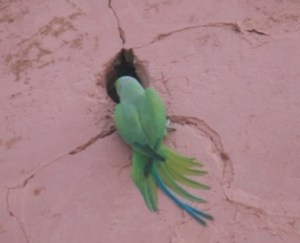
parrot’s bright green back
head stuck in a bore burrow
take it like a bird


a park: ducks floating,
who wins if there be bloodshed?
Donald or Daffy?


Donkey or robot?
Whose sadness rivals human:
Eeyore or Marvin?

DAILY PHOTO: Amphibious Hippo

Taken in April 2017 at Chobe NP in Botswana


DAILY PHOTO: Shrines, Bangkok


Taken in March of 2017 in Bangkok

BOOK REVIEW: Our Mathematical Universe by Max Tegmark

Our Mathematical Universe: My Quest for the Ultimate Nature of RealityOur Mathematical Universe: My Quest for the Ultimate Nature of Reality by Max Tegmark
My rating: 4 of 5 stars

Amazon page


In this book, physicist Max Tegmark makes an argument for the possibility of a reality in which the universe is a mathematical structure a theory that predicts a Level IV multiverse (i.e. one in which various universes all have different physical laws and aren’t spread out across one infinite space [i.e. not “side-by-side.”]) Nobel Laureate Eugene Wigner wrote a famous paper entitled, “The Unreasonable Effectiveness of Mathematics in the Natural Sciences.” The article describes one of the great mysteries of science, namely, how come mathematics describes our universe so well and with such high precision. Tegmark’s answer is because the universe is fundamentally mathematical—or at least he suspects it could be.

The first chapter serves as an introduction, setting the stage by considering the core question with which the book is concerned, “What is reality?” The book then proceeds in three parts. The first, Chapters 2 through 6, discuss the universe at the scale of the cosmos. Chapters two and three consider space and time and answer such questions as how big is the universe and where did everything come from. Chapter 4 explores many examples of mathematics’ “unreasonable effectiveness” in explaining our universe with respect to expansion and background radiation and the like (a more extensive discussion is in Ch. 10.) The fifth chapter investigates the big bang and our universe’s inflation. The last chapter in part one introduces the idea of multiverses and how the idea of multiple universes acts as an alternative explanation to prevailing notions in quantum physics (e.g. collapsing wave functions)—and, specifically, Tegmark describes the details of the first two of four models of the multiverse (i.e. the ones in which parallel universes are out there spread out across and infinite space), leaving the other two for the latter parts of the book.

Part two takes readers from the cosmological scale to the quantum scale, reflecting upon the nature of reality at the smallest scales—i.e. where the world gets weird. Chapter 7 is entitled “Cosmic Legos” and, as such, it describes the building blocks of our world as well as the oddities, anomalies, and counter-intuitive characteristics of the quantum realm. Chapter 8 brings in the Level III approach to multiverses and explains how it negates the need for waveform collapse that mainstream physics requires we accept (i.e. instead of a random outcome upon observation, both [or multiple] outcomes transpire as universes split.)

The final part is where Tegmark dives into his own theory. The first two parts having outlined what we know about the universe, and some of the major remaining mysteries left unexplained or unsubstantiated by current theories, Tegmark now makes his argument for why the Mathematical Universe Hypothesis (MUH) is at least as effective at explaining reality as any out there, and how it might eliminate some daunting mysteries.

Chapter 9 goes back to the topic of the first chapter, namely the nature of reality and the differences between our subjective internal reality, objective external reality, and a middling consensus reality. Chapter 10 also elaborates on the nature of reality, but this time by exploring mathematical and physical reality. Here he elaborates on how the universe behaves mathematically and explains the nature of mathematical structures—which is important as he is arguing the universe and everything in it may be one. Chapter 11 is entitled, “Is Time and Illusion?” and it proposes there is a block of space-time and our experience of time is an artifact of how we ride our world lines through it—in this view we are braids in space-time of the most complex kind observed. A lot of this chapter is about what we are and are not. Chapter 12 explains the Level IV multiverse (different laws for each universe) and what it does for us that the others do not. Chapter 13 is a bit different. It describes how we might destroy ourselves or die out, but that, it seems, is mostly a set up for a pep talk. You see, Tegmark has hypothesized a universe in which one might feel random and inconsequential, and so he wants to ensure the reader that that isn’t the case so that we don’t decide to plop down and watch the world burn.

While this book is about 4/5ths pop science physics book, the other 1/5th is a memoir of Tegmark’s trials and tribulations in coloring outside the lines with his science. All and all, I think this serves the book. The author avoids coming off as whiny in the way that scientists often do when writing about their challenges in obtaining funding and / or navigating a path to tenure that is sufficiently novel but not so heterodox as to be scandalous. There’s just enough to give you the feeling that he’s suffered for his science without making him seem ungrateful or like he has a martyr complex.

Graphics are presented throughout (photos, computer renderings, graphs, diagrams, etc.), and are essential because the book deals in complex concepts that aren’t easily translated from mathematics through text description and into a layman’s visualization. The book has endnotes to expand and clarify on points, some of which are mathematical—though not all. It also has recommended reading section to help the reader expand their understanding of the subject.

I enjoyed this book and found it to be loaded with food-for-thought. If Tegmark’s vision of the universe does prove to be meritorious, it will change our approach to the world. And, if not, it will make good fodder for sci-fi.

View all my reviews

DAILY PHOTO: Umbrella Trees

Taken in October of 2016 in Little India, Singapore


BOOK REVIEW: The Life of Milarepa ed. by Lobzang Jivaka

The Life of Milarepa: A New Translation from the TibetanThe Life of Milarepa: A New Translation from the Tibetan by Lobsang P. Lhalungpa
My rating: 5 of 5 stars

Amazon page


Superhero stories can be surprisingly hard to make interesting. The hero’s vast powers make it hard to build obstacles that seriously challenge him. Make no mistake; while this book may be the biography of a Tibetan Buddhist yogi who was born in the eleventh century, it’s a superhero story as well. At various points, the titular character can control the weather, fly, read minds, predict the future, and cover a distance that would take a mere mortal months in just days. Milarepa is basically the entire cast of the X-Men rolled into one monk. [Note: the introduction of 1962 Lobzang Jivaka edition features a series of rants against Westerners that put a bad taste in my mouth early in the reading–basically suggesting the reality of these magic powers should be taken as a given even though the deficient Western mind has trouble wrapping its head around difficult concepts. It made me think I’d probably not like the book, but I’d forgotten it by the time I got around to the end of the book.]

“The Life of Milarepa” is essentially a hero’s journey, which begins with his widowed mother, his sister, and he being taken advantage of by a mean Uncle and Aunt. Milarepa takes up Black Magic to influence the weather so that he can exact revenge. Doing so makes him feel great shame, and puts him on the path of a religious ascetic. After his initial training, he is put through a great series of trials by Marpa, the man who will eventually his guru. Were it not for the encouragement and support from Marpa’s wife, Milarepa would never have made it through the training, and at one point—in fact—he goes away to learn from one of Marpa’s most advanced students because it seems Marpa unwilling to teach him.

Eventually, Milarepa ends up returning to his home and, thereafter, meditating on his own. Here he runs into the aunt and uncle (now separated) who made his family’s life hell after his father died. These elders aren’t the only ones who think Milarepa is a ne’er-do-well. However, most people are too scared of his superpowers to create problems for him, at first. He eventually wanders off and becomes the poorest of ascetics—with not so much as covering for his naked body as he live off nettles.

There are oddities in the book. The Buddhist teachers he studies under both use him as weapon (i.e. his hailstorm magic) as a requirement to taking him on as a student, despite the fact that this will pile onto his Karmic debt (and ostensibly theirs), and it leaves him feeling horrible—as well, it seems, these black magic powers make Marpa hostile to the young man and not take him seriously as a student until the guru receives an omen.

So why does this story turn out to be so satisfying? For one thing, for all his powers, Milarepa is constantly confronting challenges that keep the story tight. (I should again emphasize that this is nominally a work of biography. It just doesn’t read like one because of all the magic and the classic story elements. Few people have such a novel-shaped life. A hagiography is a more apt descriptor but instead of only displaying Milarepa’s good side (boring), this book presumably dances around facts to make a more engrossing product.) While Milarepa could concoct all manner of magic, he mostly doesn’t with the exception of some ESP. After Marpa has taught him, Milarepa deals with people with calm and compassion. (His return home is a little like Alex’s from “A Clockwork Orange” in that people have ill feelings about him because of his past, but at first they are afraid of him. When they discover he can’t defend himself, they start to lay into him.) For another, we can see Milarepa’s growth and we come to respect his intense devotion tremendously as he becomes quite virtuous of the course of the book. While he is a superhero, he’s also an ascetic who denies himself with the utmost of discipline in pursuit of liberation.

I’d highly recommend this book for those who like biographies—especially if you like to learn about Buddhism in the process. In the latter half of the book there are some lessons transmitted through the text as Milarepa interacts with students and other people. Eventually, even his loathsome aunt becomes a student.

View all my reviews

BOOK REVIEW: Challenger Deep by Neal Shusterman

Challenger DeepChallenger Deep by Neal Shusterman
My rating: 5 of 5 stars

Amazon page


“Challenger Deep” is the story of a smart and artistically talented young man, Caden Bosch, who is afflicted with Schizophrenia. There are essentially two story lines being told in parallel. One is the real world, and in the chapters in this line we see Caden’s descent as it takes place. From references to past events, we gain insight into how Caden was before the disease. In the early part of the book, these chapters are set at school and at home, and then later at the mental hospital at which he’s admitted as a patient.

In the other story, Caden is on a sailing ship headed to the Challenger Deep—the deepest portion of the Marianas Trench at almost 7 miles down, and—symbolically—Caden’s rock-bottom . Shipboard life is Caden’s hallucinated experience of the mental hospital. Over time the reader begins to match up characters from the real world with those from the delusion—both patients and staff members. This is a mutinous vessel, and the tension reflects the pull between Caden’s desire to be well and the appeal of the world of delusion.

Over time the author shows key events in both lines and the reader can connect them up to interpret how delusional Caden experiences the world. The story isn’t strictly told in a chronological order, though the broad sweep of it is. The bits of disjoint create no confusion while helping to convey the nature of a fractured mind. This works, in part, because the book is told over 161 short chapters, and, because the chapters are so short, a diversion doesn’t take one far and it’s easy to show the match up of events. The book artfully conveys the bizarreness of a dreamlike world of delusion while remaining clear and readable. Any confusion in the early chapters becomes rectified as the author reveals how the delusional world and the real world zip together.

This book was imaginative, enjoyable to read, as well as allowing the reader insight into the nature of mental illness. Atypical of a work of fiction, there is a resources section that provides contact information for organizations that support mental health.

I’d highly recommend this book for fiction readers.

View all my reviews

DAILY PHOTO: Gates in Amritsar

Taken in April of 2016 in Amritsar