
Taken in December of 2018 on Havelock Island (Swaraj Dweep)



Taken in December of 2018 on Havelock Island (Swaraj Dweep)
 Seven Samurai Swept Away in a River by Jung Young Moon
My rating: 5 of 5 stars
Full-disclosure: I enjoy writing that’s quirky and rambling as long as it jettisons pretension and brings in some whimsicality. This book by Jung Young Moon plays into that wheelhouse. If you’re expecting a novel with a story arc and character development, you may not like what you find. Personally, I wouldn’t call this a novel (though the author does,) but it’s one of those books that defies neat categorization. I’d call it creative nonfiction, and – more specifically – an “essay of essays,” which is to distinguish it from an essay collection. [Comparing it to fiction, it would be more like a novel-in-short stories than a collection of stories.] The author’s own words about how the book was composed are more insightful than my own, he called it, “… a mixture of stream of consciousness technique, the paralysis of consciousness technique, and the derangement of consciousness technique…” [As far as I know, the latter two are his own designations.]
Saying the book is rambling (and “pointless” in the best sense of that word) isn’t to suggest that the book lacks a theme. It’s a Korean’s take on things Texan after having spent a substantial amount of time there. But that Korean take on Texas is given an added twist into interesting territory by this particular Korean’s off-beat worldview. So, while many writer’s have considered the psychology, motives, and possible conspiratorial links of Jack Ruby (the assassin of JFK assassin Lee Harvey Oswald), Jung focuses on the issue of Ruby leaving his dogs in the car while he went to shoot Oswald. The author discusses the book as though it – like the sit-com “Seinfeld” – is about nothing, but I think it’s more about a chain of somethings turned on their heads and viewed through a fun-house mirror.
While the Seven Samurai are referenced in the title and are discussed at various points throughout the book, it’s more as a reminiscence than a throughline. That is, if one is expecting any great insight into Akira Kurosawa’s masterwork – either its story or as a film – that’s not how Jung uses the reference. He does talk in detail about cowboys and cowboy-ness. That may seem like a rough segue, but film fans may see a connection. Kurosawa’s film was famously the basis for the Western, “The Magnificent Seven.” I think there’s a connection in the broad appeal of machismo that both samurai cinema and Texas draw upon. [But maybe it was just some sweet alliteration for use in the title.]
I enjoyed this book immensely and would highly recommend it – except for readers who require order or who insist a book make a point. It’s humorous by way of strange lines of thinking and an alien outlook on a singular culture.
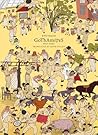 The Gothamites by Eno Raud
My rating: 5 of 5 stars
While the English translation of this children’s book just came out this summer, the original book (in Estonian) dates to 1962. I don’t point that out because it’s incomprehensibly dated, but because some readers may find the basis of the story to be misogynistic by today’s standards. There is a nation of people (the Gothamites) that is so known for their great wisdom and erudition that all of its men are hired abroad as counselors and advisers. The women find it untenable to have their men gone all the time, as well as finding their own nation is falling into shambles, and so they call all the men back home for a pow-wow. It’s decided that as long as their reputation for wisdom precedes them, the Gothamite men will always be called away to serve other nations, and so the only solution is to immediately give up their clever ways. Which they do.
The opening chapter lays out the backstory I discuss in the previous paragraph. Each chapter thereafter shows the Gothamites bumbling through a simple problem for which they are now unable to find solutions because they’ve given up being contemplative. It’s a bit like the movie “Idiocracy” but set in an ill-defined past instead of in the future, and geared toward children rather than adults. If it was meant as a jab at the Soviets for the bumbling ineptitude in which their system of governance resulted, it seems to have escaped the wrath of the USSR and – in fact – the author seems have done well for himself.
This is one of those children’s books, where I believe the age of the child matters greatly. Let’s consider just one of the stories from the book. Facing a salt shortage, the foolish Gothamites plant a field with little crystals of salt. When weeds begin to sprout, as will happen in a fallow field, the Gothamites are sure they are on the right track. There is an age at which this story is humorous and / or provides a teachable moment, but an older age at which the recipient of the story finds it boring and cringe-worthy. I think at the sweet-spot, the stories are funny and may offer ways to encourage judicious thinking. It’s certainly not laugh-out-loud funny for an adult reader, but it’s all about finding the right audience.
There are whimsical artworks throughout, depicting scenes from the various misadventures of the Gothamites. As far as how individuals are drawn, it reminded me of the old Popeye cartoons, but most of the plates show a chaotic scene with many silly things going on at once.
As l said, I think one has a limited window for an ideal readership, but within that window I think children will find the stories amusing and playful, and parents will find it to be wholesome humor. For that readership, I’d highly recommend this book.
 Dream Story by Arthur Schnitzler
My rating: 5 of 5 stars
Suffering one-two blows to his masculinity, the lead – a doctor named Fridolin – engages in a risky chain of events that culminates in sneaking into the orgiastic masquerade ball of a secret society. The major drivers of this behavior seem to be his wife’s admission of a fantasy she had about another man and Fridolin’s embarrassment over a subdued response upon being run into by another man on the sidewalk. The former is the more important event, but it amplifies the effect of the latter event, and together they result in Fridolin goading himself to do something dangerous. It also drives him to ignore warnings and show undue bravado, which results in his being discovered as an impostor at the masquerade event.
If this sounds familiar in broad brush-strokes (but not necessarily in details,) it’s because the 1999 Kubrick film, starring Tom Cruise and Nicole Kidman, “Eyes Wide Shut” is loosely-based on this story. The movie was set in modern-day New York, and the novella is set in Vienna contemporary to its composition (i.e. circa 1926.) The book was originally released in German under the title “Traumnovelle.“
I enjoyed this novella. There is excitement and tension throughout the work that varies from a bit of marital friction to life-and-death fear that the protagonist’s desire to redeem himself will get him killed. There’s also a fascinating instance in which Fridolin’s wife, Albertine, recounts a dream she had that has faint echoes of what actually happened to Fridolin in it. This leads the reader to wonder whether she knows more than she lets on, or whether her subconscious just made some lucky guesses based on their earlier interactions. The reader is shown the seedy side of early twentieth century Vienna. Certainly, what was going on there with regards to the fields of psychology and psychiatry play into the story.
If you’re looking for a short work of intrigue, I’d highly recommend this book.

Taken in December of 1999 in Budapest
 Life makes philosophers of us all.
You’re forced to decide how you will know your truth.
And it is “your truth,” or “my truth.”
We are powerless to determine THE truth, having only a limited capacity to even discern it.
“Your truth” is the concoction of fact and fiction by which you dance through life.
Now, you may say,
“Life may force me to be a liar, a whore, and a scoundrel, but I’ll never stand for it to make me a philosopher!”
Maybe you think you can side-step philosophy by taking answers straight from science, scripture, or lockstep walking with your tribe, but making that decision has still forced you to philosophize.
No matter what default you choose, knowledge of truth will remain limited and sometimes faulty.
I favor holding truths like an intact bird’s egg found fallen out of a nest — careful not to grasp too tightly for fear of either crushing it or having a misidentified velociraptor chick pop out and bite off my thumb.
I can’t say that this is a better approach than those who hold truths in the way of a rodeo rider with a dislocated elbow and shoulder who — never-the-less — stayed his eight.
It’s not just in matters of truth and knowledge that we are forced to philosophize.
One also has to determine what constitutes a virtuous life, and to what degree one finds chasing said path worth the effort. Again, the choice to outsource future thought to a holy book is still an act of philosophizing.
I understand that most people don’t want to be seen as a philosopher anymore than than they would want to be seen as a masochist — a lifestyle which bears something in common with philosophy.
After all, the philosopher is one who insists on engaging in rigorous and tedious thought on subjects that offer no right answers — just a huge slate of equally least-worst options.
If she wanted to engage in such thought AND uncover the right answer, she’d be a scientist.
If he wanted to wax eloquent on his love of living in the dark, he’d study language or literature.
But the philosopher likes his thought like he likes his tragic figures of Greek mythology –Sisyphean.
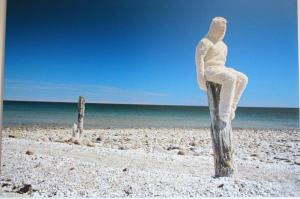
the faceless, in my dreams, play at chores i can’t comprehend,
leaning over consoles — big powerplant-style consoles,
neither typing nor jabbing buttons,
just sitting, attuned to the lay of the world according to indicator lights
i shout to them
of course, they can’t shout back
but they don’t even flinch
zero acknowledgement
i can’t tell if they have ear-holes,
whether they’re ignoring me, or can’t hear me
i guess i should consider myself lucky
if one turned its faceless face toward me
i’m sure i’d shit a dream brick

Taken in May of 2017 on the Zambezi River between Zimbabwe and Zambia


