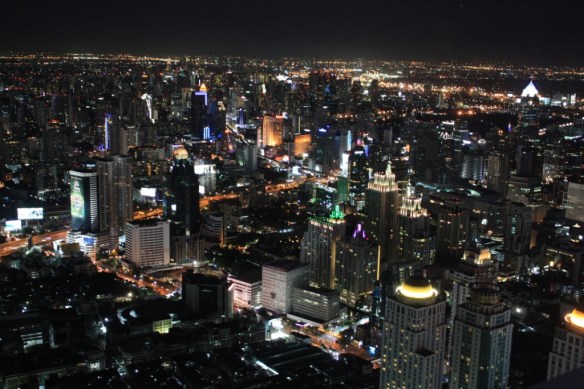
Taken from Baiyoke Sky Hotel in the Summer of 2014

Taken from Wat Arun
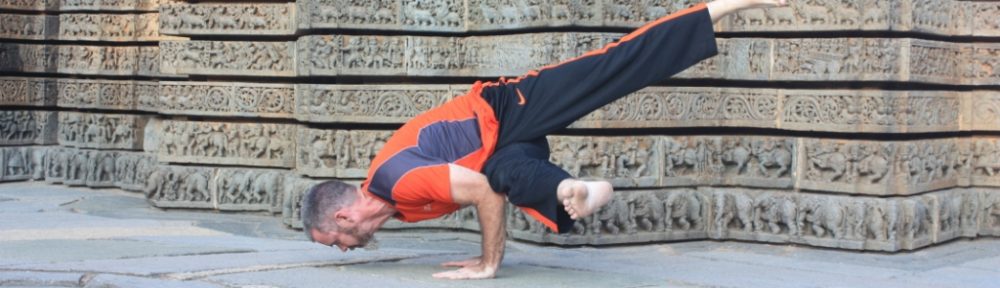

Taken from Baiyoke Sky Hotel in the Summer of 2014
Taken from Wat Arun

Taken in August of 2019 at Big Almaty Lake
ultima Thule / əl-tə-mə-ˈthü-lē / n. 1. a distant unknown region; 2. the extreme edge of the discovered world
“Where lies the ultima Thule?”
he inquired about the edge of discovery.
“It’s down in cave, beyond the cold,
in a pocket that’s hot and noxious.”
“I’m sure it lies in the Challenger Deep,
far down below the waves.”
“It must be out amid the void of space,
where frozen silence reigns.”
“If it lies not in the recesses of my mind,
I’m sure I’ll never see it.”
 Crazy Wisdom by Chögyam Trungpa
My rating: 4 of 5 stars
This book collects the lessons of two seminars on crazy wisdom taught by Chögyam Trungpa in 1972. “Crazy Wisdom” is an awakened state of mind that was taught by Padmasambhava – the teacher who introduced Buddhism to Tibet from India. The two seminars consist of six and seven lessons, respectively. These thirteen lessons make up the chapters of the book. Each chapter consists mostly of a text discussion of the topic at hand, but with an interview at the end in which the teacher is asked to clarify points mentioned in the text or that are relevant to the topic under discussion.
The book starts with differentiating two approaches: trying to live up to what one would like to be (i.e. spiritual materialism), and trying to live what one is. While the former is a widespread phenomenon across many religions, it’s dismissed as not all that productive. Along the way, the book discusses how being childlike, ruthless, hopeless, fearless, and in touch with death can all have beneficial effects on the mind. Of course, one has to go about such things in a proscribed manner as it’s emphasized that crazy wisdom and being crazy aren’t identical states (even if they may share similar appearances in some instances.)
Like many books on wisdom, this one offers a mix of profound insight and a sort of double speak used to make profound-sounding but ineffable statements, or logically inconsistent statements, seem true and / or thought-provoking. A philosophizing style is employed rather than narrative style, and so it can read a bit blandly.
There are a few notes and several line-drawn artworks in the Tibetan Buddhist style, but otherwise it’s a straightforward text.
I found this book to be intriguing and to offer interesting food-for-thought. It’s a short book, but may be a bit challenging for a reader without a background in Tibetan Buddhism, or in Buddhism in general. If you’re interested in Vajrayana Buddhism, you should give it a read.
 Surfacing by Margaret Atwood
My rating: 5 of 5 stars
A young woman takes a double-date to her childhood home in rural Canada after her father goes missing. [OK, “double-date” sounds a bit trivial for the tone of the novel, but it’s the quickest way to say that she goes with her boyfriend, Joe, and a married couple, David and Anna.] At first all is well, and the four are enjoying time away from the city, living in a cabin on an island in beautiful lake country. In fact, the group decides to extend their stay, and — intriguingly — this decision isn’t advanced by the protagonist, who’s father remains missing, but one of the others who is enjoying the novelty of back-country living. During this extension, tensions rise within the group, both within each couple and between the couples.
In the third part of this three-part book, the protagonist descends into a feral madness. Her father’s disappearance, which the protagonist addresses with the stoicism of one accustomed to living in remote territory, is only one of several triggers. We discover that she was divorced, she’d been on the outs with her parents in relation to that marriage, and that her current relationship is falling apart because Joe wants to get serious but the protagonist wants to keep things casual – presumably because of the trauma of her last marriage.
As the novel progresses, we get little indications of what might have been responsible for her father’s disappearance, though the reader doesn’t have a good grasp on whether there is merit to the speculated motives, or whether they are just indication that the protagonist is beginning to lose a grip. We discover that there are parties interested in purchasing the property. Some vitriol is spoken over the fact that the prospective buyers are American, but we don’t know whether that reflects a reasonable curiosity about why foreigners would be interested in such a remote property or whether it’s the madness or whether it’s just a visceral dislike of Americans. It also seems like the protagonist may be on the trail of some sort of artifact and that her father may have left her clues about it. However, again, we don’t know whether this is all the crazed imagings of a person descending into madness.
This is a short, quiet novel, but it was nevertheless engrossing. A lot of the intrigue is packed into the very end of the novel, but as it’s a short novel that doesn’t mean that there’s and excessively long build. The protagonist’s madness offers nice opportunities for strategic ambiguity – i.e. the reader has some freedom to determine what is true and what is paranoia.
I read this as part of a personal project to read a piece of literature that offers insight into a country for every country that I’ve visited. I think it fits the bill nicely. The reader sees a little bit of what life in rural Canada is like. The reader also witnesses some of the conflict over language and nationalism as this takes place in predominantly French-speaking territory, and the protagonist has been living away long enough that her language marks her as an outsider — even though this is where she’s from. We also see how Canadians can feel an intense difference between themselves and people from the United States, even though much of the world sees Canadians as “the polite Americans.”
I’d highly recommend this book for fiction readers.
For a moment —
a still moment —
belief flat-lined.
I don’t mean belief in gods, myths, or monsters —
that abandoned me long ago.
[Or I abandoned it? Either way, it’s gone.]
I mean recognition that there is a world,
and that I know enough to hum along to its tune.
And as I’m listening to the shrill and steady tone in my ears —
[it really was a flat-line, like in the TV medical dramas]
the world snapped back to normality
&
I almost fell out of the bed.

Taken in July of 2019 on the trail between Jeti Oguz Resort and Boris Yeltsin Peak