Unknown's avatar

About B Gourley

Bernie Gourley is a writer living in Bangalore, India. His poetry collection, Poems of the Introverted Yogi is now available on Amazon. He teaches yoga, with a specialization in pranayama, and holds a RYT500 certification. For most of his adult life, he practiced martial arts, including: Kobudo, Muay Thai, Kalaripayattu, and Taiji. He is a world traveler, having visited more than 40 countries around the globe.

Gray Day Haiku


palm trees waving
under gray, stormy skies
delusion rocked


foggy city
bridge top corner juts
from river’s cloud


monochrome town
fog drained your varied hues,
what feats light works


cloudy mountain
layers of gray stay silent
keeping secrets


vodka, no ice
peering out a window
into nothing

DAILY PHOTO: Dubai Belly Dancer

Taken in May of 2016 in Dubai

POEM: Softening a Blow with Poetry

Nothing, these days, sounds mean or terse,
if you put it in metered verse.
Rhymes make a “screw you” whimsical,
not hostile or inimical.

So if you’d like to ride the fence,
and give insults benign pretense,
just rhyme your lines and count your feet,
they’ll think it jest and call it sweet.

[Ex. 1]
Your breath is Death on crack and meth
gone ten days without a shower.
It’d stop a clock and kill the hour.
“What foul winds blow?” It is your breath.

[Ex. 2]
To say you’re dumber than a post
gives the post too much room to boast.
I’d liken your wits more to toast,
but
one day you’ll be sharp as pot roast.

So if you need make libel or slander,
you can do it with the utmost candor,
if you can make the barb zing like a song,
they will drop their riposte and sing along

DAILY PHOTO: Vegas by Night

Photos courtesy of my wife. Taken on August 29, 2019 in Las Vegas.

DFD5A1B2-6B5E-4703-BEEF-BC48EFA0B799D11B036D-1372-4873-8720-8750F5D6B577F2282A73-5DD7-4A33-BE32-70CE19B7B5A5

POEM: Same Dream in a Different Key

I have a recurring dream.

It never plays out the same,
never looks the same,
the setting differs,
and, besides me, the cast differs.

But it feels the same,
an identical nuance of feeling,
and there’s always a tower —
a high tower that I don’t think I ever top.
Sometimes, its a bamboo scaffold.
Other times, there’s gilt ornamentation around the elevators,
but there’s some common towericity… towerness?

There’s also a man on the tower who thinks himself a holy man,
but I think he’s a fraud.
I’m not sure whether I think he’s a fraud during the dream,
or only once I wake up.

But they say you are every person in your dream.
So, that makes me a fraud and a self-professed holy man,
but how can a person who never claims authenticity be a fraud?
I’m not sure what genuine means in this mysterious world,
and don’t get me started on what I don’t know about being a holy man.

I have a recurring dream.

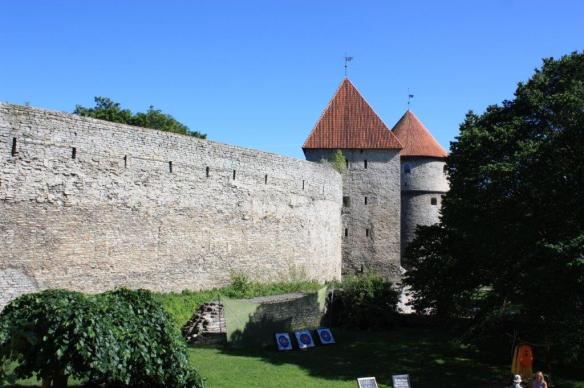
DAILY PHOTO: Old Town Wall, Tallinn

Taken in the summer of 2011 in Tallinn

DAILY PHOTO: Bishkek Central Mosque

Taken in July of 2019 in Bishkek

BOOK REVIEW: Chloroform by Linda Stratmann

Chloroform: The Quest for OblivionChloroform: The Quest for Oblivion by Linda Stratmann
My rating: 4 of 5 stars

Amazon page


Stratmann’s book tells the story of the rise, fall, and debauchment of the anesthetic known as chloroform. As such, most of the book — particularly in the first half — is a medical history that offers detailed discussion of the debates that went on between doctors as to whether chloroform was the best form of anesthesia available, or whether an alternative approach was superior. (Contenders include: ether, nitrous oxide, or the old-fashioned approach of no anesthesia whatsoever.) The book also discusses a number of cases in which chloroform was used in the commission of a crime, or was speculated to have been. On the topic of vice, the use of chloroform as a recreational drug is also described. For those who aren’t medical historians, the explorations of chloroform in crime, vice, and licentiousness are where the book gets intriguing, and they tend to take place in the latter half of the book. [That makes sense from a chronological perspective as it took some time before laypeople became aware of the range of uses of this substance.]

The book is well-written and follows the intrigue. That said, it’s definitely a niche work. I came at it from the strange direction of one who is interested in consciousness (and, by extension, how it is lost.) This book could appeal to those interested in the history of medicine, true crime, or recreational drugs, but, regardless, it’s a niche within those niche fields.

The book has graphics, annotations, a bibliography, and even an appendix that describes the chemistry of chloroform. It comes with all the bells-and-whistles one might expect of a scholarly book, but tells a story skillfully. The author is neither a journalist nor a scientist, but she seems to have done an extremely thorough job of research.

If you only read one book on the history of chloroform this year, make it this one. [Disclaimer: As far as I know, this is the only history of chloroform, and it’s certainly the only one that I’ve read to date.]

View all my reviews

BOOK REVIEW: Panchatantra [trans. / ed. by Arthur W. Ryder]

PanchatantraPanchatantra by Arthur W. Ryder
My rating: 4 of 5 stars

Amazon page


“Panchatantra” is “Aesop’s Fables” meets Machiavelli’s “The Prince,” but with an Indian flavor. [I realize that the Panchatantra is much older than “The Prince” (though not as old as Aesop’s Fables — at least not when comparing written editions) but I’d argue it’s still a useful tagline for general readers who aren’t particularly acquainted with Indian literature.] Like Aesop’s Fables, anthropomorphized animals make up the bulk of the cast in this set of stories within a story. Like “The Prince,” a lot of the the advice offers insight into how to lead (as opposed to just how to lead a moral life.) The topics addressed include: building sound alliances, avoiding deception, and making decisions regarding war and peace.

As the Sanskrit title — Panchatantra [“Five Treatises”] — suggests, this work is arranged into five books. Of the over eighty fables of the original, more than fifty are collected in this edition. [I suspect this was done to eliminate or consolidate stories that were essentially the same.] The first book is “The Loss of Friends” and it focuses on how alliances are broken up by enemies. The second is “The Winning of Friends” and it gives particular attention to alliance building. The third book is “On Crows and Owls,” and it’s about how to decide whether to go to war, choose peace, or seek some alternative. The penultimate book is “Loss of Gains” and it discusses ways in which people forfeit (or have stolen from them) what they have gained. The last book is “Ill-Considered Action,” and it advises against being hasty. The stories are skillfully written and translated, and they are thought-provoking. That said, they can be a tad hackneyed and simplistic as well. For example, a large number of these tales convey the same simple lesson that one should take advice from individuals who are wise and virtuous, and that lesson’s inverse (that one should ignore those who are foolish and / or immoral.)

I’d highly recommend giving the Panchatantra a read. It both conveys wisdom and offers good stories. It’s true that the stories can become a bit repetitive and also frequently have less than profound morals, but overall, it’s a smart and entertaining collection of fables.

View all my reviews

DAILY PHOTO: Hoover Dam

Photos courtesy of my wife. Taken on August 25, 2019 at the Arizona-Nevada border.

1C1323A4-0CAE-4489-8BAC-750E31BA8F4CAE514E3B-9FF5-48D3-9AB4-16234B28D15E