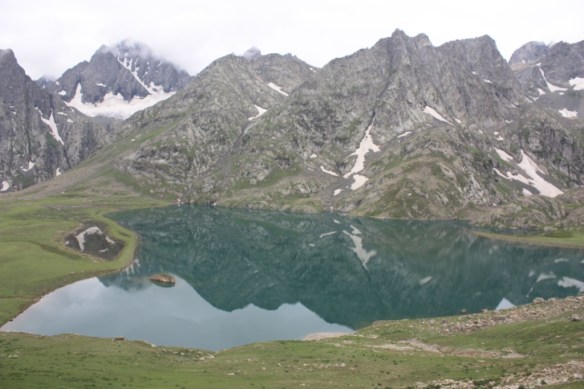


Taken in August of 2016 on the Sonamarg – Naranag Trail.
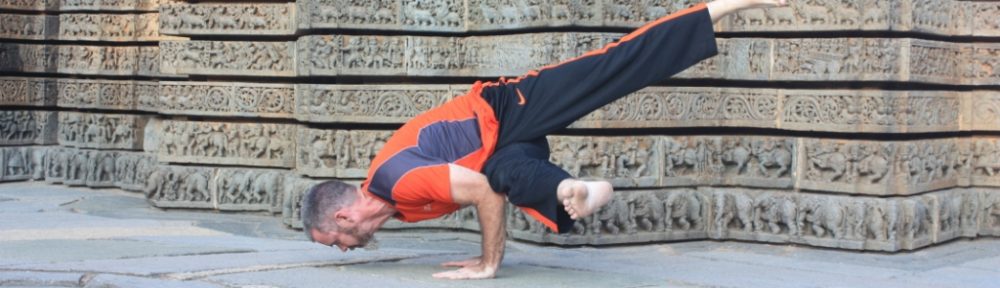

Taken in August of 2016 on the Sonamarg – Naranag Trail.
 The languid roll of the boat signaled loneliness — silently but steadily.
Was it the inseparable connection of wave and hull — each feeling that, despite the lack of distance between them, they would remain distinct?
Was it that there wasn’t another mast for miles, at least the twelve miles out to the horizon?
Was it the motion, purposeless and uniform, a lethargic fidget that signaled anxiousness without anticipation.

Oh! Cast off these khaki shackles!
Like Don Duck, pants raise my hackles.
I’d chuck my slacks in the river Styx,
show all Hades my bag of tricks.
No more this prison for my loins,
and hear these words that I enjoin:
DOWN WITH PANTS!
DOWN WITH PANTS!
DOWN WITH PANTS!

Prince Eugene of Savoy; Taken in December of 2019 at the Budavári Palota

Taken at the Várkert Bazár.

Radnóti wrote, “Walk On, Ye Doomed”
[Járkálj Csak, Halálraítélt!]
in 1936 —
Eight years before he was force marched to death by Nazis.
And I am left to wonder whether he was a prophet,
or whether the Poet’s obsession with death makes him seem prophetic.
Whether he was a prophet or not, he was true to his poem.
There’s at least 750 kilometers between the copper mines of Bor and the tiny northern Hungarian town where he was killed — a place closer to both Bratislava and Vienna than to Budapest.
Call it 500 miles on foot,
emaciated from cracking rock for copper to build the war-machinery of those trying to erase a people — his people.
They found a pocketful of poems on his person when he was exhumed.
If you can’t think of anything else to do in the act of slogging at gunpoint across two countries than to craft poems, you are not a poet, you are THE Poet.
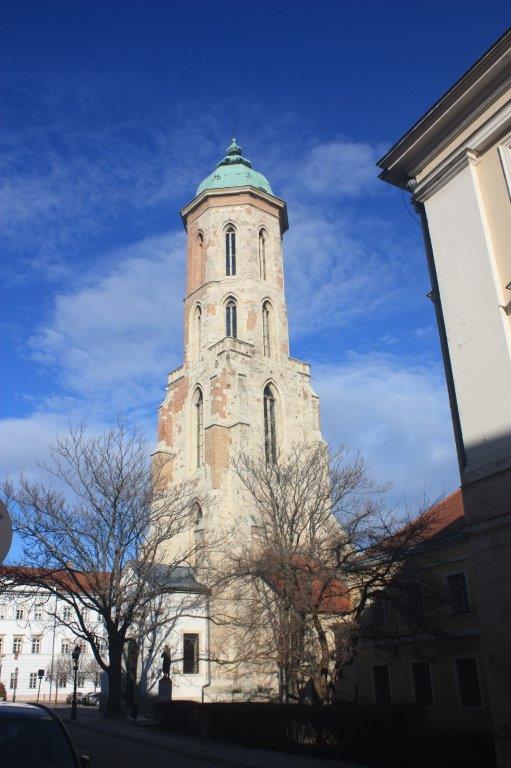
Taken in December of 2019 in Budapest
This tower is one end of the old Church of Mary Magdalene. The rest of the church (save foundations) was destroyed. These days the structure goes by the name “Buda Tower” because it’s a tourist attraction one can use to see the city from on high. The structure dates back to the 13th century.
 Everyone has a darkness to navigate.
I chased my Kurtz into the river’s savage tracts —
steamboat long since left behind —
portaging to lands above the cataract ledge.
You’ve heard it said, “You are every character in your dream?”
That thought flickered into my awareness
just as I realized I felt as much Kurtz as Marlow.
My sole consolation was that my Kurtz was dying.
And since I felt that one man can’t die two deaths —
[wishful thoughts of legacy be damned]
I felt my Marlow would outlive my Kurtz.
But when Kurtz-of-Dreamland sucked his last breath,
he didn’t stick to script with “The Horror! The Horror!”
Instead, he said, “Box my bones up for the elephants.”
Which seemed as nice as remembering his fiancée’s name —
as far as I was concerned.
 A Guide to the Good Life: The Ancient Art of Stoic Joy by William B. Irvine
My rating: 5 of 5 stars
This is a great little guide for a person considering the Stoic life. Stoicism was one of more well-known philosophies to come out of the ancient world, though it suffered a setback with changing philosophical trends and the rise of the great monotheistic religions. For those who know the term “stoic” as a small-s adjective, it’s worth noting that its definition (emotionless / impassive) is not the distinguishing trait of this school of philosophy. (Something similar can be said for Cynic v. cynic and Epicurean v. epicurean.) Still, there is a thin connection in that Stoics believed in not being controlled by emotion to one’s detriment, and not becoming emotional over things about which one has no control.
This book offers some historical background, showing how Stoicism evolved as it moved from Greece to Rome (and later how it might continue to evolve to appeal to — and work for — a modern following.) It also gives one some idea of the subtle differences of perspective among the Stoics. Usually when one bones up on Stoicism, one does so through the writings of a particular philosopher, be it Epictetus, Marcus Aurelius, or Seneca, and so it’s interesting to see how these men with varied backgrounds lived and taught Stoicism.
The book is divided into four parts. The first part discusses what a life philosophy is, it gives Stoicism a context within other ancient philosophies, and it compares and contrasts Greek and Roman Stoicism. The second part describes the techniques that Stoics used to achieve their worldview and approach to living. These techniques include negative visualization (mentally rehearsing worst-case scenarios in a way that one becomes desensitized to them), classifying events by whether one can do anything about them or not and adopting a fatalistic acceptance of what one cannot influence, self-denial (i.e. avoiding excessive pursuit of comfort or pleasure), and meditation (being aware of one’s behavior so one can learn to implement Stoic approaches to living.)
Part three describes the advice of Stoics on a range of issues that are confronted in life. These include: duty, social relationships, insults, grief, anger, desire for fame, desire for luxury, exile, old age, dying, and becoming a Stoic. You may note, most of these are as valid today as they were in the day of the great Stoics, if not more so, and even “exile” has modern day analogies.
Part four discusses Stoicism for modern living. Among the issues covered include how a secular humanist might justify the practice of Stoicism. (The historical justifications were couched in theistic assumptions about the world.) It also delves into nuts and bolts considerations for the would-be Stoic. (Specifically, Irvine suggests practicing something he calls “stealth Stoicism,” which involves living in accord with the tenets of the philosophy while avoiding drawing attention to it from friends and family who might think you’ve become a lunatic who will soon be showing up to the 4th of July BBQ in a toga.)
Besides annotations and a works cited section, the back matter also includes a Stoic reading program as an Appendix.
I found this book to be interesting and informative. I’ve read works by Stoics, but it was nice to learn about Stoicism through a broader, overhead lens. If you’re interested in a philosophy of life, in general, or Stoicism in particular, this is a good book to read.