
Taken in December of 2019 in Budapest.
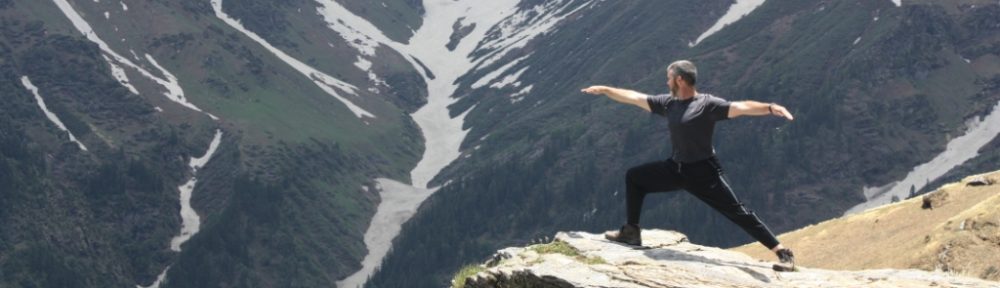

Taken in December of 2019 in Budapest.
 The Weird: A Compendium of Strange and Dark Stories by Jeff VanderMeer
My rating: 5 of 5 stars
For a book themed by such a niche genre, stories of the weird, this book covers a huge amount of ground. Over 1100+ pages, the book includes more than a hundred stories. While the book mostly consists of short stories, it does include several novellas and a novel excerpt. Not only does the book cover temporal ground (from the 19th century through writers of today), it includes works by authors from India, Japan, Nigeria, Benin, Iran, the Czech Republic, and many other nations besides the numerous British and American entries. It includes names you’ll know from mainstream literature, such as Haruki Murakami, Ben Okri, and Ray Bradbury, as well as a few of the best-selling authors of all time such as Stephen King and George R.R. Martin. However, it also includes names that you probably won’t have heard of unless you are a huge fan or an amateur historian of this cross-cutting subgenre (more on that descriptor to come.) It’s telling that only one author has more than one piece in the anthology, and that seems to represent an attempt to gather the very best pieces from each. I won’t say every great author of weirdness was included, but a whole lot of them were — whether the weird was a momentary diversion for him or it was the whole of his writing career.
The organization is chronological, and the book stands a single-volume education on stories with weirdness, bizarreness, or surreality at their heart. I used the term “cross-cutting subgenre” to describe the theme, and, I’m not sure I even understand what I meant, but these stories have a super-genre – e.g. horror or literary – but they necessarily have this element of strangeness. In other words, while some of the stories might be labeled “horror,” that genre classification is neither a necessary nor a sufficient condition for inclusion. Many of the stories aren’t particularly dark, and just because a story horror doesn’t mean that it’s weird enough to be included. The stories generally take place in a world that is recognizable, but with a hint of the surreal and with some level of strategic ambiguity as to the nature of that surreal element. This allows the collection to include examples as dark and visceral as “The Brotherhood of Mutilation” by Brian Evenson or as quirky and amusing as “The Sea Was Wet as Wet Could Be” by Gahan Wilson.
I couldn’t possibly go through all 110-ish of these stories, but will say that it’s a phenomenal collection. If I had to make my own personal top ten list it would be (in no order but the one in which the stories came in)
1.) “The Spider” by Hanns Heinz Ewers: A man moves into a room under the pretext of investigating a string of suicides only linked by residence within the apartment.
2.) “The Night Wire” by H.F. Arnold: A man in a newspaper office with a gift for simultaneously transcribing from two wires receives incoming reports of an ominous fog.
3.) “The Mainz Psalter” by Jean Ray: A mysterious ship journey ventures into bizarre territory and the crew starts disappearing one-by-one, leaving nothing more than gruesome stains.
4.) “The Crowd” by Ray Bradbury: A man tries to understand how a crowd seem to form almost instantaneously at the site of a car accident that he survived.
5.) “Sand Kings” by George R.R. Martin: A nasty little man buys some otherworldly pets that prove difficult to maintain.
6.) “Bloodchild” by Octavia Butler: In a recurring theme for Butler, she writes about an alien species that appears to be beneficent toward humans, but shows that where a power disparity exists beneficence is an illusion.
7.) “Shades” by Lucius Shepard: A Vietnam vet turned journalist returns to Vietnam on a story about one of the men who died in his unit.
8.) “The Diane Arbus Suicide Portfolio” by Marc Laidlaw: A renown photographer somehow has her own suicide photographed and this leads to questions of the nature of art and the degree of passion it evokes in people.
9.) “The Brotherhood of Mutilation” by Brian Evenson: A man who self-cauterized his own amputation in order to kill the man who cut his hand off is drawn into the shadowy world of a bizarre cult who honor voluntary (and unnecessary) amputations.
10.) “Flat Diane” by Daniel Abraham: A father helps his daughter send out a picture cutout of herself for a school project. His daughter inexplicably starts experiencing PTSD like symptoms around the same time the father starts getting disturbing anonymous photos through the mail.
I don’t know how representative my top ten list is, but hopefully it gives one an idea of the nature of stories included. Though, as I said, it’s hard to give nutshell commentary on such a diverse work. It was even hard to come up with a top thirty, there were so many great inclusions.
I’d highly recommend this book if you at all enjoy weird tales. I got a copy on Amazon at a bargain price, especially considering that this is about four books worth of great stories.
 Prescriptive Stretching by Kristian Berg
My rating: 4 of 5 stars
Many people have problems that they are only aware of through symptoms like head aches or back pain that result from imbalances in muscle tightness. This book explores stretching, systematically.
The book is divided into four parts. The first, entitled “Stretching Fundamentals,” presents fundamental principles and background information. Besides basic guidelines for stretching, it also discusses anatomy and physiology of the muscular system at a rudimentary level.
The second part is about targeted stretches, and it forms the heart of the book. This section, literally, goes from head to toe (and then back to the arms) explaining techniques for stretching major skeletal muscles. For some muscles, there is more than one stretch shown, but for others there is just one. Each entry on a muscle is divided into two parts. The first, “Muscle Facts,” describes the muscle, the causes of tightness, the symptoms of tightness, tests to gauge how tight the muscle is, and any precautions that should be considered when stretching the muscle. The second presents the stretching technique with a line drawing and mention of any mistakes to avoid. There are a mix of solo and partner stretches, as well as those using a ball.
The third part presents programs for pain relief. There’s a useful section that discusses morning aches and pains, and the ways in which one is sleeping might be leading to a crick in the neck or shoulder pain. This section not only lists the muscles that one should stretch to address various issues, but it gives little anatomical drawings in the context of the stretch that both help show what one is stretching and gives a reminder of the stretch.
I came to this book from the perspective of a yoga practitioner and teacher. If you’re wondering how these stretches differ from yoga, a major factor is that balance is taken out of the equation. The stretches in the book are done in a stable position. The downside of this is two-fold. First, if you want to build and maintain balance, you need to do an entirely separate set of exercises for that (depending upon the condition of the individual that could be necessary or a waste of time.) Second, one needs access to a wide range of equipment such as tables, adjustable benches, etc. (not to mention a partner, in some cases) to make these exercises work. The upside is that the individual is in a safe and stable position, so if they have poor balance they are at minimal risk.
The last section is one assessing flexibility and muscle balance. People think more about the former than the latter, but for most people, how balanced opposing muscle groups are probably contributes more to painful problems in the body. Because some muscles are easier to stretch than others, a book that shows how to get to the more challenging muscles is a great thing to have.
The ancillary matter includes a variety of graphics (mostly line drawings and anatomical drawings), a section upfront on the major components of the muscular and skeletal systems, and a references section in back.
I found this book to be useful and informative. I’d recommend it for individuals such as trainers, yoga teachers, athletes, and others who want to understand stretching at a level beyond technique.

Taken in December of 2019 in Budapest
 Its alien orange gleamed across a mid-winter forest.
The only thing — save shamrock green moss girding the base of trees — that begged attention in that silent, decaying woods.
Its globule nature desiccated into angularity,
adding to its alien claim,
and it shone with every orange a flame can throw.
The guide said you were edible,
but, seeing your flaming colors,
I could never convince myself that you wouldn’t taste of orange jelly enough to not spit you out on the ground.
Besides, I won’t say you’ve seen better days,
but you’ve seen less alien days.


Taken on January 1, 2020 in Doha.
The Msheireb Museums consist of four heritage houses that each have a different theme. The Company House (a.k.a. House 2) shows visitors what life was life for those who worked in the early days of oil and gas in Qatar.
The others are:
Mohammed Bin Jassim House (#1): Shows the historical development of the Msheireb District.
Radwani House (#3): Shows what a Qatari household was like back in the 1920’s.
Bin Jelmood House (#4): Describes the past and present of slavery, globally, and advocates for an end to the practice.

Taken in December of 2019 in Budapest
 The mind is architect of a slum town of grief.
Silent words, yet ceaseless calling.
I envy the simple way of a falling leaf.
No grasping, nor fear of falling.
If a thought could twist on the wind for its brief life —
not frantically seeking hold.
We would not live these dear lives strafed by strife.
We’d not find our dreams bought and sold,
or feel untimely turning old —
vigor sapped by a false form of cold.
And life would be all we had to live.

Taken on Gellért Hill in December of 2019


