Unknown's avatar

About B Gourley

Bernie Gourley is a writer living in Bangalore, India. His poetry collection, Poems of the Introverted Yogi is now available on Amazon. He teaches yoga, with a specialization in pranayama, and holds a RYT500 certification. For most of his adult life, he practiced martial arts, including: Kobudo, Muay Thai, Kalaripayattu, and Taiji. He is a world traveler, having visited more than 40 countries around the globe.

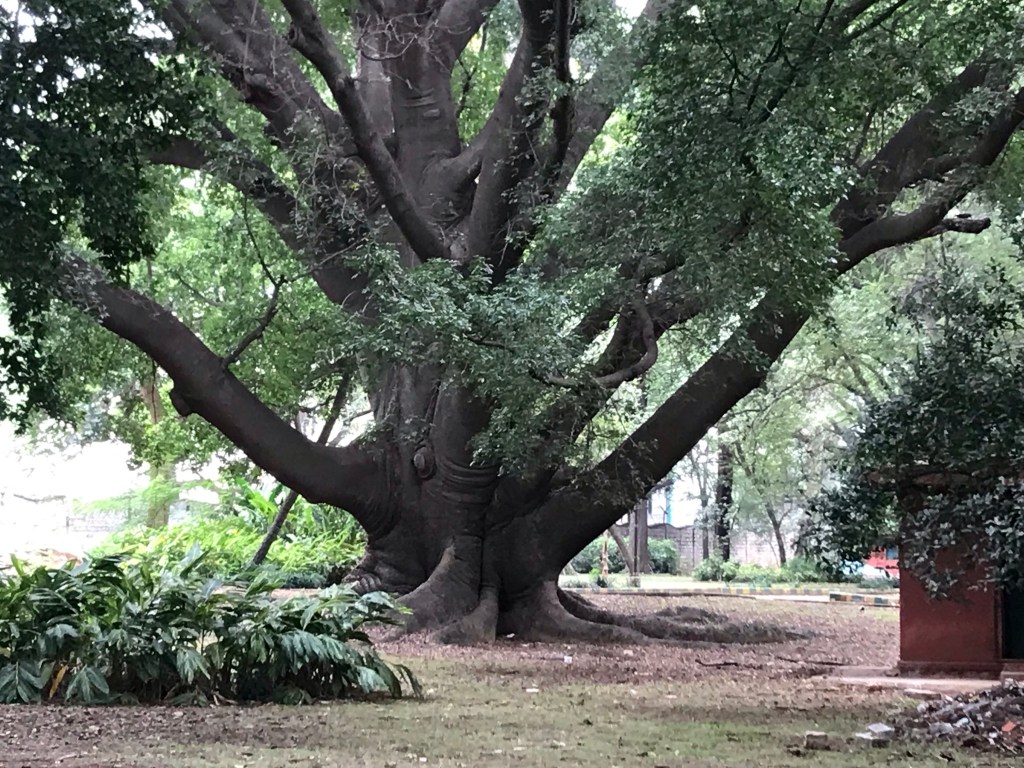
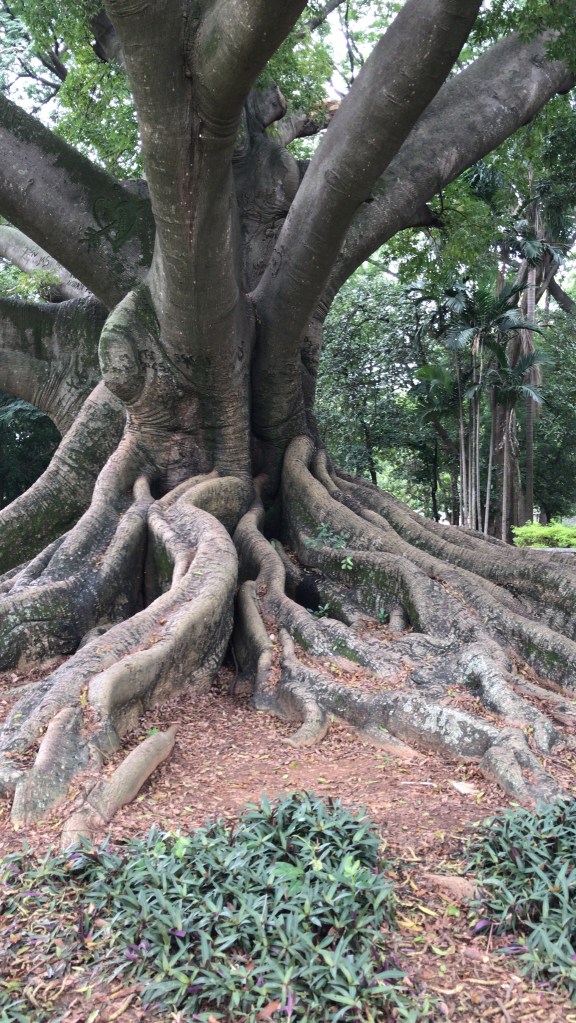
DAILY PHOTO: Kapok Trees

Taken in Lalbagh Botanical Gardens in September of 2021

BOOK REVIEW: I Breathed a Body by Zac Thompson
I Breathed a BodyI Breathed a Body by Zac Thompson
My rating: 4 of 5 stars

Amazon.in page

Out: October 5, 2021

This is one creepy commentary on technology run amok, and the alienation, desensitization, and disconnection that can result. [Or, at least that’s how I interpret it.] The protagonist is a driven social media executive who finds herself in territory that even she believes is over the line, despite her near psychopathic emotional disconnection. Another way to interpret the story is that the fungi that has taken parasitic control over humanity is making people see the world more as they would – i.e. with less cringing about death, decomposition, and deformation. [I happen to think that the fungi infection is a clever plot device to get across ideas about technology and modernity, but I could be wrong.]

Either way, I do think this is a clever story. There’s a species of Cordyceps fungi that takes control of the brain of an ant, steers it to the top of the nearest tree, and bursts out of the ant’s head to spread its spores from its new, elevated vantage point. This book reminded me of the Cordyceps fungi, and I wouldn’t be surprised if it inspired the story — with the requisite growth in sophistication to account for taking over a much more complex brain. This is a compelling and thought-provoking story, but it’s also gruesome and at times chaotic. If you can take horror, you’ll probably find it worth reading.

View all my reviews

DAILY PHOTO: Akka Honda

Taken on September 11, 2021 in Chitradurga Fort

Fungi Mind [Free Verse]

From its perspective,
we live in a vacant
 upside down underworld.

It can't understand 
our terror over death
and our obsession
with life. 

Just thinking about it
gives it nightmares,
heebie-jeebies
of being overrun
by endless piles
of creatures --
endless piles
with endless needs.

We may wrinkle a nose
in disgust at its worldview,
but it finds ours
positively suffocating.

But it forgives us
our simple ways,
we are just its food,
after all. 

Streetcorner Socrates [Free Verse]

A streetcorner Socrates
calls out those who grow
forests of words --

not because he doesn't love
the trees, but because
they impede his view,

making for perpetual dimness
in a mind that craves light.

The trick is not to clearcut,
but to leave only that which
enhances the view.

BOOK REVIEW: Gorgias by Plato

GorgiasGorgias by Plato
My rating: 5 of 5 stars

Amazon.in Page

Project Gutenberg

This Socratic dialogue explores what rhetoric is, and whether rhetorician is a real job, like plumber or secretary, or whether it’s more like “bottled water sommelier” or “social media influencer” – i.e. an undertaking by which one can make loads of money without contributing society one iota. It starts out (as usual) with Socrates questioning someone, in this case the rhetorician Gorgias. This exchange can be summed up by the ideas that: 1.) rhetoric is persuasion; 2.) the ignorant are more persuasive to the ignorant than are those with knowledge. [Gorgias boasts that he has been able to convince patients to take actions that their physicians couldn’t. Because Gorgias had to admit he didn’t know as much about facilitating health as a physician, he was forced to agree to the sad absurdity that people will often comply with slick talkers who know nothing (a plight which may prove to be the downfall of our species.)] There’s a fine epistemological discussion of the difference between belief and knowledge that is used by Socrates to show that rhetoricians aren’t concerned with knowledge so much as beliefs.

Then Polus and Callicles (young rhetoricians) take up the questioning role, turning the tables and asking Socrates what is the art of rhetoric. [And we know they’re not going to like the answer.] Socrates denies rhetoric is an art, and calls it the counterfeit part of politics. Socrates compares rhetoric to cookery, where cooks pretend to be experts in what food should be eaten but, while people often love the cook’s meals, it’s the physician who actually knows what food is best. Socrates doesn’t consider rhetoric an art because it isn’t rooted in knowledge or virtue, but rather in momentary preferences. Much of the argument hinges on the fact that the young men believe it is worse to suffer injustice than to do injustice and that being able to exert control (be it for good or ill) equates to power and happiness. Socrates accepts neither premise, and systematically refutes both. Callicles’ tack is along lines of natural justice — the strongest do as they please and pursuit of pleasure is noble. [The truth is that while Socrates may have the more sound and supportable position, the rhetoricians describe the way the world operates more accurately.]

This is a sharp and insightful dialogue, and given its surprising relevance to the present day, I’d highly recommend reading it.

View all my reviews

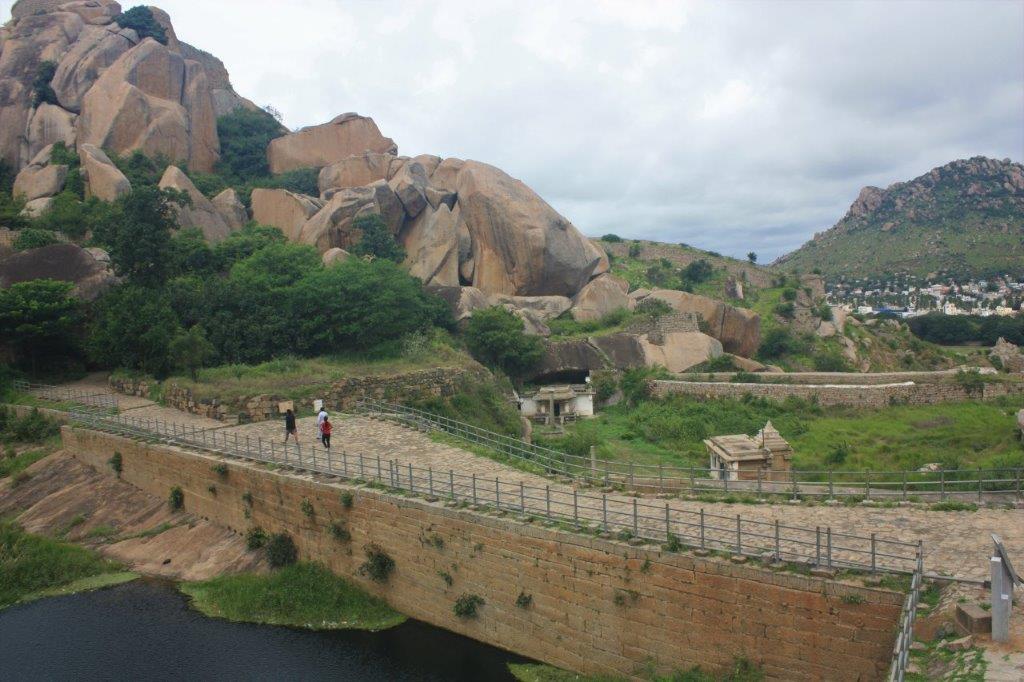
DAILY PHOTO: Dhavalappan Giri

Taken near Chandravalli Cave on September 10, 2021

BOOK REVIEW: Poetry and Prose of the Tang and Song [Trans. by Yang Xianyi & Gladys Yang]

Poetry and prose of the Tang and SongPoetry and prose of the Tang and Song by Yang Xianyi
My rating: 5 of 5 stars

Amazon.in Page

This collection includes works from eighteen prominent poets and writers from the Tang (618-907 AD) and Song (960 – 1279 AD) Dynasties of China. Among the most famous of the included authors are: Wang Wei, Li Bai, Du Fu, Bai Juyi, Wang Yucheng, and Su Shi. The included works (mostly poems but including some brief prose writings) explore subjects such as nature, social justice, patriotism, travel, and drinking. If some of those topics surprise you, you’re not alone. I may be letting my biases show, but I was surprised by how much social outrage and humor was contained in these works from the China of 750 to 1,400 years ago. That said, most of the works do present the kind of sparse imagist depictions of natural scenes one would likely expect from Chines poets in days of yore. (Think haiku, but longer — though no less devoid of analysis or judgement.)

As someone who isn’t an expert on Chinese literature or even a speaker of any of the Chinese languages, I can’t comment intelligently on how precise the translations are. However, the English language versions contained in this volume are evocative, clever, and, occasionally, funny.

To give one an idea of the kind of humor, I’ll offer this quote from a poem by Xin Qiji:

Last night by the pine I staggered tipsily
And asked the pine, “How drunk am I?”
When I imagined the pine sidling over to support me,
I pushed it off saying, “Away!”


I enjoyed this collection, and would highly recommend it.


View all my reviews

BOOK REVIEW: The Aleph by Jorge Luis Borges

The Aleph : including the prose fictions from The MakerThe Aleph : including the prose fictions from The Maker by Jorge Luis Borges
My rating: 5 of 5 stars

Amazon.in Page

This book contains the seventeen stories of The Aleph, plus about twenty short pieces of prose fiction from The Maker. Borges was one of the best writers of the twentieth century. His writings are mystical, philosophical, imaginative, provocative, compact, and thick with ideas and references to great literature from Don Quixote to Shakespeare to Greek Mythology. Much of Borges work has a fantasy / speculative component, but it never feels like it’s for its own sake, but rather to convey ideas of a philosophical, psychological, or spiritual nature. One might think that such short writings by a man who was clearly obsessed with a few key ideas (e.g. libraries and labyrinths) would get stale, but far from it.

The collection known by its titular final story (i.e. “The Aleph”) makes up the bulk of the book, and offers some exceptional stories – e.g. “The Other Death,” “Deutsches Requiem,” “The Man on the Threshold,” and, of course, “The Aleph.” The stories engage the readers with issues like mortality, fate, courage, and mystery.

The pieces from “The Maker” are short, few more than a couple pages and some just a paragraph. The most famous piece included is probably the brilliant “Borges and I,” but other important pieces include “The Maker,” “Everything and Nothing,” “The Yellow Rose,” and “The Witness.”

The book has notes and back-matter by the translator / editor, which can be useful for readers who aren’t acquainted with Latin America or the broad canon of classic literature Borges regularly references.

I’d highly recommend this for those who enjoy though-provoking, philosophical fiction. It is a thinking person’s read, but yet many of the pieces are highly engaging as stories.

View all my reviews

Swallowtail [Kyōka]

a swallowtail lands;
crashed into by another,
it doesn't flinch;
ten feet away, I lean in
and it flutters away