Unknown's avatar

About B Gourley

Bernie Gourley is a writer living in Bangalore, India. His poetry collection, Poems of the Introverted Yogi is now available on Amazon. He teaches yoga, with a specialization in pranayama, and holds a RYT500 certification. For most of his adult life, he practiced martial arts, including: Kobudo, Muay Thai, Kalaripayattu, and Taiji. He is a world traveler, having visited more than 40 countries around the globe.

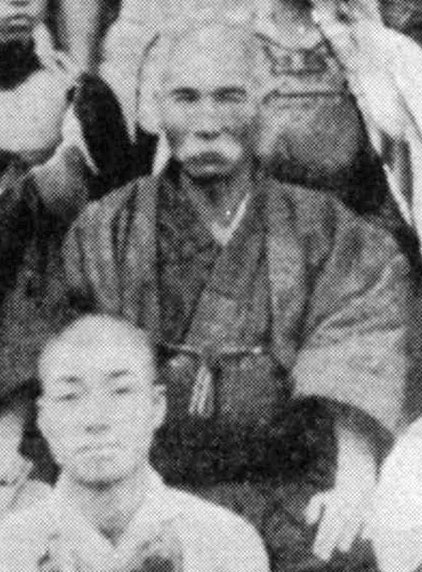
“Ankō” Itosu Transforms a Thug

Source: "The Okinawan Times" February 28, 2006

Source: “The Okinawan Times” February 28, 2006

One day Yasutsune “Ankō” Itosu walked down to the waterfront to have lunch at a local restaurant. As the renowned karate master rounded a corner, a ruffian leapt forward, launching a punch at Itosu-sensei’s midsection. The elderly Itosu subtly shifted his position and the punch glanced harmlessly off his ribs. But Itosu trapped the thug’s arm before the young man could retract it. Pivoting to face the same direction as the young hoodlum, the karate teacher scanned his surroundings seeing that the young man had friends nearby, but they weren’t coming to his assistance.

Maintaining a vice-like grip on the young man’s forearm, Itosu-sensei switched the arm under his other arm–attacking pressure points as he did.

Establishing control and taking the fight out of the young man with jolts of pain, Itosu said, “Come join me for lunch, we have much to talk about. But first, what is your name.”

“Kojo, everybody calls me Kojo,” the young man said through gritted teeth

“Pleased to meet you, Kojo. My name is Ankō Itosu,” the karate master said.

Itosu led Kojo into the restaurant. At a cursory glance it looked like the older man was walking arm-in-arm with the younger. The two sat down side-by-side.

“So, Kojo, do I know you? Have I done something to lead you to give an old man such a start?” Itosu asked.

“No. My friends dared me. They told me you were Itosu-sensei. We often come down here to test our skills,” Kojo explained.

“And how does your karate teacher feel about this?” Itosu asked.

“Uh… well, I don’t have a teacher,” Kojo replied.

“Ah. Then that’s the problem. You’ll become my student. Your technique could use improvement, and you need to stop this brawling, and especially stop trying to scare old men,” Itosu explained as he released the young man’s arm.

Kojo was taken aback, but didn’t dare turn down the teacher’s offer. He never brawled again, and eventually became a committed student.

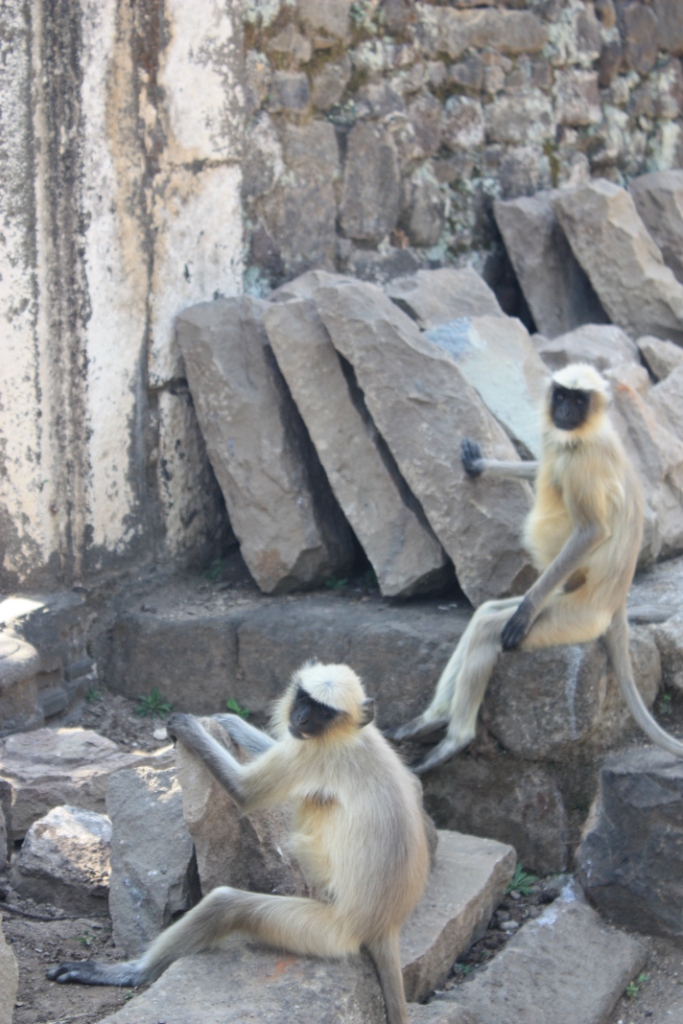
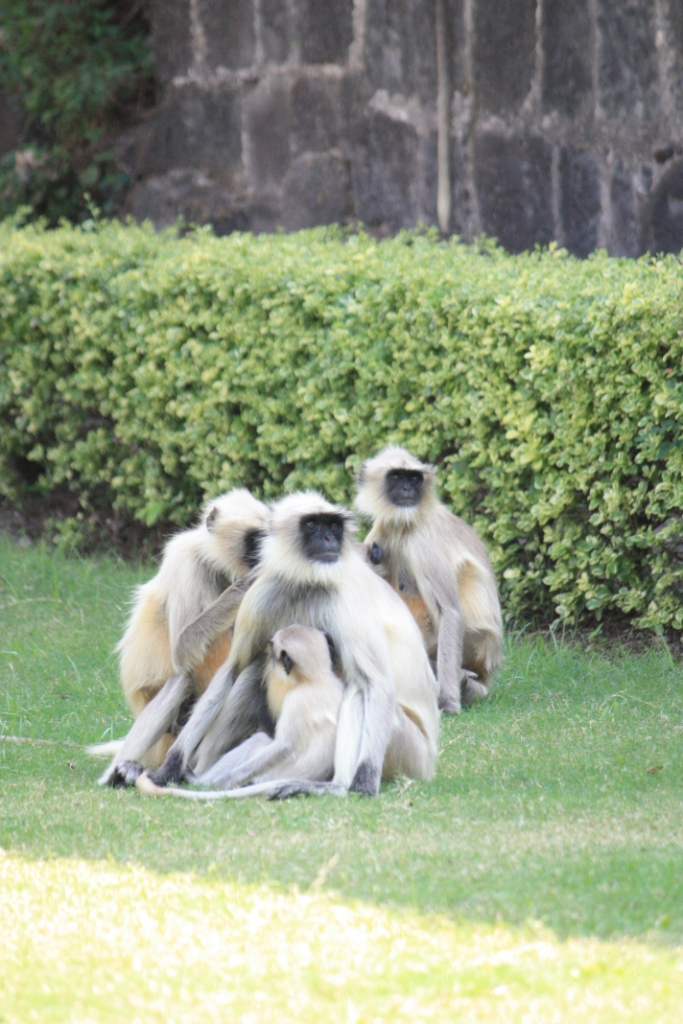
DAILY PHOTO: Gray Langurs Sittin’ Around

Taken in November of 2014 at Daulatabad Fort

Taken in November of 2014 at Daulatabad Fort

IMG_1170

DAILY PHOTO: Loofah Time Elephant Style

Taken in May of 2015 at Millennium Elephant Foundation in Kegalle, Sri Lanka

Taken in May of 2015 at Millennium Elephant Foundation in Kegalle, Sri Lanka

IMG_0067

DAILY PHOTO: Gaiety Theater

Taken in June of 2015 in Shimla

Taken in June of 2015 in Shimla

IMG_2717

BOOK REVIEW: The Sky Unwashed by Irene Zabytko

The Sky UnwashedThe Sky Unwashed by Irene Zabytko

My rating: 4 of 5 stars

Amazon page

The Sky Unwashed is a character-driven novel, telling the story of an elderly pensioner residing a few miles from the ill-fated Chernobyl nuclear plant. The protagonist’s name is Marusia, and she lives with her beaten-down son Yurko, his cheating wife Zosia, and the dysfunctional couple’s children (her grandchildren.)

The first part of the novel is a bit of a slog, though the character portraits of the adult family members may be enough to keep one intrigued if one enjoys being pulled into a dysfunctional Ukrainian village household. (The first part is a bit like “Jerry Springer—Ukraine Edition.”) Zosia’s unfaithfulness provides the main source of tension, but that tension is a quiet one between Marusia and Zosia. Yurko knows about his wife’s infidelity, but doesn’t seem to care–or doesn’t seem to be able to muster the energy to make the appearance of caring. Marusia, on the other hand, is the doting mother who feels that her doofus son could do better, but she bites her lip as she doesn’t feel it’s her place.

It’s the Chernobyl meltdown that kicks the novel into interesting territory. One is shown how tragedy can bring out the best and worst in people. Both Yurko and Zosia have jobs at the plant, but it’s Yurko who’s working when the incident occurs, and it’s he who gets a dose of radiation that will prove lingeringly fatal. Interestingly, the reader isn’t taken into the plant often. We don’t see Yurko fighting the fires, but rather we see the family in the village Starylis. We experience the family first noticing Yurko’s failure to return and then becoming increasingly concerned. We see the family noticing the subtle signs of something gone awry—like air that tastes of pennies.

Starylis’s occupants—including Marusia’s family–are eventually evacuated to Kiev. It’s here that we see how events press the once hostile family together before ultimately tearing them apart. The Zosia we found unpalatable in the first part is now seen in more sympathetic terms. We see her at her best and her worst, and we see that in sum she is a survivor. Her behavior, good and bad, is committed saving the remainder of her family—which is her children.

The truly visceral part of the novel is reached when Marusia opts to move back to Starylis, despite the fact that it’s abandoned. At first, the elderly woman is completely alone. It’s the eerie loneliness of an abandoned place that one once knew as a thriving community. Even the livestock Marusia left behind is long gone. Her daily ritual includes ringing the church bells to let any other stragglers know they aren’t alone. Eventually, she befriends a cat gone feral, and shortly thereafter others begin to trickle back to the village—virtually all of them women.

In retrospect it seems the author might not have been comfortable writing male characters. The only male character of note is Yurko, and he’s by far the most flat of the major characters—that’s probably on purpose and it feels true enough. The only other male character we get to know in any detail is quickly killed off. Given all the male-dominated works of literature, this isn’t necessarily a complaint or a problem—just an observation.

I’d recommend this book for the patient. If you need a hard and fast hook to keep you engaged, you’ll have trouble with this book. However, once one gets into the parts set in Kiev and the abandoned Starylis, you’ll find the book intensely engaging.

View all my reviews

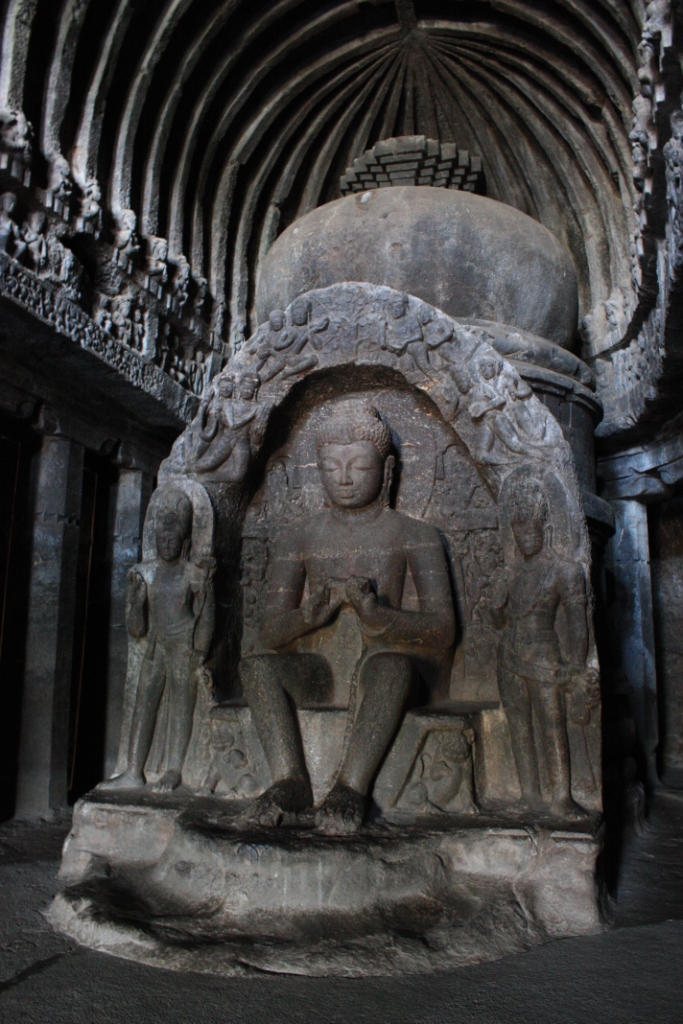
DAILY PHOTO: Buddha in a Cave

Taken in November of 2014 in Ellora Caves

Taken in November of 2014 in Ellora Caves

DAILY PHOTO: Shrine Amid Boulders

Taken in November of  2013 at Hampi

Taken in November of 2013 at Hampi

STORY: The Most Inaccessible Place of All

I ran across this little story quoted in an academic paper while I was doing research for a writing project. It was written by Dorothy Gilman in a book called A Nun in the Closet. At any rate, I found it clever and thought you might as well. [I’m assuming that Gilman made this story up, rather than borrowing an old folktale–but that–as with all assumptions–could be wrong. Please feel free to correct me if you know otherwise. If she did come up with it from scratch, she perfectly captured the folktale.]


brain


“Once upon a time, [Bhanjan Singh, a guru-like character in the book] said, when God had finished making the world, he wanted to leave behind Him for man a piece of His own divinity, a spark of His essence, a promise to man of what he could become, with effort. He looked for a place to hide this Godhead because, he explained, what man could find too easily would never be valued by him.


“Then you must hide the Godhead on the highest mountain peak on earth,” said one of His councilors.


God shook His head. “No, for man is an adventuresome creature and he will soon enough learn to climb the highest mountain peaks.”


“Hide it then, O Great One, in the depths of the earth!”


“I think not,” said God, “for man will one day discover that he can dig into the deepest parts of the earth.”


“In the middle of the ocean then, Master?”


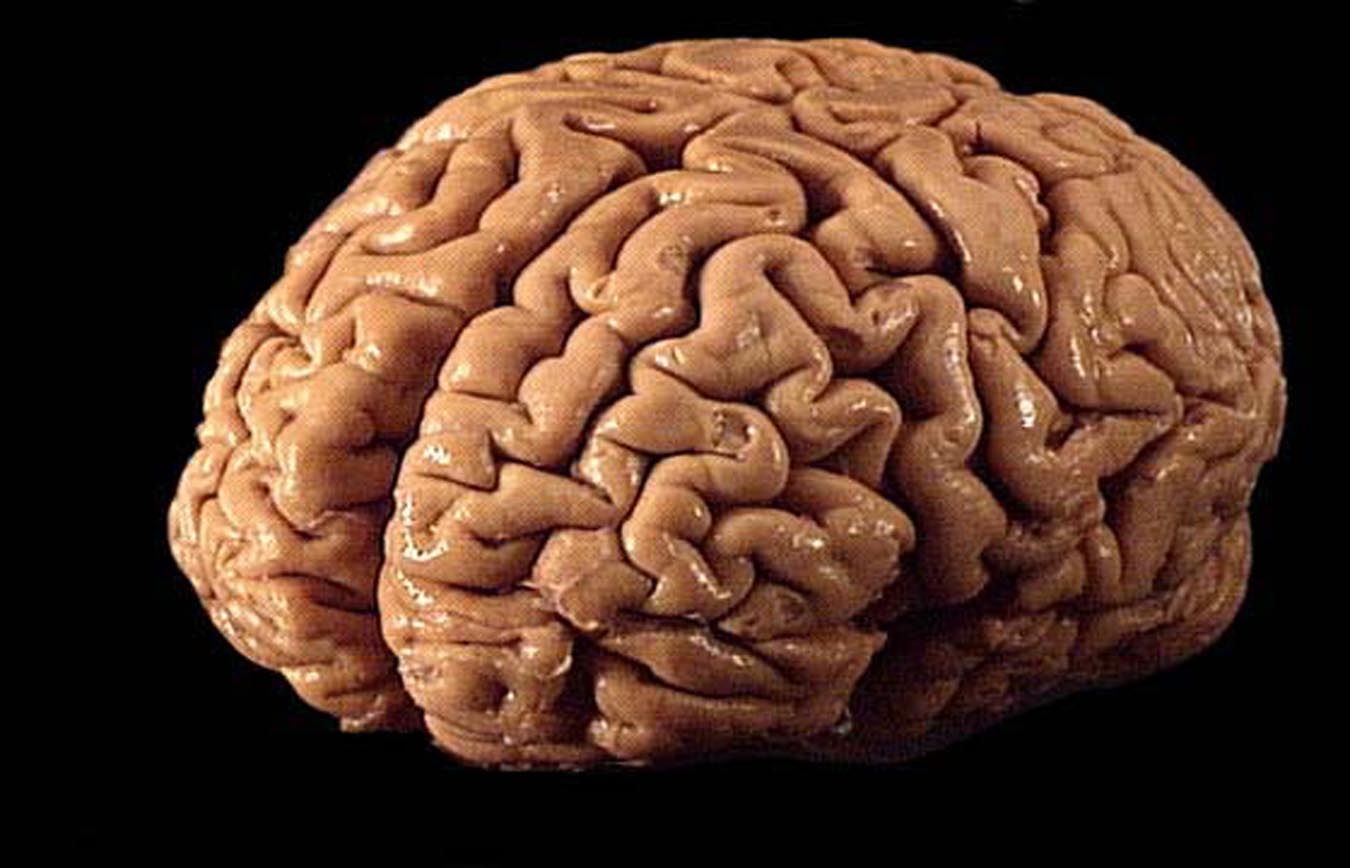
God shook His head. “I’ve given man a brain, you see, and one day he’ll learn to build ships and cross the mightiest oceans.”


“Where then, Master?” cried His councilors.


God smiled. “I’ll hide it in the most inaccessible place of all, and the one place that man will never think to look for it. I’ll hide it deep inside of man himself.”

DAILY PHOTO: Stupa Row in Wat Po

Taken in September of 2014 at Wat Pho in Thailand

Taken in September of 2014 at Wat Pho in Thailand

DAILY PHOTO: Mountain Scene

Taken in June of 2015 in Great Himalayan National Park

Taken in June of 2015 in Great Himalayan National Park