Unknown's avatar

About B Gourley

Bernie Gourley is a writer living in Bangalore, India. His poetry collection, Poems of the Introverted Yogi is now available on Amazon. He teaches yoga, with a specialization in pranayama, and holds a RYT500 certification. For most of his adult life, he practiced martial arts, including: Kobudo, Muay Thai, Kalaripayattu, and Taiji. He is a world traveler, having visited more than 40 countries around the globe.

What Are Your Thoughts on “Dick Move Mondays” in a Dojo?

Going rogue with attacks

Gone rogue

So, the whole “dick move Mondays” concept may require clarification. First of all, some readers may be saying, “Every day is dick move Monday at our dojo.” However, readers who train at more orthodox schools may be wondering how such an apparently ludicrous idea would even come up. The idea’s origins are the result of seeking a martial art’s correlate to the “bad pass Fridays” that have been instituted in many basketball practices in recent years. On “bad pass Fridays” coaches give players passes that are catchable–but just barely. I’ll get into the scientific argument for this kind of training below, but for now suffice it to say that the idea is to have regularly scheduled instances in which the individual is taxed to his or her limits and forced to try to cope with worst case scenarios. While there needs to be some limitations for safety’s sake, I’ll argue that there’s some advantage to applying this concept from the sports science and motor learning literature to martial arts training. [Note: if your objective in practicing martial arts has nothing to do with being able to succeed in the context of a sporting match, an actual combat situation, or both (i.e. a situation in which an opponent is trying to clobber you and vice versa) then this isn’t really relevant to you. But feel free to read it any way.]


Here’s some low-down on the science. Historically, it’s been popular to teach / coach sports (and non-sport martial arts) using a “partial and blocked” approach. This method is extremely popular because: a.) it’s simple to organize and conduct practice sessions, b.) short-term growth is rapidly visible, and c.) it looks neat and tidy. “Partial” means that a particular skill (or even sub-skill) is extracted from the overall skill set of the activity at hand and practiced in isolation. This could be a throw, a strike, or a means of receiving or defending. “Blocked” practice means that one skill or sub-skill is practiced over and over again under the exact same conditions until it’s deemed time to move onto the next. “Whole and random” practice represents the opposites of “partial and blocked.” “Random” means that one drills a skill under an ever-changing situational context (e.g. one may still be drilling hip throws repetitively, but not against a static partner who’s standing in the same place–there’s movement and pushing and pulling, and possibly a few dick moves.) “Whole” practice simulates the actual event that one is practicing for–whether it’s a Muay Thai match or a parking deck brawl.


For a good explanation of the problems associated with blocked practice, watch the video by Trevor Ragan of “Train Ugly” that’s linked below. (fyi: “Train Ugly” is an apropos name for an approach that involves more “whole and random” practice because there will be more short-term failure and one won’t look masterful at what one is doing by the end of a practice session. However, long-term skill retention and the ability to integrate those skills and sub-skills into a more realistic environment is higher.)

As Ragan points out, the random approach requires one read the situation and environment and respond in a way that won’t leave one worse off. (I don’t like the word “planning” applied to martial arts because there’s never time to do any planning in the sense of using one’s conscious mind. However, I’d say reading is a very apropos concept, and there is a need to adjust to one’s context.)

So what would “whole and random” training look like in a martial art? First of all, one should realize that one doesn’t need to make every training session “whole and random” from the very beginning. In the beginning a lot of “partial and / or blocked” practice is necessary. The problem is that if one doesn’t ever move beyond that, one’s performance will be hindered. Second, all practice doesn’t have to be both whole and random; one can spend a lot of time with random drilling of a particular skill. One can drill a particular skill while moving around freely, applying counters, making timing more random, and making the approach less regimented. “Whole and random” practice in the martial arts involve sparring or randori. Jigoro Kano did a brilliant thing in making the techniques and practice environment safe enough that randori (free form) training became possible. For many years, I would have said that Kano Sensei made a system that was less “realistic” by paring out the dangerous elements of jujutsu. However, today I don’t see it that way. I’ve come to realize that the ability to train randori keiko actually added back in a great deal of realism. Who’s to say what the net effect on realism is. I certainly see the advantage over the old way in which one trained in a regimented fashion devoid free form components for years and then one day one went out on musha shugyō (warrior’s errantry) and may be the day you learned of a deficiency in your technique was the day you died.

So “dick move Mondays” is really a way to add randomness into training. One can’t ignore the reading portion of the attack because one never knows what whacky ass attack one’s opponent is going to come up with.

If you do implement “dick move Mondays” in your school or gym, you may want to review this instructional video by Master Ken because the “bitch slap” is sure to enter into your training.

[Disclaimer: Master Ken video included as farce. Readers are advised not perform any techniques suggested by Master Ken or his Amer-i-do-te practitioners.]

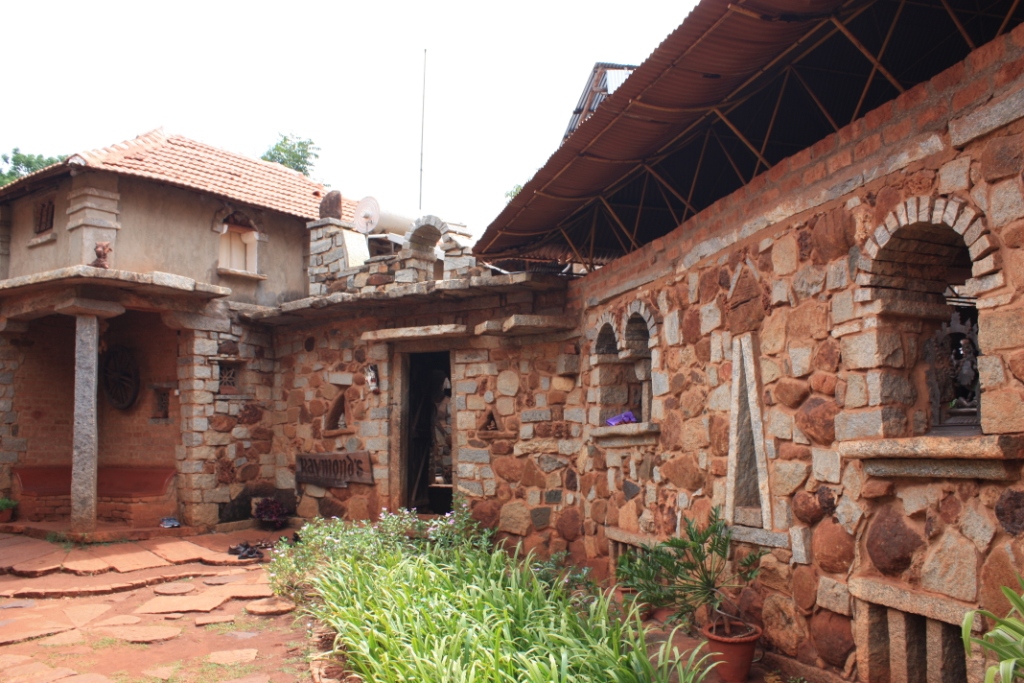
DAILY PHOTO: Nrityagram Dance Village

Taken on August 8, 2015 at Nrityagram

Taken on August 8, 2015 at Nrityagram

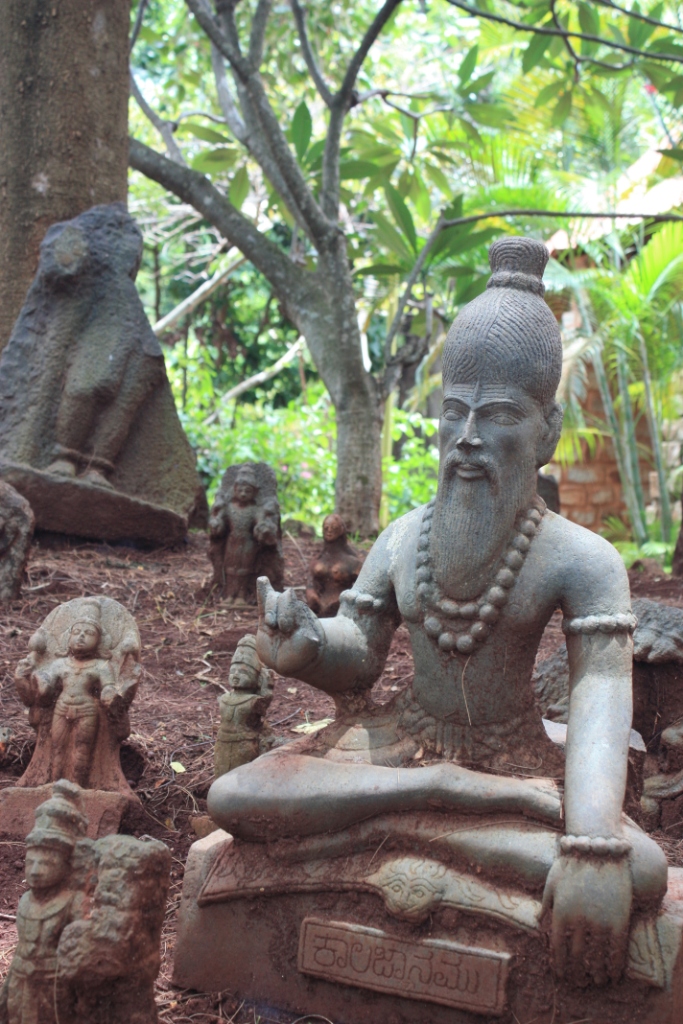
DAILY PHOTO: Shiva at Nrityagram

Taken on August 8, 2015 at Nrityagram.

Taken on August 8, 2015 at Nrityagram

I’m a neophyte with respect to Hindu iconography–plus I read no Indian languages, so I may be wrong about this being a Shiva. Shiva is usually depicted clean-shaven, but I’ve seen bearded images. I mostly based my conclusion on the tiger skin (or stylized representation thereof) that he’s sitting on, which is often associated with Shiva.

Shiva is part of the Hindu trinity, which also includes Brahma (the creator) and Vishnu (the sustainer.)  This leaves Shiva, the destroyer.

If you’re someone who actually knows about such things, and know I’m wrong, please drop me a comment to let me know.


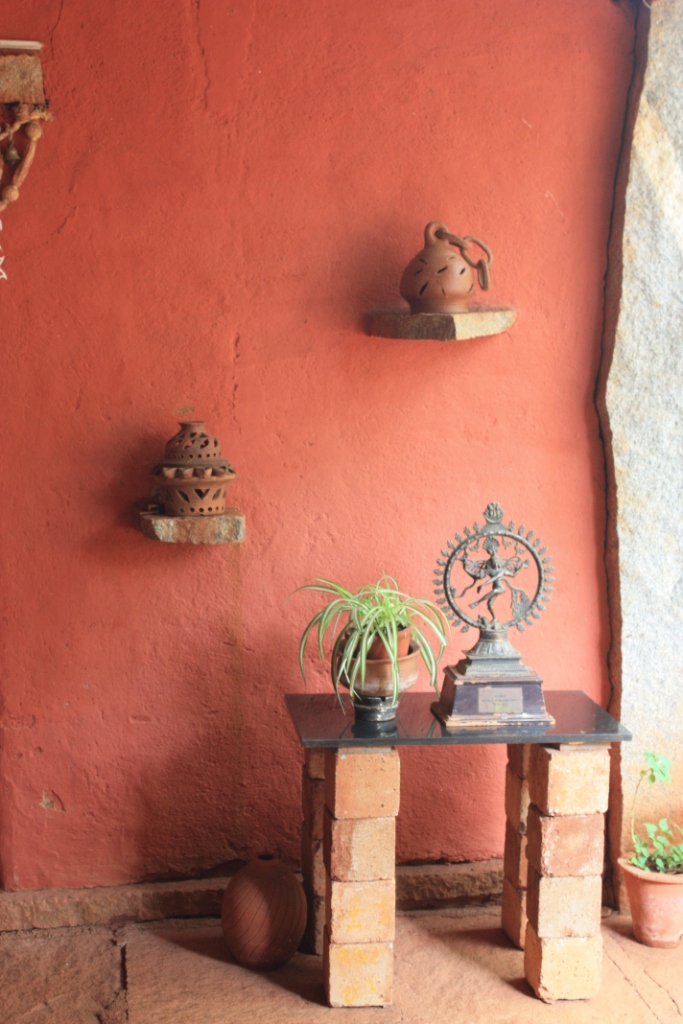
DAILY PHOTO: Red Wall at Nrityagram

Taken on August 8, 2015 at Nrityagram

Taken on August 8, 2015 at Nrityagram

BOOK REVIEW: Faster, Higher, Stronger by Mark McClusky

Faster, Higher, Stronger: How Sports Science Is Creating a New Generation of Superathletes—and What We Can Learn from ThemFaster, Higher, Stronger: How Sports Science Is Creating a New Generation of Superathletes—and What We Can Learn from Them by Mark McClusky

My rating: 4 of 5 stars

Amazon page

McClusky’s book tells us how advances in sports science and technology are producing a new class of elite athlete. More usefully, it discusses which practices of high-level athletes can reasonably be emulated by amateurs. One may think that what’s good for the goose is good for the gander. In this case, not so much. If shaving a hundredth of a second off your time isn’t going to affect your life’s course, there are many activities of elite athletes that simply aren’t worth the cost (in whatever terms.) For example, the loss of friendships due to rampant flatulence resulting from consuming large quantities of baking soda isn’t worth it if you just want a little bit stronger Sunday cycling ride. (Baking soda [sodium bicarbonate] counteracts blood and muscle acidification during exercise and makes it possible to keep moving strongly when fatigued would normally degrade performance. Incidentally, this practice has been shown to be effective only for events that last between one and seven minutes.) On the other hand, some of the lessons of sports science are relatively low-cost and high benefit, and might be just what one is looking for to improve one’s performance. (e.g. Replacing a pre-workout stretching routine with one of rolling out the muscles.)

Faster, Higher, Stronger consists of twelve chapters, each addressing a different aspect of the application of science and technology to sport, including: training methods, genetics, nutrition, recruitment, practice, performance enhancing substances (legal and illegal), elevation training, and the limits of performance.

One question that has always been of great interest is how much of a top athlete comes from his or her genes? In other words, can anyone can do it–given a willingness to work like a maniac of course. As with many other questions about heredity, it was once thought that there would be a precise answer to this question in the wake of the decoding of the human genome. However, the success of the human genome project showed only that the situation was vastly more complex than we’d imagined. It turns out that having certain genes isn’t the end of the story because there are many factors that influence which genes are expressed. Attempts have been made to put numbers to the influence of genetics. For example, one scientist is quoted as claiming that 50% of oxygen processing capability (i.e. VO2 max) is heritable. This translates to the fact that, while the average Joe has a reasonable chance of engaging in athletics at some level, only a 0.1 to 0.3 % can summit the pinnacle of elite level athletics.

In many ways, science has encouraged coaches, trainers, and recruiters to think outside the box—and to look beyond the traditionally engrained approaches. One fascinating story was that of how the British national rowing team held tryouts based only on height, with experience with the sport being not required. They ended up with a champion rower who’d first entered a boat only four years before. This is part of the evidence that controverts the once popular 10,000 hour rule that was popularized by Malcolm Gladwell–though Anders Ericsson is more properly considered the father of the idea. It turns out that 10,000 hours of practice aren’t required for most activities if one goes about it right.

McClusky spends a considerable amount of space on the questions of what athletes should and shouldn’t consume. In emulating elite athletes many amateurs are working at cross purposes. This is readily seen with the issue of sports drinks. If you’re guzzling down a Gatorade or snacking on Cliff Bars after your run, you may only be ensuring that you continue to gain weight despite working out. On the other hand, you may decide that chocolate milk or beet juice are good choices for you.

I’d recommend this book for those interested in the heights of human performance.

View all my reviews

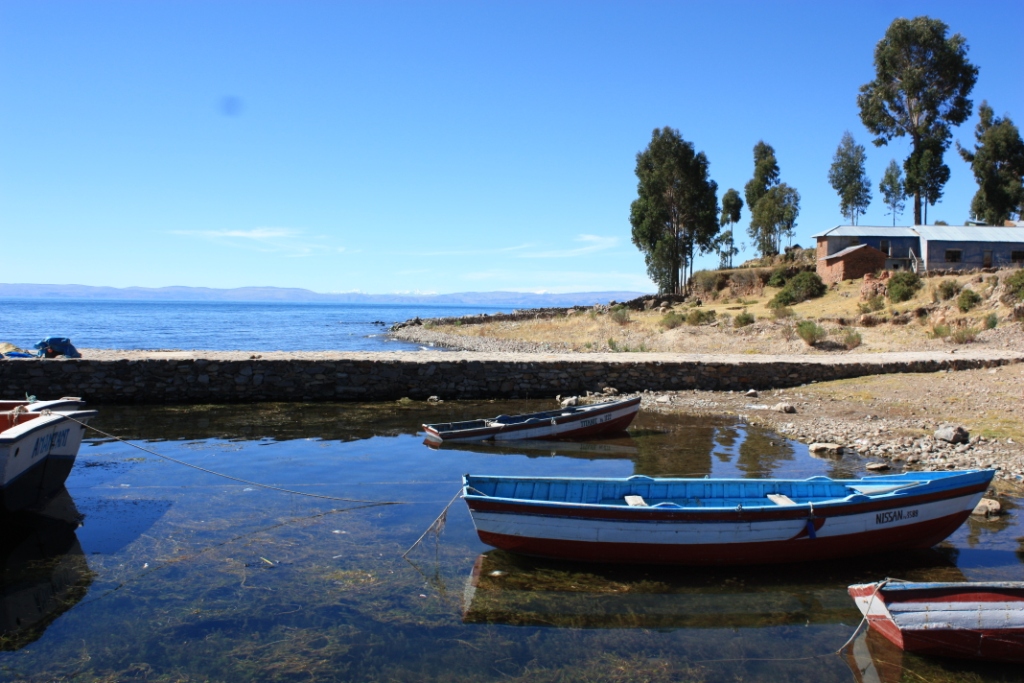
DAILY PHOTO: Amantani Jetty

Taken in July of 2011 on Amantani Island

Taken in July of 2011 on Amantani Island

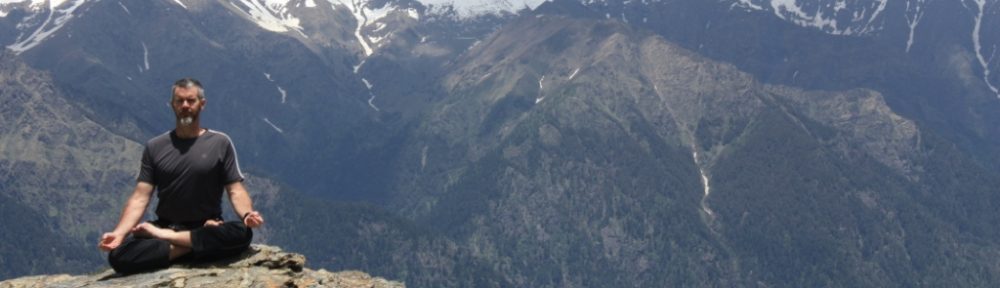
DAILY PHOTO: Across a Great Valley

Taken in June of 2015 in Great Himalayan National Park

Taken in June of 2015 in Great Himalayan National Park

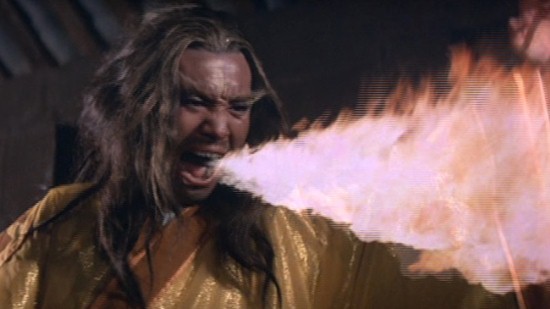
DAILY PHOTO: Fire Handler

Taken in May of 2015 in Kandy

Taken in May of 2015 in Kandy

IMG_0474


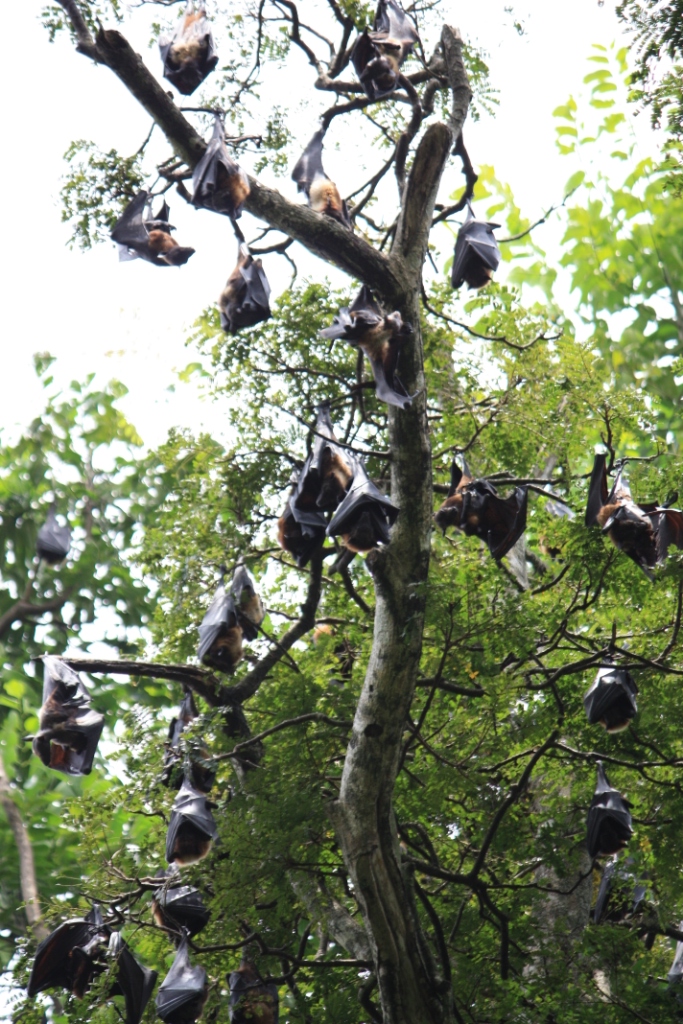
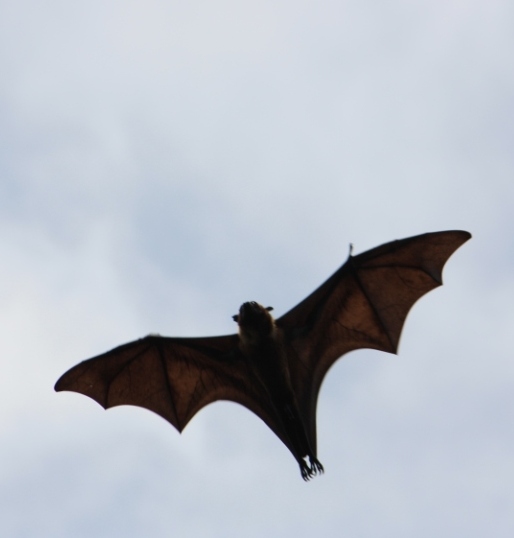
DAILY PHOTO: Bats

Taken in May of 2015 in Sri Lanka

Taken in May of 2015 in Sri Lanka

IMG_0279

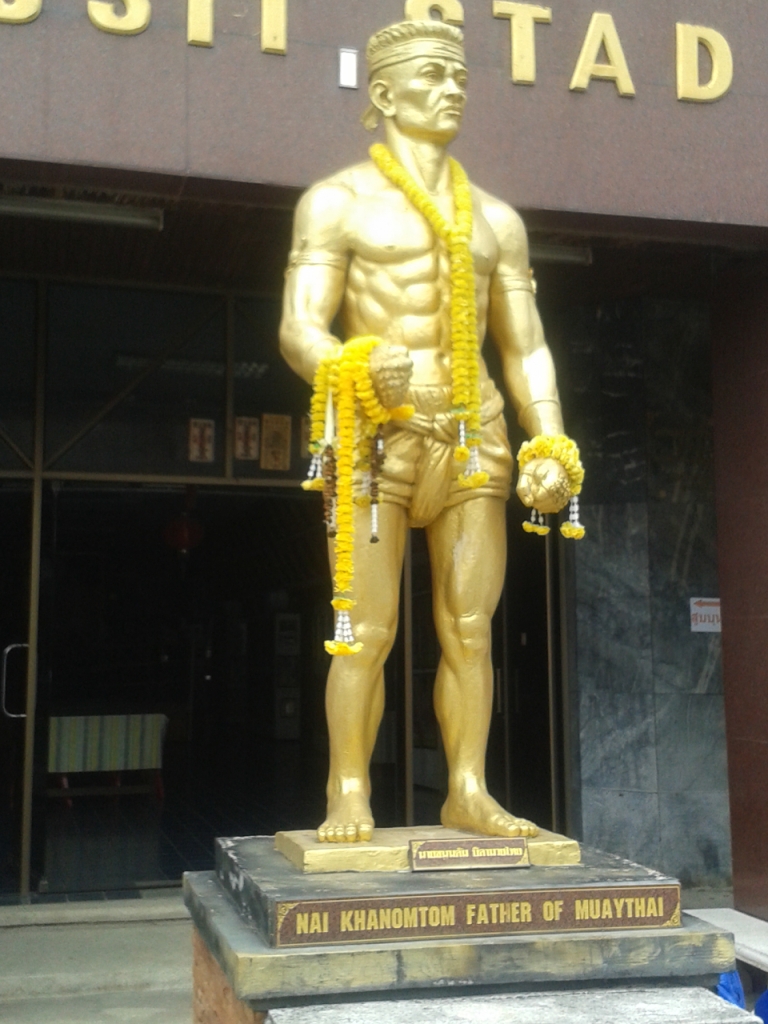
The Legend of Nai Khanomtom: Hero of Muay Thai

?????????????

Muay Thai Institute in Rangsit, Thailand

In 1767 the Ayutthaya Kingdom of Siam fell to the Burmese. Burma occupied Siam only briefly because Burma’s king, King Hsinbyushin (a.k.a. King Mangra), was forced to withdraw his troops to combat a Chinese invasion to his homeland. The Thais were fabled to be valiant fighters and even had a numeric advantage, but they were easily put into disarray by Burmese forces. Even King Mangra was said to have declared that he couldn’t have taken Ayutthaya had the leadership of the opposition been more effective. [Keep in mind that even if he did say this, it might have been more a dig at his Thai counterpart than an expression of his true feelings.]

The Burmese captured a many prisoners during their Thai campaign and true warriors were particularly coveted as prisoners. One such fighter was Nai Khanomtom (fyi: it’s also written Nai Khanom Tom.) Nai Khonomtom was renowned for his skill in Muay Boran, an early Thai fighting style related to Muay Thai. This made him a logical choice to headline for the Thais in a tournament that would pit Muay Boran against Thiang–i.e. the indigenous martial arts of Burma (e.g. Lethwei and Bando.) The tournament would be part of King Mangra’s seven day festival in honor of Buddhist relics, the festivities of which would also include plays, comedians, and sword fights.

Nai Khanomtom was pitted against a Burmese champion, a man who was clearly the audience favorite. Timed rounds didn’t exist in those days. Fights stopped when one of the fighters was physically unable to continue, and not before. The Burmese fighter wore a kind of sarong that was the usual attire for the men of Burma, and Nai Khanomtom wore a loin cloth tied up in the traditional Thai style (see the statue pic above.) Each fighter wrapped only ropes on their forearms and hands, and each may have had some padding over the groin–though not as insurance against an accident, but because crotch kicks were fair game.

Nai Khanomtom began with a Wai Kru, which perplexed the Burmese. Wai Kru is a pre-fight ritual that has several purposes, the most important of which is to show respect for one’s teachers, deities, and the audience. The practice can take several minutes and some variants of it can be physically demanding.

When the fight started, Nai Khanomtom charged over the fight space taking the fight to his opponent and laying down a barrage of kicks, knees, elbows, and punches. By some accounts, his victory was declared invalid by a judge, who’d been distracted by other festival events (and who–no doubt–wasn’t pleased by the swift defeat of the Burmese champion.) The decision was made despite the fact that the Burmese fighter had been knocked unconscious.

The King was thrilled by the fight and offered Nai Khanomtom his freedom if he could fight nine more Burmese fighters. Nai Khanomtom didn’t get breaks between these fights, and as soon as an opponent went down the next was queued up to come after the Thai fighter. And so it was that Nai Khanomtom took on the Burmese fighters in an ironman fashion. The last of his opponents was a famous martial arts master teacher from Rakhine, a coastal region in Burma’s southwest. Nai Khanomtom went after the Rakhine master with flurry of kicks. It’s worth noting that in those days Burmese fighters were said to have relied much more heavily on hand strikes than kicks, and so the kicks may have given Nai Khanomtom a range advantage while presenting his opponent with attacks that the Burmese fighter was less practiced at defeating.

At the fight’s end, King Mangra honored his agreement, and Nai Khanomtom was granted his freedom and provided safe-conduct back to Siam. There are varying accounts that say that Nai Khonomtom returned home with either two Burmese wives or a number of his fellow prisoners as an additional payment for providing a spectacle that the Burmese king found gripping. In these accounts, Nai Khanomtom is usually said to have turned down a cash payment.

There’s a quote that’s often attributed to King Mangra that goes, “Every part of the Thai is blessed with venom, even with his bare hands he can fell ten opponents.” [FYI-It should be noted that seeing the same words quoted by several sources isn’t proof of truth, because the quotes could have a common (and false) point of origin.  So take it all with a grain of salt.]

[Note: The details of this story vary. So you may hear–or have heard–a slightly different version of events. The exact details are likely lost to history and–when that happens–embellishment may creep in. That said, the variations that I’ve heard are neither great nor particularly significant. It’s also worth noting that these events are celebrated in Thailand every March 17th on what is called Boxer’s Day or National Muay Boran Day.]