In Medias Res [Free Verse]

Journeys start with a cattle-prod jolt 
& a kick in the soul --
not at an airport,
or a ferry dock,
or a taxi stand,
or at the curb.

By the time you've gotten that far,
you're already traveling.

By the time you've "decided" to go,
you're already traveling. 

Travel begins earlier,
if in the dark,
because travel is not a dream,
&
only dreams start 
in the middle of nonsense.

Real life flows down 
a continuous and unbroken
stream of nonsense, 
drifting at a rate slow enough 
for your brain to make a movie of
rationalizations,
so that your brain can tell you: 
that you're in control,
that you know what's going on,
that you know what will happen next,
&
assorted and sundry bullshit like that. 

Chicory Dance [Haiku]

chicory -
its little blue flowers sway,
 dancing with stems

DAILY PHOTO: Elephants & Cattle Egrets

Taken in May of 2017 in Amboseli National Park, Kenya

BOOK REVIEW: The Transcendentalist by Ralph Waldo Emerson

The TranscendentalistThe Transcendentalist by Ralph Waldo Emerson
My rating: 5 of 5 stars

Amazon.in Page

Free Online: Emersoncentral.com

In this short essay (about ten pages,) Emerson lays out an argument for Idealism over Materialism, and then contends that it’s reasonable to excuse oneself from the economic and civic aspects of society in favor of a simple life of introspection. [e.g. As Thoreau did in his years at Walden Pond.]

Emerson opens by suggesting that Transcendentalism is just Idealism by a different name. Idealism being a philosophical stance which puts consciousness at the fore while proposing that there is something beyond [that transcends] our experience of sensory information. The arguments put forth in favor of Idealism include the fact that sensory illusions exist and the Kantian critique of Locke’s view that there’s no more to the intellect than that which is or was sensory experience; Kant argues that there’s intuition. Kant’s influence is considerable, and Emerson explains that even the term “Transcendentalism” is derived from Kant’s use of the term “transcendental.”

The latter part of the essay echoes Emerson’s masterwork, the essay “Self-Reliance.” It proposes that it’s perfectly laudable to take advantage of the greatest gift one has, one’s consciousness, to introspect and indulge one’s need to better understand.

I may have mixed views on Emerson’s ideas, but one can’t say he doesn’t use language and reason and passion to make compelling claims. I found this brief essay to be both thought-provoking and inspirational, and I’d highly recommend it.


View all my reviews

BOOK REVIEW: Comparative Literature: A Very Short Introduction by Ben Hutchinson

Comparative Literature: A Very Short IntroductionComparative Literature: A Very Short Introduction by Ben Hutchinson
My rating: 4 of 5 stars

Amazon.in Page

By the book’s end, I had a much better grasp of the field of Comparative Literature, which is a multidisciplinary subject concerned with comparing / contrasting various forms of literature across time and space (among other ways.) That said, it’s not one of the more friendly of books in this series for a neophyte in need of a grasp of the basics of a field. [I’m a big fan of the AVSI series, and frequently turn to it.]

I attribute the book’s problems to two factors. First of all, the first chapter didn’t feel like it really said anything, and I came away from it with the thought, “So, Comparative Literature is all the disparate things I thought it might be, and more.” I understand why there’s a desire for a broad overview upfront, but it would work better for a discipline that was more contained and orderly.

Second, while it might be the necessary way to tell the story of this discipline, the book spends a lot of space discussing comparisons between literary theorists and what felt like little in comparisons of works of literature. The challenge is that most readers come to such a book with an extensive understanding of major works of world literature, but few people outside the field are familiar with literary theorists and critics. A reader might expect to learn why and how “Don Quixote” would be compared to stories of Jorge Luis Borges or Ovid, but one learns more about how the ideas of Roland Barthes compare to those of George Steiner.

Once I got into the second chapter, I felt I was getting a little clarity on the subject and that the chapter was well organized for learning. In subsequent chapters, I found that there were many interesting ways of thinking about translation of literature, the debates in the field, and the competing ideas about discipline’s future. The book also has a useful further reading section that breaks down the various dimensions of comparative literature a little so that interested parties can find a line of attack to advance their studies.

Ultimately, I think the book helps one get a grasp of the subject, but I’d skip over the first chapter and then go back to it once one has a little confidence that there will be clarity rather than obscurity in store.


View all my reviews

DAILY PHOTO: A Riverside Bar in Vang Vieng

Taken in January of 2019 in Vang Vieng, Laos

River Trance [Common Meter]

I sit on a green grass riverside,
watching brown waters flow.
Some karst monoliths stand behind
in which scrubby shrubs grow.

I feel my mind could be swept on
down to the sprawling sea,
while my body would stay behind
asleep with back to tree.

And panic and freedom both rise -
untethered from earth's hold.
As I see the future and the past
blended at the threshold.

And space, like time, has no meaning --
just an amorphous blob.
I awaken gasping spastically,
my pulse in a wild throb.

BOOK REVIEW: Fresh Out of the Sky by George Szirtes

Fresh Out of the SkyFresh Out of the Sky by George Szirtes
My rating: 5 of 5 stars

Amazon.in Page

This is a collection of nested poems and other short creative writings of varied formats. There are four sections in the book, each with parts and sub-parts. The titular work, “Fresh Out of the Sky,” consists of five parts, each having five parts in turn. It explores memories of an immigrant childhood and being “Citizens of nowhere.” [Szirtes was Hungarian born but his family moved to England in 1956, the year of the uprising that was brutally suppressed by the Soviets.]

The second section, “Inside the Yellow Room,” has an eerie surrealism to it that I found unexpectedly intense. The penultimate, “Going Viral,” touches on the present-day pandemic world while continuing to revisit memories in a hazy, ethereal sort of way. The last section, “Five Interludes” has the tightest interconnectedness of themes, touching upon breath, dreams, and the animal-human world at turns.

I enjoyed this collection, finding it evocative, phantasmagoric, and nostalgic.


View all my reviews

Cold Shore [Free Verse]

Was it a lifetime ago,
or was it a dream?

I remember it being a 
long drive to a cold shore.

And I sat alone
on that shore,
and I sought a shark --
not out in the waters,
but within myself. 

Finding nothing,
I felt the thing to do
was to 
rattle in rhythm with
the twisted hustle of
pounding waves,

and I awoke, 
shivering under piercing
points of light
that somehow felt cold,
& 
made me feel cold -
deep inside.

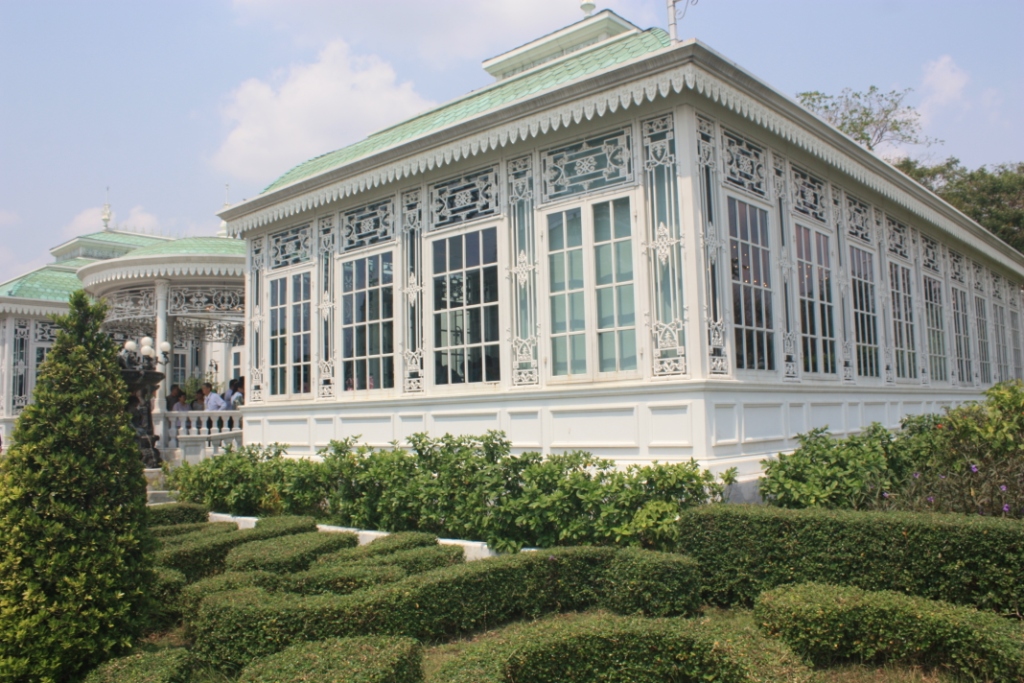
DAILY PHOTO: Three Scenes from Bangkok

Taken in May of 2017 in Bangkok