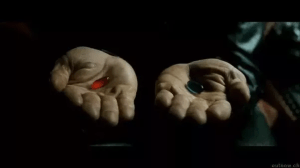
Aaaannd Buddha’d

“This is going on your permanent record, young man!”

“All is impermanent.”


“I want you to get up there and clean your room.”

“Desire is the root of all suffering.”


“There’s a big spider in the corner, kill it!”

“Nothing can harm you as much as your own thoughts.”


“My left sock has static cling.”

“You only lose what you cling to.”


“HELP! My sleeve got caught in this threshing machine.”

“No one saves us but ourselves. No one can and…[cringes]”


“I wonder where the Professor is, he’s usually not late.”

“When the student is ready, the teacher will appear.”


“I’m feeling like a jelly doughnut.”

“What we feel, we attract.”


“I’m thinking a jelly doughnut would be good, too.”

“What we think, we become.”


“I’m furious with you.”

“Holding onto anger is like drinking poison and expecting the other person to die.”


“Well, speak up. Explain yourself!”

“He who doesn’t understand one’s silence will probably not understand one’s words.”


“HELP! My sleeve got caught in this threshing machine.”

“Be patient. Everything comes to you in the… [cringes]”


“It’s time to take the trash out.”

“If anything is worth doing, do it with all YOUR heart.”


“No. I’m sorry, I can’t go to your Solar eclipse gala bash. I have to take my grandmother to chemotherapy.”

“Three things cannot be long hidden: the sun, the moon, and the truth.”

5 Ways to Fake It til You Make It

5.) Adopt a power posture: There’s been a lot of research in recent years suggesting that posture isn’t a one-way street–i.e. body doesn’t necessarily have to follow our mental state. One can reverse the flow, improving one’s mental state by adopting a strong  and confident posture.

One of the most thorough discussions of this phenomena is in Amy Cuddy’s book Presencewhich famously mentions the “Wonder Woman” pose. However, another widespread example is using the up-and-outward fist pumping posture that is widely seen among humans and even other primates (i.e. with arms outstretched as Usain Bolt is seen above.)


I got my eye on you

4.) Master eye contact: This is dreadfully difficult for an introverts such as myself. We tend to look anywhere but the eyes.

If one is traveling in risky places, it’s important to have a grasp of the fine art of eye contact. If one doesn’t make any eye contact, then one risks looking zoned out–potentially inviting aggression. If one rapidly  looks away, offering too short an eye contact period, one appears intimidated–potentially inviting aggression. However, if one’s eye contact is too long, it may trigger some primal fight impulse, or–at a minimum–suggest you have taken more interest in the individual–which may invite aggression. This means one has to balance a fine line that says, “I see you, you know I saw you. Now I’m going to do me and let you do you.”


3.) Adopt the opposing viewpoint:  Say you find yourself obsessing about some perceived slight or wrong.  While you want to address this issue, you want to be calm enough to avoid saying or doing something you’ll regret. You want to be seen as a sensible individual while being persuasive. The key is seeing both sides, and taking a moment to realize that your opposition is probably not the black-hearted villain of his own story. He likely has some reason for his behavior. Maybe it’s even a reason you can empathize with, given your own experience–i.e. being overworked and distracted, facing a decision that only allows for a best worst option, etc.


2.) Visualize it: It may seem as though anything that occurs solely in the mind can’t have that much force, but–in fact–it can. Visualizing can help one get over one’s anxieties. By systematically considering how events will unfold, one can break the cycle of worst-case scenario creation that the brain readily falls into. This will make an activity seem less intimidating and more manageable.


1.) Start small: Often when a person would like to be more kind or compassionate, she’s flummoxed or overwhelmed by the scale of the problem. She sees problems that she can’t make a dent in. So schedule one small act of kindness in a week or maybe a bigger one monthly, or as is possible. Do it, see its value, and be content.

One also sees a need for starting small with advanced physical practices. If you can’t do a yogasana or martial arts move, figure out what capacity building or modifications one needs to get to the end goal. Then take it on bit-by-bit. There are many videos on how to systematically build up to challenging maneuvers like the press handstand or planche, moves that almost no one can do with out a great deal of prep work.

POEM: Not All Journeys Have Routes; Not All Journeys Are Mapped

Struggling to give birth to bliss,

the proud parent fears it’ll flee

–never to return.

He heard his guru chanted the

the mantra one thousand times

–pow, Enlightenment.

Chanting the mantra 999 times

he waits expectantly for his gift

–pow, Nothing.

They told him that it was a path.

A guru told him he had the map.

 False analogy.

Teacher’s destination is not yours.

Don’t buy a map to the unknown.

Dead reckon it.

Be a scientist, leaving the detritus

of failed experiments in one’s wake.

Inching closer.

The rules of space do not apply here.

No seekers have the same beginning.

& destinations vary.

Seekers must make their own path.

Chasing footprints is a fool’s errand.

Step forward.

BOOK REVIEW: The First and Last Freedom by Jiddu Krishnamurti

The First and Last FreedomThe First and Last Freedom by Jiddu Krishnamurti
My rating: 4 of 5 stars

Amazon page


The edition of the book I’m reviewing is the Harper Collins e-book with a Forward by Aldous Huxley and in which more than half of the page count consists of appendices of Krishnamurti’s answers to various broad-ranging questions (i.e. What is the meaning of life, and such?) Jiddu Krishnamurti was a philosopher of Indian origin who passed away in 1986. This was one of his early books (first published 1954, though this is a 2010 edition) and it covers quite a bit of philosophical ground.

Krishnamurti’s teaching attracted a unique audience and existed in a unique space—at least back in his time. The topics he addressed were traditionally in the domain of spiritual philosophy, theology, or theosophy, but Krishnamurti downplayed belief and spiritualism. His teachings were attractive to those who were interested in developing their minds and selves, but who were dismayed by religiosity and all that such proclivities brought with it. Like mysticism, his ideas are about turning inward, but sans the notion that there’s a deity residing inside. In Krishnamurti’s writings, one hears echoes of Emerson’s suggestion that one must trust oneself and not get tangled up in the ideas of others—though, again, Emerson was clearly a believer. There’s also overlap with the ideas of some secular humanists, though they tend to be more scientists and less interested in meditations of the sort that have usually been relegated to spirituality in the past. (This has, of course, changed considerably in the decades since Krishnamurti’s death. Now this is a thriving space.)

The book itself consists of 21 chapters, and then there are 38 question-appendices. The chapters are 140+ pages and the appendices are cumulatively the same length. The appendices may be offered to attract readers who read the original book in a different edition. (It’s not so much a padding situation, because the 21 chapter book is long enough to stand as a book in print edition in and of itself.) The question section offers past readers a substantial amount of new material while providing an opportunity to reread the book.

There’s too much material covered by this book to make it worth accounting for it all. The overall theme of looking within to find one’s answers plays out across topics like fear, desire, the tension between individual and society, etc.

There’s good and bad news about readability. The good news is that, as one might expect of a book with almost 60 chapters (or chapter-like appendices) in a book of less than 300 pages, the information is delivered in bit-sized chunks. The bad news is that Krishnamurti was a thinking-man’s thinker. He’s not troubled to employ story-telling, humor, or the spinning of interesting language. This is raw philosophizing, and so it reads incredibly dryly unless one is a philosophy-lover to the core.

I would recommend this book for philosophy lovers.

View all my reviews

5 Bits of Ancient Eastern Wisdom to Make Your Modern Western Life Happier

img_12811.) The Dispassionate Witness:  A person’s default setting is to repress emotions and pretend they don’t exist. On the one hand, this seems to work because others rarely notice one’s clenched jaw or downing of Prozac, and it’s true that fist-fights rarely break out in workplaces and classrooms. On the other hand, this approach leads to a lot of passive-aggressive behavior and stress-related illness. I just read in some material on Flow and business that 2/3rds of performance issues in businesses result from strained relationships.

The alternative is to take time to observe one’s emotional state, but to watch it without dumping fuel onto the fire. This process puts one’s feelings in perspective so that one can respond in a careful, but not repressed, manner. It doesn’t mean one won’t still be mad, sad, or scared, but one will be in a position to act in a manner that is neither petty and knee-jerk, nor one that consists of gobbling antacids. This brings us to #2.


2.) The Second Dart: [Siddhartha Gotama] Buddha talked about the mind’s response to an event as the second dart, suggesting that the second dart produces much more prolonged misery than the first. Imagine one is walking along and gets hit by a dart. Ow!  It hurts. But what makes it agonizing is when one’s mind becomes obsessed with the injury. It’s unfair that someone threw a dart at me. What if the wound doesn’t heal right? What if the wound heals up too well, and I don’t have a cool scar at story time?

This point is closely related to #1. One has to observe, but not let mind run wild. The first dart is real. The second dart is immaterial, a figment of the mind.


3.) Relaxation is Part of the Process: Anyone who’s attended a yoga class is familiar with closing in savasana (corpse pose.)  Occasionally, a student wants to get up and walk out at this point. They “aren’t paying __ $’s to lay around on their a##.” For Americans, rest is something begrudgingly accepted between actually doing stuff.

The problem with the “rest as laziness” approach isn’t just that one is likely to suffer a relaxation deficit, but also that the rest one gets isn’t effective. But how can rest be effective? I’m glad you asked. Because when you’re doing savasana or yoga nidra (yogic sleep) you’re not just letting your monkey mind run wild as it does when one is watching television or stuck in afternoon rush hour.


4.) Breath is Anything but Mundane: Since breathing is constantly going on and one can choose not to think about it, people dismiss it as unworthy of consideration. However, breath is the one point at which we can consciously influence our autonomic nervous system. [Well, there’s also blinking, but to my knowledge there’s no evidence that one can adjust one’s energy level or emotional state through blinking–but you can with breath.]  Breath is the key to improved physical performance, but it’s also a powerful tool to train the mind.


5.) Use the Belly: I haven’t studied a large number of martial arts, but I’ve trained in a diverse few that were extremely different in both approach and priorities. It could be said that these arts (budō, tai chi chuan, muaythai, and kalaripayattu) had nothing in common. Except they did. They all valued strength in a point below the navel. Sometimes it was called dan tien; other times tanden. However, regardless of the pronunciation, name, or the precise anatomical location, there was this commonality.

Strength in the belly is tied to both breath and mental concentration.

img_1786

5 Works of Fiction That Teach Life Lessons

Every novel or short story has lessons to teach. After all, stories are nothing more than problems resolved. Sometimes fiction teaches one how to do it right, and in other instances how to do it wrong–but there’s always a lesson.

But some works of fiction teach more than others (and more effectively.) It’s a great challenge to merge entertaining and thought-provoking story lines into one piece. Below are five books that I found both illuminating and engrossing.

[The hyperlinks in the titles go to my book review.]


1.) Ishmael by Daniel Quinn: Ishmael asks one to reevaluate what one thinks one knows about the world based on a lifetime of viewing it through the lenses of culture and anthropocentrism.

ishmael_quinn


2.) The Journeys of Socrates by Dan Millman: The “Socrates” in question is Millman’s [probably fictional and / or composite] teacher from the “Peaceful Warrior” books–not the Greek philosopher. This book shows us how a person whose life has been scarred by tragedy can attain peace of mind.

journeyofsocrates


3.) The Little Prince by  Antoine de Saint-Exupéry: The Little Prince teaches one to reevaluate what one thinks is important, and encourages one to see the world through a more child-like lens.

littleprince

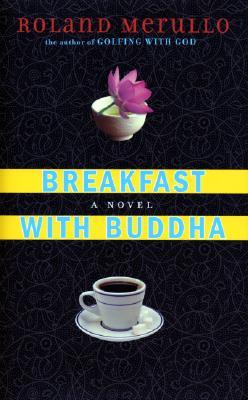
4.) Breakfast with Buddha by Roland Merullo: How can the average Joe reshape the way he [or she] views life so as to live a happier one?


breakfastwithbuddha


5.) Veronika Decides to Die by  Paulo Coelho: A young woman who attempts suicide is told by her doctor that she damaged her heart and has only five days to live.

veronika


Happy reading.


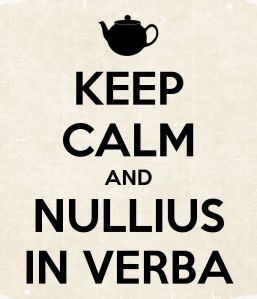
POEM: Nullius in Verba

nulliusinverba1

Said Socrates, “Oh, those poor bastards, for they think they know.

“I may be an ignorant slut, but I know I know not.”

[I paraphrase.]

My point, if I have one, is that “know” is an overused word.

Stinking up the discourse, like a bloated, floating pig turd.

[Remember Jim Carey, in the movie “Liar, Liar”]

“I object, Your Honor”… “Because, it’s devastating to my case.”

It’s a refrain seldom stated, but oft implied.

It works quite well, if you only talk to one side.

Fault us not for we’re wired to be certain.

If the cave wall shadow might be a tiger,

you don’t wait to see whether it’s a mouse.

That said, we’ve evolved these huge honking brains.

Our prefrontal cortexes might withstand the strain–

of asking:

How do I know this?

What if I’m wrong?

Might my mind deceive?

Facts: cherry-picked or  strong?

POEM: Fuel & Fools

Source: Wikipedia (Public Domain)

Source: Wikipedia (Public Domain)


It was a fire-breathing preacher,

a hard-core and ceaseless teacher,

of lessons they said they wanted none.

Yet, it belched them out by the ton.


Spitting fire and dreadful lies

from the freedom of the skies.

And all about, its fires burned.

And people wailed like lovers spurned.


And then one day there came sage.

He found some sad, some in a rage.

“What troubles you folk,” he inquires.


“From far above, it slings these fires!

Can you save us, you wise old man,

from life in this blasted frying pan?”


“Every fire requires a fuel,

And every lie, a willing fool.

Do you feed the beast, or in its fires bask?”


“Neither, of course, and how dare you ask!”


“I can douse the flames, but they’ll flare right back,

if you fuel them with your petty, piddling yak.”


“Just do it, old man, before we all burn!”


“OK, I’ll give you this one chance to learn.”

So, pulling a hose, off the sage marched.

“Mighty dragon, you must be terribly parched?”


“You know, breathing fire IS a thirsty job.”


At a nod, minions spun the spigot knob.

The water caught the grateful dragon in the throat.

Steam rose, ash spewed, and that’s all she wrote.

With no fire to breath, the dragon flew off,

sputtering out its last ashen cough.


The town was saved, or so it appeared.

But it was as the sage had feared.

Soon, some dabbled in volatile mixtures–

at weakest moments, becoming fixtures.

And the fools? Oh, they missed the glow

of the dragon’s garish and tawdry show.


And soon enough, conditions were right

for the dragon’s fire to again alight.

POEM: Einsteinian Insanity

Einstein tongue.jpg
Fair use, https://en.wikipedia.org/w/index.php?curid=8970653


Einstein defined what’s nuts,

clear as day, no ifs or buts.

Doing the same, time and again

and expecting change is insane.


So when you hit a fail,

don’t hammer the bent nail.

Pull it out, start anew,

and don’t let bent nails accrue.


Even imaginary monsters get bigger if you feed them

Public domain image sourced from Wikipedia

Public domain image of Epictetus, sourced from Wikipedia

There’s a story about Epictetus infuriating a member of the Roman gentry by asking, “Are you free?”


(Background for those not into Greek and Roman philosophy. Epictetus was a Roman slave who gained his freedom to become one of the preeminent teachers of stoicism. Stoicism is a philosophy that tells us that it’s worthless to get tied up in emotional knots over what will, won’t, or has happened in life. For Stoics, there are two kinds of events. Those one can do something about and those that one can’t. If an event is of the former variety, one should put all of one’s energy into doing what one can to achieve a preferable (and virtuous) outcome. If an event is of the latter variety, it’s still a waste of energy to get caught up in emotional turbulence. Take what comes and accept the fact that you had no ability to make events happen otherwise.)


To the man insulted by Epictetus, his freedom was self-evident. He owned land. He could cast a vote. He gave orders to slaves and laborers, and not the other way around. What more could one offer as proof of one’s freedom? Of course, he missed Epictetus’s point. The question wasn’t whether the man was free from external oppressors, but whether he was free from his own fears? Was he locked into behavior because he didn’t have the courage to do otherwise?


I recently picked up a book on dream yoga by a Tibetan Lama, Tenzin Wangyal Rinpoche. Lucid dreaming has been one of my goals as of late. I wasn’t expecting to learn anything new about practices to facilitate lucid dreaming because I’ve been reading quite a bit about the science, recently. I just thought that it would be interesting to see how the Tibetan approach to lucid dreaming maps to that of modern-day psychology. Tibetan Buddhists are–after all–the acknowledged masters of dream yoga, and have a long history of it. Furthermore, I’ve been doing research about the science behind “old school” approaches to mind-body development, lately. At any rate, it turns out that there were several new preparatory practices that I picked up and have begun to experiment with, and one of them is relevant to this discussion.


This will sound a little new-agey at first, but when you think it out it makes sense. The exercise is to acknowledge the dream-like quality of one’s emotionally charged thoughts during waking life. Consider an example: You’re driving to an important meeting. You hit a couple long red lights. You begin to think about how, if you keep hitting only red lights, you’re going to be late and it’s going to look bad to your boss or client. As you think about this you begin to get anxious.  But there is no more reality in the source of your fear than there is when you see a monster in your dreams. There’s a potentiality, not a reality. Both the inevitability of being late and the monster are projections of your mind, and yet tangible physiological responses are triggered (i.e. heart rate up, digestion interfered with, etc.) It should be noted the anxiety isn’t without purpose. It’s designed to kick you into planning mode, to plan for the worst-case scenario. Cumulatively, one can get caught up in a web of stress that has a negative impact on one’s health and quality of life.  For most people, when they arrive on time, they forget all about their anxiety and their bodily systems will return to the status quo, until the next time (which might be almost immediately.) Some few will obsess about the “close call” and how they should have planned better, going full-tilt into a stress spiral.


Mind states have consequences, whether or not they’re based in reality. I’ve always been befuddled by something I read about Ernest Hemingway. He’d won a Nobel Prize for Literature and was universally regarded as one of the masters of American literature, but he committed suicide because he feared he’d never be able to produce works on the level that he’d written as a younger man. There seems to be more to it than that. Many others managed to comfortably rest on their laurels when writing became hard[er]–including writers with much less distinguished careers.  The monster may be imaginary, but if you feed it, it still gets bigger.


As you go about your day, try to notice your day-dreams, mental wanderings, and the emotional states they suggest. You might be surprised to find how many of them have little basis in reality. They are waking dreams.