“Concord Hymn” by Ralph Waldo Emerson [w/ Audio]

By the rude bridge that arched the flood,
Their flag to April's breeze unfurled,
Here once the embattled farmers stood
And fired the shot heard round the world.

The foe long since in silence slept;
Alike the conqueror silent sleeps;
And Time the ruined bridge has swept
Down the dark stream which seaward creeps.

On this green bank, by this soft stream,
We set today a votive stone;
That memory may their deed redeem,
When, like our sires, our sons are gone.

Spirit, that made those heroes dare
To die, and leave their children free,
Bid Time and Nature gently spare
The shaft we raise to them and thee.

Sung at the Completion of the Battle Monument, July 4, 1837
BOOKS: “How to Fight Tough” by Jack Dempsey

How to Fight ToughHow to Fight Tough by Jack Dempsey
My rating: 5 of 5 stars

Read online at Archive.org

This book was put out by the Coast Guard during World War II as a commando fighting manual. The lead on the project was heavyweight boxing champion Jack Dempsey, aided by a small team of others — all with varied bona fides in Combatives.

This is a fun book to read. It’s loaded with 1940’s slang, over-the-top reminders to fight tough and mean, and jokes that — while dated — still amuse with their quirky language. Seriously, the voice in my head was playing in Trans-Atlantic dialect (1940’s radio announcer voice) or as James Cagney playing a gangster the whole time I was reading this book.

That said, while the text was campy, the actual techniques are solid. The book consists of eighteen lessons that are built on well-established grappling and submission techniques such as hadaka jime (rear naked choke.) Also, while there is often only one (or — at most — a few) photos per technique, they seemed to put some effort into doing them conscientiously. (And they are almost full-page shots, so one can actually see a bit of detail.) The techniques include: unarmed v. various unarmed attacks, unarmed v. knife, unarmed v. gun (holstered, and front and rear approaches,) and unarmed v. bayonet.

I’d highly recommend reading this book. It’s a quick and amusing read with some useful techniques inside.

View all my reviews

“Shiloh: A Requiem” by Herman Melville [w/ Audio]

Skimming lightly, wheeling still,
The swallows fly low
Over the field in clouded days,
The forest-field of Shiloh--
Over the field where April rain
Solaced the parched ones stretched in pain
Through the pause of night
That followed the Sunday fight
Around the church of Shiloh--
The church so lone, the log-built one,
That echoed to many a parting groan
And natural prayer
Of dying foemen mingled there--
Foemen at morn, but friends at eve--
Fame or country least their care:
(What like a bullet can undeceive!)
But now they lie low,
While over them the swallows skim,
And all is hushed in Shiloh.

BOOKS: “Thirty-Six Stratagems” by Sun Bin [or Anonymous]

Thirty-Six Stratagems: Bilingual Edition, English and Chinese 三十六計: The Art of War Companion, Chinese Strategy Classic, Includes PinyinThirty-Six Stratagems: Bilingual Edition, English and Chinese 三十六計: The Art of War Companion, Chinese Strategy Classic, Includes Pinyin by Sun Bin
My rating: 3 of 5 stars

This is a collection of idioms on strategy with brief explanatory commentaries on each. The idioms, themselves, are thought-provoking and worth studying, but the book is problematic in a couple of regards. First, some of the work seems to either be plagiarized or has been plagiarized. Let me explain that accusation, because the actual thirty-six stratagems are clearly in the public domain, dating to the Sixth Century AD. However, while checking out the Wikipedia site to learn more about the author (incidentally, attribution of this work to Sun Bin is not accepted by consensus,) I discovered that the whole English translation of commentaries is verbatim the same as in Wikipedia. (Wikipedia has a tag on the article that it may contain original research and solicits further information.) I further noticed that the commentaries aren’t straight translations of the original Chinese text, but rather are reformulations written to be understandable to a present-day reader of English with no particular insight to Classical Chinese culture and history (which they are.) I can’t say whose work it is or whether it isn’t a misunderstanding that would be cleared up with additional information, but my point is that I wouldn’t recommend forking over any money to the publisher without knowing that the actual work (not the copy / pasting, but the intellectual work) either belongs to them or is in the public domain. Especially, given that it’s freely available on the internet.

That brings me to a second problem, a problem that is clearly on the publisher. There is a very limited sense in which this is a bilingual edition. Yes, the idioms themselves are presented in Chinese characters with pinyin as promised, but the commentary is wholly in English. The idioms, themselves, are largely Chengyu and other forms of Chinese idiom (so 4 characters, give or take, are all that is in Chinese for each.) So, if you’re purchasing this book to work on learning to read Chinese, it’s of limited benefit, and you’ll have to go elsewhere to get the Chinese commentary.

There is an appendix that explains a little about Classical Chinese. I can’t say whether this is original work or exists elsewhere on the internet. I can say that it also isn’t presented in a bilingual fashion either, excepting a few characters for some of the vocabulary. The appendix does have some interesting information.

My recommendation to readers would be not to buy this text when you can read both the Chinese and the exact English translation on Wikipedia for free. My recommendation to the publisher would be, if the commentaries are their original work, to put in a complaint to Wikipedia to pull it as copyright infringement. (And if they were the ones who lifted the text, to stop it already.)

View all my reviews

Survivor [Free Verse]

What a thing to return from war --
a survivor --
To find that so little has survived:
Not the grass, nor garden,
Not the roof, nor lintels...

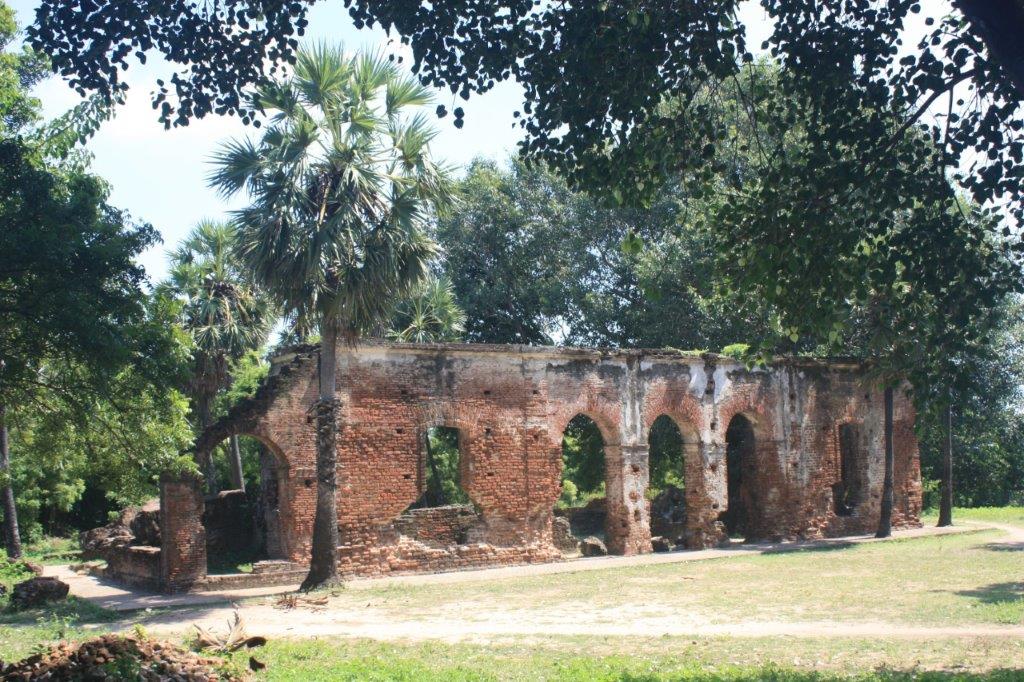
The homestead, an overgrown ruin:
Like a remnant of a once great
Civilization that was one's
Peace of mind.
“Success is counted sweetest” (112) by Emily Dickinson [w/ Audio]

Sucess is counted sweetest
By those who ne'er succeed.
To comprehend a nectar
Requires sorest need.

Not one of all the purple Host
Who took the Flag today
Can tell the definition
So clear of victory

As he defeated -- dying --
On whose forbidden ear
The distant strains of triumph
Burst agonized and clear!

“Dulce et Decorum Est” by Wilfred Owen [w/ Audio]

Bent double, like old beggars under sacks,
Knock-kneed, coughing like hags, we cursed through sludge,
Till on the haunting flares we turned our backs,
And towards our distant rest began to trudge.
Men marched asleep. Many had lost their boots,
But limped on, blood-shod. All went lame; all blind;
Drunk with fatigue; deaf even to the hoots
Of gas-shells dropping softly behind.

Gas! GAS! Quick, boys! -- An ecstasy of fumbling
Fitting the clumsy helmets just in time,
But someone still was yelling out and stumbling
And flound'ring like a man in fire or lime. --
Dim through the misty panes and thick green light,
As under a green sea, I saw him drowning.

In all my dreams before my helpless sight,
He plunges at me, guttering, choking, drowning.

If in some smothering dreams, you too could pace
Behind the wagon that we flung him in,
And watch the white eyes writhing in his face,
His hanging face, like a devil's sick of sin;
If you could hear, at every jolt, the blood
Come gargling from the froth-corrupted lungs,
Obscene as cancer, bitter as the cud
Of vile, incurable sores on innocent tongues, --
My friend, you would not tell with such high zest
To children ardent for some desperate glory,
The old Lie: Dulce et decorum est
Pro patria mori
.

NOTE: Dulce et decorum est pro patria mori is a line written by Horace in Latin that translates to: “It is sweet and fitting to die for one’s country.”
“Cavalry Days” by Xin Qiji [w/ Audio]

Drunk, I'd keep a lamp lit to find my sword,
The blare of horns sounded throughout the camp.
Soldiers ate meat under waving banners;
The military band played boisterous tunes.
Autumn brought our troops to the battlefield.

Carried by a charger at full gallop,
My bow thwipped, sending swift arrows flying.
We restored Imperial lands, boldly,
And won great fame for fighting gallantly,
But fame grows thin and gray just like my hair.

PROMPT: Named After

If you could have something named after you, what would it be?

Maybe an atomic bomb. It would be nice to get in the last word.

“Suicide in the Trenches” by Siegfried Sassoon [w/ Audio]

Photo by Ernest Brooks (Imperial War Museum)
I knew a simple soldier boy
Who grinned at life in empty joy,
Slept soundly through the lonesome dark,
And whistled early with the lark.

In winter trenches, cowed and glum,
With crumps and lice and lack of rum,
He put a bullet through his brain.
No one spoke of him again.

You smug-faced crowds with kindling eye
Who cheer when soldier lads march by,
Sneak home and pray you'll never know
The hell where youth and laughter go.