“One’s-Self I Sing” by Walt Whitman [w/ Audio]

One's-Self I sing, a simple separate person,
Yet utter the word Democratic, the word En-masse.

Of physiology from top to toe I sing,
Not physiognomy alone nor brain alone is
worthy for the Muse, I say the Form complete
is worthier far,
The Female equally with the Male I sing.

Of Life immense in passion, pulse, and power,
Cheerful, for freest action form'd under the laws
divine,
The Modern Man I sing.

“Beginning My Studies” by Walt Whitman [w/ Audio]

Beginning my studies, the first step pleas'd me so much,
The mere fact, consciousness -- these forms -- the power of motion,
The least insect or animal -- the senses -- eyesight -- love;
The first step, I say, aw'd me and pleas'd me so much,
I have hardly gone, and hardly wish'd to go, any further,
But stop and loiter all the time, to sing it in ecstatic songs.

“Darest Thou Now O Soul” by Walt Whitman [w/ Audio]

Darest thou now O soul,
Walk out with me toward the unknown region,
Where neither ground is for the feet nor any path to follow?

No map there, nor guide,
Nor voice sounding, nor touch of human hand,
Nor face with blooming flesh, nor lips, nor eyes, are in that land.

I know it not O soul,
Nor dost thou, all is a blank before us,
All waits undream'd of in that region, that inaccessible land.

Till when the ties loosen,
All but the ties eternal, Time and Space,
Nor darkness, gravitation, sense, nor any bounds bounding us.

Then we burst forth, we float,
In Time and Space O soul, prepared for them,
Equal, equipt at last, (O joy! O fruit of all!) them to fulfill O soul.

“A Noiseless Patient Spider” by Walt Whitman [w/ Audio]

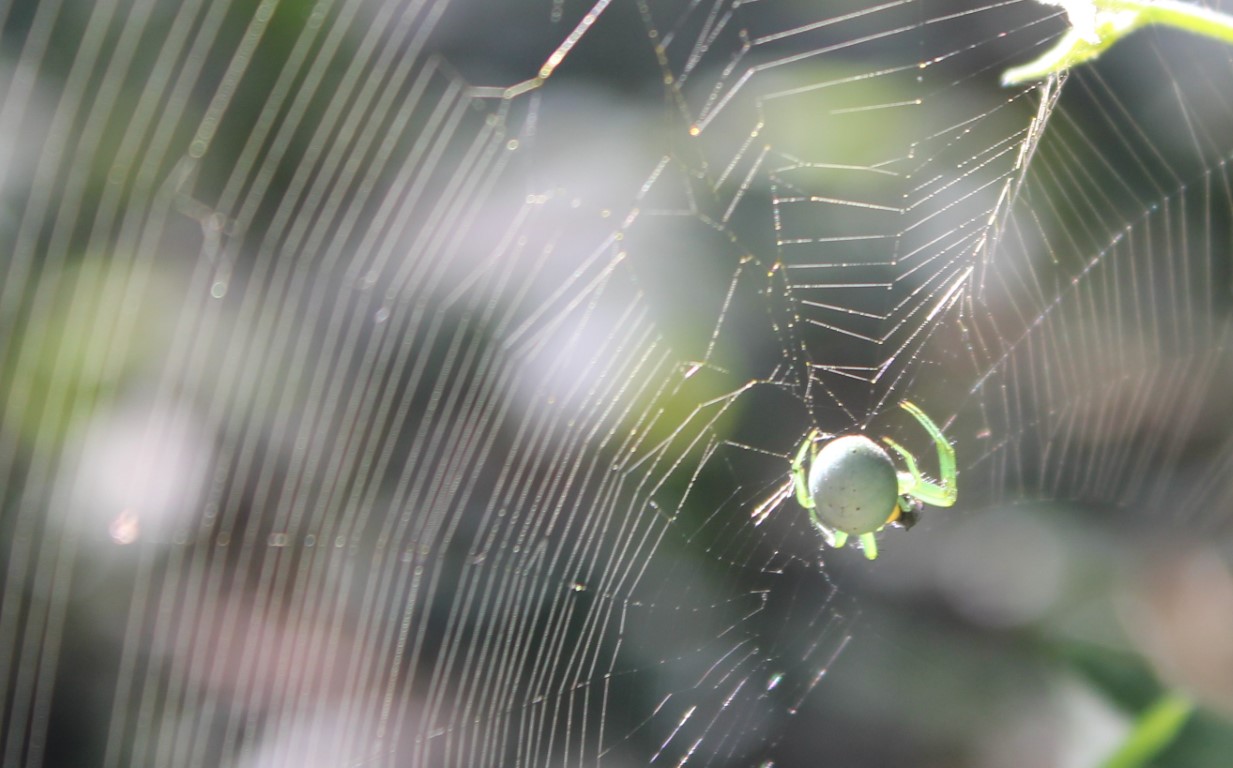
A noiseless patient spider,
I mark'd where on a little promontory it stood isolated,
Mark'd how to explore the vacant vast surrounding,
It launch'd forth filament, filament, filament out of itself,
Ever unreeling them, ever tirelessly speeding them.

And you O my soul where you stand,
Surrounded, detached, in measureless oceans of space,
Ceaselessly musing, venturing, throwing, seeking the spheres to connect them,
Till the bridge you will need be form'd, till the ductile anchor hold,
Till the gossamer thread you fling catch somewhere, O my soul.

When I Heard the Learn’d Astronomer by Walt Whitman [w/ Audio]

When I heard the learn'd astronomer,
When the proofs, the figures, were ranged in columns before me,
When I was shown the charts and diagrams, to add, divide, and measure them,
When I sitting heard the astronomer where he lectured with much applause in the lecture-room,
How soon unaccountable I became tired and sick,
Till rising and gliding out I wander'd off by myself,
In the mystical moist night-air, and from time to time,
Look'd up in perfect silence at the stars.

I Hear America Singing by Walt Whitman [w/ Audio]

I hear America singing, the varied carols I hear,
 Those of mechanics, each one singing his as it should be blithe and strong,
 The carpenter singing his as he measures his plank or beam,
 The mason singing his as he makes ready for work, or leaves off work,
 The boatman singing what belongs to him in his boat, the deckhand singing on the steamboat deck,
 The shoemaker singing as he sits on his bench, the hatter singing as he stands,
 The wood-cutter's song, the ploughboy's on his way in the morning, or at noon intermission or at
   sundown,
 The delicious singing of the mother, or of the young wife at work, or of the girl sewing or washing,
 Each singing what belongs to him or her and none else,
 The day what belongs to the day -- at night the party of young fellows, robust, friendly,
 Singing with open mouths their strong melodious songs.

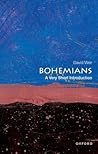
BOOKS: Bohemians: A Very Short Introduction by David Weir

Bohemians: A Very Short Introduction (VERY SHORT INTRODUCTIONS)Bohemians: A Very Short Introduction by David Weir
My rating: 5 of 5 stars

Amazon.in Page

This book examines the brief life of the Bohemian artistic lifestyle, exploring how it came about, what it looked like in its heyday, what led to its demise, and by what / whom it was replaced (e.g. the Beats.) It is an intriguing examination of the subject. I will say, there were points that I felt the book had become lost in the weeds, but at other points I found it fascinating. I concluded that my own calculus was to find it interesting when it discussed the lives and works of artists who are still deemed to have relevance and influence today (e.g. Baudelaire, Picasso, and Whitman,) and not so much when it was elaborating on artists and works that have fallen into obscurity among the general populace (e.g. Henry Murger’s Scenes of Bohemian Life.) So, that may be more a reflection on me than on the book.

The author touches upon the fictional influences that inspired Bohemianism, the places where the lifestyle thrived (e.g. Paris and New York,) the philosophy and – particularly – the political philosophy of the Bohemians (e.g. often Anarchists or – at least – anti-government.) One of the topics that most interested me is how the successor artistic communities differed from the Bohemians.

If you’re interested in who the Bohemians were and how they differ from other artistic communities (before and after,) this book is well worth the brief read required.

View all my reviews

O Captain! My Captain by Walt Whitman [w/ Audio]

O Captain! my Captain! our fearful trip is done,
 The ship has weather'd every rack, the prize we sought is won,
 The port is near, the bells I hear, the people all exulting,
 While follow eyes the steady keel, the vessel grim and daring;
       But O heart! heart! heart!
          O the bleeding drops of red!
             Where on the deck my Captain lies,
                Fallen cold and dead.

O Captain! my Captain! rise up and hear the bells;
 Rise up -- for you the flag is flung -- for you the bugle trills,
 For you bouquets and ribbon'd wreaths -- for you the shores a-crowding,
 For you they call, the swaying mass, their eager faces turning;
       Here, Captain! dear father!
          This arm beneath your head!
              It is some dream that one the deck
                 You've fallen cold and dead.

My Captain does not answer, his lips are pale and still,
 My father does not feel my arm, he has no pulse nor will;
 The ship is anchor'd safe and sound, its voyage closed and done,
 From fearful trip the victor ship comes in with object won;
       Exult, O shores! and sing, O bells!
          But I, with mournful tread,
             Walk the deck my Captain lies, 
                 Fallen cold and dead. 

PROMPT: Three Books

Daily writing prompt
List three books that have had an impact on you. Why?
Leaves of Grass by Walt Whitman

This poetry collection teaches that most challenging of human skills: how to be insanely confident that you can do anything without being a jerk about it. (Also, how to see beauty beyond the societal consensus of what’s beautiful.)

Zhuangzi by Zhuangzi

The virtues of a carefree, spontaneous, minimalist, and down-to-earth approach to living explained through tiny stories.

The Tragedies of William Shakespeare by William Shakespeare

A master class in things that can turn a life into a tragedy.

Titus Andronicus: Live by the sword = tragedy (An eye for an eye, and everyone dies.)

Romeo & Juliet: Grudges (+ Lust) = tragedy

Julius Caesar: handing your adversary the mic (/ the fickleness of crowds) = tragedy

Hamlet: indecisiveness = tragedy (i.e. On or off the crazy-bus.)

Othello: jealousy = tragedy

Macbeth: excessive ambition = tragedy

King Lear: needing gratuitous signs of affection = tragedy

Timon of Athens: expectations of reciprocity = tragedy

Anthony & Cleopatra: mixing one’s love and work lives = tragedy

Coriolanus: a crotchety old warrior in peace time = tragedy

Whitman’s Eye [Free Verse]

Walt Whitman saw the world 
   with its ubiquitous beauty
     laid bare.

He saw it in dock workers
    & painted ladies &
    swimmers & walkers &
    Presidents & paupers. 

He saw it in every hue &
    sinew, and danced it into hymns.