“Gitanjali 35” by Rabindranath Tagore [w/ Audio]

Where the mind is without fear and the head is held high;
Where knowledge is free;
Where the world has not been broken up into fragments by narrow domestic walls;
Where words come out from the depth of truth;
Where tireless striving stretches its arms towards perfection;
Where the clear stream of reason has not lost its way into the dreary desert sand of dead habit;
Where the mind is led forward by thee into ever-widening thought and action
Into that heave of freedom, my Father, let my country awake.

NOTE: This poem is often entitled “Let My Country Awake,” particularly when it is anthologized independently of the larger Gitanjali poem.

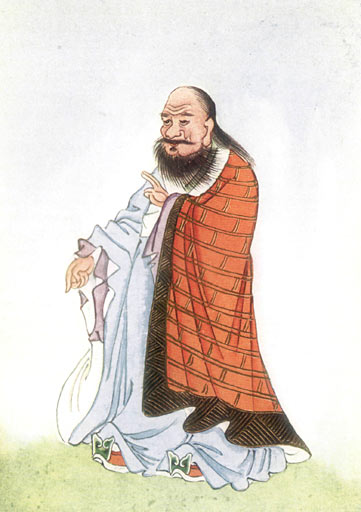
“On Laozi” by Bai Juyi [w/ Audio]

"The ignorant speak, while the wise keep silent."
I read the words of Laozi.
But if Laozi knew the Way,
Why did he write those five thousand characters?

“Night Rain” by Bai Juyi [w/ Audio]

Chirp of an early cricket. Silence.
The lamp dies then flares up again.
Night must be raining outside the window:
plink, plink on the banana leaves.

Translation: Barnstone, Tony and Ping, Chou. 2005. The Anchor Book of Chinese Poetry: From Ancient to Contemporary. New York: Anchor Books.

“West River Moon” by Su Shi [w/ Audio]

Wavelet on wavelet glimmers by the shore;
Cloud on cloud dimly appears in the sky.
Unsaddled is my white-jadelike horse;
Drunk, asleep in the sweet grass I'll lie.
My horse's hoofs may break, I'm afraid,
The breeze-rippled brook paved by moonlit jade.
I tether my horse to a bough of green willow.
Near the bridge where I pillow
My head on arms and sleep till the cuckoo's song awakes
  A spring daybreak.

Translation: Xu Yuanchong [translator]. 2021. Deep, Deep the Courtyard. [庭院深深.] Cite Publishing: Kuala Lumpur, p. 238

“Happy the Man” by Horace; Translated by John Dryden [w/ Audio]

Happy the man, and happy he alone,
He who can call today his own:
He who, secure within, can say,
Tomorrow do thy worst, for I have lived today.
Be fair or foul, or rain or shine
The joys I have possessed, in spite of fate, are mine.
Not Heaven itself, upon the past has power,
But what has been, has been, and I have had my hour.