BOOK REVIEW: Perv by Jesse Bering

Perv: The Sexual Deviant in All of UsPerv: The Sexual Deviant in All of Us by Jesse Bering
My rating: 4 of 5 stars

Amazon page


“Perv” is an examination of human sexuality outside the norm. As one might expect from the back blurb mention of a woman who was aroused by the Eiffel Tower, the book provides many a revelatory “things-that-make-one-go-HUH?” moment. The author’s humor–and willingness to offer cringe-worthy personal confessions–makes the book all the more readable. (e.g. As an example of the author’s humor: “As an adolescent male, you’re basically an ambulant sperm factory with an incompetent foreman…”) The book is in the vein of Mary Roach’s “Bonk” (something about sexuality triggers the urge to go monosyllabic), but Bering carves out his niche in deviant territory, while Roach’s book provides a more balanced look at the subject (although both books exploit anomalies to make for interesting reading.)

There are two ways in which this book wasn’t the one I expected, one of which is entirely my fault for reading too much into some words in the book blurb while ignoring others. I think the author and/or publisher must take some responsibility for the other as the subtitle itself leads one to expect a different emphasis in the book beyond the first chapter. First, I expected more insight into why people engage in these behaviors. Are there explanations rooted in our evolution? Does a given act result from some cross-wiring in the brain? There’s a cursory mention of science in the book’s description which led me to expect it to go much further beyond a cataloging of anomalous sexual behavior. To be fair, the author does back load an interesting discussion on the role of theory of the mind into the last chapter and there is some of this discussion throughout. However, the book spends much more time on history and semantics than I expected. Semantics sounds boring, but there are some fascinating insights into how words came to be used, and how usages have changed over time. (Also, the reader may be surprised at the huge vocabulary of “-philias” [objects of love / attraction] that’s not unlike the more well-known one for “-phobias” [fears.])

The second way this wasn’t the book I expected was that—owing to the subtitle “the sexual deviant in all of us”—I expected much more discussion of widespread but unconventional sexual proclivities (e.g. exhibitionism, voyeurism, dominance / submission, role-play.) Instead, Bering spends a lot of time discussing rare fetishes for materials, animals, objects, etc, and also extremely high-profile (but also rare) proclivities such as pedophilia and vovarephilia (cannibalistic arousal.) One can see the appeal from the book selling perspective. Said emphasis provides a lot of WTF and giggle-inducing moments to keep up the reader’s interest. However, if you’re expecting drilling down into [no double entendre intended] why people engage in these activities, mostly you’ll get playful variants on “the heart wants what the heart wants” and not so much insight into whether there are unseen Darwinian mechanisms at work or whether there’s some synaptic cross-wiring. I doubt this is a conscious attempt to avoid dealing with the un-PC ramifications of finding some deviant behaviors to be explicable in terms of brains that are operating within expected parameters while others may only be explained in terms of something not working as usual. I doubt this because Bering seems quite willing to take the book in uncomfortable directions. I’m not certain that there’s not an unconscious bias away from considering the “why” questions because it risks putting one in the cross-hairs even if one reports in an objective and non-judgmental way. (Perhaps there’s a lack of scientific findings to report for the same reason.)

Still, while I didn’t get the book that I expected, there were some surprising bonuses to weigh into the mix. Bering provides interesting food-for-thought on a few topics. One of these is what he calls the “naturalistic fallacy,” which is the idea that whether an activity can be considered acceptable depends upon whether one sees it elsewhere in nature (i.e. besides humanity.) This has been used over the years to divide acceptable from unacceptable “perversions”—often by people who had little to no idea what activities are or aren’t seen across the animal kingdom. (We do, after all, see monkeys literally throwing their poop.) Another challenging area of consideration is whether society’s extreme distaste for pedophilia leads us to write laws that actually exacerbate child abuse and exploitation (e.g. completely CGI [computer generated imagery] pornographic material is illegal, and—according to the author—there is reason to believe that–were it not—exploitation of children would decline.)

The book consists of seven chapters. An introductory chapter sets up the idea of sexual deviance and its changing definitions. Chapter 2 is about the many ways in which people manage to overcome their instincts toward disgust in order to engage in sexual activities. Chapter 3 looks at various forms of hypersexuality (e.g. nymphomania) and the changing definitions over time—and the biases contained therein (i.e. it was once thought to be a condition only females could experience.) Chapter 4 considers various paraphilias—i.e. unconventional sources of arousal. Chapter 5 deals with the subjective experience of many of these sexual behaviors and how that brushes up against societal norms. Chapter 6 delves into the topic of age and attraction discussing pedophilia, hebephilia, ephebophilia, teleiophilia, and gerontophilia. Of these, the vast majority of people are teleiophilics (attracted to full-grown adults) with hebephilic and ephebophilic tendencies not being uncommon (i.e. attraction to pubescent or post-pubescent youths.) Much of the discussion is about pedophilia and the legal entanglement of pedophilia and ephebophilia. Chapter 7 delves into the science and psychology in a way that I wished the rest of the book had.

There are no graphics in the book. It does have both chapter end-notes and bibliographic notes (the former being more foot-note like elaborations and the latter being mostly sources.)

I found this book interesting. It was more historical and semantic (dealing in the terminology of deviant sexuality and its changing nature over time) and less scientific and psychological than I expected, but it was still loaded with interesting information and insights. I’d recommend this book with the provisos mentioned, i.e. that it might not be the book you expect and may deal much more in rare proclivities than one expects.

View all my reviews

POEM: The Mystifying Sex Life of Scootley-Wootleys

Scootley-Wootleys are not of this world.

They don’t come in 2 types–a boy and a girl.

There are 16 sexes, 64 ways to mate,

and 3,000 rules on who and whom may date.

Pop-too can’t date Wah-toh, and Wah-toh can’t date Plarks,

but Wah-toh can take Pop-too for Sunday in the park.

Blang-doos and Moracks can only date each other.

Unless a Plark and a Blang-doo have a common grandmother.

The Siskay and the For-noo can only date but once.

But that’s plenty enough, cause it takes the whole of 4 months.

Planning an orgy necessitates a complex algorithm,

plus: blocks, straps, and a composite pulley system.

Just keeping track of it all was making me witless,

til I struck on a policy of minding my own business.

BOOK REVIEW: Touch by David J. Linden

Touch: The Science of the Sense that Makes Us HumanTouch: The Science of the Sense that Makes Us Human by David J. Linden
My rating: 5 of 5 stars

Amazon page


“Touch” is a neuroscientist’s perspective on the human sense of touch, and the profound impact it has on life in our species.

It’s a short book, only about 200 pages of substantive text, arranged into eight chapters. The first chapter considers the role that our sense of touch plays in our lives as social animals. There are a number of studies described in this chapter, but I’ll cite only two that I think give an idea of what the chapter is all about. The first considers why a person holding a cold coffee is likely to be viewed more negatively than if that same person was holding a hot coffee after a handshake. The second reports that survey takers in a mall were more likely to gain compliance if they engaged in gentle, casual, and non-creepy touch—e.g. fingers to forearm.

The second chapter explores the combination of sensors we have in our skin—particularly in our fingers–that allow us to conduct feats of dexterity that (while we take them for granted) are phenomenally difficult. For all the billions put into robotics research, robots are nowhere close to being able to complete tasks that any five-year old can do. The third chapter examines how humans are uniquely geared to be able to give and recognize a particular type of touch sensation, the caress. Throughout the book there are a number of interesting stories, some of them are scientific case studies and others… not so much. This chapter begins with the story of a man on trial for flying into a rage because his girlfriend couldn’t get the pressure right when engaging in manual stimulation. (The author was actually on the jury.)

The fourth chapter delves more deeply and explicitly into sexual contact. Whereas chapter 3, dealt largely with hand against random skin, this chapter deals in genitals and erogenous zones more specifically. There are also a number of fascinating cases / stories herein. A lot of the chapter deals in how we experience and interpret pleasure.

Chapter five explains a specific type of sensation, that of temperature. It considers why crushed chili feels hot but crushed mint feels cool to the skin. While the focus of the book is on human anatomy, physiology, and social interaction, there are many cases from other species throughout the book. This chapter offers a prime example. It explains how Vampire Bats have a unique ability to sense infrared. This is of benefit to them, since they only take blood meals and, therefore, need to be able to sense where the blood is flowing and has the least insulation (fur) over it.

Continuing the examination of specific kinds of sensation, chapter six is about pain. This is where the neuroscientific perspective offers some interesting insight. In particular, because it considers why soldiers who had multiple gun wounds could do their job on the battlefield with nary a peep of complaint, but then would raise holy hell about a bad blood stick a few days later in the hospital. The case of a medic who was badly shot up but not cognizant of it until later is discussed in some detail.

Chapter 7 deals in the itchy, and asks and answers the question of whether or not itchiness is a particular case of low-intensity pain. By low intensity, I’m not speaking of the compulsive behavior sometimes spurred by such sensations.

Chapter 8 is also highly neuroscience influenced. It deals with various illusions of sensation, and how these illusions come about through the interaction of sense and the brain. While the most famous example of such an illusion is phantom limb pain experienced by amputees, Linden addresses less traumatic and more work-a-day tactile illusions for most of the chapter. (This may be because there are a number of popular works of neuroscience that deal in phantom limbs—most notably V.S. Ramachandran’s books.)

I enjoyed this book. It conveys significant technical detail, but does so in a fashion that is easy for a non-expert to follow both because of readable writing and the use of stories. The author uses frequent graphics to help clarify points, and the graphics (mostly line drawings and graphs) do their job by being easy to follow and interpret.

In short, the book was highly readable, concise, and informative. I’d recommend it for anyone interested in the sense of touch.

View all my reviews

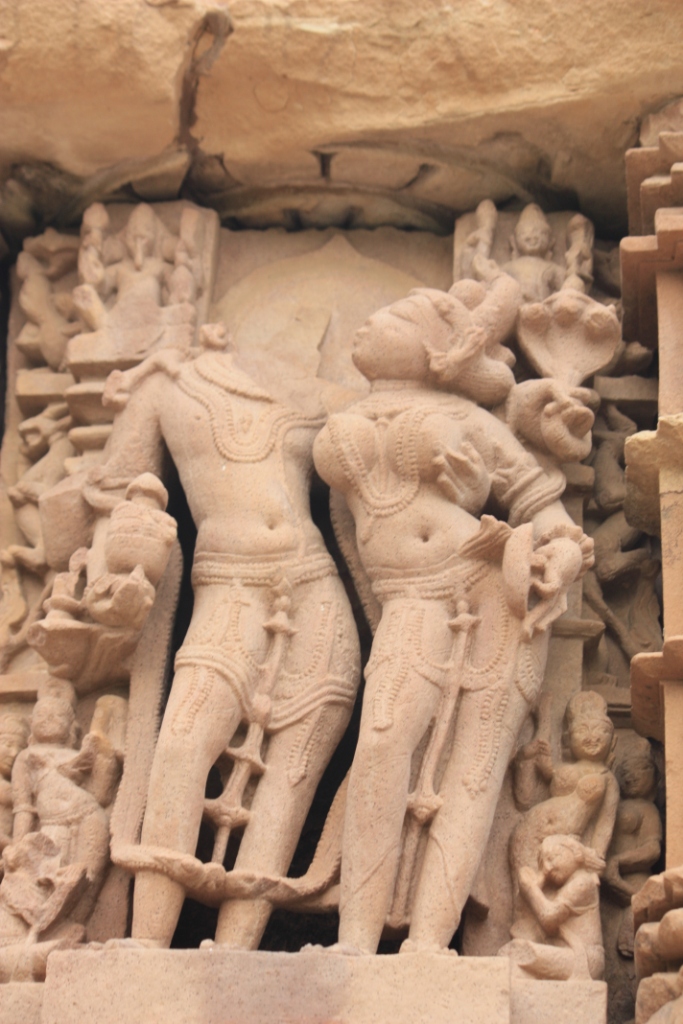
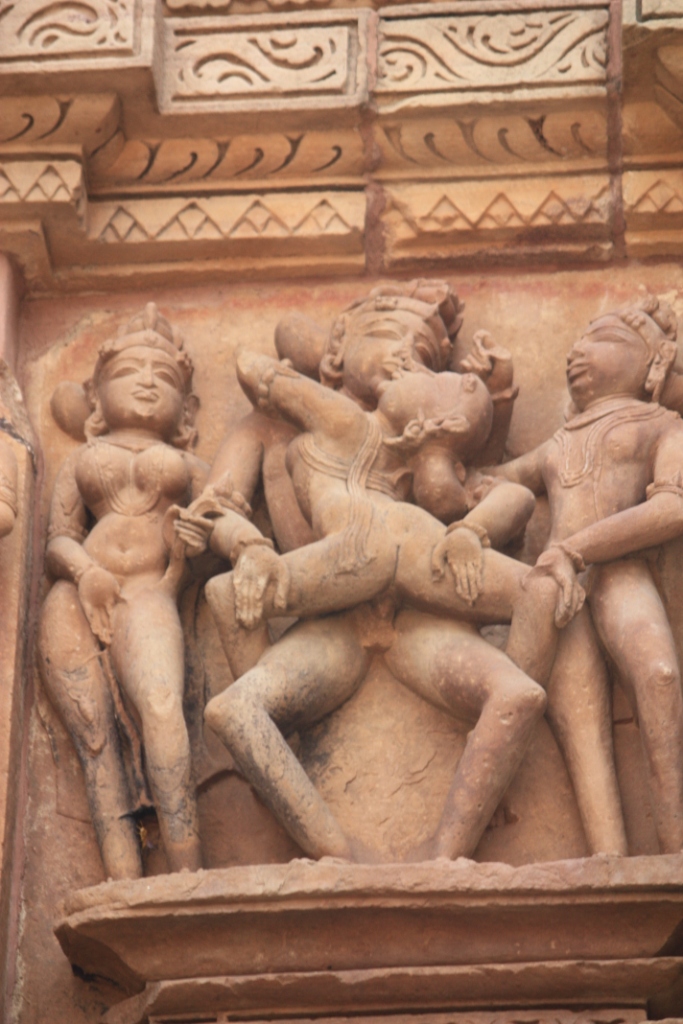
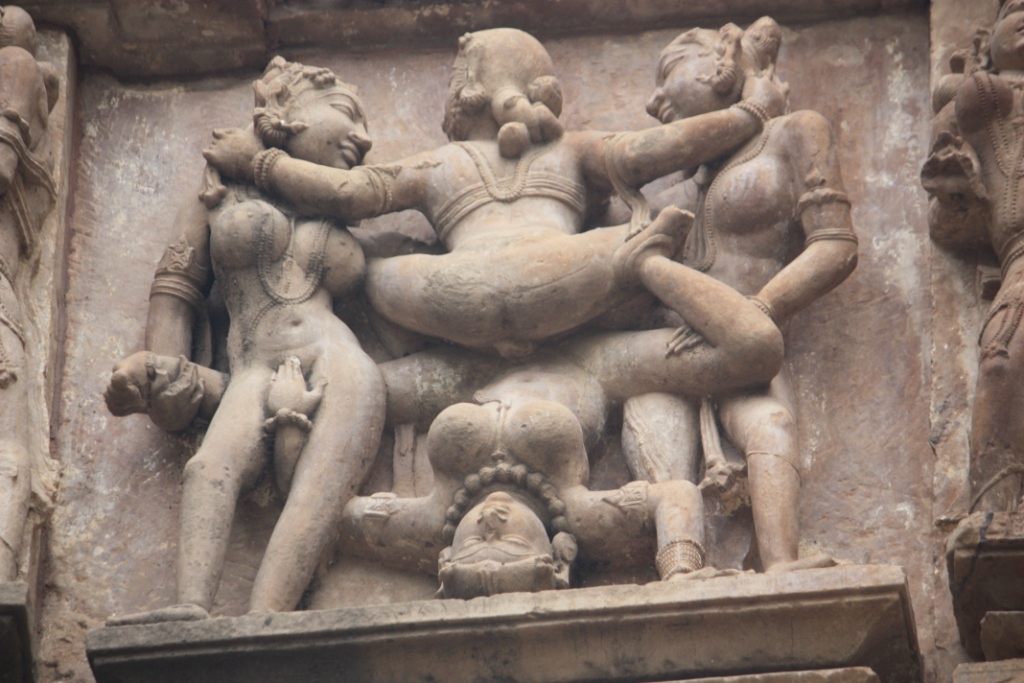
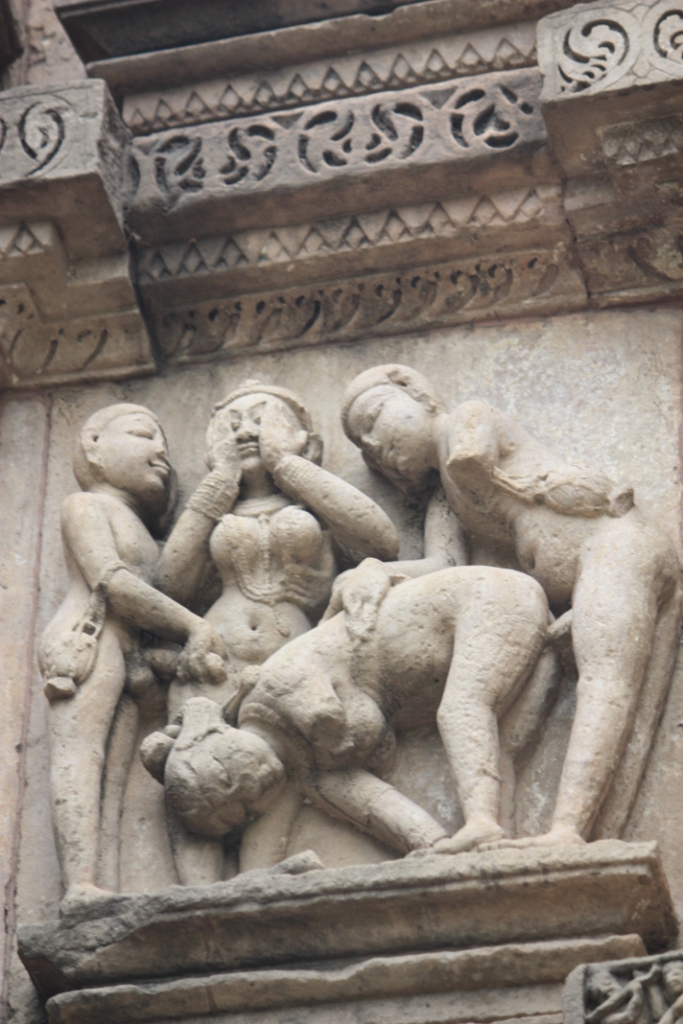
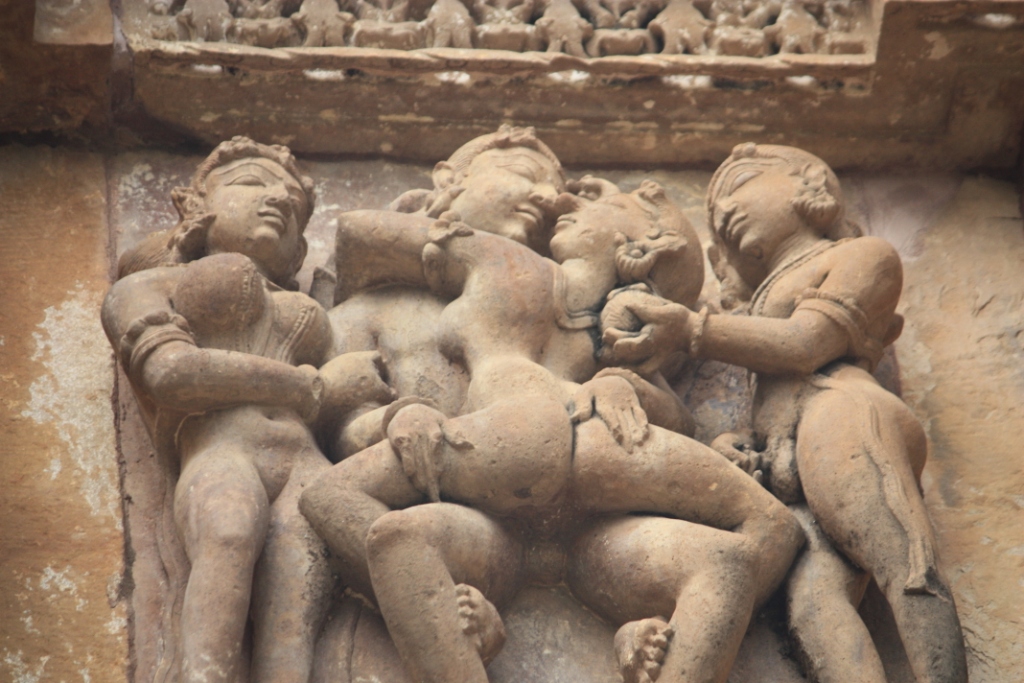
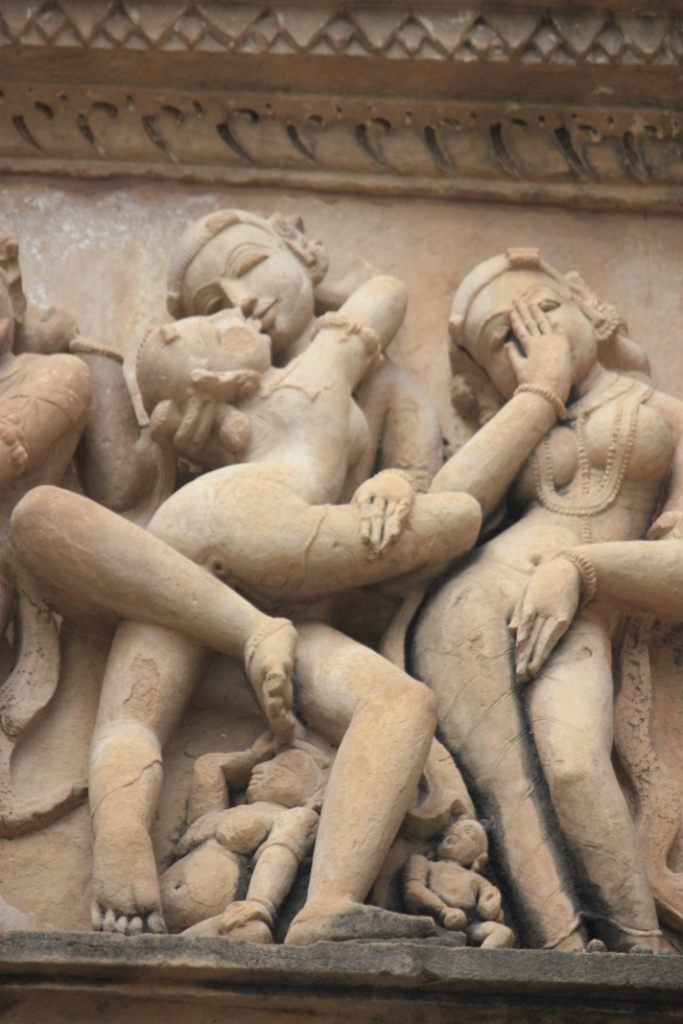
DAILY PHOTO: The Erotic Artwork of Khajuraho

Title: "A kiss so good his head exploded"  Taken at Khajuraho on October 22, 2015

Title: “A kiss so good his head exploded” Taken at Khajuraho on October 22, 2015


If it’s not apparent from the title, this post features sculptures of a graphic nature. If you tend toward the puritanical, turn back now or be introduced to the wild side of ancient Indian sexual positions.

IMG_3200 IMG_3301 IMG_3300 IMG_3291 IMG_3288


I love the theme of covering one’s eyes–just not all that carefully.

BOOK REVIEW: How Pleasure Works by Paul Bloom

How Pleasure Works: The New Science of Why We Like What We LikeHow Pleasure Works: The New Science of Why We Like What We Like by Paul Bloom

My rating: 3 of 5 stars

Amazon page

Paul Bloom’s book is about why we take pleasure in peculiar actions, proclivities, and objects. These are the pleasures that aren’t readily or directly explained by our evolutionary hardwiring. Evolution has programmed us to experience pleasure with sex and eating to encourage procreation and nourishment. In other words, those who experienced pleasure with sex had sex more often, and passed on their genes more successfully. Those who had a healthy appetite, ate more, became stronger, survived, and passed on their genes.

However, just because the pleasure of sex is readily understood through biology, doesn’t give us insight into the panoply of activities that people find pleasurable in a sexual way that have no value for procreation whatsoever. Bloom uses the example of masochism, but there are all sorts of kinky fetishes out there that one might also consider. It’s the peculiar pleasures that Bloom tries to explain. This is not to suggest that Bloom’s book is entirely about food or sex. He addresses each of those subjects with a chapter of its own, but they aren’t the sum total of the book. Both he and I, no doubt, rely heavily on food and sex because they are such fundamental pleasures and ones whose domains have blossomed far beyond the dictates of biology.

So what does the book address besides food and sex? It examines why people collect things that were once owned by famous people? Bloom sites a study showing that Joshua Bell anonymously playing violin in the subway in street clothes can barely garner a collective $32 in an afternoon, even having been passed by people who will pay $200 each to hear him later that evening as he wears a tuxedo in a concert hall, though playing the same songs on the same $3.5million violin. Why do we sit around watching television and movies? If any of these pleasures seem self-evident, I would encourage you to ask yourself why they should be? It’s by no means clear that we should value something more highly because of who previously owned it, and it’s certainly not clear why we should get value by watching others play act lives that seem more interesting than our own.

The theory that Bloom presents is called essentialism. It’s the idea that each of these things that give us pleasure represents the essence of something or someone in our minds. So a person who pay’s 500 times the going rate for a used guitar solely based on the fact (x-factor) that it once belonged to John Lennon is, according to Bloom, imagining that there’s some sort of essence of Lennon that rubbed off onto the guitar. Yes, the guy buying the guitar could be buying it entirely based on economic considerations, but the only reason there’s an economic benefit (economic rents in economist terminology) to be made is that there are people out there (many of them) who desire to possess a famous artist’s instrument even though it costs them far more than an equivalent guitar not owned by a famous person. Things become even clearer when one looks at an item like JFK’s tape measure—i.e. a mundane item that is not tied to the man’s fame. (Said tape measure sold for an absurd amount.)

Bloom discusses art forgeries to elaborate this concept of “essence” versus the intrinsic value (i.e. the beauty of the art.) There are many cases of paintings being sold for millions because they were believed to be painted by a certain “artistic genius” and then they become trash when it’s discovered that they were painted by a nobody—a nobody who’s genius was clearly sufficient to convince all the experts that he was some other genius for a while, mind you. If what we cared about was the beauty of the painting, its value would have nothing to do with its origins. In this example, it might seem to be all about rarity (a dead artist paints no more, and, thus, has a limited stock of paintings), but there is reason to believe that’s not the whole story.

We can see the value of these essences ubiquitously. There have been a number of blind taste test experiments that show that oenophiles (wine lovers/experts) can’t tell nearly as much about a wine’s delicate intricacies when they don’t have its label on hand. Famously, there was the CEO of Perrier who couldn’t pick his own company’s water out of a blind line up of waters, though insisting it was a superior product. (It took him five tries out of seven waters.) Even after that event there were people willing to spend twice as much for Perrier because it gave them some pleasure that was completely delinked from its taste or nutritional characteristics.

Bloom’s thesis is interesting, and he presents a lot of fascinating examples in this book. What the book doesn’t really explain is how come certain essences act heavily on some people and not at all on others. It also seems like a theory that begs for another level of explanation. Why should such essences exist, i.e. what is their root cause? The latter may prove difficult given the degree to which individuals vary in their peculiar pleasures from one to the next.

I found this book to be intriguing, and would recommend if for people with interests in the oddities of human behavior.

View all my reviews

How to Kill a “Cereal Killer” and Restore Halloween

cereal killerI know what you’re going to say. Why would I want to murder a cereal killer, a taco belle, a holy cow, a pig in a blanket, a deviled egg, or any of the other bearers of bad Halloween punnery? First, you want to kill someone.  You don’t have to admit it to me and I’d advise against admitting it to the District Attorney, but at least admit it to yourself. Second, if you kill the person you really want to kill (e.g. your boss, the tax man, your personal trainer, or your hairdresser—sorry, low blow) you’ll be the lead suspect. Therefore, you need to find a way to vent your homicidal rage into productive outlets, and I’d argue that the killing of punsters is community service. You shouldn’t even think of it as murder. It’s more like culling the Halloween herd. Forest fires kill, but the next year the forest is more lush and beautiful than ever before.


Now let’s get down to the real reason to conduct your own Halloween killing spree. Because it’s the perfect time for the perfect crime. Think about it.

  • Anonymity: Except for the lazy people who wear a T-shirt with “Halloween Costume” printed in unimaginative block letters, everybody is in makeup or has their head stuffed in some stinking mask that five people have thrown up in within the last three years. This makes it almost impossible to identify suspects. The lazy bastards would be eliminated immediately anyway because it takes commitment to be a homicidal maniac.
  • Relative Inconspicuousness: You won’t be the only one who’s apparently blood spattered. Besides Marti Gras and full moons, what other nights can one say that. There will be large numbers of people wielding weapons and looking creepy. What better time to blend in?
  • Distraction: If I might be granted a brief diatribe. Halloween used to be the holiday of terror, but no more. Valentine’s Day may be the holiday of romance (or florists), but Halloween is the holiday of sex. However, you can use this trend to your advantage. There’s a great deal of distraction to be garnered from the proliferation of sexy nurses, sexy waitresses, and sexy actuarials. When the girl whose costume is painted on rather than worn walks through the room to get a single potato chip, that’s a good time to jab the hypodermic into the neck of the nearest drunk pun and get the hell out of dodge.


So how will you choose your target? First, as indicated, it’s best to pick someone who’s inebriated because no one will realize they’re dead–and not just passed out–until they begin to stink. Don’t worry, finding a drunk won’t be hard. At a given Halloween party there will be four designated drivers for the 150 people in attendance—so 148 people will be completely hammered. [No, my math is not that bad. Two of those designated drivers are cheating bastards. If you kill a pun who’s a cheating designated driver you’ve hit the trifecta—OK, maybe my math is that bad. At any rate, you get bonus points. ]


Next comes the question of determining whether the costume is a pun or not. This can be harder than it seems. Sure there are the easy ones I mentioned above (and others like Kevin “Bacon” [Kevin nametag on a meat vest], “Bat” Man [w/ Louisville Slugger], Down for the Count [Dracula with a blowup doll orally affixed to his crotch region], Spice Girl, Dust Bunny, Formal Apology [tuxedo-clad man with “sorry” written on his tie], etc.) that will be immediately obvious.


However, what if one sees a guy in a Grim Reaper costume with a bag of pot. Perhaps this is just someone who likes to imbibe. However, if the pot is dayglow green, then you may have a “the grass is greener on the other side” who desperately needs killing. The key is that one must pay attention to the details. Sometimes the costume will be poorly done. Imagine a fine “Tom the Cat” costume with three misshaped spheres feebly stapled to the crotch region. This is a “horny as a three-balled tom cat” who must die.


On the other hand, you should avoid reading too much into costumes. Say you see a girl who looks like a stripper. You shouldn’t engage in some Rube Goldberg-esque thought process in which you conclude that she is saying, “All that glitters is not gold–because sometimes it’s a stripper.” Said woman may merely be costumed as a stripper, or might be a stripper who just got off stage and didn’t have time to go out looking for a costume.


When in doubt, if the costume doesn’t seem to make a lick of sense, it’s probably someone’s sense of clever gone awry and you shouldn’t feel bad about friendly fire against a non-pun.


Finally, some general rules of thumb (BTW: feel free to kill anyone dressed in a giant mitten with a page of the tax code taped to the thumb):

  • Only kill one pun per party. Being a killer of puns is like being a Marine Sniper—except that it’s completely illegal and involves no honor whatsoever—my point is that if you loiter in place you’ll get pinned down by the Vietcong. It doesn’t matter whether the party in question has the best pigs in a blanket (i.e. the hors doeuvres, not the cutesy couple costume), the best DJ, or the sluttiest witches, maids, librarians, or geologists in town. Don’t get greedy. Get in and get out—well, you can grab a handful of those delectable pigs in a blanket on the way out, but then get out of the house!
  • Never wear the same costume to more than one party. The police call that a clue. You have to be like Kathrine Heigl in that 27 Dresses  movie—which I never saw. Do the quick change like Clark Kent between parties. That brings me to an alternative killing scheme whereby you can kill anyone who’s dressed as a character from a romantic comedy.
  • Don’t consume a lot of legumes, high fiber foods, beer, or Taco Bell before your outing. Just because no one will see your face inside that barf-splotched mask doesn’t mean they won’t be able to smell you. Plus the zippers in costumes are unreliable, and you don’t want a case of Taco Trots to hamper your evening’s fun.
  • Don’t wear a costume that’s too menacing. You want to be able to point to someone who is nearby, completely innocent, and who looks like a killer and say, “she did it.” Also, don’t wear the “Identity Thief” costume in which one has name tags all over one’s outfit with different names. First, it plants the seed of criminality in the mind of those around you. Second, it’s a bad pun and may result in your being stabbed. Which brings me to the ultimate rule:
  • Don’t wear a pun costume yourself, it may result in your being stabbed. I’m not saying that I once stabbed a prostitute with a Seeing Eye dog who turned out to be just another good-hearted Halloween killer because “love is blind,” but…


I hope this guide to perpetrating a Halloween massacre has been helpful. I think we’d all like to bring the fear back to Halloween like all the Saints who partied down on All Saints’ Day Eve intended. So, whether you’re a first time killer or you’ve been around the block (another potential costume cliché to kill), a few simple steps will keep you out of the hands of the slutty cops—or regular cops.

BOOK REVIEW: The 120 Days of Sodom by Marquis de Sade

The 120 Days of SodomThe 120 Days of Sodom by Marquis de Sade

My rating: 1 of 5 stars

Amazon page

This book was listed in one of those “500 Books One Must Read” lists. Maybe it was “1,001 Must-Read Books.” However large the number, I think it was wrongly included. But it was free in e-book form (or nearly so) and so I figured: “I love free and I like edgy, so what’s not to enjoy.” Besides, this book has been banned many places around the world and there’s nothing that makes me want to read a book like it being banned. Plus, how many authors have such profound impact on the language as to have their names raised from that status of proper noun to common noun and adjective (the Marquis de Sade being from whence the word sadism, or “delight in cruelty,” is derived.)

Now the natural inclination of people seeing the uncomplimentary fashion in which I present this novel will be to think that I’m just a vanilla guy who found the work morally objectionable and that tarnished my view. It’s true that the scat, pedophilia, rape, and—in the latter chapters—homicidal mania rampant throughout the book are not my cup of tea. I, therefore, may not be able to convince you that I could have found the book appealing if it presented the same content in a more skillful manner. [I can’t imagine such a book being “enjoyable,” but I can imagine one that would be “engrossing.”]

However, I intend to convince you that there is a great deal that is unappealing about this book that has nothing to do with the subject matter. I firmly believe that, regardless of one’s ability to stomach the substantive content, one will still find the book to be an utter disappointment. [It should be noted that many people will find the book is more effective in the horror genre than the erotica genre—which isn’t to say that it succeeds in either.]

The synopsis is that four wealthy and prominent men take a harem of 46 individuals (boys, girls, men, and women) to a remote retreat to both have their way with them and, ultimately, snuff most of them out. The four men spend their time listening to tales of debauchery and sadism as told by a couple of prostitutes and then emulating the acts in the aforementioned stories.

Now, you may say, “What would keep 46 people from overwhelming four men—rich and powerful as they may be—and regaining their freedom?” Well, that’s the first problem with the book. It’s true that many of the victims aren’t adults, but enough are to make a rebellion workable. We are never told why this should work, and in this way the book is just a bunch of crude juvenile fantasies that fail the credulity test. A Bishop or President tells someone to drink acid or kill their own kin, and we are just supposed to accept that they would do it without question. The book sets up no tension. It really is the fantasy realm of an impotent man with delusions of grandeur.

The organization of the book is in five parts corresponding to the months / partial months that make up the 120 days mentioned in the title, and the storytellers tell progressively more vicious tales as the book progresses. The first couple parts don’t involve much violence and the acts described aren’t much different from what one might find in a book like The Story of O, except for the tonnage of poo in the Marquis’ stories. Having compared this to Réage’s work, let me say that it’s not just the poo that makes Sade’s work inferior, it’s also the lack of insight into the mind of the characters. (Part of the problem is that there is a vast cast of victims that have no dimensionality to them.) We see O’s reluctance, anger, pain, and transformation, but get none of this in The 120 Days of Sodom.

As the book progresses, it degrades further into lists of acts of debauchery and cruelty that all seem to blend together into a tepid bowl of poo. The Marquis de Sade wrote this work in prison and it really comes off as an outline of acts of violence he dreamt up out of the frustration of impotence. A well-written work that wanted to explore this situation would pick a few particularly evocative acts from the list and would form them into a coherent story with multi-dimensional characters and a narrative arc. This book is just a list of cringe-worthy acts written out tersely, but they don’t induce a cringe because none of it feels real because we get no insight into characters and the four leads are just supermen who get to do whatever they please without any realistic opposition.

If you read this book, read it out of interest in the historical persona of the Marquis de Sade. If you’re reading it as erotic literature, you’ll probably find it to be a disappointing series of premature ejaculations that just tries too hard to list the most disgusting and objectionable acts imaginable. If you read it as horror, you’ll have to read through a couple of chapters of stuff that’s just disgusting–but not particularly scary, and then when you get to the horrifying part it’ll just be a machine gun blast of little tales with inadequate description to be truly gripping.

Needless, I think the greatest act of cruelty ever committed by the Marquis de Sade was getting people to read this horrible book—maybe that was what he was after.

View all my reviews

BOOK REVIEW: The Science of Yoga by William Broad

The Science of Yoga: The Risks and the RewardsThe Science of Yoga: The Risks and the Rewards by William J. Broad

My rating: 3 of 5 stars

I brought a great deal of interest and enthusiasm towards this subject as I began reading this book. As I proceeded to read, my feelings about The Science of Yoga became much more mixed. At its best, the book shows the state of scientific research on yoga and crushes myths that are deeply ingrained, and it points out risks of which yogis and yoginis should take notice. At its worst, it is sensationalism run-amok–suggesting hugely expensive solutions to issues that are either relatively small problems or that the author fails to prove are really problems at all. Put more simply, at its best it’s outstanding, but at its worst it’s tripe. What I will say about this book is the same thing that its author says about yoga, which is that—on balance—it does more good than harm.

The book is arranged into seven chapters, each of which discusses the scientific research on a different dimension of controversial beliefs about yoga. These include the historic claims of supernatural yogic abilities, the issue of whether yoga increases cardiovascular health, the role of yoga in mental health and well-being, the safety of practicing yoga, the role of yoga in healing, the sexual claims of yogis, and whether yoga enhances creativity. It is written in a scholarly format, heavily end-noted and with bibliographic citations. There is front matter giving information about key people, time lines, and yoga styles in outline form.

In an afterword, Broad points out that this has been his most controversial book to date. I can see why, but, to be fair, I’m sure much of the criticism is unfairly based on a failure to read the book or a desire for the author to treat many of yoga’s mythical aspects as science (as many of its practitioners do.) The former problem was exacerbated by the fact that a single chapter excerpt was published in the New York Times as a teaser for the book. Designed to spark controversy (always good for readership), it was one of the most negative of chapters—the one dealing with yoga injuries. Some who took umbrage probably didn’t realize that Broad is a yoga practitioner, and that there are chapters that are overwhelmingly positive on yoga (e.g. the chapter on “mood” which deals with yoga’s influence on psychology has mostly great things to say about the discipline.) While all of the chapters combine a mix of good and bad news, one comes away from some of them seeing a positive picture of yoga and others with a negative one. In the first half of the book it seems as though chapters may have been arranged to alternate positive and negative dimensions.

Of course, there will also be people who are outraged because of the discussions of the debunking of the con games of their beloved yogis, or for a failure to discuss the critical importance of things like Chakra fluffing. It should be noted that Broad doesn’t deride or mock such spiritual beliefs, he more or less ignores them beyond the occasional off-hand mention—as one would expect in a book about science.

My primary criticism with The Science of Yoga is a common one consideration of problem-solving utilizing public policy (not just with respect to yoga), which is to become so impassioned about a problem that you lose all sight of cost-benefit considerations or the negative feedback effects incentivized by your “solutions.” The problems about which Broad gets so exercised as to suggest an overhaul of yoga as we know it, largely fall into two categories. First, there are problems that are exceedingly rare but catastrophic for in individual involved. This is exemplified by the apparent heightened incidence of strokes among individuals engaged in certain inversions (e.g. a shoulder stand in which the neck is under compression.)

In an interesting turn away from science, Broad makes assumptions in the face of lack of evidence about the incidence of stroke in yoga practitioners. He assumes that yogis have at least the same incidence of stroke due to vertebral artery injury as the general population because of inversions and other yogic activities that put pressure on blood vessels in the neck. He does make clear that it’s just a guess, but one could equally well speculate that those who practice yoga suffer a diminished rate of such strokes because of greater flexibility and strength in the neck. (For the most part the human body is an anti-fragile system, i.e. it grows stronger when subjected to stresses—up to a point—than when shielded from stresses.) While he does call for increased study of the issue, he’s also simultaneously calling for expensive reforms. In essence, he’s calling for a solution before awaiting the evidence that there’s actually a real problem. Stroke is the 800 pound gorilla of the risks the Broad writes about in terms of damage, and so it’s not surprising that he paints the risk in ominous terms. He criticizes the Yoga Journal for dismissing it as a “minuscule number of cases”, but even taking his estimate of 300 (and realizing it could be much lower and is compared to 800,000 cases of stroke per year in the US according to the CDC) “minuscule” does not sound that out of line in a country of 314 million people.

Second, there is the issue of bad information being spread by yoga teachers and authors either because they don’t know any better or because they have an incentive to deceive. This is exemplified by the widespread notion that yoga (and particularly pranayama— breathing exercises) increases one’s cardiovascular fitness. Is it wrong? Yes, but it’s not clear that this propagation of bad information has hurt anybody. That may sound harsh, but—think about it–many people lead long and fruitful lives believing things that aren’t true. Now you may say, “Yes, but people who believe the Earth is flat can’t get hurt believing that, but yoga practitioners can be hurt by wrong information.” I would agree that some wrong information could be damaging, but consider the example given, which–I might add–is one of the main thrusts of Broad’s book. If it were the case that many people got fat because they thought yoga would help their cardio when instead it decreased their metabolism (as the evidence suggests it does), then no one would believe the myth. The idea wouldn’t have the strong hold that it does. What happens more often is that people either lose weight because they stress and eat less or they stay the same—either way they haven’t been hurt any more by bad information. Even if someone came to yoga to lose weight and gained some, they will abandon yoga and go to Zumba or Taebo with greater flexibility and probably a diminished risk of injury for having done yoga.

By spreading information about the risks and the state of scientific understanding of them Broad is doing good work. However, he goes on to suggest that we need lots of bureaucrats to monitor and license yoga and that we need much more rigorous requirements for yoga teachers than the 200 or 500 hour Yoga Alliance certifications that currently exist (or the teaching certificates issued by the gurus or teacher trainers of various styles of yoga), and herein lies two problems. It’s not clear that a problem exists to merit such an expensive solution.

First of all, many of the worst cases that he points out were people engaged in questionable practices on their own. I’m sorry for my frankness, but you can’t regulate stupid out of existence. There was one kid who sat for hours in Vajrasana (sitting on haunches), one who fell asleep in a forward bend, and another who had a stroke after holding a shoulder stand on a hard surface for hours. Now, my experience may not be as extensive as others, but I’ve attended yoga classes in the US, India, and Thailand. I’ve had teachers tell me to hold a pose for 5 deep breaths. I’ve even had teachers tell me to hold a pose for 10 deep breaths. No teacher has ever said to me, “Hold that pose for four hours or until you have a stroke, whichever comes first.” Even teachers with a couple hundred hours of instruction and a couple hundred more of experience don’t—as a rule—give patently stupid advice. (To the degree that there are rare exceptions, thinking that no teacher would ever again give a piece of bad advice if they just all had PhDs is a little presumptuous.)

The major problem with Broad’s suggestion of a need to overhaul the system and install bureaucratic gatekeepers and overseers and to make teachers jump through vastly more educational hoops is that it increases the cost of doing yoga with a teacher. Now, I know that yoga is associated with relatively affluent people, but—believe it or not–there are yoga practitioners who aren’t SUV-driving, Abercrombie&Fitch-wearing, maid-hiring suburbanites. If the monthly cost of attending yoga class goes from tens of dollars to hundreds of dollars because every yoga teacher has to have a PhD in Kinesiology and every studio has to comply with the extensive regulations and licensing fees of the newly formed Department of Yoga Management, then many people who are happy with the level of instruction they are currently getting are going to be emulating books and videos and injury rates could actually go up.

Another example of a “problem” that is not definitively shown to be a problem is Broad’s extensive criticism of an author of a popular book on yoga (i.e. Larry Payne) for using a Ph.D. designation that was from a southern Californian diploma-mill. While there is something objectionable about putting a PhD behind one’s name that wasn’t justly earned, it’s not at all clear that this was a problem. One expects to hear how Larry Payne left a pile of wrecked souls in his wake. However, while Broad devotes pages to ridiculing Payne for putting PhD after his name, the few mentions of the Payne’s interactions with others suggest that he helped them get healthier (e.g. Dr. Ursatine) and that he furthered the state of his professional field. The implication being that the credential matters vastly more than the individual’s experience and diligence. Interestingly, Dr. Fishman (for whom Broad has nothing but kind words—presumably because he holds an MD) is quoted as speaking glowingly about Payne and his contributions to the field.

Another example of sensationalism can be seen in the chapter on sexuality. While we would expect this chapter to be entirely about the claims of yoga being able to enhance one’s sex life, a fair amount of it is devoted to pointing out instances of lecherousness among yogis. I’m not saying that it’s bad to point out bad behavior of gurus in terms of harassing or molesting their female students, but unless there’s some evidence that this inclination is tied the sexual practices of yoga, this would seem to be the wrong venue for the discussion. In other words, if yogis are no more lecherous on the whole than other teachers or coaches, then it would seem that mention of this issue is just to titillate. If yogis are uncontrollable horn-dogs because of yogic practices, then fine, but you’ve got to establish that there’s evidence for that somehow.

Overall, I’d recommend that individuals interested in the scientific literature on yoga read this book. It provides a good overview of the literature, and is well-cited. The books weakness comes from insisting that a large number of mole hills are really the Himalayas. These mole hills can be addressed with education, but can never be eliminated. Suggesting we upend the apple cart to produce “solutions” to marginal problems is ridiculous. We may think a world in which there was never another fatal traffic accident would be nice, but I assure you we would not want to live in the world in which all the actions were taken necessary to achieve said goal. If one compares the extrapolated estimates of hospital visits for yoga injuries, they are really quite few and we have no reason to believe that the vast majority aren’t life-threatening or permanently disabling.

For me it would have been a great book if it laid out the risks and rewards, and suggested caution. Of course, then it probably wouldn’t have gotten any more attention than the many books that already exist on the subject of yoga injuries, so maybe some good can come of Broad’s implication that going to the yoga studio is akin to storming the beaches at Normandy and that we need to stop the horrors or yoga practice.

View all my reviews

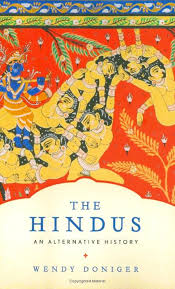
Penguin India and The Hindus: Do Self-Imposed Bans Sell?

Hindus

If anything sells a book more effectively than sex, it’s being banned. One knows that a book contains powerful ideas when someone goes to the effort to try to have it banned. Granted, the powerful ideas may or may not be good ideas–or true ideas, but thinking minds will demand to see for themselves. (I for one will be stopping by my local bookstore to see if they have a copy they’ll sell me for less than 1,000 rupee [$16USD], because I’ve got to know what has the thought Nazis up in arms.)

But does a self-imposed ban have the same effect? Penguin India settled a suit by agreeing to stop printing the book The Hindus: An Alternative Historyand to burn outstanding copies. This, after a protracted legal battle against a Hindu nationalist group called Shiksha Bachao Andolan. However, there may be more to it than simply trying to build sales on the four+ year old book (that likely would have been long forgotten in an environment of free speech.) Indian law makes it a criminal offense to offend Hindu sensibilities, and thus puts the publishers in physical as well as fiscal jeopardy. Of course, it’s already come and gone as a best-seller in India, so it couldn’t hurt to restoke global interest.

It should be noted that there isn’t overwhelming support for banning the book in India. There has been outrage against Penguin’s fold by Indians who read, who believe in freedom of speech, and who are terrified of the idea of a crime of hurting someone’s feelings by discussing their religion’s history. (The latter being a direct route to tyranny if ever there was one. )

As I said, sex sells and bans sell double; the book in question has both. One might be inclined to think that it’s some sort of porn novel churned out on pulp.  Actually,  the author is a Professor of Religious History at the University of Chicago, Wendy Doniger. The book does apparently focuses heavily on the role of sexuality in Hindu mythology. What some readers might not know–and might be surprised to learn–is that hardcore Hindu nationalists are two steps to the right of Jerry Faldwell on issues of sex.

Here’s are accounts by the LA Times and Galleycat.

One of the most extensive discussions of the forces who succeeded in getting the book banned is in the NY Times.

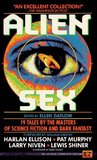
BOOK REVIEW: Alien Sex Ed. Ellen Datlow

Alien Sex: 19 Tales by the Masters of Science Fiction and Dark FantasyAlien Sex: 19 Tales by the Masters of Science Fiction and Dark Fantasy by Ellen Datlow

My rating: 4 of 5 stars

Amazon page

Alien Sex is an anthology of 19 works of short fiction that revolve around sex, attempted sex, or sex-like behavior with non-human entities. While the title leads one to believe the book is specifically about sex with aliens from outer space, that’s not the case in all these stories. There are also stories where the object of affection is a lesser primate, an incubus, a new species, and a biologically-modeled robot. As one would expect with life forms from other worlds, the “sexual” act is not always what we would recognize as sex. (e.g. One planet’s whoopee might be another’s mundane act.) As a last warning about what the book is not, it’s not—on the whole—a collection of sci-fi erotica. A number of the stories probably wouldn’t be arousing to the freakiest of super-freak, and I can only assume weren’t meant to be.

While there’s a unifying theme, the works included cover a lot of ground in terms of style and format. It’s not even true to say it’s 19 short stories because there’s one poem and one chapter that reads more like an essay (i.e. lacks a narrative structure.) Some of the works are written in the language, tone, and style of erotica, but others aren’t. A few of them read like thinly veiled commentary on problems in the author’s own love life—i.e. cheating spouses, feeling a lack of attentiveness, or porn addiction. (Each work has a brief author commentary at the end, and a couple of the authors suggest that what was going on in their own life or those close to them shaped the idea.)

While the appeal of the works varied significantly, overall this was a fun and intriguing read. The works included are as follows:

1.) Her Furry Face by Leigh Kennedy
A primate handler who is in a waning marriage falls for one of his super-intelligent orangutan students.

2.) War Bride by Rick Wilbur
The world is going to end tomorrow unless you’ve been taken as a pet by one of the aliens.

3.) How’s the Night Life on Cissalda by Harlan Ellison
A man sent to investigate an alien race becomes inextricably sexually entangled with one of the aliens. Eventually, he’s forcibly separated from the alien—of a race that are apparently thin-skinned—and lives to see the descent of mankind.

4.) The Jamesburg Incubus by Scott Baker
A teacher in a Catholic school finds that he can make out-of-body nocturnal visits to some of his more attractive female students.

5.) Man of Steel, Woman of Kleenex by Larry Niven
This reads more like an essay than a short story. The work delves into the physics of why sex with Superman would be fatal for Lois Lane.

6.) The First Time by K.W. Jeter
This is a variation on the old coming of age story in which a young man is taken to a brothel for his first sexual encounter. It’s just that this encounter is of the 3rd kind.

7.) The Jungle Rot Kid on the Nod by Philip José Farmer
The premise behind the story is what if William S. Burroughs (author of Naked Lunch) had written the Tarzan stories instead of Edgar Rice Burroughs. In essence, it’s a risqué take on Tarzan.

8.) Husbands by Lisa Tuttle
After the extinction of husbands, a woman develops a new species to serve the companion role.

9.) When the Fathers Go by Bruce McAllister
A husband confesses to his wife that while she was in stasis waiting for him to come back from interplanetary travel, he sired a child with an alien. Furthermore, the child is coming to live with them. But wait there’s more…

10.) Dancing Chickens by Edward Bryant
This story reads more like an overly elaborate joke than a short story. It begins with the question, “What do aliens want?” and ends with a pun punch line. That being said, the lead is an unappealing but intriguing character.

11.) Roadside Rescue by Pat Cadigan
A stranded motorist is made an indecent proposal by a chauffeur on behalf of his alien employer.

12.) Omnisexual by Geoff Ryman
This is about an intergalactic brothel, but it’s the story in the collection that reads most like literary fiction—meant in both the best and worst possible ways.

13.) All My Darling Daughters by Connie Willis
While there are several really good works in this anthology, I’d have to rank this as my favorite—if only by a narrow victory. A sassy, sexually-liberated co-ed has her sex life torn asunder when all the young men come back from break with little, furry creatures in their possession and no interest in the female student body. Besides a neat concept for a story (though it may be implying that men are overwhelmingly rapey), the author does a great job of character development making the lead character both interesting and likable, while juxtaposing her with her apparently goodie two-shoes roommate.

14.) Arousal by Richard Christian Matheson
A woman who cheats on her husband with a stranger is cursed with permanent post-coital euphoria that swamps all interest in her family and life in general.

15.) Scales by Lewis Shiner
A woman’s husband is having an affair with what she thinks is a student assistant, but who turns out to be a soul-sucking seductress from the netherworld.

16.) Saving the World at the New Moon Hotel by Roberta Lannes
A woman waiting for her spouse to meet her at a bar to apologize for his infidelities decides to get a little herself. The man she hooks up with turns out not to be a man at all.

17.) And I Awoke and Found Me Here on the Cold Hill’s Side James Tiptree, Jr.
An experienced man offers advice to a newbie to get away before he ends up seduced by the aliens. This story talks about sex, but is about something much broader.

18.) Picture Planes Michaela Roessner
This one is a poem about alien sex, rather than a story. It stands alone as the only non-prose entry.

19.) Love and Sex Among the Invertebrates Pat Murphy
In a post-apocalyptic world, a dying scientist–who no longer believes in science–creates robots capable of engaging in the act. The creatures she makes are based on a range of real animals which are written about interspersed with the story-line.

I’d recommend this book for those who enjoy science fiction. One need not be into erotica to enjoy the stories and, the more one is seeking erotica, the less appeal the book may have. It’s a collection of big name writers in science-fiction, and the anthology’s diversity makes it particularly interesting.

View all my reviews