Escaping the Cave [Common Meter]

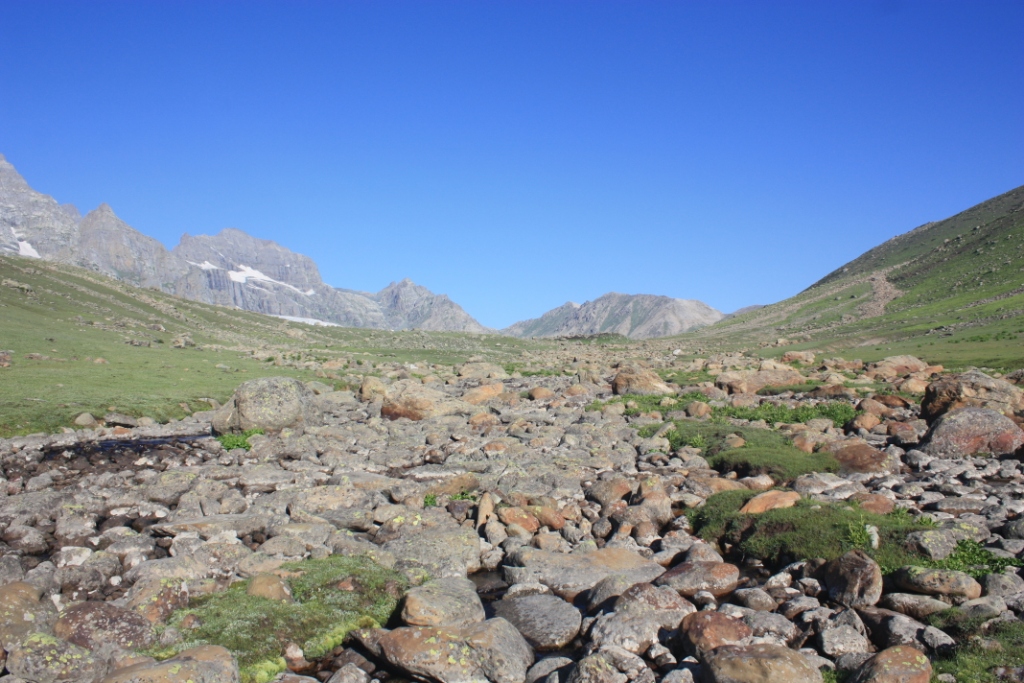
Climbing a mountain, I feel like
  I've escaped Plato's cave.
 My senses reel as though they're a
   crew of newly freed slaves.

The sky is bluer, rivers green,
  each grit granule is clear.
 And even at the very edge,
   there's ease in feeling fear.
 By "ease" I mean not frozen stiff,
   but like a friend so dear
 that one can take one's grand peril,
   a gift received with cheer.

Take me to the mountains, I say,
  where it's serene and real,
 and I can open up my sight
   to a world that's ideal.

Possibilities [Free Verse]

Possibility.

That which is not,
but could be:

in the future, or
in a world as feasible as our own.
(perhaps more so?)

When is a possibility a reality?

It may not be a reality
unless - and until - it comes to be,

and, yet, might be a basis of reality,
decisions are made on assumptions
that a possibility
has high probability 
of becoming reality. 

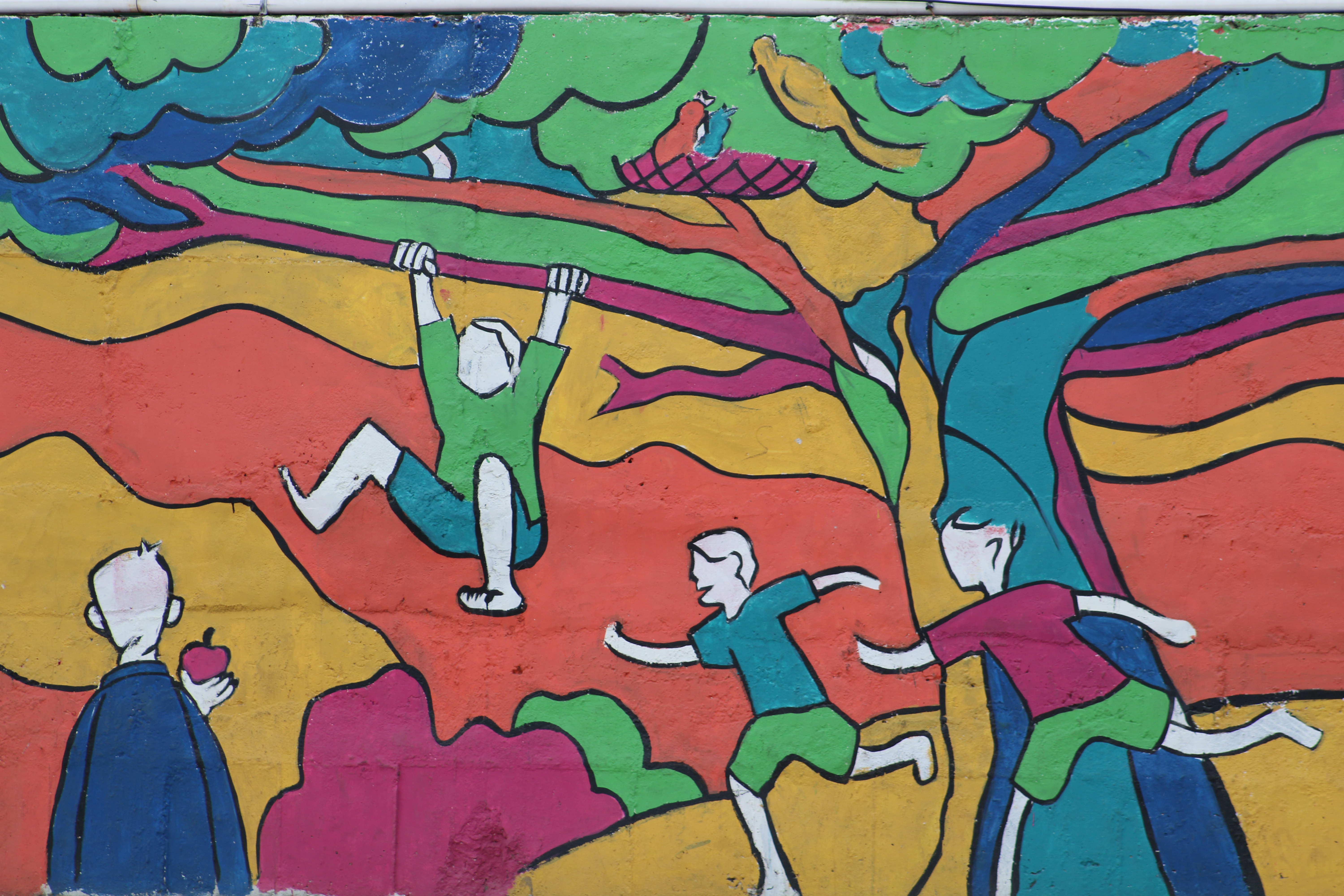
I see kids playing 
and feel the expanding field
of possibility, 

and wonder when it starts to shrink,
to collapse?

When & why
does possibility die?

BOOK REVIEW: The Romance of Reality by Bobby Azarian

The Romance of Reality: How the Universe Organizes Itself to Create Life, Consciousness, and Cosmic ComplexityThe Romance of Reality: How the Universe Organizes Itself to Create Life, Consciousness, and Cosmic Complexity by Bobby Azarian
My rating: 5 of 5 stars

Amazon.in Page

Out: June 28, 2022

This book presents a metaphysics based on the relatively new (but increasingly mainstream) sciences of complexity, chaos, and information. It boldly explores some of the major questions that consume both philosophers and scientists, such as: how life came to be, what life’s purpose is (to the degree it has one,) what consciousness is and does, and how come we live in a universe finely-tuned to generate and support life? (Particularly, if one doesn’t like explanations that are audacious and unprovable like “god did it” or “there are infinite parallel universes.”)

The book starts out in territory that is fairly uncontroversial among physicists, arguing that life comes about (and does so with striking speed – i.e. fast abiogenesis) by a process through which nature moves the ordered / useful energy that Earth has in abundance into disordered / useless energy (e.g. waste heat,) a process that runs on rules not unlike Darwinian evolution (molecules have an informational existence that allow something like hereditability [passing down of “blueprints”] and mutation [distortion in copies, some of which will make the molecule or organism more efficient at using energy.])

The book then ventures into territory that is quite controversial, arguing that life has a purpose (beyond the tedious one of moving low entropy energy into a high entropy state,) and that purpose is to be an observer – i.e. to be the first stage in a self-aware world. I should point out a couple things. First, when I say this part is controversial, I mean that it couldn’t be called the consensus view, but that’s not to say that these ideas don’t have a following among some high-level intellects. Second, I think we need people to consider ideas that might seem a bit “out there” because there is a danger of not progressing because we’re trapped in morass of assumptions. Science has quite a few self-appointed guardians who mock as pseudo-science any idea that strays from scientific consensus or from a rigidly reductionist / materialist / Copernican worldview. The author doesn’t abandon a scientific point of view, even though it might seem he does to some because he abandons the nihilistic view that’s taken as a given by many in the scientific community (i.e. that life is a happy accident without purpose, significance, or influence on the universe – and that life consists of automata, playing out programs — devoid of any kind of free will.)

I don’t know how much of Azarian’s metaphysics will prove true, but this book was superbly thought-provoking and opened up to me whole new vistas of possibility about the big questions of philosophy and science. I’d highly recommend it for readers interested in the meaning of life, the universe, and everything.

View all my reviews

Slant [Free Verse]

They told it slant,
but not all the truth,
and it rolled into the ears
of the willing
and into the minds
of the faithful.

And in those minds
it was built into 
a swift machine,
one of great power -- 
if little reality.

But deaths never required
reality of motive,
only 
reality of matter.

So, the wild stories
became wild ideas
that were the bane
of us all. 

POEMS: Worlds, Real & Imagined

People die from skin cancer —
freaking out about nuclear power plants —
but not freaked out about the sun
enough to slather on some sunscreen.

A plane crashes,
and many decide it’s safer to drive —
clearly, they must be among the 93%
who are better than average drivers.

Mosquitos kill five orders of magnitude
more people than sharks,
and yet “PROBOSCIS” is not a movie
that will give “JAWS” a run for its money.


People pride themselves on living in the real world,
and yet…

POEM: Time’s Arrow

Precognition?

I barely have post-cognition —
which is to say, memory.

I have memories of memories of a world that never was.

Cobbled together hopes, dreams, and fears made into a montage of me.

One could chip away at what never was, but I’m not sure reality could support it’s own weight.

What was might end up a toxic rubble, steaming away into nothingness.

5 Philosophical Questions Life Forces You to Answer

Like it or not, life makes philosophers of us all. You may hate philosophy, but you can’t escape it. You can — as many people do — outsource how you answer these questions, but that still requires a decision.

5.) How do I know a thing is true?  Sometimes the answer is self-evident, but, more often then people acknowledge, it’s not. This is exacerbated by the confusion of subjective truth (a personal “truth”) with objective truth (the universally true.)

Some people relinquish decision to an authority — be it a teacher, a scripture, or the scientific consensus. Some people only believe what said person’s personal experience tells them.

There is a related question of how tightly should one hold onto whatever beliefs one acts as if are true. The scientific approach suggests one should be ready to abandon something one believes is true in light of new information (assuming the new information is sound and can be validated.) Religions tend to prefer that the truths that have been handed down should be grasped firmly no matter what one sees, hears, or learns. One’s philosophical stance may take either approach, or one in between.

4.) [Who] am I?  As the brackets suggest, this is actually two questions. The full question, “Who am I?” presumes that there is a self (an I.) Some philosophies, e.g. Buddhism, reject this presumption, hence the more fundamental question of “Is there an I?”

3.) What constitutes a virtuous or moral life? Of course, some philosophies would reject the ingrained presumption that one should care, but that’s a fringe position. Maybe the more general question of “What constitutes a good life?” is a better one.

2.) What does it mean for something to be real? Some will say, “Come on. I know what’s real. I don’t need to philosophize about that?” Really? Because the best minds in the world are constantly debating this and have reached no consensus on the subject. It’s certainly possible to get through life behaving as though reality is “x,” whether or not “x” turns out to be true. But that’s very different from knowing what is true.

1.) Is there free will, and — if so — in what sense?  It feels like we have complete free will, but there are a couple of grounds on which this has been questioned. For the religious, reconciling an omnipotent god and free will takes some mental gymnastics. (If one can act completely freely, how can a god also?)

But more recently, free will has been challenged by science as well. Benjamin Libet’s work showed that “decisions” take place before people become conscious of them, and — therefore — aren’t decisions in the sense we usually understand that word (i.e. the product of conscious deliberation.) Of course, while some have argued that the repeated validation of Libet’s work shows free will is purely an illusion, there remain many who argue there are still possible ways in which some form of free will exists. (Including, apparently, Libet who believed we at least have “free won’t” even if we don’t have free will — i.e. we can consciously veto deterministic “decisions.”)

Best of luck picking — or building — your own life philosophy.

POEM: Momentarily Untethered


For a moment —
a still moment —
belief flat-lined.

I don’t mean belief in gods, myths, or monsters —
that abandoned me long ago.
[Or I abandoned it? Either way, it’s gone.]

I mean recognition that there is a world,
and that I know enough to hum along to its tune.

And as I’m listening to the shrill and steady tone in my ears —
[it really was a flat-line, like in the TV medical dramas]
the world snapped back to normality

&

I almost fell out of the bed.

BOOK REVIEW: Reality is Broken by Jane McGonigal

Reality is Broken: Why Games Make Us Better and How They Can Change the WorldReality is Broken: Why Games Make Us Better and How They Can Change the World by Jane McGonigal
My rating: 4 of 5 stars

Amazon page


The provocative title of this book captures why people are so drawn to games while they are, simultaneously, discontented with their real lives. McGonigal argues that all aspects of human activity could benefit from gamification, and that we should stop thinking of games as trivial endeavors to be engaged in in our spare time. After reading the book, I have a much better understanding of how turning activities into games can increase motivation, productivity, and – if done right – even human interaction. That said, I remain unsettled as to whether her overall thesis is sound.

On one hand, games are unambiguously motivating and captivating. To see it, one needn’t look further than the people playing games for free with at least as much (re: more) enthusiasm and attentiveness as they do those activities for which they are paid a salary. The mechanism by which games spur us is understood. Considering the question from the perspective of Mihaly Csikszentmihalyi’s “Flow” (as McGonigal does in ch. 2) we can see that constant feedback and an impetus to reach ever beyond our current capacity make games Flow-prone activities. Given that Flow is associated with both high productivity and positive mental states, that’s a sound argument in support of McGonigal’s ideas.

That said, I’m afraid that the need for constant, instantaneous feedback and the inability to remain mentally engaged for long periods when one must focus on something dull could have dire consequences for our species. Homo sapiens once had to follow wounded prey for days with constant vigilance, without instantaneous feedback, and with the possibility that the payoff could be lost at any moment. We developed attentiveness and mental discipline in the face of unstimulating conditions at great cost, and it has helped us to achieve great things. What will happen to our mental machinery when no one can pay attention for two minutes if there isn’t the possibility of an instantaneous virtual reward for it? To be fair, McGonigal does acknowledge — and to some degree discusses — these issues, but fails to take on such questions in much detail or with much objectivity. (It should be noted that she does extensively challenge the belief that gaming leads to lonely people living on their couches and never talking to real people in the real world.) The book is extremely thought-provoking, but shouldn’t be taken as an unbiased examination of the rise of gamification.

The fourteen chapters of the book are divided into three parts. The first part (ch. 1 through 6) both introduces what games are and offers insight into what they do for us. This includes an examination of what positive psychology (e.g. Csikszentmihalyi, as mentioned) has to say about games, as well as how games can foster collaboration and give us the ability to take on problems bigger than our individual capacities would allow. Chapter four offers one of McGonigal’s most powerful arguments: that games are a way for people to learn to fail with grace and resilience. Adult humans tend to be severely averse to failure. (There’s a great meme featuring a baby sitting like she just plonked down on her butt, and the caption reads, “What if babies decided after four or five falls, ‘This walking thing just isn’t for me?’”)

The second part (ch. 7 through 10) is entitled “Reinventing Reality,” and it considers how games can be brought into real life to make reality more invigorating. A great example of this can be seen in the discussion of “Chore Wars,” which is a game designed to take household chores out of the realm of mundane drudgery and to make them a competitive activity that excites people. McGonigal uses the story of real games that have been developed for various purposes extensively in both part II and part III. Another example is the “Tombstone Hold ‘Em” game that was designed to address the problem of declining visits to cemeteries. While there are games that address less unusual topics, these two examples are insightful in that they show how virtually any endeavor can be gamified.

The final part (ch. 11 through 14) suggest how games can be used to take on large and difficult problems. Such challenges often remain insufficiently addressed (or unaddressed altogether) because of a lack of immediate motivation to take them on or a structure to organize activities – games can help provide both the motivation and the organization. Readers learn how the wisdom of crowds can be harnessed, as well as how incentives to change behavior can be created. In this section, McGonigal highlights games such as one designed to help humanity move beyond our oil supply.

The book has a few graphics and appendices, and is annotated to support the author’s thesis.

I found this book to be thought-provoking and insightful. As I mentioned, it doesn’t address my fears that humans will become incapable of sitting down and reading Joyce’s “Ulysses” or weeding a garden if we tread the path needing some sort of Pavlovian pat-on-the-back every time we do anything. (Again, to be fair, the author does suggest that one limit time devoted to gaming – e.g. Appendix 2.) The book does do a good job of showing how games can be used to make people more motivated, productive, and happy. I would recommend it for people considering that question, as well as those trying to figure out how they might go about gamifying some activity that they think needs to be more motivating.

View all my reviews

POEM: Madmen on the March

by Gustave Dore (via Wikipedia)


Madmen on the march
Clones de la Mancha
Pouring through the arch
Lacking lingua franca


Seeking common thrills
An army of sham knights
Tilting at windmills
With more pride than fight


It’s not a sickness of the brain
that scripts this lunatic life.
It’s chasing the sanction of “sane”
that breeds this stream of strife.


[Note: A poem on the hilarity of defining sanity as the recognition of reality. As if any of us knows what’s real in a meaningful sense. Sanity is being able to pretend you know what’s real with sufficient confidence to avoid grinding against society’s sensitive spots.]