5 Books to Read If You Want to Live

Taken on the Annapurna Sanctuary Trail in Nepal.

Over the years, I’ve read many books about survival in extreme or unexpected situations. Here are five of my favorites.

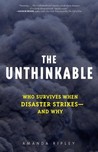
THE UNTHINKABLE by Amanda Ripley [Full Review]

What I like about this book: Ripley focuses heavily on the topic of mindset while exploring a wide range of survival situations from being stranded in a lifeboat to being in the Twin Towers on 9/11. It’s a fascinating – as well as educational – book.

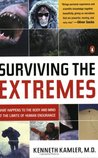
SURVIVAL AT THE EXTREMES by Kenneth Kamler [Full Review]

What I like about this book: This book focuses on surviving in all the places humans are not adapted to, places where one cannot live for long without ongoing technological support. These places include Mt. Everest (with which the author has personal experience,) the ocean, and the harshest of deserts. Kamler is a medical doctor and the book, therefore, does a good job of explaining the limits of human physiology.

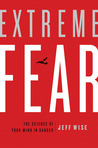
EXTREME FEAR by Jeff Wise [Full Review]

What I like about this book: Wise’s book examines how fear can work against us in challenging situations (e.g. causing one to freeze at the wrong time) and what methods have been developed to overcome such crippling or inappropriate fear responses. This book is not entirely about life-and-death survival, but it does have a lot to say that is relevant to the subject.

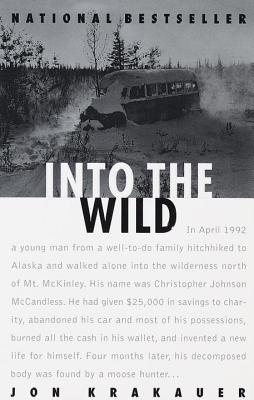
INTO THE WILD by Jon Krakauer [Full Review]

What I like about this book: This book is not like the others. There are no physical or mental techniques for survival described in it, nor discussions of physiology. Rather, it is an extremely well-written cautionary tale about a young man who goes out into the wilderness and gets in over his head. It is highly readable food-for-thought.

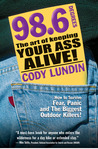
98.6 by Cody Lundin [Full Review]

What I like about this book: This is the closest thing to an actual survival manual on my list. But it’s written in conversational, folksy style that makes it easy to read, despite the daunting subject matter. As the title suggests, Lundin’s central premise is that one must keep the body burning at its appropriate temperature, or else…

BOOK: “The Mind Electric” by Pria Anand

The Mind Electric: A Neurologist on the Strangeness and Wonder of Our BrainsThe Mind Electric: A Neurologist on the Strangeness and Wonder of Our Brains by Pria Anand
My rating: 5 of 5 stars

Publisher Site — Simon & Schuster

There are A LOT of pop neuroscience books out there that reflect upon what we know about the brain from what goes wrong with it. I thought I was done reading such books because, while the first few are fascinating, they tend to retell the same stories.

That said, I’m glad I read this one, and what made it worth reading was that the science was explored in a very personal way, and I don’t just mean that the author recited her own personal experiences or those of her patients (though she does both,) but rather that the whole book is imbued with her worldview. She relates maladies of the mind to works of literature, of Greek and Hindu mythology, and to other aspects of culture in a relatable manner.

Another factor that sets this book apart is that its author shows a passion for language. In that sense, it reminded me of the works of Oliver Sacks (who she references a number of times,) rather than your average — articulate but linguistically conservative — neuroscientist.

I’d recommend this book for any readers interested in neuroscience, particularly anyone looking for a book that sets itself apart from the crowd. (I don’t recall it even mentioning Phineas Gage, which I thought was a requirement of all such books.)

View all my reviews

BOOKS: “Lost in the Twentieth Century” by Albert Szent-Györgyi

Lost in the Twentieth Century (Annual Review of Biochemistry Book 32)Lost in the Twentieth Century by Albert Szent-Györgyi
My rating: 5 of 5 stars

Available Online – NIH National Library of Medicine

This is the very brief autobiography of a fascinating man. Szent-Györgyi is most famous for work in biochemistry involving Vitamin C, work that won him a Nobel Prize. However, his life is not only notable for science before and after the Nobel (after he worked on the physiology of muscular activity, on electron activity in physiology, and on cancer.) He also performed important works outside the laboratory, notably he conducted an espionage / diplomatic mission during the Second World War (“Espionage” in that he traveled to Turkey under false pretenses, under cover of giving a lecture at a university, “diplomatic” in that the trip’s true objective was to negotiate with the Allied powers.)

Szent-Györgyi has some interesting quips and insights that make it worth reading this pamphlet-scale book, even though his Wikipedia page probably contains as much information. He had an interesting way of thinking about matters, both scientific and not, and was politically and socially engaged in the world.

If you’re curious about Szent-Györgyi or enjoy biographies, in general, I’d highly recommend reading this one.

View all my reviews

BOOK REVIEW: Body Am I by Moheb Costandi

Body Am I: The New Science of Self-ConsciousnessBody Am I: The New Science of Self-Consciousness by Moheb Costandi
My rating: 5 of 5 stars

Amazon.in Page

In this book you’ll learn about: a man who wanted a perfectly healthy leg amputated, a fisherman who felt like his hands were crab claws, a woman who felt she wasn’t responsible for the actions of her hand, various people who’ve experienced “Alice in Wonderland Syndrome” [i.e. feeling one has shrunk or stretched,] and about many other issues stemming from the body’s sensory and motor integration with what we think of as the mind. For most of us, the most powerful take-away to be gained from this book is just how wonderful and awe-worthy it is that we have bodies that are so well integrated and coordinated that we can go about life engaging in all sorts of fascinating and productive activities.

While this isn’t the only book that addresses this subject, I think it’s a topic worth learning more about and reflecting upon in depth. We can get so out of touch with the fact that our body is integrated with our mental and sensory experiences that we take “brain in a vat” scenarios as a given for the near future, as if one is the sum of one’s neuronal connections. This book will disabuse one this notion. In fact, the final chapter (Ch. 10) questions the proposition that copying consciousness is a matter of mastering such neuronal mapping. It’s easy to miss how much of our emotional experience is rooted in what’s happening in our guts and heart, and how much all the non-central nervous system parts of the body play in our conscious experience of the world.

I learned a great deal from this book and would highly recommend it.

View all my reviews

BOOK REVIEW: The Exquisite Machine by Sian E. Harding

The Exquisite Machine: The New Science of the HeartThe Exquisite Machine: The New Science of the Heart by Sian E. Harding
My rating: 5 of 5 stars

Amazon.in Page

Release date: September 20, 2022

Get Speechify to make any book an audiobook

In this book, a renowned heart researcher presents an overview of what we know (and don’t know) about the human heart: i.e. what can go wrong with it and why, how [and to what degree] it fixes itself, and what modern medicine can do to treat or replace a damaged heart. I learned the most from the middle of the book – i.e. chapters five through seven. Chapter five explores plasticity in the heart, plasticity is a concept that most people associate with the brain and its ability to rewire itself to contend with damage or changing needs. The other two chapters look at how the heart can be damaged, specifically as a result of emotional experience. A “broken heart” isn’t necessarily a misnomer.

Chapter four is also intriguing but takes the win for “which one of these things is not like the others.” It deals with big data, though not in a general sense but rather as it applies to gaining a better understanding of the heart. This chapter discusses a common challenge of medical research: that it’s hard to come up with large enough study groups of patients with close enough to the same problem to draw solid conclusions. Four also discusses the potential of the vast amount of data that exists, e.g. Fitbit heart rate figures.

The last couple chapters deal largely with the future of heart repair through genetic / biological means (as opposed to via mechanical hearts and technologies, which are dealt with in Chapter nine.) This is where the book gets to be a challenging read for a readership of non-experts. It gets technical and jargon- / acronym-heavy.

The heart is an astounding entity, relentlessly at work, rarely giving up despite regularly being subjected to intense shocks, an organ tied to our whole being in a way that humans have always felt – if only just begun to understand. If you’re interested in learning more about this magnificent organ, check this book out.

View all my reviews

BOOK REVIEW: The Physiology of Yoga by Andrew McGonigle & Matthew Huy

The Physiology of YogaThe Physiology of Yoga by Andrew McGonigle
My rating: 5 of 5 stars

Amazon.in Page

This is a much-needed book for two reasons. First, while there are a number of fine books on anatomy as it applies to yoga, such books focus on the musculoskeletal system, occasionally venturing into the respiratory system – re: pranayama (breathwork.) However, yoga anatomy books rarely giving an overview of the workings of the body as a whole or describe how yoga influences and is influenced by other bodily systems. This book systematically reviews not only the muscles, bones, and lungs, but offers insight into the less familiar systems, such as the lymphatic, immune, and endocrine systems. Unless you want to know more about yoga and the integumentary system (skin, hair, and nails,) this book has got you covered. The book does an excellent job of avoiding muddling science with mythological beliefs about the body, a common sin among yoga books.

Second, there are many physiology misunderstandings and mistakes that are widespread and have come to be repeatedly parroted by new generations of teachers. These range from ideas that are unsupported by scientific evidence to those that are completely in conflict with well-understood science. This book has text boxes throughout that investigate widely taught physiology myths (e.g. twists detox the liver, shoulder stands stimulate the thyroid & pineal glands, kapalbhati (forced exhalation breathing) stops the aging process, heavy sweating detoxifies the body, and various claims about specific asana / practices curing specific ailments.) These boxes review what studies have been done on each claim, and (in the absence of scientific literature) it discusses whether claims make any sense in light of well-established physiological science.

The book is clear and easy to read, and has well-drawn anatomical drawings and diagrams to help communicate the workings of the body. It also has an extensive bibliography of works referenced.

The book wasn’t perfect. I thought the last chapter, which is a collection of yoga sequences, was out of place and unnecessary, given the objectives of this book. I suspect its inclusion was solely to remind readers flipping through the book that they were reading a book about yoga as well as physiology. (The graphics and headings don’t necessarily scream yoga.) However, I think this could have been more relevantly and effectively by including more graphics throughout that show individuals engaged in yogic practices / asana, or – alternatively – focusing on the physiological aspects of the practices and sequences in the last chapter. There was also a place or two where I wasn’t sure what the authors were saying, not because they didn’t write in a clear and readable style or because what they were saying wholly conflicted with what I understood to be true, but just because there was enough ambiguity that I was left puzzled.

Overall, I’d recommend this book for yoga teachers and practitioners looking to expand their understanding of the workings of the human body, and to liberate themselves from some misinformation that has gained a following.


View all my reviews

BOOK REVIEW: Life at the Extremes by Frances Ashcroft

Life at the ExtremesLife at the Extremes by Frances Ashcroft
My rating: 5 of 5 stars

Amazon.in Page

Anyone interested in the limits of human physiology will find this book fascinating. Technically, its subject matter is broader than that, considering the environmental limits of living creatures, generally. However, all but the last chapter focuses on how humans react to (and adapt to) extreme conditions. Chapters one through six explore the challenges and limitations of humans under extreme conditions of elevation (ch. 1,) of pressure [underwater] (ch. 2,) of heat (ch. 3,) of cold (ch. 4,) of intense physical activity [running-centric, but deals with strength and power as well] (ch. 5,) and in space (ch. 6.) Then, each chapter reflects upon examples of species that are extremely well-adapted to said conditions, and why. (e.g. After learning about how and why humans have to acclimate to survive high elevation treks, one learns about the bar-headed goose, a bird that can go from sea level to flying over Everest – all in the same day.)

The final chapter (ch. 7) is a bit different in that it discusses extremophiles, creatures that can survive in a wide range of conditions (e.g. acidity, temperature, lack of moisture, lack of oxygen, etc.) that would be certain death not only for humans but for any animals. Most of the species discussed are either single-celled creatures or tiny multi-cellular life (e.g. Tardigrades.) With respect to humans, there is a discussion of the limits and present understanding of suspended animation.

This book offers an intriguing look at life at the extremes. While written by a Professor of Physiology, it’s highly readable for a general audience. It mixes narrative examples in with the discussion of physiology to make the material approachable and engaging. I’d highly recommend this book.


View all my reviews

BOOK REVIEW: Drunk Flies and Stoned Dolphins by Oné R. Pagán

Drunk Flies and Stoned Dolphins: A Trip Through the World of Animal IntoxicationDrunk Flies and Stoned Dolphins: A Trip Through the World of Animal Intoxication by Oné R. Pagán
My rating: 5 of 5 stars

Amazon.in Page

Humanity’s proclivity to think ourselves above nature has led us to miss the fact that we aren’t the only intelligent creatures and that we share more in common with the rest of the animal kingdom than – perhaps – we’d like to think. Science’s recognition of this truth has spawned a vast collection of books on animal (and, for that matter, plant) intelligence as well as the other traits we share in common with different species. This book carves out an interesting niche in this literature by discussing how other creatures use psychoactive substances (i.e. what we think of as “drugs and alcohol.”) While people tend to think that we are alone not only with respect to intelligence, but also with respect to our vices, it turns out this doesn’t seem to be the case. Of course, there’s a lot we don’t know about dolphins that play with blowfish or monkeys on magic mushrooms – e.g. what their internal experience of the substance is like, and to what degree consumption is purposeful versus accidental, but there is an increasing number of studies that suggest other species use drugs, and like it. The book also delves into the role plants play, particularly in producing substances that have psychoactive effects.

This book is humorous (the material is certainly there) and intriguing. It’s an easy pop science read, and avoids becoming too bogged down in the minutiae of biochemistry. That said, it does include graphics, such as chemical diagrams of psychoactive molecules, and does have to dip its toe into concepts of biology and chemistry. If you find the topic intriguing, you should give it a read.

View all my reviews

BOOK REVIEW: Yoga Anatomy, 3rd Ed. by Leslie Kaminoff and Amy Matthews

Yoga AnatomyYoga Anatomy by Leslie Kaminoff
My rating: 5 of 5 stars

Amazon.in Page

This book has several competitors, and so this review will focus on a few of the features that I believe make it one of the best books on yoga anatomy, and the most appropriate for many users. To clarify, H. David Coulter’s “Anatomy of Hatha Yoga” has some advantages over this book, but Coulter’s book is also denser and will send neophyte readers to the glossary / internet / library much more often. On the other hand, some of the other yoga anatomy books fixate entirely on postural yoga and treat it entirely as a matter of skeletal alignment and muscular engagement. While a lot of this book (and any such book, really) focuses on skeletal alignment and muscular engagement, I appreciated the books exploration of breath and the nervous system – topics that are often neglected. In short, this book offers a mix of reader-friendliness and detail that makes it at once approachable and tremendously informative.

One important feature of this book is that it avoids the dogmatism of some yoga texts, encouraging experimentation and recognizing that a one-size-fits-all approach to bodies is bound to fail. This can best be seen in the “Cueing Callout” boxes that explore the pithy adjustment directives for which yoga teachers are famous (and often satirized,) advice that is often misunderstood in ways detrimental to a student’s progress.

A second key feature involves keeping anatomy and physiology distinct from the folk science of yoga / ayurveda. While Kaminoff and Matthews do refer to ideas like prana and apana, they do so in a broad, conceptual way that doesn’t conflate said ideas with science. A common problem in yoga texts is conflation of science with folk science such that confused readers are left with a muddle of puzzle pieces that don’t belong to the same puzzle.

Finally, as one who’s found pranayama (breathwork) to be one of the most profoundly transformative elements of a yoga practice, I appreciated that the book not only had a chapter on breath dynamics, but that all the posture discussions included a “breath inquiry” section that encouraged readers to reflect upon the effect of the posture on breathing, as well as suggesting ways in which a practitioner might experiment to improve one’s breathing.

The only criticism I have is that many of the text-boxes in the early chapters seemed to contain random information that could have been incorporated into the text, into footnotes, or edited out altogether. [In contrast to the aforementioned “Cueing Callout” boxes that had a clear and distinct purpose.] If you’re a yoga teacher or dedicated practitioner without a deep scientific background, you’d be hard-pressed to do better than this book for learning about the anatomy of yoga.


View all my reviews

BOOK REVIEW: Immunity by Jenna Macciochi

Immunity: The Science of Staying Well—The Definitive Guide to Caring for Your Immune SystemImmunity: The Science of Staying Well—The Definitive Guide to Caring for Your Immune System by Jenna Macciochi
My rating: 5 of 5 stars

Amazon.in Page

This is a book about how to keep one’s immune system firing on all cylinders, and it reports on the scientific findings about how a range of lifestyle activities (e.g. exercise, sleep, and nutrition) impact upon the robustness of one’s immune response. The book was exceedingly timely, having been put out last spring in the early days of the pandemic [though I was delinquent in getting to my review until now.]

The book consists of just seven chapters, though they are substantial in length and extent of discussion of the respective topics. The first chapter offers a primer on the immune system, its components, and how it does its crucial job. This chapter also explains how vaccinations work, what autoimmune diseases and allergies are, and what role genetics (nature) and lifestyle / environment (nurture) play in immunity.

Chapter two investigates a range of topics at the nexus of lifecycle and immunity, including: differences between male and female immune responses, pregnancy and immunity, and the effects of aging and menopause on immune system activity.

Chapter three is about our intestinal microbiomes and immunity. If this seems like a strange topic to devote an entire chapter to, you probably haven’t been following the voluminous outpouring of research findings about how our helpful microbiological lifeforms are being shown to have a profound impact on all aspects of human health and well-being from mental health to, well, immune system robustness.

Chapter four explores how immune system activity is compromised by lack of sleep or poor-quality sleep. However, it also looks more broadly at how our immune system responds to the various cycles in which it finds itself — from the daily cycle of days and nights to the yearly seasonal cycle.

Chapter five considers the nexus of mental health and immune response. As was mentioned with respect to the gut, the connections between physiological activity and mental health are becoming ever more apparent – though there remains much to be understood.

The penultimate chapter is about fitness and physical activity and what is know about why exercise is so good for one’s immune response. Of course, there seem to be diminishing marginal returns (less benefit for a given additional workout) and even diminishing returns (negative outcomes) if one goes too crazy with one’s exercise regiment and doesn’t give one’s body adequate amounts of rest.

The final chapter is about the role of nutrition in immune system activity. The approach is very much accord with my own beliefs which are that if one eats right, there is little need for supplements, and no volume of supplements will save you from a poor diet. The emphasis is upon a high-fiber diet rich in plant nutrients and balanced to provide all necessary macro- and micronutrients, while debunking fads and dietary myths. There is discussion of many of the foods that are traditionally associated with immunity (echinacea, elderberry, turmeric, etc.,) and what claims seem to hold and which are unproven.

If you don’t know a lot about the science of healthy lifestyles, this book offers an additional benefit in that it approaches the topic from a quite basic level. That is, it provides a lot of background information that would be useful for a complete neophyte to understand the points about immune activity. So, for example, the author lays out rudimentary explanations of micronutrients or sleep cycles before getting into the relevant information about how these impact on immunity. Of course, the flip side is that for those who have studied this science, it may take some skimming because there is a lot of material that will probably be elementary to those who practice healthy living.

I found this to be an extremely beneficial book. Its focus upon what one can do to improve immune robustness makes it tremendously useful for the average reader. It presents the science without getting too deep in the weeds of detailed physiological activity. I felt the author did an excellent job of walking the line to produce a book that is useful, readable, and digestible.

View all my reviews