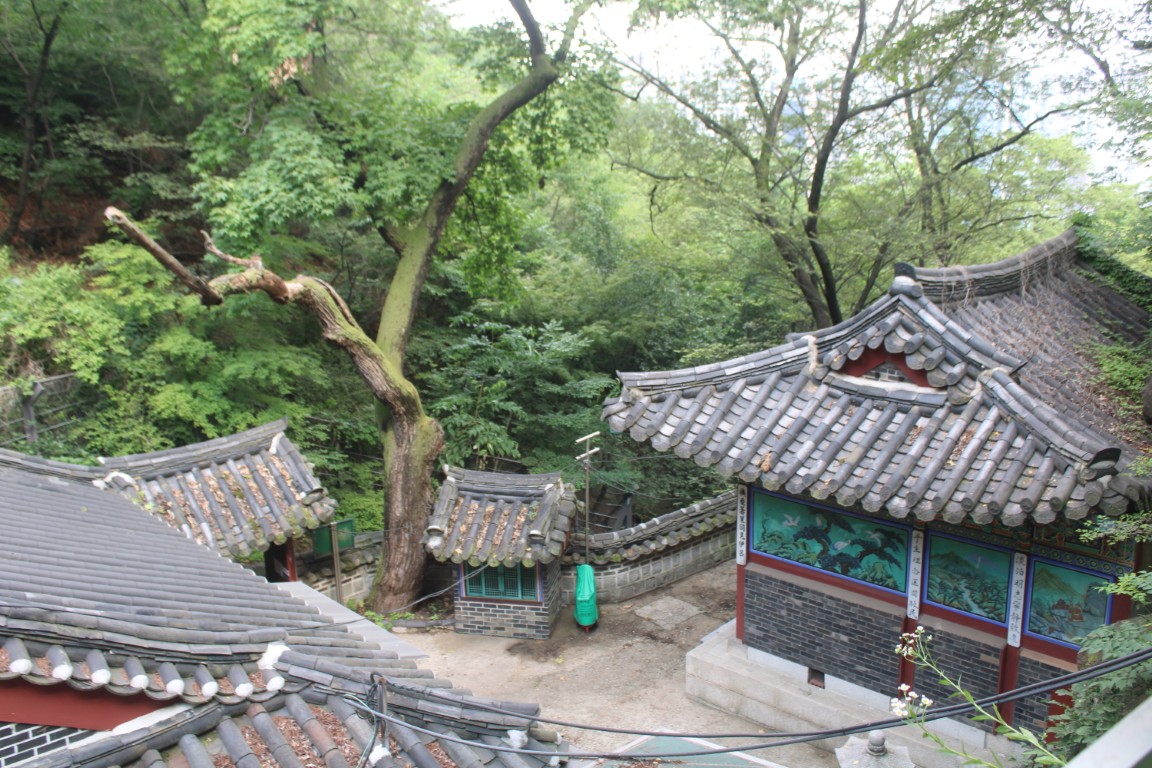
On Tourists & Travelers [Free Verse]

A tourist looks back fondly upon 
A favorite destination;
A traveler is always at it.

A tourist loathes travel hiccups;
A traveler calls them stories.

A tourist jumps from one
Postcard vista to the next;
A traveler moves through the world.

A tourist collects knicknacks & geegaws;
A traveler collects experiences.

A tourist, between sights, seeks
A life experience as close to
Their homelife as possible.
A traveler wants a life experience
As close to local as possible.

A tourist has a favorite meal;
A traveler assumes he hasn't
Crossed paths with it yet.

A tourist leaves nothing to chance;
A traveler embraces the spontaneous.

A tourist takes comfort as a main course;
A traveler uses it like a condiment.

FIVE WISE LINES [June 2025]

…we should not be too confident in our belief of anything.

cicero; tusculan disputations

No matter what plans you make,
no matter what you acquire,
the thief will enter from the unguarded side.
Be occupied, then, with what you really value
and let the thief take something less.

Rumi; Mathnawi II

Very little is needed to make a happy life;
it is all within yourself, in your way of thinking.

Marcus aurelius; Meditations

I possess, but I am not possessed by her;
since the best thing is to possess pleasures
without being their slave,
not to be devoid of pleasures.

aristippus [according to Diogenes laertius in
lives of the eminent philosophers]

Do not fear the gods.
Do not fear death.
What is good is easy to attain.
What is painful is easy to endure
.

philodemus; Herculaneum papyrus
[Often referred to as the four cures of epicurus]

PROMPT: Three Books

List three books that have had an impact on you. Why?

Steven Kotler’s The Rise of Superman changed the way I looked at mind-body development.

Water Margin [a.k.a. Outlaws of the Marsh] convinced me a sprawling epic could be worth reading if it was done well, it kicked my love of Chinese Literature into high gear, and it started me on the path of learning Chinese.

Self-Reliance and Other Essays by Ralph Waldo Emerson had a major influence on my early philosophical development — especially the titular essay.

Now, I’m thinking I should’ve pushed one of these out for Leaves of Grass by Walt Whitman, but perhaps another time.

BOOKS: “Violence: A Very Short Introduction” by Philip Dwyer

Violence: A Very Short Introduction (Very Short Introductions)Violence: A Very Short Introduction by Philip Dwyer
My rating: 4 of 5 stars

Publisher Site – Oxford University Press

This is a brief overview of various types of violence, starting with the question of what counts as violence. The book explores violent acts carried out by individuals, mobs, movements, governments, and religions. It reflects upon how the nature of violence has changed over the centuries while hinting at potential reasons for said changes (along with counterarguments.)

This book raised some provocative questions, such as: Why would people go to watch executions? Does Steven Pinker’s hypothesis that humanity is becoming less violent hold water? [Pinker made this argument in his book The Better Angels of Our Nature, but it has been refuted on number of grounds — definitional, methodological, etc. Though Dwyer only briefly touches on Pinker’s book and its critics in this book and a detailed critique will require looking elsewhere.] How (and why) do violent tendencies vary across cultures. And, when and how did governments end up with a monopoly on legitimate use of force.

I found this book interesting and informative and would recommend it for those looking for answers as to why and how our species is so violent.

View all my reviews

BOOKS: 千字文 [Thousand Character Essay] by 周兴嗣 [Zhou Xingsi]

千字文千字文 by 周兴嗣
My rating: 4 of 5 stars

A version with English commentary can be found at the IFA Gallery

This short work, consisting of just one-thousand characters, is first and foremost a teaching tool for children. While it presents a thousand of the most important Chinese characters, it also delivers lessons on history, ethics, philosophy, and culture by way of short sayings.

It’s arranged into 250 4-character phrases (125 sentences) and reads as a lyric poem, though because it dates to the Sixth Century, the degree to which the rhyme scheme holds varies depending upon the which spoken language one speaks (e.g. Mandarin, Cantonese, or Hakka.)

There have been different versions of this work over the centuries.

This is a much beloved work of literature among Chinese, though its sayings do not necessarily hold up as well as works like Sunzi’s Art of War or Laozi’s Daodejing. Some do, but most are much less relevant than when written.

As someone learning Chinese, I’d highly recommend this work as a way to expose oneself to language while gaining insight into Chinese culture.

View all my reviews

PROMPT: All

Daily writing prompt
What does “having it all” mean to you? Is it attainable?

Health, food, air, water, love, and thought… that about covers it.

Sure, why not?

PROMPT: Belongings

Daily writing prompt
What personal belongings do you hold most dear?

I do have a jō (short wooden staff) of which I’m fond. I crave books, but since I could care less whether I read them as paper or on a screen and gladly give any but those with long-term reference value away after reading, I don’t think they count.

Being fonder of ideas than anything material, I like the story about Diogenes the Cynic who, upon seeing a boy drink from cupped hands, threw away his cup in self-anger for being such a hoarder.

PROMPT: Legacy

Daily writing prompt
What is the legacy you want to leave behind?

If “legacy” is defined as something left behind that serves to keep one’s memory alive, then I don’t. I think that goal is futile, illusory, and a bit narcissistic. Even those who are “remembered” long after their deaths are not truly remembered. For example, the Alexander the Great who is remembered to this day likely bears little resemblance to the one who was flesh and blood. What we remember are products of imagination. [Which is fine, but then why tie them to people who lived as opposed to purely fictional ones?]

If I could leave behind some configuration of knowledge of the art of human living that would be helpful to anyone (without it being tied to my identity or memory) that would be a fine thing.

Crisis Arises [Free Verse]

Crisis arises
From the depths
Of intended perfection --
"Intended" because all
We can ever do is
Aim & release.
It is more an act of luck
To hit the bullseye
Than to miss.
Bullseyes don't occur because
Of a lack of adverse forces
At work.
They occur because of some
Fortuitous balancing
Of adverse forces.

“Have you ever made a just man?” by Stephen Crane [w/ Audio]

"Have you ever made a just man?"
"Oh, I have made three," answered God,
"But two of them are dead,
And the third --
Listen! Listen!
And you will hear the thud of his defeat."