BOOK REVIEW: Monkey: A Folk Novel of China by Wu Cheng’en

Monkey: A Folk Novel of ChinaMonkey: A Folk Novel of China by Wu Cheng’en
My rating: 4 of 5 stars

Amazon page


If you’re familiar with any Chinese folklore, it’s probably this story. But you probably know it as “Journey to the West.” It’s not only been released in numerous editions as a novel, it’s also been adapted for film, stage play, and I’m sure there must be a video game of it out there.

If you’re thinking, “Chinese folklore? Sounds boring.” Think again. This is a superhero story. Monkey, also known as the Monkey-King and “Great Sage Equal to Heaven,” is an immortal who has all manner of supernatural powers. He can fly. He can make copies of himself. He can transform himself—either disguising himself as another being or appearing as an inanimate object. He has an iron truncheon that can be the size of a sewing needle or a mile long and which is indestructible. Wielding said staff, he can defeat armies or deities.

In fact, the flaw in this story isn’t a lack of adventure or thrill. On the contrary, it’s one adventure after the next. If anything, the flaw is “Superman Syndrome.” That’s what I call it when the hero is so ridiculously overpowered that even when he’s fighting gods, dragons, or whole armies there’s still no doubt about the outcome.

Of course, the Monkey does eventually meet his match in the form of the Buddha. The Buddha defeats Monkey not in combat, but in a bet. That event shifts the direction of the story. In the early chapters, Monkey is goes about heaven and earth arrogantly wreaking havoc. He’s not altogether detestable. He does have his redeeming traits, but he’s insufferably arrogant and mischievous. After he’s imprisoned following his run-in with the Buddha, a monk is assigned to go to India to bring back scriptures (hence, a “journey to the west”) to China. Monkey is assigned to be the monk’s guardian and along with two others that they pick up along the way (Pigsy and Sandy) the monk is escorted on his journey. The party faces one challenge after the next, and the trip is long and arduous. Some of the challenges require brute force but in many cases they are battles of wits. So while Monkey may be overpowered, he does experience personal growth over the course of the story.

The story is told over 30 chapters, each set up with a cliffhanger. I enjoyed this translation by Arthur Waley. It is end-noted, which is useful given the historic and cultural nuances that may not be clear to readers.

It should be noted that this is unambiguously a Buddhist tale. There is a bias against Taoists and other non-Buddhist religions evident throughout the story. It’s not just the fact that the Buddha easily defeats Monkey when no other deity or group of deities can, there’s a steady stream of anti-Taoist sentiment. So, Taoists and Chinese Folk Religion practitioners be warned, I guess.

I would recommend this book for fiction readers, particularly if you have an interest in the superhero genre or Chinese literature.

View all my reviews

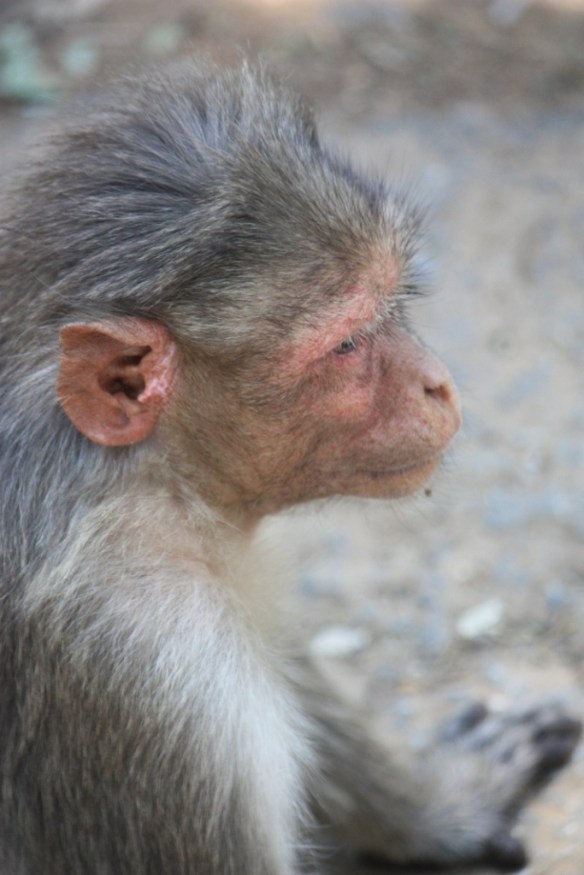
DAILY PHOTO: Old Macaque in Profile

Taken in March of 2014 in Nandi Hills

Taken in March of 2014 in Nandi Hills

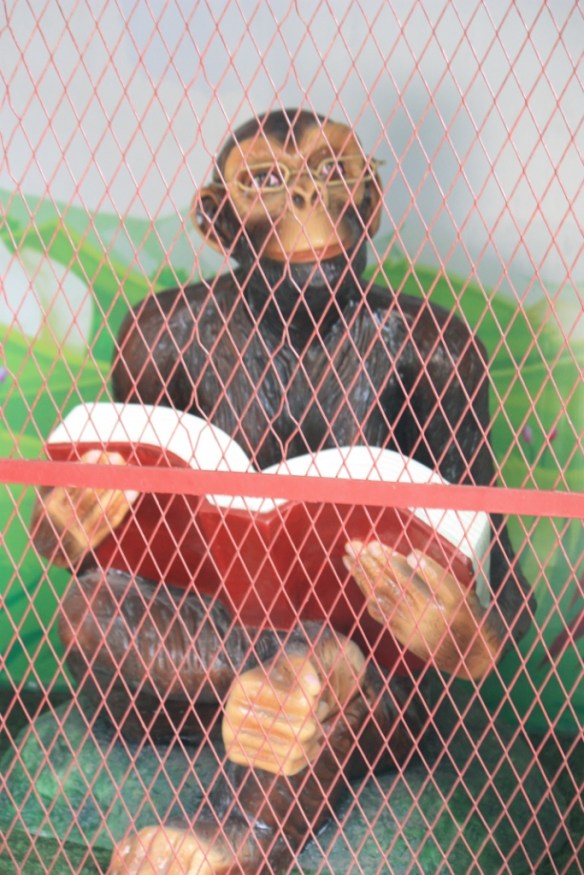
DAILY PHOTO: Chimp in a Cage Reading a Book at the Amritsar “Zoo”

Taken in Amritsar on April 10, 2016

Taken in Amritsar on April 10, 2016


So many questions:

1.) As it’s clearly not a real ape, why the need for the cage?

2.) Why did they anthropomorphize this particular primate? (i.e. Is it just whimsicality, or is it a statement of some sort?) [Most of the creatures are in animalistic poses–though often not to scale.]

3.) Did the chimp start off reading huge (Tolstoy / Dickens / Ayn Rand style) books, or did it have to work up to them?

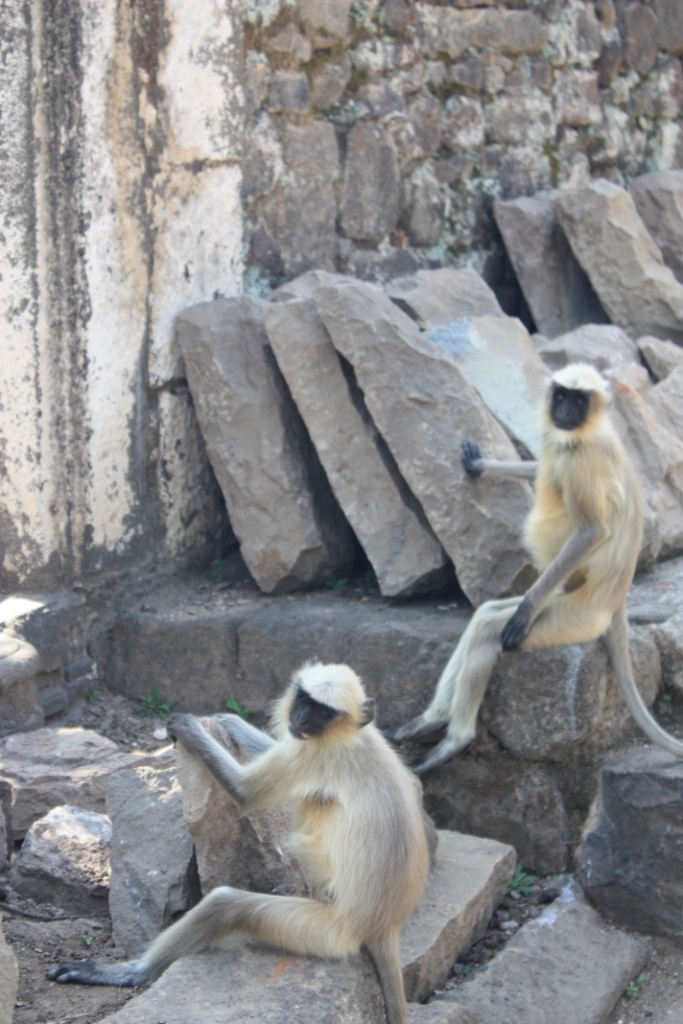
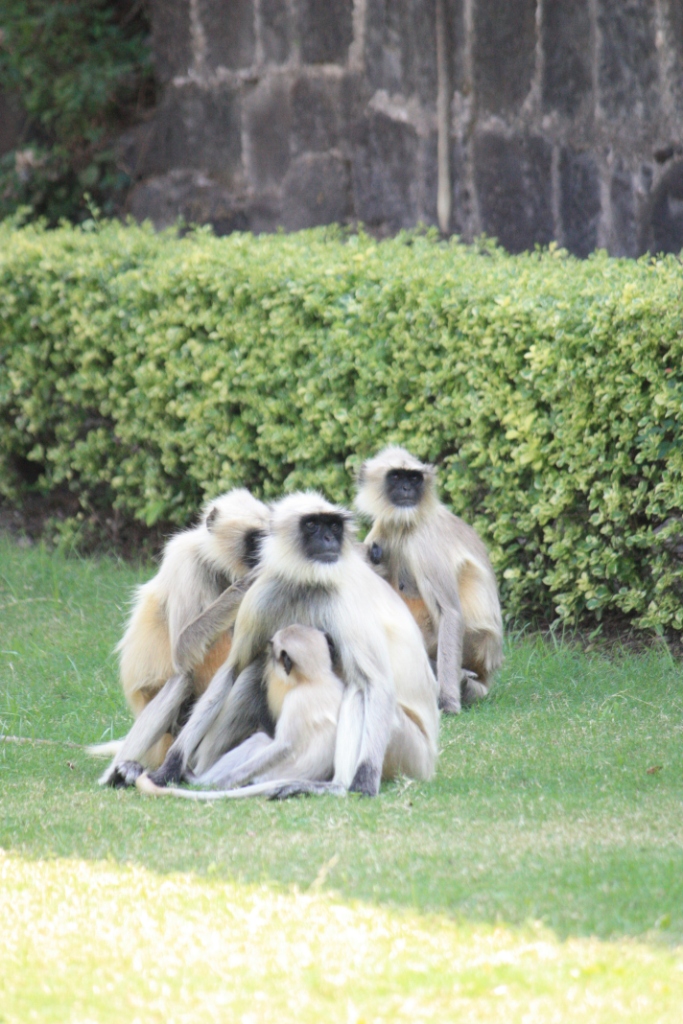
DAILY PHOTO: Gray Langurs Sittin’ Around

Taken in November of 2014 at Daulatabad Fort

Taken in November of 2014 at Daulatabad Fort

IMG_1170

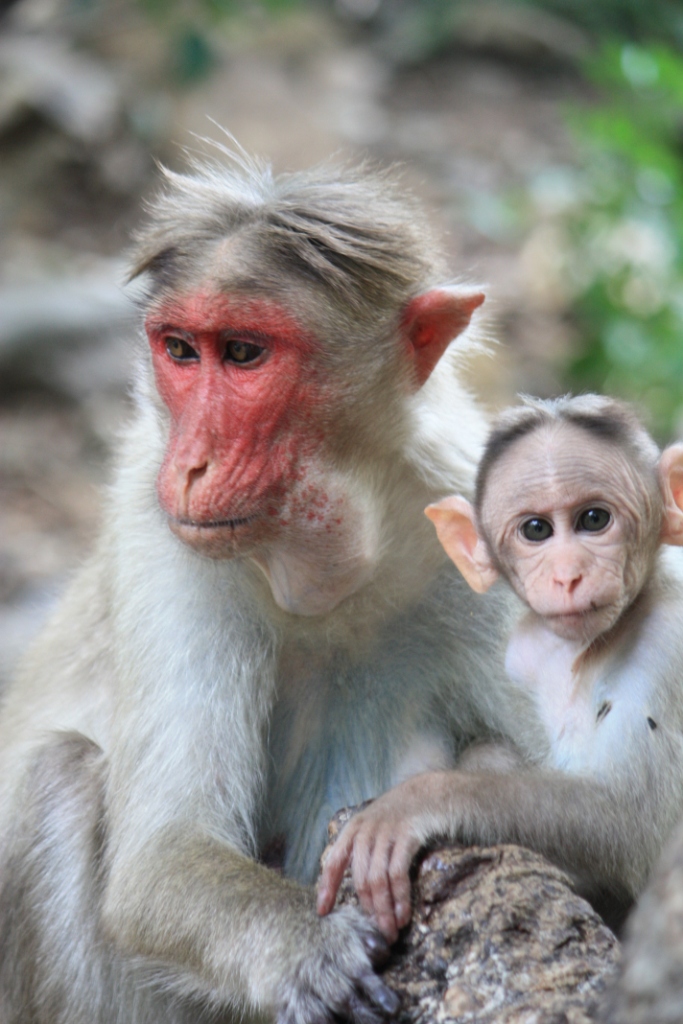
DAILY PHOTO: Macaque Portrait

Taken in the July of 2014 near Chamarajanagar.

Taken in the July of 2014 near Chamarajanagar.

DAILY PHOTO: Ross Perot Gargoyle Monkey

Taken March 23, 2014 at Nandi Hills

Taken March 23, 2014 at Nandi Hills

Many say that baby macaques are cute. Those people may not have seen a true infant, hairless and wrinkled, looking–ironically–like an old man.

This one hasn’t even grown to fully look like H. Ross Perot. You see, all young macaques look like H. Ross Perot, and some adult macaques look like Gary Busey.

DAILY PHOTO: Monkey Love

Taken March 23, 2014 at Nandi Hills.

Taken March 23, 2014 at Nandi Hills.


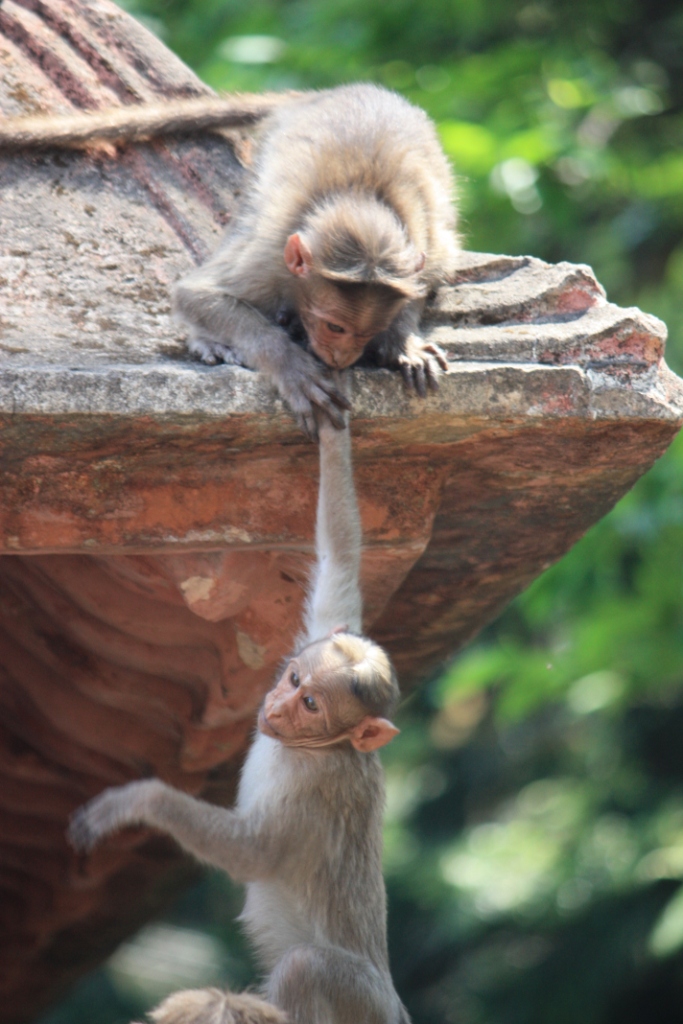
DAILY PHOTO: Helping Hand or Monkey Bite?: You Decide

Taken on March 24, 2014 at Nandi Hills.

Taken on March 24, 2014 at Nandi Hills.

One monkey was hanging off the fascia of Tipu Sultan’s old hunting lodge. The other was either being a helpful monkey–trying to help his brother up–or being a mischievous monkey–trying to make him fall.

You figure out which.

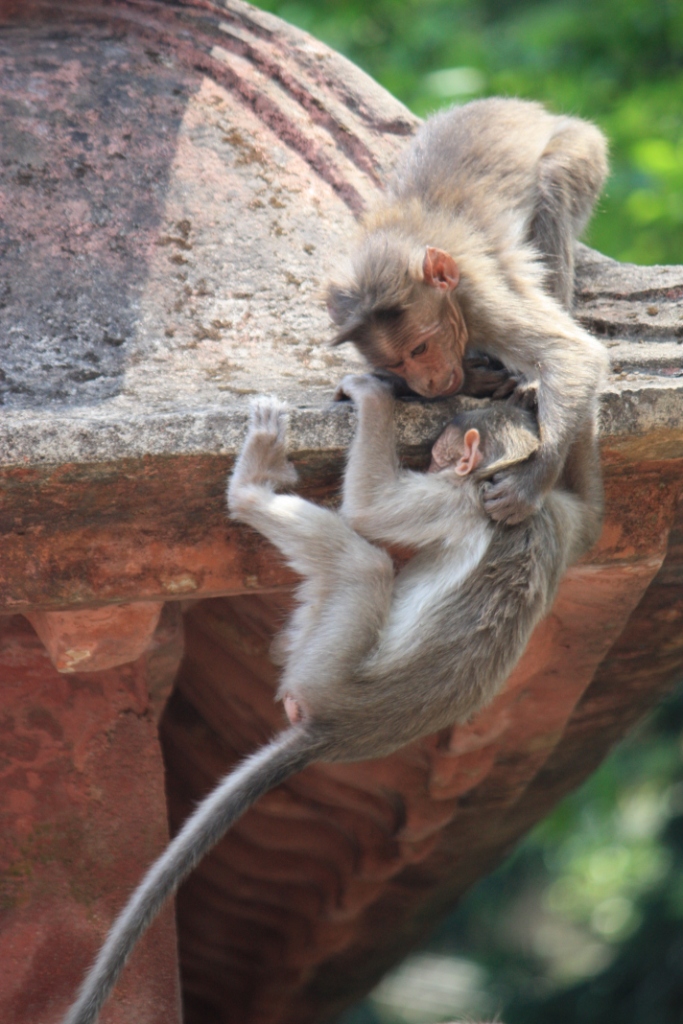
Here’s a photo from moments later.

IMG_1348Still can’t tell?

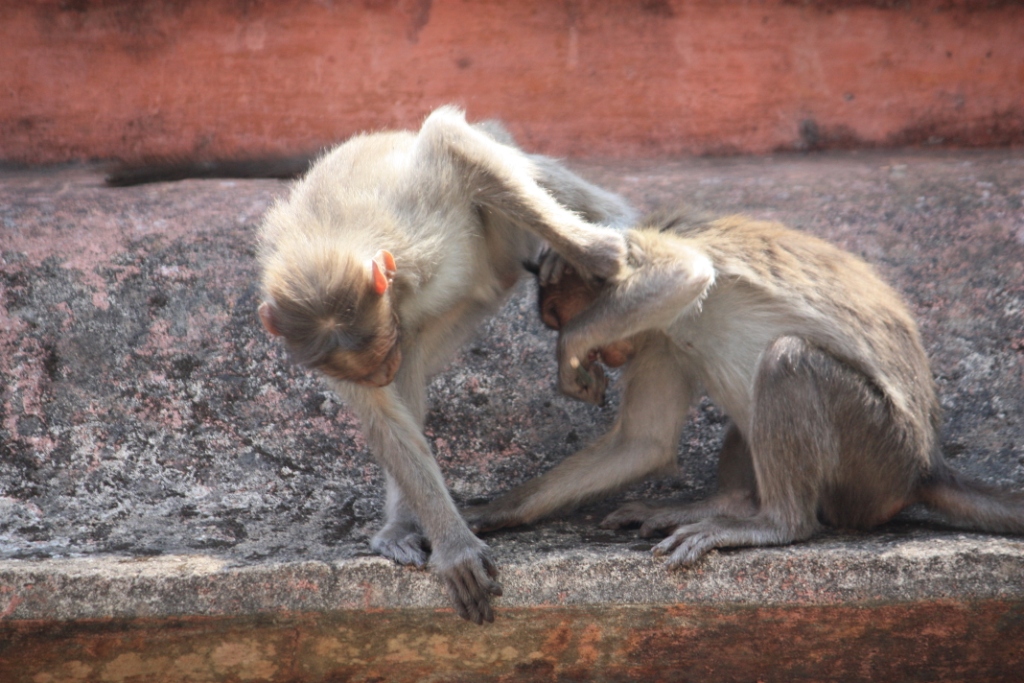
IMG_1350If you said they were in the middle of a mixed martial arts knock-down-drag-out, you were correct.  Here you can see the monkey who had been hanging getting a single-leg take-down on his tormentor.

FYI- For those who think one needs to get all “roided up” for strength building: Note this apparently puny monkey had the upper body strength to pull himself onto a roof while successfully fighting off an attack.

POEM: No Chunky Monkey

IMG_1346there’s nothing sadder than a monkey

who’s grown pudgy, blown up chunky,

and become a Mars Bar junkie

just cause we’re genetically entwined

makes it neither right nor kind

to give them a bootilicious behind

 when swinger’s branches threaten break

and under foot the earth it quakes

it’s then too late to lay off the cakes

when dealing with our friends furry

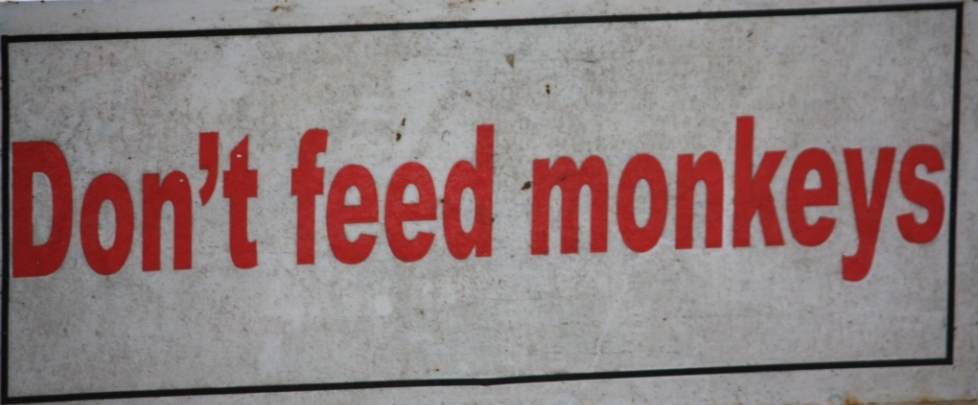
remember no ice cream or curry

no panicked food drop and scurry

 IMG_1439

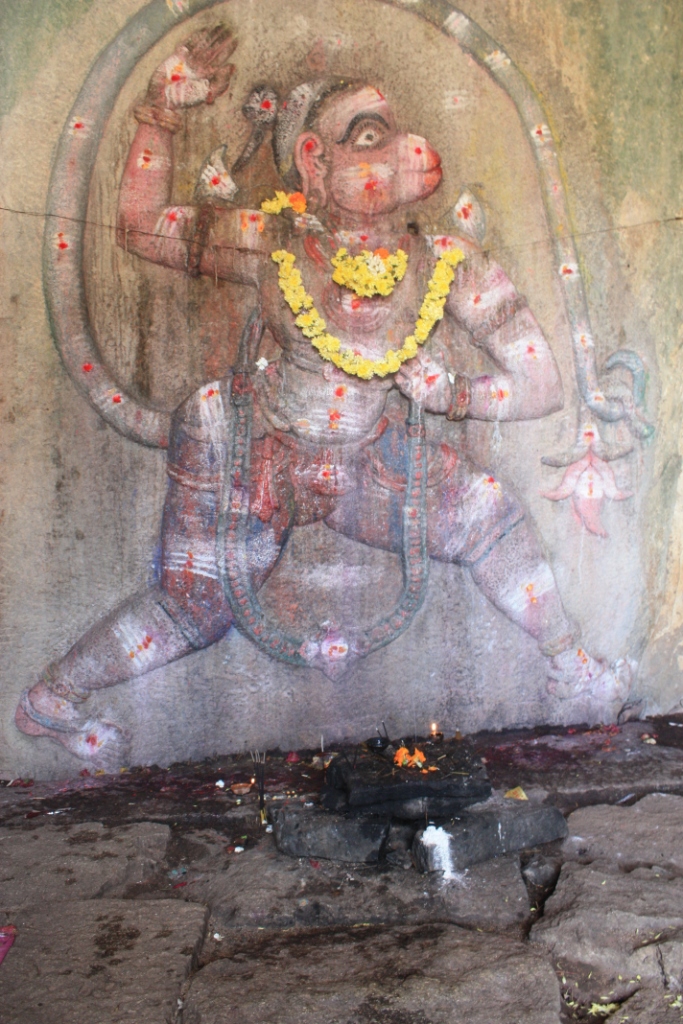
DAILY PHOTO: Hanuman

Taken November 2, 2013 at Hampi.

Taken November 2, 2013 at Hampi.

Among the many devotees of this Hindu deity are wrestlers, who admire the monkey-god for his reputed strength. In Rama’s war against Ravana, he was said to have picked up a mountain and carried it a great distance, which is pretty strong.

He’s not whimsical and mischievous like Sun Wukong, the Taoist monkey-king (who also has god-like powers), but some believe that Sun Wukong’s myth was partially influenced by Hanuman’s myth. (Of course, the more irreverent and anti-authoritarian Taoists had a different take than the caste-conscious Hindus. (Whimsicality and mischievousness are considered more virtuous among the former than the latter.)

This Hanuman temple is a small, stone-block affair abutting a giant boulder on the trail from Hampi Bazaar to Achyutaraya temple. As you can see, it still has local devotees.