BOOK REVIEW: Consciousness by Susan Blackmore

Consciousness: A Very Short IntroductionConsciousness: A Very Short Introduction by Susan Blackmore
My rating: 4 of 5 stars

Amazon page


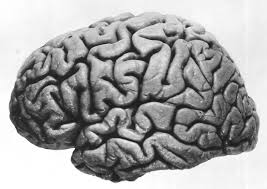
Consciousness remains one of the least understood phenomena of our world. It’s also one of the most intriguing subjects, and fascination with it has spurred debate both between science and religion and within science. While science has been moving toward the belief that consciousness is rooted in the brain, there remain many important questions to be answered. Of course, historically, it wasn’t at all common to think of consciousness as arising from the action of a material object (e.g. the human brain), it was beyond humanity’s intellectual capacity to comprehend how something as grand as consciousness could arise from a 1.2kg (<3lb) organ. Consciousness was intertwined with ideas of “the soul”—a non-material self-ness.

So it is that Blackmore takes on a shadowy subject in which questions are as likely to lead to more questions as they are answers. She lays out the arguments between scholars of science and philosophy as to what exactly consciousness is, how it operates, and how important it is or isn’t.

The book consists of eight chapters. The first chapter attempts to define consciousness and discusses the degree to which there is a lack of consensus on the subject. In doing so, it outlines why consciousness is such an elusive subject.

Chapter two describes the attempt to find correlates of consciousness in the brain, and it describes some of the case of brain damage that support the notion that consciousness is a product of the brain. Many beliefs of duality (i.e. the idea that body and mind are separate) have been in decline because of cases in which brain damage is specifically linked to changes in consciousness. Consider life-long love being uprooted by a scalpel.

Chapter three deals with a number of topics related to time and space, such as whether consciousness lags behind reality. That sounds ridiculous. However, remember that we experience the world from inside the frame of reference of consciousness.

Chapter four examines a number of illusions to which our conscious minds are systematically subject. We have a number of blind spots, many of which result from the fact that a great deal of what the brain does, it does without letting the conscious mind in on events.

In the fifth chapter, the author presents the link between consciousness and perception of self. It has long been taken for granted by most of the world that there is some soul that exists beyond the body, and it’s in this chapter that the author reflects upon whether this is an illusion or not.

Chapter six covers a topic that is integrally linked to consciousness and the idea of self, and that is free will. Free will is another notion that humanity historically took for granted that is coming under fire in the face of our increasing understanding of the brain. Current scientific evidence suggests that free will as we perceive it (i.e. thinking things through consciously and then making a decision at a conscious level) is an illusion.

Chapter seven is about the many altered states of consciousness, including: dreaming, drug-induced effects, meditation, and some of the widely reported experiences that seem to involve separation of consciousness from body (e.g. out-of-body and near-death experiences.)

Chapter eight ponders the evolutionary advantage offered by consciousness (especially if a major part of what we think we use our conscious minds for is an illusion.) One thing is clear; evolution doesn’t hand out vast and complex advances in capability if they don’t serve to make one more likely to survive to procreate. However, could consciousness—majestic as it may seem—be a mere side-effect of a big brain developed to facilitate survival in a world in which we weren’t the strongest, fastest, or most athletic creatures by a long shot?

The book uses a wide variety of black-and-white graphics including cartoons, technical diagrams, and photographs. These graphics help to communicate important ideas and are more likely to do so with levity than technical complexity. The book is readable, considering the challenging topic.

I’d recommend this book for those interested in an overview of the state of understanding and debate about what consciousness is.

View all my reviews

BOOK REVIEW: The Tibetan Yogas of Dream and Sleep by Tenzin Wangyal Rinpoche

The Tibetan Yogas Of Dream And SleepThe Tibetan Yogas Of Dream And Sleep by Tenzin Wangyal
My rating: 5 of 5 stars

Amazon page

I stumbled upon this book in a used bookstore, and didn’t know what to expect–but was intrigued. It’s a book on the Tibetan Bön approach to dream yoga and sleep yoga, written by a Bön lama (monk.) Dream yoga is a term used in Buddhism and other Eastern traditions to refer to what is called lucid dreaming in Western scientific circles. My review will focus on the more than 3/4ths of the book that deals in dream yoga (lucid dreaming.) The 40-ish pages that deal with sleep yoga are outside my wheelhouse. The author suggests that that part is for initiates who are familiar with certain background concepts. I’m not an initiate, and—in fact—I have no idea whether there is any merit to sleep yoga practice. Lucid dreaming is a well-studied and documented phenomena, but, as far as I know, what the author calls sleep yoga remains unstudied. All I can say is that the part on dream yoga is readily comprehensible, despite much of it being couched in spiritual terms, but a lot of the section on sleep yoga is arcane and ethereal.

As it happens, I was pleasantly surprised with the portion of the book about dream yoga. Having read a number of books dealing with the subject recently, I wasn’t sure whether I would learn anything that was both new and useful. But I was exposed to ideas that were new, useful, and mind-blowing. There were a few ideas for helping one to achieve lucid dreaming—mostly through practices carried out during the day—that I’d not seen in other works, at least not put in such clear terms. Also, while there is a lot of reference to the Bön and Buddhist spiritual traditions, this didn’t result in the explanations being needlessly complicated or arcane. There is a lot of information that one doesn’t need if one is a secular practitioner, but many readers will find it interesting, even if it’s not necessary to advance their practice.

The book is organized into six parts: 1.) The Nature of Dream, 2.) Kinds and Uses of Dreams, 3.) The Practice of Dream Yoga, 4.) Sleep, 5.) The Practice of Sleep Yoga, and 6.) Elaborations. The last part has information pertinent to both dream yoga and sleep yoga.

There are some graphics in the book including photos, line drawings, and tables. Most of these aren’t essential, but some make it easier to imagine what the author is describing (e.g. when he discusses sleeping positions.) The book has a glossary and bibliography. The former is useful, and the latter doesn’t hurt (but it’s only one page and offers only a handful of citations.) The glossary is mostly of foreign terms, but includes English terms specific to the religious traditions discussed. It offers both Tibetan and Sanskrit variants of the word if they exist, which is a nice feature. There is also an appendix which summarizes the crucial practices elaborated upon in the book.

I’d recommend this book for those interested in developing a lucid dreaming practice. I will say that it may not be the best first book to read on the subject, unless you are a practitioner of Bön or intend to be. (For that, I would recommend Charlie Morley’s “Lucid Dreaming: A Beginner’s Guide…” which I recently reviewed.) However, this book makes an excellent follow-up once one has read a book that is couched in simpler terms (i.e. not specific to a certain spiritual tradition) and which reports on the science. I found that the book gave me a number of new ideas, and—in fact—offered some insightful ideas.

View all my reviews

BOOK REVIEW: Lucid Dreaming by Charlie Morley

Lucid Dreaming: A Beginner's Guide to Becoming Conscious in Your DreamsLucid Dreaming: A Beginner’s Guide to Becoming Conscious in Your Dreams by Charlie Morley
My rating: 4 of 5 stars

Amazon page


Lucid dreams are those in which the dreamer is aware he or she is in the dream and can interact with the dreamscape. Most people experience lucid dreaming only as a happy accident. Some people dream lucidly in their youth, but never as an adult. Some people become aware they’re dreaming under specific conditions, e.g. on a certain medication. However, lucid dreaming has been practiced in some traditions for centuries, most notably by Tibetan Buddhists (though chapters 5 & 6 demonstrate that it’s much broader than just the Tibetans.) Furthermore, having confirmed lucidity in dreams in sleep laboratories, scientists have moved to advance our understanding of the phenomena using the scientific method and by taking advantage of the latest brain imaging technologies.

Charlie Morley has written a couple books on the subject as well as giving a well-received TEDx Talk on the subject. Morley studied under a Tibetan lama as well as studying up on the science of the phenomenon.

There are eight chapters in this book. The first three chapters constitute part one, the basics. This part introduces one to the subject of lucid dreaming, considers some of the reasons why people get into it, and explains how to recognize one is in a dream. The remaining five chapters form the second part, which is about going deeper with one’s practice. The second part explores what one may see in a dream, and how one can use the experience of being lucid for self-improvement. Lucid dreaming is one of the few access points to one’s subconscious mind. The second part also charts the development of lucid dreaming in both the West and the East, as well as offering suggestions about how nutrition may help in one’s practice.

The book is written as an instructional manual, and offers “toolboxes” of techniques to help advance one’s lucid dream practice by teaching one to remember one’s dreams, understand the phases of sleep, recognize one is in a dream, achieve lucidity, and know what to do once one is lucid in a dream. These are handy summaries of the lessons taught in greater detail in the text. All of the chapters but 5 and 8 have one of these toolbox summaries. There are also frequent text boxes of strange but true facts about lucid dreaming, tips from experienced lucid dreamers, case studies, and stories used to make relevant points about lucid dreaming. There are no graphics, but they aren’t missed.

I found this book to be useful and interesting. It’s readable and logically organized. I’d recommend it for anyone interested in developing a lucid dreaming practice—particularly if one is starting from scratch. There are a number of books on the subject, but many will be too ethereal to be of value to a new practitioner, but Morley writes in an approachable fashion and organizes the book to help one get into a practice as efficiently as possible.

View all my reviews

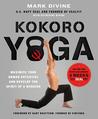
BOOK REVIEW: Kokoro Yoga by Mark Divine

Kokoro Yoga: Maximize Your Human Potential and Develop the Spirit of a Warrior--the SEALfit WayKokoro Yoga: Maximize Your Human Potential and Develop the Spirit of a Warrior–the SEALfit Way by Mark Divine
My rating: 4 of 5 stars

Amazon page

Like many yoga practitioners, I’m never sure whether to be dismayed, amused, or pleased by the explosion of new styles of yoga. It’s nothing new. Yoga has been branching out since its early days. But today’s flavors tend toward the frivolous, usually involve shoving yoga together with something else generally likable, and said two things are in some cases largely inconsistent. There’s marijuana yoga, dog yoga, karaoke yoga, and tantrum yoga. I wouldn’t be surprised if there was a Häagen-Dazs Yoga. Hell, if I was a bit less lazy and more unscrupulous I’d have made a mint from my patented SELFIE YOGA (™ -pending), which involves modifying impressive looking poses so that an individual can take their own pics for FaceBook. (You’re welcome; to whomever the driven sleeze-bag is that turns that idea into a thing.)

I, therefore, tend to approach books like Mark Divine’s “Kokoro Yoga” with a measure of skepticism. That said, I found that this book offered a respectable vision of yoga that might even succeed in bringing a new demographic into the fold. Divine is a former Navy SEAL who developed a fitness empire called SEALFIT, a system that combines fitness ideas from the famous Special Operations unit with ideas from civilian sports and exercise science, such as high intensity interval training (HIIT.)

Incidentally, “kokoro” is the Japanese word for heart / mind (heart and mind were inexorably entwined for Japanese in the era in which the term came into being.) Divine mentions that “Warrior Yoga” would have been his first choice, but that was already taken. The author appeals to warriors with this approach to yoga. He does this in several ways. Firstly, and encouragingly, he doesn’t neglect the mind, but rather puts it front and center by emphasizing the need for mental strength and clarity. My biggest problem with the plethora of new yogas is that they usually forget that it’s ultimately about calming the mind, and instead of providing an environment conducive to looking inward, they embrace or create all sorts of distractions (loud pop music, mirrors everywhere, nudity, animals, ice cream, circus clowns, etc.) Divine doesn’t just make a new fitness fad, he argues for the need for all of the eight limbs of yoga—not neglecting yama and niyama—and emphasizes how yoga served as a calming and clarifying tool for him and not just as a means to be more bendy.

Second, he adds components to balance out the dimensions of fitness. If you are a yogi / yogini, and you want a yoga body; yoga is all you need. However, if you are a martial artist, cop, or soldier, you also need strength, speed (then, by definition, power), and cardiovascular endurance, as well as those aspects yoga offers (e.g. breath control, flexibility, core strength, posture, and mental clarity.) Again, I’m often dismayed by attempts to round out yoga with functional strength building and cardiovascular endurance. I understand the desire to combine them into one workout. Besides the fact that some people need a more balanced approach to fitness, not everybody has time to do multiple workouts multiple times a day. Still, one can’t just ram these components together willy-nilly because if one needs to be in a space to observe one’s breath while being still and one is coming out of having done 100 burpees, it’s probably not going to work so well. I haven’t yet done any of the sequences from the book, but it looks like this shouldn’t a problem, at least not for individuals who are moderately fit. I’m less confident about the value of mixing in elements of chi gong and “cardio kickboxing,” which is suggested by the system. It’s certainly not that I’m opposed to either chi gong or functional martial arts training, but there’s a lot of important detail in those activities and this format risks some horrible half-assery. (Yes, sometimes you get chocolate in peanut butter and get a Reese’s cup, but more often you get sausage in the pudding. Two things being great, by no means ensures they will be great together.)

Finally, Divine puts his approach in the language of soldiers, using concepts like “strategy” and “tactics” and eschewing Sanskrit terminology. The book begins with an anecdote about going into a combat zone as a Reserve officer, which describes his use of yoga to help him get his mind in the right place. He also talks extensively about his practice of martial arts.

There are eight chapters and three appendices to the book. They proceed from the aforementioned story through a look at the general approach, looking at the eight limbs of yoga, before getting into the details. The penultimate chapter sums up research on some of the benefits of yoga, and the last chapter offers advice about how to set up one’s sadhana (personal practice) with the Kokoro Yoga approach in mind. The appendices offer information about functional conditioning exercises, combat conditioning, and module building.

Overall, I think this is a useful book that provides some interesting thoughts on yoga. You may or may not find that it’s the approach for you, but it’s worth checking out. The photos are well-done—though some readers may wish there were more related to the functional conditioning exercises (but he’s got other books for that, it seems.)

I’d recommend this book for those interested in how a yoga practice might be integrated with other aspects of fitness without losing track of the core yogic objectives.

View all my reviews

BOOK REVIEW: Discovering the Power of Self-Hypnosis by Stanley Fisher

Discovering the Power of Self Hypnosis: The Simple, Natural Mind-Body Approach to Change and HealingDiscovering the Power of Self Hypnosis: The Simple, Natural Mind-Body Approach to Change and Healing by Stanley Fisher
My rating: 4 of 5 stars

Amazon page


For many, hypnosis is the domain of stage artists who make people cluck like chickens. As with the feats of stage magicians, few give much consideration to wherein the trick lies, but they assume there’s a trick. In scholarly circles, hypnotic practices have been on a roller-coaster ride. Hypnosis was once mainstream psychology but then fell into disrepute but now there’s a resurgence of interest as neuroscience answers questions about what is happening in the brain during a trance state. Doctor Fisher’s book is an attempt to demystify the subject, and to explain how a personal practice can be used to achieve a wide range of benefits.

Fisher’s book culminates in a description of how to build one’s own self-hypnosis exercise to work toward change in one’s own life. However, there’s a lot of track that needs to be laid in anticipation of that final chapter (Ch. 9.) The first chapter counters seven of the most common myths about hypnosis. Given the aforementioned misapprehensions about hypnosis, this seems like a wise place to start to get readers on board. Chapter 2 starts where Fisher’s personal involvement with self-hypnosis began, with the use of it to prepare patients for surgery and surgical recovery. Here we get our first look at the technique of self-hypnosis as well as a discussion of cases of self-hypnosis used for surgical patients. Cases are central to Fisher’s approach, and are used throughout the book to inform the reader about how self-hypnotic methods worked for particular individuals in the pursuit of various goals. Chapter 3 explains what the trance state is and how it’s achieved.

Chapter 4 explains the process by which we make choices with an eye toward helping to disrupt destructive impulse behavior. In the next chapter the reader learns about how the state of mind can contribute to physical illnesses, and how changing the state of mind can help improve one’s health. Chapter 6 is about reevaluating ingrained beliefs that don’t serve us well. This includes the notion that one can’t change one’s behavior because it’s just how one feels, as well as the belief that one can simply quash one’s emotions through force of will. Chapter 7 examines cases involving a number of common problems resulting from stress and the pressures of everyday life.

The penultimate chapter offers comparison and contrast with a range of alternative methods that are used to achieve the same goals—some more advisable than others. The alternatives include: therapy, meditation, biofeedback, exercise, somatic desensitization, and drug use.

As indicated, the final chapter offers an outline for building one’s personal self-hypnosis practice to achieve one’s own goal. There are three sections to this chapter. The first is a simplified set of exercises to evaluate one’s capacity to enter a trance—including both a survey and physical methods (e.g. degree of eye roll.) Susceptibility to hypnosis varies widely. The subjects one sees at a stage show tend to be those rare specimens who are highly suggestible. Often, part of the act is separating them from the crowd. There are also those who can’t be hypnotized under any circumstance. Most of us are in the meaty middle, having some, limited capacity to be hypnotized. The second section offers advice about how one might go about setting up the suggestive part of one’s exercise, i.e. the core of the exercise carried out once one has induced a trance. The final section lays out three different methods of inducing a trance. The first of these is the eye roll-based method one is introduced to in Chapter 2, and the others are variants that may work better for some.

I found this book to be informative and useful. It gives the reader both the necessary background to understand how one’s subconscious mind can influence one’s life and how positive ideas are introduced through it, as well as a practical guide to setting up one’s own personal practice.

I’d recommend this book for anyone who wants to learn about self-hypnosis.

View all my reviews

POEM: Memory is a Fickle Cow

brainmemory, she’s a fickle cow

you can never have one in the now


and why are the memories best of those who need them least

should not as your age grows great your memory too increase


an eight year old has no need of keys but he can tell you where they are

for me the point is quite moot cause I’ve forgotten where’s the car


more and more I’m less and less certain of what memories were dreams

I clearly remember posting that bill cause I passed a yeti eating ice-cream


a woman watching 60 Minutes was robbed, but cops called her a loony

you see the old girl was quite sure she’d been burgled by Andy Rooney


now it’s time for me to bring this poem to a close

I had a much better bit but have forgotten how it goes

An Unusual International Yoga Day Post: or, Dream Yoga and Fear Management

"The Sleep of Reason Produces Monsters" by Francisco Goya

“The Sleep of Reason Produces Monsters” by Francisco Goya

I awoke exuberant that I’d achieved lucidity in my dream and that I’d apparently slain a nasty character (picture Hans Gruber on a bad day)–a task that had seemed impossible before my eureka of “I’m lucid!” Only my exuberance was short-lived when I realized that Hans was also me. Do you have the courage to talk it out with your dream world nemesis instead of reacting from fear?

I was thinking that I should do a post on yoga for International Yoga Day (June 21st), but what to write about? My answer came in the wee hours of the morning when I had a minor breakthrough in lucid dreaming–also known as, dream yoga. I know this seems like a stretch because, despite “yoga” being right there in the name, this practice is much more firmly associated with Tibetan Buddhism than Hatha Yoga. But my last couple yoga posts (which were a while back on my experience with RYT300 teacher’s training and teaching a Yoga Kid’s Camp) were fairly conventional, so I’m due one that’s out there. Furthermore, I promise to try to make clear the relevance of dream yoga to my hatha yoga practice. (If you read the aforementioned posts, you’ll see that the theme of freeing oneself by managing one’s fears and anxieties is a recurring theme across all these posts. And that is the crux of the relevance of lucid dreaming to unifying mind, body, and breath [i.e. yoga.])


What is lucid dreaming? It’s becoming aware that one is in a dream as one is dreaming. One can then exert influence over the course of the dream. Maybe half of you have had this experience at some point in your lives, and so what I’m saying will not seem far-fetched. For those who don’t actively practice lucid dreaming, it’s much more common among the young, so maybe you had such dreams as an adolescent but don’t have them anymore.

For the other half, the whole idea may seem like poppy-cock. I could easily have been such a doubter. Without following a practice, I almost never remember dreams–let alone dreaming lucidly. At best, I get disappearing fragments of dreams that are ephemeral and hazy. I’m one of those people who might claim that he virtually never dreams, except that I read the science, which suggests that each of us dreams every night that we sleep long enough to cycle through REM (rapid eye movement) mode (and commonly 4 or 5 times a night.) We just don’t recollect these dreams. [However, I have had lucid dreams on rare occasions, and so my skepticism on the subject was curbed.]


Why do I practice dream yoga? While it wasn’t part of my formal hatha yoga training, dream yoga isn’t as far removed as one might think. I have been trained in yoga nidra (yoga sleep), which is an exercise that takes place in a hypnagogic state (on the edge between waking and falling asleep.) Commonly, yoga nidra is used as a deep relaxation exercise, but it can also help one to access the subconscious (as is reflected in repeating a sankalpa [a resolution] in the yoga nidra state.) Lucid dreaming is another approach to assessing the subconscious in order to see what’s going on in there and to try to make changes as necessary. Curiosity about the subconscious mind and its–largely unseen–influence on my daily life is what drew me to dream yoga. It’s just another aspect of knowing oneself and trying to expand one’s capacities of mind and body.


How does one practice dream yoga? Hardcore practitioners set alarms to wake themselves up when they think they’ll be in REM sleep. This, as I understand it, helps them reconnect with the dream when they drift back and greatly speeds the process. As I sleep with a wife who would clobber me with a brick if I set alarms for random times in the middle of the night, I’m not among those hardcore. My practice consists of three main aspects. First, I make resolutions to remember my dreams and to dream lucidly as I’m drifting off to sleep. Second, when I’m not making said resolutions, I try to just observe the subconsciously generated imagery that pops up as a witness–rather than letting my conscious mind go into its preferred mode of planning for an uncertain future. [One can tell the difference because the subconscious images don’t make a lick of sense, and–for me–are devoid of any verbal/language element–i.e. it’s all imagery.]  Finally, I keep a journal in which I record any dreams or fragments that I can recall–sometimes with drawings to supplement the text (though my artisticness is lacking, to say the least.) The first and last of these are among the most common recommendations one will hear from experts.

I should point out that there are a number of books on the subject by individuals much more qualified than I. Said books give detailed guidance into how one can begin one’s own practice. One that I recently finished reading and would recommend is Charlie Morley’s “Lucid Dreaming: A Beginner’s Guide to Becoming Conscious in Your Dreams.”  At some point, I’ll post a review of that book. Also, there is “Dreaming: A Very Short Introduction” by J. Allan Hobson, which I have reviewed.


As I wrote up the entry in my dream journal, I made a resolution to stop attacking the “bad guys” in my dreams and to try to understand them. Note: I don’t recommend this approach for dealing with real world axe-wielding maniacs, but I highly recommend giving it a try in one’s dreams.


Sweet dreams.

BOOK REVIEW: Running with the Mind of Meditation by Sakyong Mipham

Running with the Mind of Meditation: Lessons for Training Body and MindRunning with the Mind of Meditation: Lessons for Training Body and Mind by Sakyong Mipham
My rating: 4 of 5 stars

Amazon page

Tibetan Buddhists believe Sakyong Mipham is the reincarnation of a great teacher from late 19th century Tibet. He’s also completed many marathons—nine at the time of this book’s publication. He’s certainly qualified to comment on meditation, running, and the nexus of the two–if there is such a thing. However, it may not be clear that the topics are particularly connected. Readers may have an intuitive sense that they are closely connected, but without sufficient understanding of both elements to draw sound conclusions.

The author, himself, proposes that one should recognize the points of contrast as well as comparisons between the two activities. A couple quotes make this clear:
“People sometimes say, ‘Running is my meditation’… in reality, running is running and meditation is meditation… It would be just as inaccurate to say, ‘Meditation is my exercise.’”
“The body benefits from movement, and the mind benefits from stillness.”
Later in the book, the author suggests that the apparent clarity after running usually has more to do with the “wild horse” of the mind being tired, rather than it being tamed. (Taming the mind being the objective of meditation.) That said, Mipham Rinpoche clearly believes that there are benefits to be had from an interaction between these two activities.

The book is divided into six parts. The first part gives background on basics like base-building, breath, what meditation is, and the challenge of starting to build a regime (either of running, meditation, or both.) The rest of the book is organized by way of a Tibetan Buddhist conception about how new skills are learned. This schema relies on animal symbolism. The first level is that of the tiger, and this is when one works on attentively and conscientiously building one’s technique. The lion level follows the tiger. The lion phase is a joyful one because a base capacity and fundamentals have been built and the initial struggle is in the past. The next phase is represented by the Garuda (a mythical eagle-like creature that features in Hindu as well as Buddhist mythology), and it’s expressed by challenging oneself to more demanding practice. The final phase is the dragon, and it involves moving beyond doing the activity for oneself to doing it for others. There’s a final part, entitled the windhorse, that is based on the notion of an energy that Tibetan Buddhists believe accumulates when one follows the aforementioned 4 phase path. This last part is a description of events that might be seen as the culmination of the author’s running career.

Within the aforementioned six parts, there are 40 chapters—most of which are only a few pages and deal with a specific aspect (or pitfall) of that phase of training.

I found this book interesting. Learning about the four phases (tiger, lion, garuda, and dragon) of skill development was illuminating, and I found myself thinking about how this idea could be more widely applied. It’s a handy conception with broad utility. The author uses stories from his own experience to add credibility as well as light-heartedness to the philosophy lessons being taught. While the book may seem ethereal, much of the discussion is on down-to-earth subjects like dealing with pain and injury. It should be noted that the introductory and tiger parts make up a little more than half the book—suggesting the importance of fundamentals. There’s a lot of valuable information on fear, confidence, and how to view pain.

I’d recommend this book, especially for runners and meditators—but not exclusively so. Many people who are interested in mind / body interaction will be able to draw useful lessons from the book, even if running isn’t your thing.

View all my reviews

BOOK REVIEW: Zen in the Art of Archery by Eugen Herrigel

Zen in the Art of ArcheryZen in the Art of Archery by Eugen Herrigel
My rating: 4 of 5 stars

Amazon page

Herrigel’s book is part autobiography of his experience learning Japanese archery (kyudo) from the distinguished master archer Kenzo Awa (and through archery, Zen,) and it’s part philosophical treatise on how archery can help one achieve a Zen state of mind.

The book is less than one hundred pages and has a Zen feel itself. Exemplary of this, the book’s divisions aren’t labeled or numbered into chapters—i.e. there’s a general trimming away of the extraneous features of a book. That said, there’s a clear organization to the book, and most of it follows the chronology by which the author (and others) progress in developing deep insight into the mind through the practice of archery.

There are nine sections:
The first section helps the reader understand why one might consider Zen and archery in the same thought–something that will by no means be obvious (even to many Zen Buddhists.)

The second section explains why Herrigel took up Zen and decided to use archery as his vehicle to understand it.

Section three describes the early learning process, and focuses heavily on the importance of breath.

Section four takes place after Herrigel has been practicing about a year, and the theme of purposeless action is at the fore. This idea is one of the recurring central ideas in the book.

Section five is Herrigel’s introduction to withdrawing from attachments, and—in particular—letting go of the ego. It’s not the point at which Herrigel masters this difficult practice, but he’s made aware of it.

The next section is one of the longer chapters and in it Master Awa tries to teach Herrigel the importance of letting “it shoot” rather than making the shot. This is clearly a challenging idea.

In the seventh section, Herrigel has been practicing for five years and Master Awa recommends that he take a test to help him move on to the next stage in his practice.

Section eight is a brief elucidation as to why kyudo is still relevant and how its relevance has long been tied to what it teaches about the mind.

The final section shifts gears into the relation between Zen and swordsmanship. There have been many works written on this subject, and Herrigel’s purpose may have been to convince the reader that kyudo isn’t uniquely a vehicle for Zen. One can engage in many activities (arguably any activity) with the mind of Zen, be it flower arranging, tea ceremony, calligraphy, or spearmanship.

I’d recommend this book for those interested in the mind / body connection. It’s short, readable, filled with food for thought, and is a classic on the subject.

View all my reviews

BOOK REVIEW: An Introduction to Zen Training by Omori Sogen

An Introduction to Zen TrainingAn Introduction to Zen Training by Omori Sogen
My rating: 4 of 5 stars

Amazon page

This is a guidebook that explains how to sit for meditation—particularly in the Rinzai style. It describes all the fundamentals one needs to begin Zen sitting including: posture, breathing, where to look, what to do with one’s hands, and even how to get up after a long session. It also provides background information about what to look for in a teacher, what differentiates Rinzai from Soto Zen, and what the objective of practice is (and why it is sought after.) This makes it sound like a dry, technical manual, and to some degree it’s unavoidably so. However, the author does include stories here and there to make the book more engaging and palatable. Overall, though, it’s written as a manual for students.

The book is arranged into 7 chapters, but it’s only the first five of these that are the author’s introduction to Zen meditation. These five chapters are logically arranged to cover the ground from why one should practice to what effects it will have with consideration of the aims, technique, and pitfalls covered in between. The last two chapters are commentaries on (including text from) a couple of the key documents of Zen Buddhism: “A Song of Zen” (Zazen Wazen) and “The Ten Oxherding Pictures.”

There are black and white graphics. First, there are line drawings used to convey information about posture and the physical body in meditation. Second, there are a few photographs of the author, including his dōjō and in the practice of swordsmanship. The author was a skilled swordsman; hence my tagging of this book in “martial arts,” as there may be some interest among martial artists in the author’s take as one who straddled the two worlds of Zen and budō. Finally, there are also copies of the ten ox herding pictures that go with the verse.

I think this book is well-organized and provides a beginner an excellent introduction to the practice of Zen. I didn’t really note any major deficiencies, and will thus recommend it as a good resource for anyone considering taking up a Zen practice or wanting to learn more about doing so. I should point out that the book does also get into the philosophical aspects of Zen, but if one isn’t looking for information about how to practice then there may be books more oriented toward one’s needs. Despite the fact that the book is a translation, it’s clear and readable. As I said, it includes stories—including those about Japanese warriors as well as Zen masters—and that helps to break up the dryness of what is at its core an instructional manual.

View all my reviews