BOOK REVIEW: The Classic Tradition of Haiku Edited by Faubion Bowers

The Classic Tradition of Haiku: An AnthologyThe Classic Tradition of Haiku: An Anthology by Faubion Bowers

My rating: 4 of 5 stars

Amazon page

The other haiku anthology I reviewed is Classic Haiku, located here.

This is the second haiku anthology that I’ve reviewed on my site. While they’re both thin volumes of traditional haiku, each has its distinct flavor. The previous volume was organized by season. This one is organized by author. The two books share several authors (e.g. the greats Bashō, Issa, and Buson), but diverge on many of the lesser known poets.

One nice feature of this book is that it offers multiple translations of many of the haiku. Poetry is notoriously tricky to translate as literal translations can be meaningless. Multiple translations can give one a better opportunity to hone in on what the author meant to convey. This volume does give the original Japanese poem in romanized transcription (for those who enjoy the sound the author conveyed as well as meaning), but–unlike the other volume–it does not include the kanji. (This doesn’t matter for me, as I don’t read Japanese, but I’m sure the kanji is a nice feature for readers of Japanese.)

Some favorites are:

clouds occasionally
make a fellow relax
moon-viewing

Matsuo Bashō

islands
shattered into a thousand pieces
in the summer sea

Matsuo Bashō

you’re the butterfly
and I the dreaming heart
of Sōshi

Matsuo Bashō

[Note: Sōshi is the Japanese name of the Taoist thinker Chuang Tze, and this references his famous statement about having dreamt he was a butterfly.]

that dream I had
of being stabbed–was true
bitten by a flea

Takarai Kikaku

oh, won’t some orphaned sparrow
come
and play with me

Kobayashi Issa

View all my reviews

DAILY PHOTOS: A Sculpture of Three Nudes in Tokyo

Three nude women sitting around chatting, as happens all the time... in the dreams of men.

Three women standing around chatting in the nude, as happens all the time… in the minds of men. Taken in Tokyo in the Summer of 2008.

CLASSIC WORKS: Bushidō by Inazo Nitobe

Bushido: The Soul of JapanBushido: The Soul of Japan by Inazo Nitobe

My rating: 4 of 5 stars

Amazon page 

On the whole, people are ambivalent about feudal times. On the one hand, it was a horrible time to be alive for 99.5% of the population. Chances are that if you’d lived during that time you’d be toiling ceaselessly on the land with no hope of improving your lot in life. Everything was determined by heredity, with merit having little to do with anything. This added insult to injury because that person you’d have had to suck up to was as likely to be putz as not.

On the other hand, there is widespread nostalgia for those times because one can’t help but feel that they were the golden days of virtue. As Ralph Waldo Emerson said, we think that society is ever advancing, but, in reality, we advance like a wave–losing as much on the backside as we gain on the front.

Inazo Nitobe’s book gives us an accounting of the chivalric virtue practiced by the samurai, the warrior class of feudal Japan. Bushidō means the way of the warrior. Nitobe lived after Japan’s feudal era, in the late 19th and early 20th centuries. Nitobe was an educator, and the book has a feel of erudition. Interestingly, the author was a Quaker and received education in the West, and, therefore, is able to contrast the Japanese worldview with that of Westerners.

The book is built around discussion of the seven virtues of bushido: justice, courage, benevolence, politeness, sincerity, honor, and loyalty. Each of these virtues has a chapter devoted to it (Ch. 3 through 9.) But first the book introduces bushido as an ethical system, and then it explains the effect that Buddhism, Shintoism, and Confucianism played in the development of this system.

Later chapters outline the education and training of a samurai, the importance of stoicism, the institution of suicide (seppuku), the symbolism of the sword in Japanese society, the role of women, the role of bushido as an ethical system in the present-day (his present), and its proposed role in the future. It is interesting that the book begins by discussing those things that influenced the development of bushidō, and it ends with discussion of how bushidō influences the larger world.

Our views of virtue have changed, but at some level remain consistent. The seven virtues are all still considered virtuous, but we don’t regard them in the same way today. In some cases we are undoubtedly better off with today’s views, but that’s not always the case.

Consider the seventh precept, loyalty. We still value loyalty, but in today’s world the rule of loyalty has an ever-present Shakespearean addenda: “to thine own self be true.” In other words, we no longer believe in loyalty that is blind as was valued in the days of old.

Sincerity, by which Nitobe generally means honesty, is also seen in a different light today. As depicted in the Jim Carey movie, Liar Liar, there’s a widespread view that it’s better to fib and make someone feel better than it is to tell the truth and hurt that person’s feelings.

One of the most intriguing chapters is the one that deals with seppuku. This is a concept that has never been well-understood in the West, and it’s a major point of cultural disconnect. While the Japanese have tended to see suicide as a means to restore honor that was lost in failure, in the West we tend to see it as a more pathetic and cowardly affair. I’ve recently been reading Ian Fleming’s You Only Live Twice, and this is one of many points of diverging attitudes between “Tiger” Tanaka and James Bond.

Bushidō is definitely worth a read. It’s thought-provoking, and is one of those books to be read slowly and conscientiously.

View all my reviews

Was the Fukushima-Daiichi Incident the Final Nail in Nuclear Energy’s Coffin?

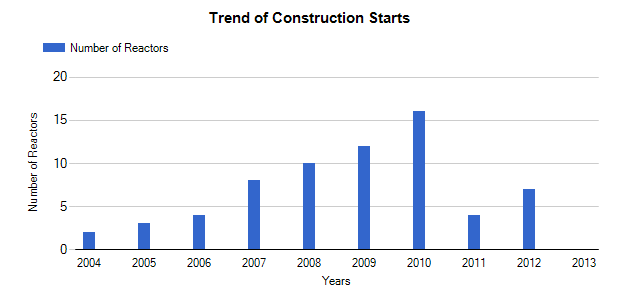
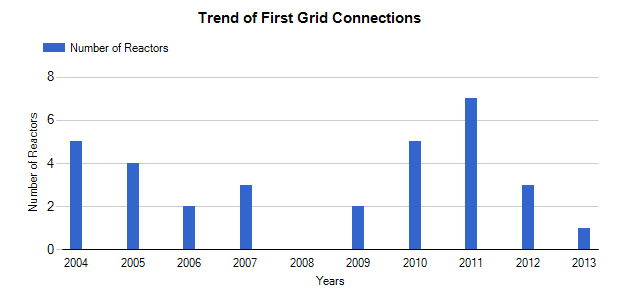
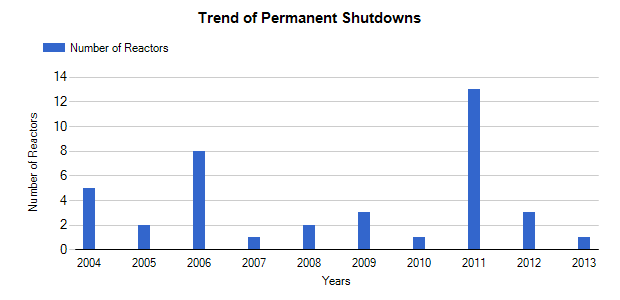
Today is the two-year anniversary of the tsunami that swamped parts of eastern Japan. Among the ongoing effects of this event was a re-chilling of attitudes toward nuclear energy–undoing a thaw that some swore was imminent. The tsunami hit the Fukushima-Daiichi plants and knocked out generators that were needed to run the coolant pumps with the power lines down. In the days after the disaster, the release of radioactivity and explosions of built up hydrogen presented some of the most prominent news stories.

Japan obtained about a third of its energy from nuclear prior to the event. All reactors were shut down in subsequent months, at no small cost to their economy. Eventually, a couple of plants were brought back on-line, providing only a fraction of the electricity of the country’s full fleet of 50+ nuclear plants.The Japanese had plans to add another 15 plants to their reactor fleet at that time, plans that have since vanished.

Even China, the world’s most prolific builder of nuclear plants as of late, had a brief moratorium on nuclear power plant (NPP) construction. However, China seems to have regained its ardor for nuclear power. France, of course, won’t be dissuaded either. However, for much of the rest of the world, doubts remain.

Pictures may be worth a thousand words.

Source: International Atomic Energy Agency (IAEA) Power Reactor Information System (PRIS)

Source: International Atomic Energy Agency (IAEA) Power Reactor Information System (PRIS)

Source: IAEA PRIS

Source: IAEA PRIS

Source: IAEA PRIS

Source: IAEA PRIS


The Nuclear Renaissance and International Security

Edited by Adam N. Stulberg and Matthew Fuhrmann

2013, Available Now

Buy this book

ONLINE RESOURCES
Contents

Contributors

Introduction

BOOK REVIEW: Classic Haiku ed. by Yuzuru Miura

Classic Haiku: A Master's SelectionClassic Haiku: A Master’s Selection by Yuzuru Miura

My rating: 5 of 5 stars

Classic Haiku is a collection of 106 poems by masters such as Matsuo Bashō, Kobayashi Issa, and Yosa Buson. It’s logically arranged into five sections: Spring, Summer, Autumn, Winter, and New Year’s Day. While haiku has come to be thought of as any poem in a 5-7-5 syllable arrangement, those familiar with traditional haiku know that there are other requirements that are at least as fundamental as the syllabic arrangement. One of these is that the poem be pure observation devoid of exposition. Another criteria is that it be rooted in nature. A final criteria, historically, has been that the poem indicate the season, if not giving an explicit seasonal word or phrase. This makes the season an optimal organizational unit for the book.

One nice feature of this book is that it includes the English translation, the Japanese romaji version (i.e. the way it would be spoken in Japanese but using roman alphabet characters), and the version using the Japanese system of writing. Granted, for those who aren’t fluent in Japanese, these features might not seem to add much. However, sound can be evocative itself in poetry, and so it can be interesting to read the Japanese for that reason. Furthermore, there are those who argue that 5-7-5 syllables is not the closest facsimile to Japanese haiku for haiku written in English. Because of the average length of syllables, some say that a 2-3-2 accented syllable pattern for English haiku is closer to the original Japanese form. Reading the Japanese, gives one an idea of the sound characteristics of Japanese haiku.

[Furthermore, if one loves a haiku enough to want to get it tattooed in Japanese on one’s body, one can double-check the characters before one gets it done at a Chinatown tattoo parlor only to find that what one really has tattooed on one’s butt is, “Syphilitic nightmare – Ketchup bottle mayhem day – Rides the goat to school”]

Here’s a sampling my favorites:


the raftsman’s straw cape
brocaded with
the storm-strewn cherry blossoms
– Yosa Buson

calm and serene
the sound of cicada
penetrates the rock
– Matsuo Bashō

in summer grasses
are now buried
glorious dreams of ancient warriors
– Matsuo Bashō

oh, cricket
act as grave keeper
after I’m gone
– Kobayashi Issa

View all my reviews

BOOK REVIEW: The Lone Samurai by Wm. Scott Wilson

The Lone Samurai: The Life of Miyamoto MusashiThe Lone Samurai: The Life of Miyamoto Musashi by William Scott Wilson

My rating: 4 of 5 stars

Amazon page

[Note: this was previously posted in my martial arts blog, Jissen Budōka.]

This is a concise and well-researched biography of one of Japan’s most famous swordsmen. Miyamoto Musashi, however, wasn’t just a swordsman, he was also a writer, a painter, a sculptor, a Zen Buddhist, a poet, a philosopher, and a strategist. In short, he was a renaissance man. While The Lone Samurai focuses heavily on Musashi’s many duels as a traveling warrior, it also describes his artwork as it paints a portrait of a complex and beguiling character.

Musashi holds a curious allure among figures in Japanese history. The Japanese tend to be strictly bound by societal conventions, and being respectful and well-mannered is valued above all else. Musashi flouted convention whenever it served him. He used irreverence for strategic advantage. He was an astute reader of men. He often showed disrespect in order to get into his opponent’s head. This is most famously exemplified in his Ganryu Island duel with Sasaki Kojiro.

Musashi adopted a life of musha shugyo, or warrior errantry, though he could have been much wealthier and more comfortable had he chosen to be. He enjoyed simplicity, and only owned a few possessions. In his travels, he engaged in over 60 duels, and is usually credited with being undefeated [Note: I’ve heard some dispute the outcome of his second duel with Muso Gonnosuke. Wilson calls it a draw, but I’ve heard it called Musashi’s only defeat as well.] He fought as a samurai in battle at Sekigahara as well, but his adulthood was a relatively peaceful time.

One fascinating, but controversial, claim is that Musashi had no teachers–neither in swordsmanship nor in any of the fine arts he practiced. Musashi said this himself, but some historians dispute it. If true, it really takes being an extraordinary person up a notch. It should be noted that Musashi was only 13 when he had his first duel.

There is much about Musashi that is lost to the ages, but this book does a great job of pulling together what is known and weaving it into a portrait of the man.

There is an extensive series of appendices providing background information, notes, a glossary, and even a collection of pop culture (e.g. movie and novel) depictions of Musashi.

It’s well worth the read if you’re interested in strategy, history, or the biographies of incredible people.

View all my reviews

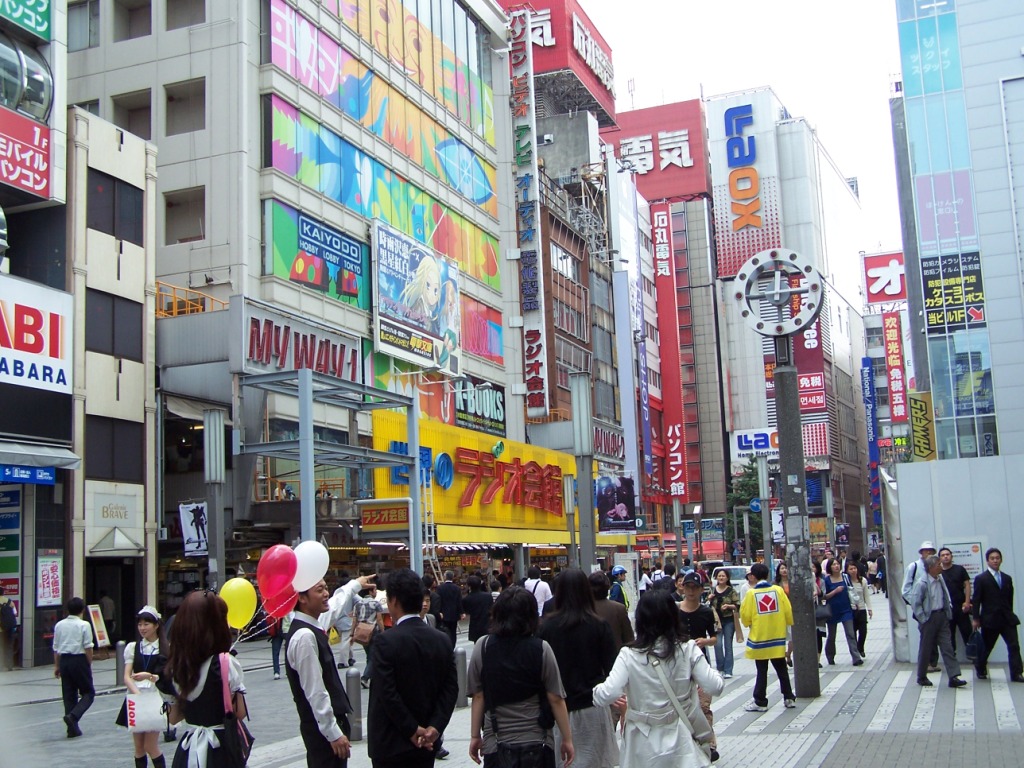
DAILY PHOTO: Akihabara in Tokyo, Japan

Tokyo's Electronics District

Tokyo’s Electronics District

Akihabara is where one goes to find the latest in high-tech gadgets. I was there in 2008, about exactly 48 hours before the multiple-fatality stabbing spree that darkened the doorstep of this lively consumer district.

If you’re wondering about the girls in the French maid costumes, they weren’t kinky prostitutes. They were giving out free tissue packets with advertising  on them. Why wear such costumes? I have no idea– except that I imagine they sell a lot of what they’re selling to sarariman.

Book Review: Takagi Oriemon, Budo Hero of Shiroishi

9781447769033Takagi Oriemon: Budō Hero of Shiroishi by Mamiya Hyoemon

My rating: 4 of 5 stars

This is an English translation of a book that was written long ago. The translation is by the Jinenkan Honbu Dojo — specifically Manaka Unsui (the head [Kancho] of the Jinenkan) and his students Robert Gray, Maurizio Mandarino, and Eric Shahan. The original is entitled Budo Shiroishi no Ei and was written in Japanese.

The book is the story of the seven-year warrior pilgrimage (musha shugyo) of a warrior named Takagi Oriemon who lived from 1625 to 1711. Takagi founded a martial arts school that, as was typical, branched out over the centuries. As I understand it, there are two or three descendant schools still in existence today.

Takagi was legendary for his strength. The book offers many accounts of descriptions of both his physical strength (from moving boulders to help farmers to chopping down a house to create a fire break) and his strength of mind (e.g. staying where others were afraid to because of hauntings.) However, mostly it portrays Takagi as a supremely humble and virtuous man. He misses no opportunity to assist those in need of help, and always humbly declines reward. He does not use his great power for wanton destruction, but does punish the wicked when no other choice remains.

Unlike Musashi’s Book of Five Rings or Yagyu’s The Life-Giving Sword, which are mostly about strategy, this book is mostly examples of virtuous living with a few strategic concepts thrown in.

I can offer a test for whether a reader might enjoy this book or not.

You’ll love this book if you:
– are fascinated by biographies of great martial artists.
– enjoy learning about life in Japan during the Tokugawa period.
– enjoy morality tales and the example set by great men and women.
– like to be inspired by people who really had their stuff together.
– don’t mind the occasional ghost story.

You won’t like this book if you:
– are an editor or English teacher and things like errant apostrophes make your head explode.
– are turned off by the flouting of conventional writing style (multi-speaker paragraphs of dialogue abound in this book.)
– find that ghost stories or supernatural elements completely ruin an otherwise down-to-earth read.
– find typos grate on your nerves.
– are really grossed out by gory manga-style line drawings (they are not all like that, but some are.)

I had to deduct at least a star for the many grammatical and formatting deficiencies of the book, but I still think everyone would gain from reading it and seeing the life example set by Takagi Oriemon: Budo Hero of Shiroishi.

View all my reviews