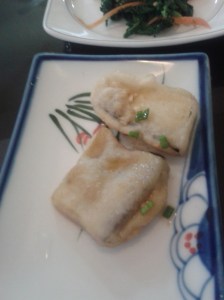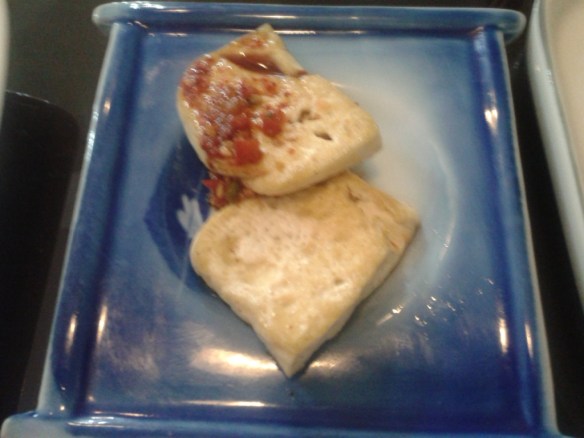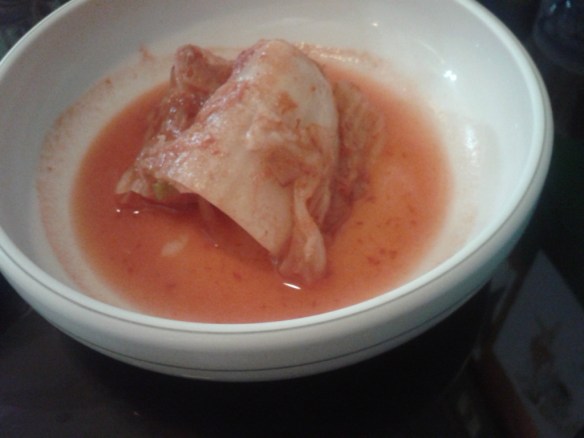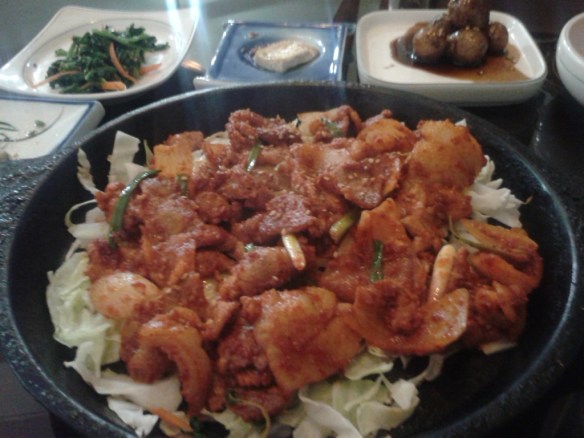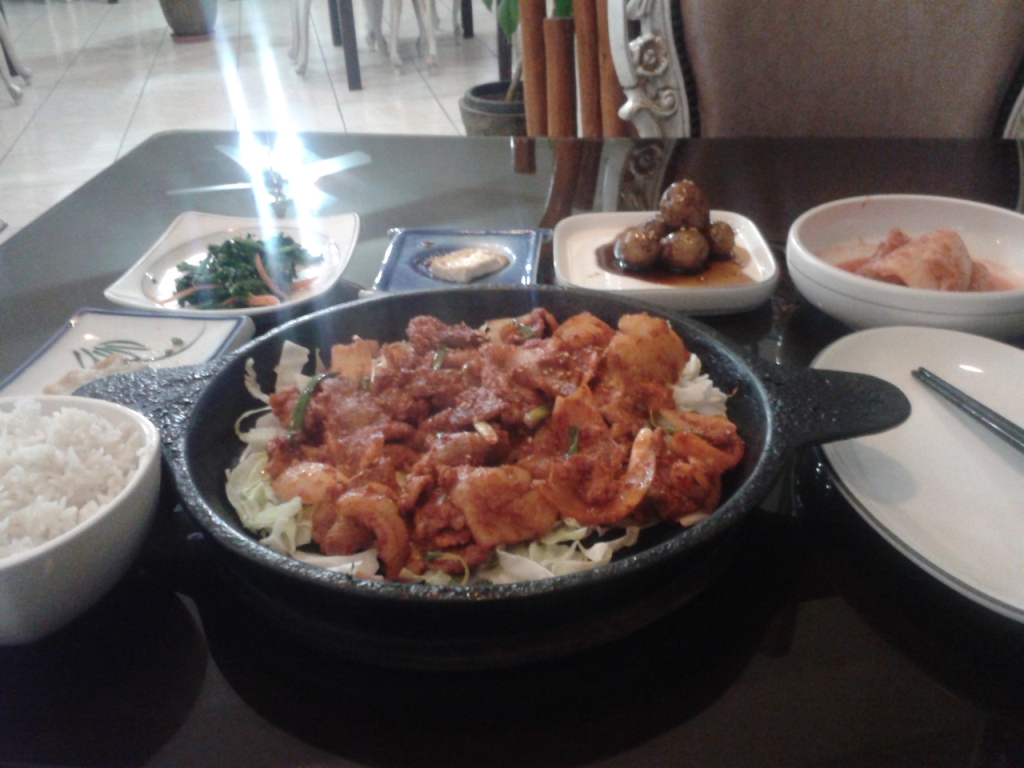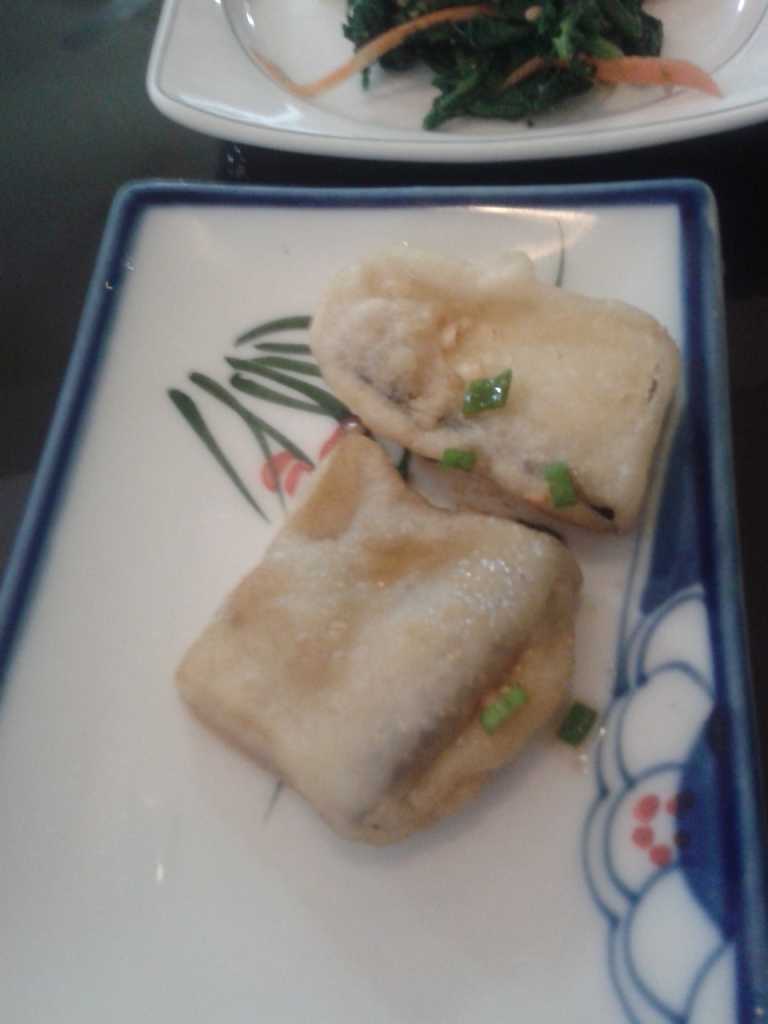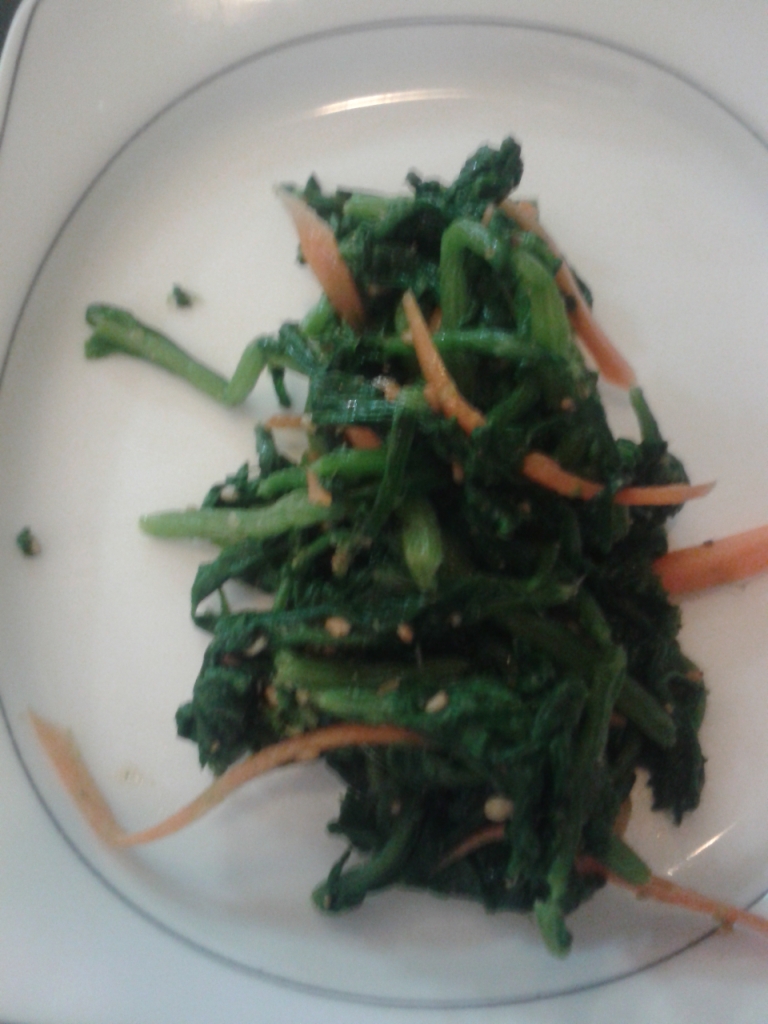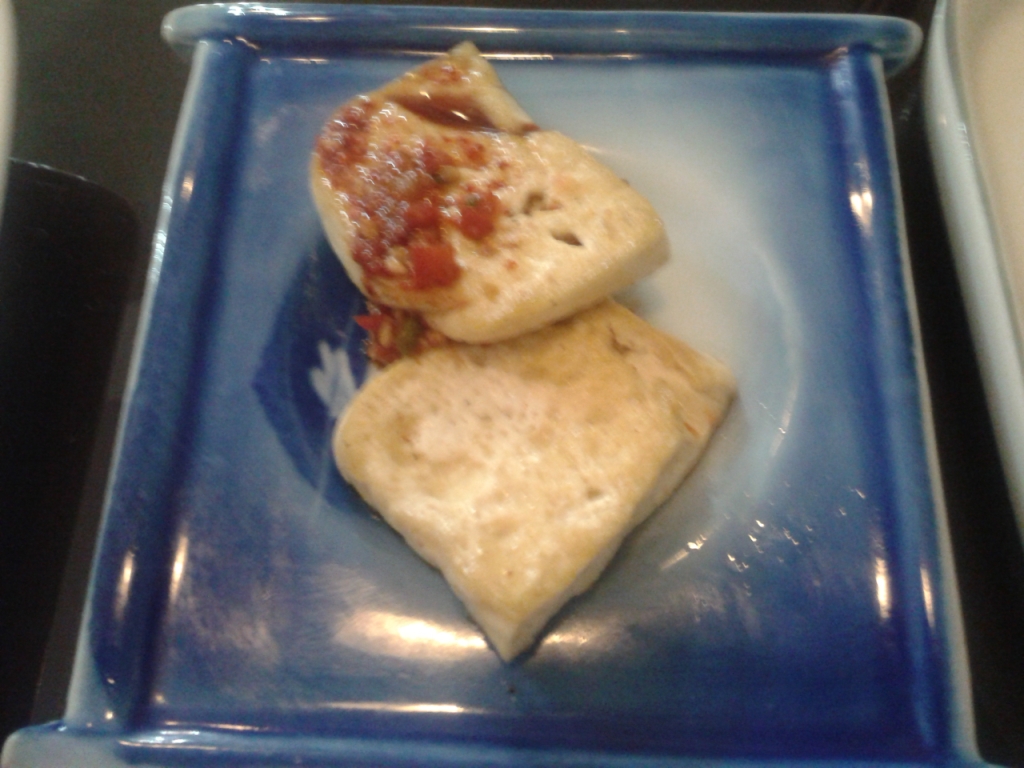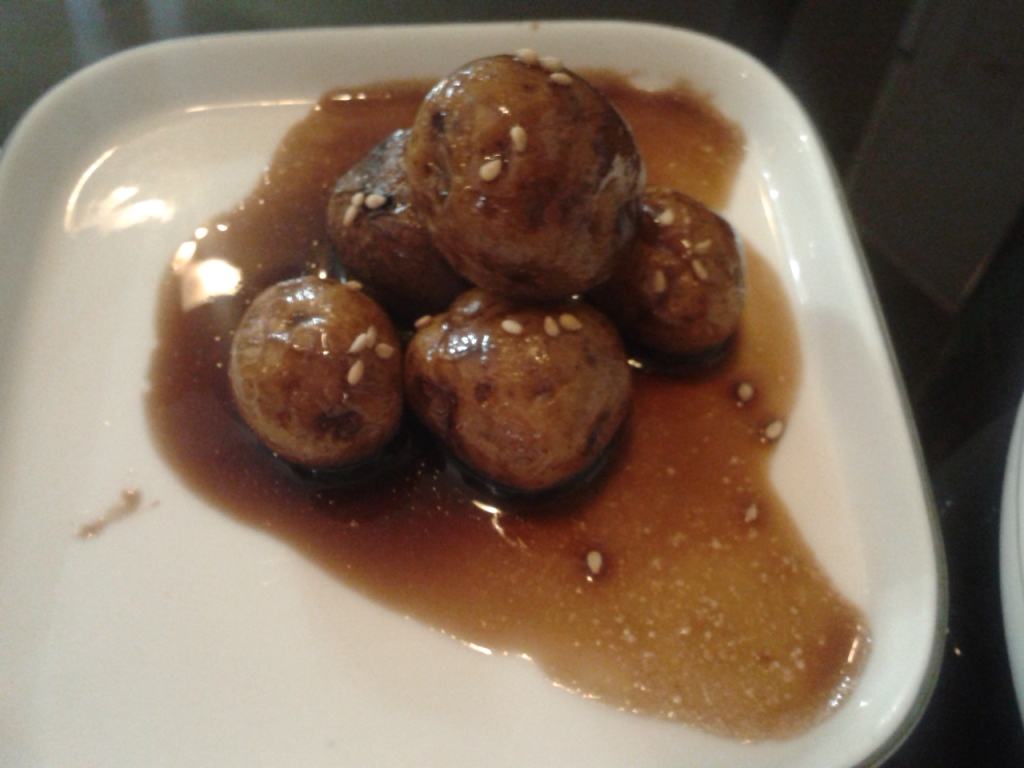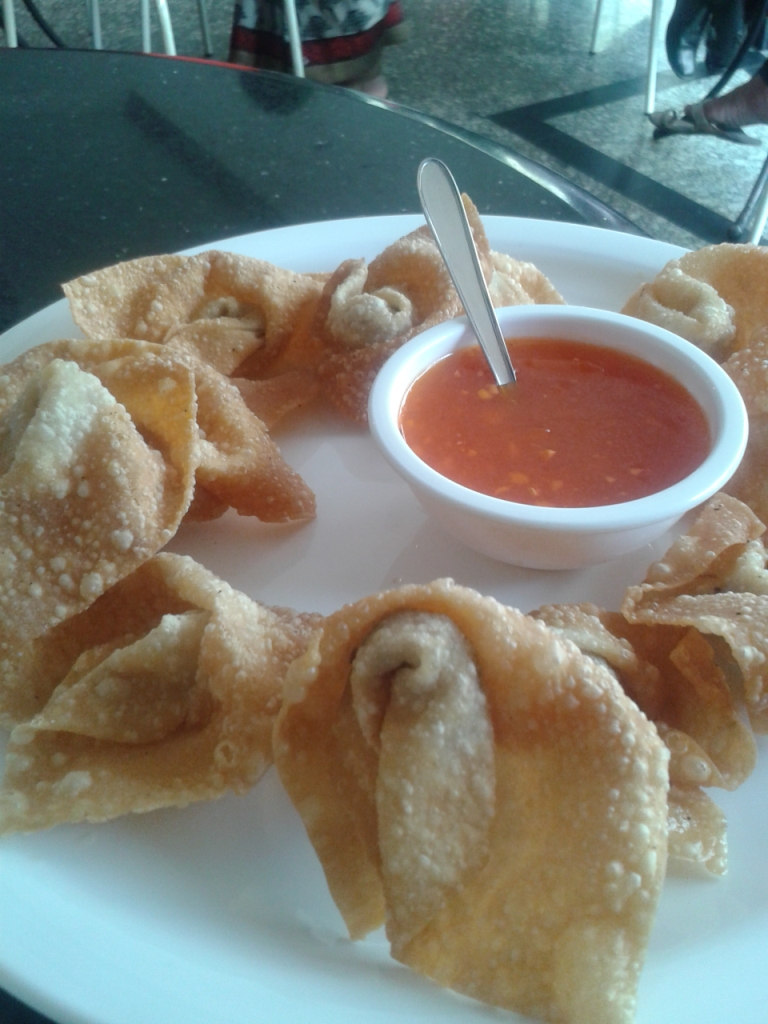
DAILY PHOTO: The Fried Wontons of Green Onion

Taken October 9, 2013

Taken October 9, 2013

I’m a hole-in-the-wall kind of guy. I like good food wherever I find it, but I find it particularly pleasurable at tucked away little places.

This week I ate at Citrus in Leela Palace. It’s one of the swankiest places in Bangalore. The food was excellent, but, of course, you know it’s going to be excellent. It’s expensive and has a French sommelier on staff. There’s great food, but no surprises.

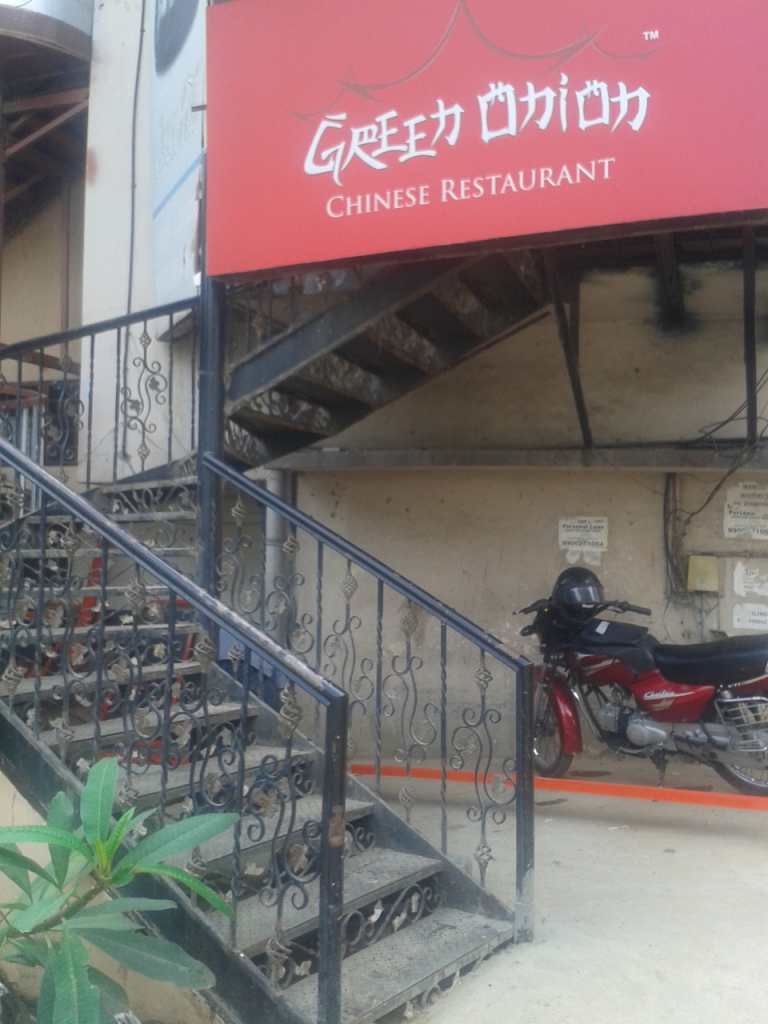
Green Onion is a little first floor (second floor to Americans) Chinese place on a short side-street off of MG Road. I’ve been there twice, and it’s been almost full both times. It’s good food at a reasonable price. Today, I had the above fried wontons  along with kung pao chicken (which I order as much because it’s fun to say as because it’s delectable.) As can be said of most any Chinese place in Bangalore, it’s Indo-Chinese. That is to say, dishes don’t taste like they would in Beijing. That doesn’t make them bad, just different.

I don’t know if it’s cultural bias or not, but I think good Chinese food in America mirrors Chinese food in China more closely than does good Chinese in India. (Of course, bad Chinese food abounds in the U.S. and probably outnumbers good Chinese restaurants.) It may be because American food doesn’t have the extensive and potent flavor palette Indian food does, or because the China and India have shared a border for long enough to have developed a third entity cuisine over time in the manner that Tex-Mex food is distinct from Mexican. All this being said, it’s still tasty, just not in the same way Chinese food in China is.

20120109_005927

7 Perqs of Life in India

1.) Vegetarian restaurants: While I’m not of the vegetarian persuasion, my wife is. This can make finding a mutually acceptable restaurant a pain. However, it’s vastly easier to pick a restaurant in India. Except for the very rare American-style steak house, she can eat anywhere and the menu will be at least half vegetarian.

In Atlanta, I’d estimate that she could eat healthily and well in about one in five restaurants. American Southern cooking doesn’t offer one a side of green beans without a ham bone in it. I’d say we’ve cut our restaurant selection time to about a quarter of the time it took in the US.

IMG_0512

2.) Cheap books: While English is secondary to Kannada as the spoken language here, it’s not second  in the bookstores by any means. Bookstores are common and offer some new options. I’ve spent a lot of time in bookstores, so I usually don’t see a lot that’s new, but there are books printed by Indian publishers here that don’t usually appear on the shelves of Barnes & Noble.

And, unlike in Cambodia where books are  cheap by means of photocopying, the books here aren’t cheap by virtue of stiffing the writer.

BlossomBooks

3.) Amazon: On a related note, I can still buy Kindle books just as easily as I did in the states. There are some websites that don’t work here, such as Hulu and Netflix, but Amazon operates just fine.

4.) Walk-centric life: Bangalore is not an easy city to walk in because the traffic is horrendous, there is no system for traffic lights, and sidewalks are about as dangerous as walking in the street. (If your eye isn’t constantly on the sidewalk, you might just plunge into a sewer.) However, being in the heart of the city, there’s nothing I need that I can’t get via a short walk.

5.) Servants: I haven’t mowed lawn, swept a walk, done laundry, or washed a dish since I left the US, and yet it’s always done. After a brief period of feeling awkward, it’s beginning to grow on me. The hardest part will be going home, once I’ve become accustomed to a certain level of service.

6.) Climate: There’s been a pleasant breeze coming through my window pretty much all day. I haven’t had to use the AC since we’ve been here. And it’s starting to not rain every night. Of course, this one is not so much about India as Bangalore specifically. On the whole, India’s climate is not so pretty.

7.) Loan words:  I suspect it’s harder for the locals to talk about foreigners behind their backs here than most countries because there are so many English loan words. They’ll be a couple of locals talking in Kannada, and you’ll here: “Waa-wah-waa-wah-waa-wah-super convenient-waa-wah-waa.” So it’s like having a rudimentary grasp of a language, you can kind of get a feel for the general drift of what is being talked about-even if you don’t know any specifics. At least this makes bad-mouthing foreigners a mental exercise.

Enough with the Indian Food Warnings, Already

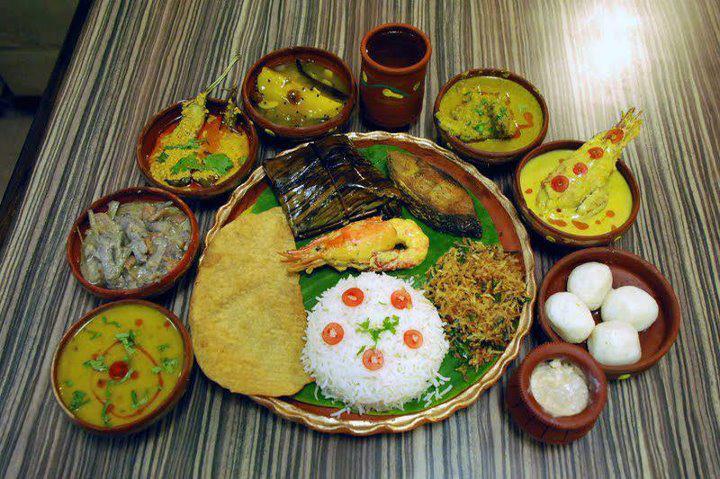
Bengali Authentic Full Meal; Source Nandinissaha (via Wikipedia)

Bengali Full Meal; Source Nandinissaha (via Wikipedia)

When I tell people that I’m moving to India, a common–but strange–response is for them to issue warnings about the food and water. I find this odd for two reasons.

First, said warnings are often issued without much firsthand experience of developing world dining (not including high-brow resorts), and without knowledge of my dining history.

Here are few facts that might help one to better understand my approach. I’ve dined on cold seafood salad in a Phnom Penh cafe. I’ve noshed on snake-on-a-stick in China. I once supped at a home/restaurant in the Peruvian Andes whose latrine consisted entirely of a squat-hole cantilevered out over a  cliff side. A couple of days in Bangkok, I consumed nothing but street-food. I was raised on a farm with non-pasteurized milk, and had a father who wasn’t above cooking up a nice-looking piece of road kill. Not a bloated opossum mind you– but I’ve gnawed clean the drumstick of a pheasant that died not by birdshot, but on the grill of a Peterbuilt. (Funny story, spellcheck wanted to change “pheasant” in the preceding sentence to “peasant.” That would have really freaked you out.) So while my home life has been first world, I’ve got a little third world in my gut.

Now you’re probably thinking, “This idiot is infinitely lucky to be alive, and given his behavior he will probably die soon.” Au contraire mon frère. It’s not that I randomly engage in high-risk behavior. Even locals get Delhi Belly if they don’t choose wisely–despite the full panoply of aggressive gut organisms working on their behalf. I’m quite aware of the hazards, and take calculated risks backed up with sensible precautions.

It’s funny that people live in terror of street food–not that there aren’t some carts that one should run from screaming. However, do you really know what the pimply-faced teenager is touching or scratching during the act of assembling your burger at Chili’s? I know exactly what the hands of the old lady grilling my moo ping on Sukhumvit Road looked like. I got a good look because there was always a line that I had to wait in– and gladly so. (FYI – sanitary wipes or hand sanitizer are one thing you should take with you wherever you go in this world.)

I’m not saying that I’ve never gotten an upset stomach, but I’ve done some remote third world travel and never experienced anything worse than resulted from any given trip to Taco Bell.

I’m quite fond of Indian food, and am sure I will cope well with having it for the majority of my meals for the next couple years. Yes, I’ll have to severely reduce my intake of ice-cold beverages and raw foods. (Ice and wash water are the hidden killers that probably cause more food-borne ailments than anything else.) However, ice-cold beverages –while refreshing and pleasant– are not really that healthy for a body in high temperatures anyway. (Flash heating or cooling of things at the other end of the temperature spectrum is bound to cause problems–one’s organs aren’t that different.) While I like raw vegetables, the human body is more efficient at extracting nutrients from cooked food, so there’s a side advantage there as well.

I think people freak themselves out and miss out on some excellent food. One individual who traveled widely once told me that she never ate the local food for fear of getting sick. I felt bad for her. She traveled to the source of some of the world’s best food, and then dined on American fast food–that’s a squandering of no small part of the travel experience. Of course, some people have very weak systems, and that may have been the case for her. (American fast food may be bad for you, but it is uniformly bad throughout the world.)

The second thing that I find strange is that when I was moving to England 25 years ago, no one warned me that I would be going to one of the most gastronomically unappealing places on the planet. Let’s face it, the reason Britain took over India in the first place was so that they could get something decent to eat. Curry is also the reason they didn’t let go easily.

Is there some bias whereby people tend to respond with negativity when one says that one is moving to the developing world, versus positive responses to moving within the developed world?  One probably shouldn’t respond with negativity to news someone is moving anywhere, but–if you must– you should tailor it to the individual concerned.  For example, if one said to me, “That shrill flute in their music is going to get on your last nerve.”  Well, sorry, but that’s probably a correct statement. (No offense, I’m sure it sounds lovely if you were brought up with it, but it will be–at best– an acquired taste for me.)

DAILY PHOTO: Chanterelle

Take June 29, 2013; High Falls, GA

Take June 29, 2013; High Falls, GA

It’s All Fish Balls and Kipper Snacks From Here on Out

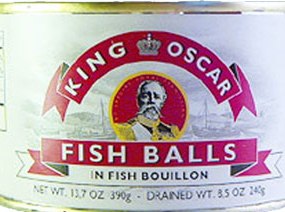
FishballsOwing to a freakish and inexplicable popularity of this blog with Norwegians, I recently received a quasi-lucrative endorsement offer from the King Oscar Canned Fish Corporation. In exchange for tweaking this blog’s content, I will receive all the canned fish products that I can eat– for life. Yeah, that’s right, I get all the minced mackerel, pickled herring, and fish balls that I can stomach. (FYI- Fish balls aren’t aquatic rocky mountain oysters, if you were wondering.)  This is almost as good an offer as was received by Flipper, and he had immense star power. The first truckload arrived this morning as promised, putting me on retainer. Therefore, from this moment onward, the content of this blog will be devoted to the delectable joys of such foods as herring fillets in monkfish sauce or Kipper snacks in oil.

Rest assured, I’ll continue to present the same type material I have in the past, but it will now all have a canned seafood theme running through it. For example, for those who have enjoyed my poetry, I have a doozy coming up entitled “Ode to the Happy Anchovie.”  I will continue to produce humorous postings. There is only one subject off the table… no, not pedophilia… I will never make fun of the delicious Norwegian canned fish snacks of the King Oscar Corporation. However, I have a scathing rant against people who don’t want anchovies on their half of the pizza that I think you’ll find particularly rib-tickling.

In conclusion, I’d like to wish you all a happy April Fool’s Day.

TODAY’S RANT: The Lonely Omnivore

My salami has a first name, it's B-E-S-S-Y.

My salami has a first name, it’s B-E-S-S-Y.

I’m a member of a group that has long suffered the bitter pill of discrimination. How is it–you may ask–that a white, heterosexual, suburban, graduate-educated male knows the foul taste of discrimination? I love meat, but my wife is a vegetarian.  This makes me a lonely omnivore.  When I go to the market, I can’t find meat packaged for my kind. No individual could cope with such quantities of meat as packaged by supermarkets. Well, that is besides those not averse to contracting colo-rectal cancer from the rotting carcass wedged in his transverse colon, e.g. Adam Richman.

One option–the healthy option–would be for me to go vegetarian. Did I mention that I love meat? I love bacon and beef and poultry and pork and rabbit and reindeer. I would eat meat on a boat. I would eat meat with a goat, and then I’d make a stew out of the goat. Cut off the beak and the bung, and you’ve got yourself a customer. You say you got horse meat in my beef? Sounds tasty. So option one is a nonstarter. I’m out of the omnivorous closet. I’m here; I eat steer; get used to it.

Another option is to find the store butcher and ask him to wrap me a solitary steak.  The problem is two-fold. First, the butcher is never just hanging out at the counter, and so there will be a PA announcement. In the 1950’s, before computers with Facebook and solitaire, the butcher would hang out at the counter, but now he’s in the back–presumably goofing off like 90% of the workforce. The announcement will be quick and neutral, but it will sound enough like the following to garner widespread attention, “Attention in the meat department, there’s a pathetic soul with no one to love him who needs steak for one, I repeat STEAK FOR ONE.” Then everyone in the store has to take a peak at the lonely omnivore. Don’t stare, Johnny, it’s just a hobo.

The second problem is that, while the butcher is smiling and polite, I know he is thinking, We have half a mile of prepackaged meat, and you really want me to take a break from my hectic schedule of playing solitaire in the back office to cut you one steak? Haven’t you heard of a nifty invention called a “freezer?” It should be located somewhere in the general vicinity of your refrigerator  

The third option is, of course, the freezer. If you had any idea how disheveled my mind was, you wouldn’t even suggest this. Using the freezer would require that I anticipate that I will eat again in the future so that I can take the meat out to thaw. Here’s how it really works. I’m sitting here typing and think, That steak would really be good about now! However, presently it isn’t a steak, it’s a block of meatcicle. So I take it out of the freezer. I stare at it for a few minutes, hoping to use my ill-developed Superman-like powers of heat vision. Then I try running hot water on it, but it remains crystalline on the inside. Then I leave it and go back to typing. Then I check on it in three minutes. Then I go back to typing. Then I check on it after two minutes. Sensing the beef will never thaw, I break down and make myself some unsatisfying but filling Top Ramen. The next time I see the steak it’s a soggy and unappetizing lump hanging out in my sink.

Now if you’re an outline-and-note-card kind of writer, you may wonder how a writer could be so unskilled at planning. I’m not that kind of writer. If you haven’t guessed it, if it hasn’t shown through, I just make shit up as I go along. For me, writing is a process of paginated diarrhea, with an admittedly messy cleanup process.

My final option is to go to one of the huge “farmer’s markets” that we have in the area. (I use quotes because I’ve never seen an actual farmer there, and the food is as likely to be from Armenia as it is from Americus, Georgia.) These markets have heaped slabs of meat on ice, they’ll and cut it however one wants. I do this sometimes. There’s a very cool thing about these places. Because they serve such a diverse population, they hire a lot of immigrants.  However, while it’s cool that my butcher is a native Lao speaker, it can be problematic for me as a non-Lao-speaking English speaker. Inevitably, my desire for ONE PIECE of meat is translated into ONE KILO of meat or ONE CRATE of meat. I know, you’re saying that there’s one simple and obvious solution: learn the Lao language.  The problem is that the next time I go I might get the Urdu-speaking butcher.

I don’t like to complain about my plight [which is why I have a regular series of posts called TODAY’S RANT], but we should make room in our society for those of different meat needs.

A Dude’s Attempt to Master Pad Thai

On a trip to Thailand last fall, my wife and I did a one-day cooking class in Chiang Mai. That day I made the perfect batch of pad thai. (For the uninitiated, Pad Thai is “noodles Thai-style.” It’s one of the more popular dishes at your local Thai restaurant. If you don’t believe me, go check. I’ll wait.)

Anyway, I preceded at home to make 35 batches of pad thai that bore little resemblance to food. That’s not true. Only the first five dishes were fundamentally inedible, the next thirty were tasty enough– they just didn’t taste like pad Thai. A poor cook might blame the difference on the variation in ingredients between Thailand and home. However, I have a sneaking suspicion the cooking school staff was slipping good cooking into my dish while I wasn’t looking. They’d say, “Godzilla” and point, and I’d turn (because one can’t take a chance that close to the Pacific), and when I turned back around the contents of my wok would look and/or smell better.

If making mac-n-cheese from a box, microwaving a HotPocket, or grilling a burger aren’t counted as cooking, then you might say that my experience with cooking was nothing. However through an extensive process of error and error, I arrived at delectable pad thai.

Below is what you’ll need.

Ingredients

Ingredients

First, for the anal retentive types who’ve noticed that I took this picture on top of the washing machine, that was solely for lighting purposes. This process in no way involves use of the washing machine. It’s not one of those clever recipes like cooking fish in the dishwasher. I’m serious, under no circumstances are you to attempt to use your washer in the making of pad thai.

In list form, what you’ll need is:
– 2 Tablespoons of oil (anything but olive)
– 4-ish cloves of garlic (more if you have a vampire-infestation problem)
– shrimp (several to many)
– chicken (one to two tenders’s worth; like the size of tender they give you at Applebees or Chilis– NOT McDonalds, i.e. a swanky tender)
(substitute tofu if you’re one of those quasi-vegetarians who count chicken as animal but don’t count shrimp/fish.)
– egg (1)
– 2 Tablespoons fish sauce
– 1-1/2 teaspoons sugar
– rice noodles (about 2 ramen packets worth, not that you should buy it that way)
– crushed peanuts (3 heaping Tablespoons)
– spouts (1 cup-ish. Normally this is soy or mung bean sprouts, but I’ve substituted Alfalfa sprouts because they work fine and last longer in the fridge.)
– spring onions or chives or something green and oniony (1-cup-ish)
– 1/2 a lime

Step 1: Heat your oil in a wok. Get it hot enough so that when you throw the garlic in, it’ll sizzle. This will make you feel more chef-like.

Sizzling garlic

sizzling garlic

Step 2: Add the animal stuff. Put the chicken in first, it takes longer than the prawns.  If you’re using tofu, put it in after the shrimp (tofu won’t cause you severe debilitating diarrhea if it’s under-cooked. [I don’t think, but I have no idea what I’m talking about. Although I do suspect one shouldn’t refer to diarrhea at any point in a food blog post.])

chicken and shrimp (lamest superhero duo ever.)

chicken and shrimp (lamest superhero duo ever.)

Step 3: Add the egg, fish sauce, and sugar. Scramble the egg up good, and mix everything together.

Egg, fish sauce, and sugar

egg, fish sauce, and sugar

prawn scramble

prawn scramble

Step 4: Add the noodles. This is the trickiest part of all. First, they make a lot of different types of rice noodles in different dimensions and colors, and they all cook differently. I prefer thin noodles. I must admit the noodles are the weak part of my game. In the batch I’m showing, the noodles are overcooked, but I have done them just right. (You’ll have to take my word.) It’s preferable to have them slightly under-cooked when they’re mixed with the prawn scramble (There’s usually enough moisture that they’ll continue cooking.)

At the cooking school, we put pushed the prawn scramble up to the top of the wok and tilted the wok over and put dry noodles and a cup of water in the bottom of the wok. We then cooked the noodles, and then mixed them with the prawn scramble.  If you’re an octopus or a ninja, that method works great. I, however, pour boiling water over bowled noodles when I’m putting the chicken in the wok, then I tong them into the wok and mix them right together with the prawn scramble.

overcooked noodles this time

overcooked noodles this time, so sad

Step 5: Add the vegetable stuff. First, throw in the crushed peanuts. Then stir in the sprouts and the spring onion. (These are all done last, because you want them to provide a bit of crunch. i.e. You don’t want them thoroughly cooked.)

with the veges in

with the veges in

The penultimate step is to squeeze on the lime. This can be done into the wok after it’s removed from the heat or directly on top of one’s bowl.

Step 6: Eat. I’ve included the following picture as proof that this was, in fact, edible.

last few bites

last few bites

TODAY’S RANT: Nukes and Ketchup

Why was there no Manhattan Project for Ketchup?

Why was there no Manhattan Project for Ketchup?

How come we mastered the thermonuclear warhead decades before we did the ketchup bottle?

Building a nuke took:

– the greatest scientific minds Hungary ever produced (You scoff, but Hungary’s claim to fame is driving out more Nobel Laureates and top-rate scientific minds than most countries will ever hope to produce. [e.g. Teller, Szilard, Wigner, von Neumann, etc.] If they didn’t let jackwagons run their country, they’d probably rule the world by now.)
– $42 billion in current-year US dollars
– the Project Manager who built the Pentagon
– and a whopping two or three years (for the fission weapon)

Building a decent ketchup bottle shouldn’t have even required an Algonquin Round-table  It could have been achieved by two morons sitting around at a barbecue.

Moron one says, “You knows what would be delightful, if this bottle was squeezable plastic, not glass.”

Moron two says, “Dude, you are so right, and what if they turned it upside-down so that all the ketchup stayed near the hole?”

Bob’s your uncle, the ketchup bottle is perfected.

Do you know what kind of Galactic douche-bags this makes humanity look like? It makes it seem like we don’t care about our condiments.
Oh, but we do. I’ve seen it. I’ve seen a man in Boise use no less than 42 packets of ketchup on his fries. I saw a rotund woman in Phoenix use half a jug of mustard on her hot dogs. I saw a canuck slather mayo on his burger (what is up with that, Canada.) From sea to that other sea, amid the prairie dogs, through the alligator-infested swamps, across those bruised mountains, I’ve seen a divinely inspired love of sauces throughout our great nation (and that ancillary nation to the north.)

No wonder aliens haven’t visited us; they probably haven’t received word across the light-years that we’ve mastered ketchup. Or maybe it’s the fact that we haven’t built a plastic fork whose tines could stick up to a sturdy gherkin. (But that outrage is for another day. Yes, manufacturers of disposable flatware, you too will taste my wrath.)